

Juliana Ama, the indigenous woman who preserves the memory of an entire people in El Salvador
Ninety years have passed since the massacre during the indigenous uprising against the military dictatorship in El Salvador. Juliana Ama, granddaughter of one of the rebellion's leaders, recalls that story.


Share

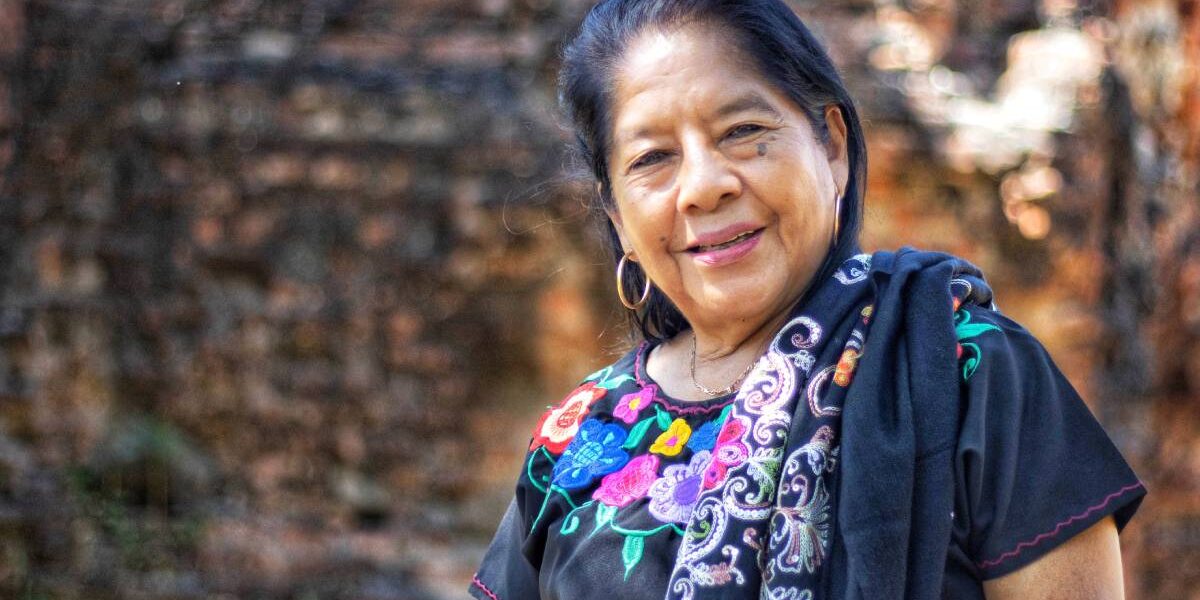
SAN SALVADOR, El Salvador. Lidia Juliana Ama is a tireless Indigenous woman from the Nahuat community of El Salvador. At 73, she continues to promote the language, culture, and memory of one of the largest massacres against Indigenous populations perpetrated by the state.
The events that took place in January 1932 in the western part of the country have been classified as an ethnocide. Several historians estimate that it resulted in the deaths of approximately 25,000 Indigenous people in the western region. An official figure has not yet been released.
The main focus of the repression took place in the municipality of Izalco , about 56 kilometers west of the capital San Salvador.
Between January 22 and 26, thousands of indigenous men were subdued, taken from their homes and murdered by the National Guard, who, following the orders of President General Maximiliano Hernández Martínez (1931 – 1944), were supposed to suppress the “communist uprising” in the impoverished Central American country.
Fraud and dispossession
The indigenous uprising was motivated by the continuous dispossession of communal lands, used by the people; the reduction of agricultural work payments to less than half; and the electoral fraud in the municipality's mayoral election.
Feliciano Ama, Juliana's great-uncle, was the main suspect in instigating the movement in the area. They were demanding that the government recognize the victory of Eusebio Gómez, the mayoral candidate for Izalco, over Miguel Cal.
“As always, there was fraud. They gave the victory to this man (Miguel Cal), and that made the Indigenous people even angrier. On January 22, all the elders gathered under a ceiba tree in the park. At six in the evening, they began to march through the town protesting the fraud and demanding the return of the communal lands,” Juliana Ama told Presentes .
“Our grandparents were communal, not communists. To denigrate them, the government said they were communists. At some point, they blamed Tata Feliciano for his audacity in rebelling against the town's landowners,” he pointed out.
The small municipality of Izalco, covering 175 square kilometers, has historically been divided between the upper and lower parts of the city. The former are mostly wealthy Ladinos or mestizos, while the latter are indigenous people impoverished by dispossession.
“While the wealthy celebrated Miguel Cal’s victory, the elderly arrived to protest, armed with sticks and machetes. They were met with gunfire. During that confrontation, Cal was killed. On January 24, President Maximiliano Hernández Martínez ordered all Salvadoran troops to concentrate in Izalco to kill half the population, without asking them anything,” Juliana recalled.
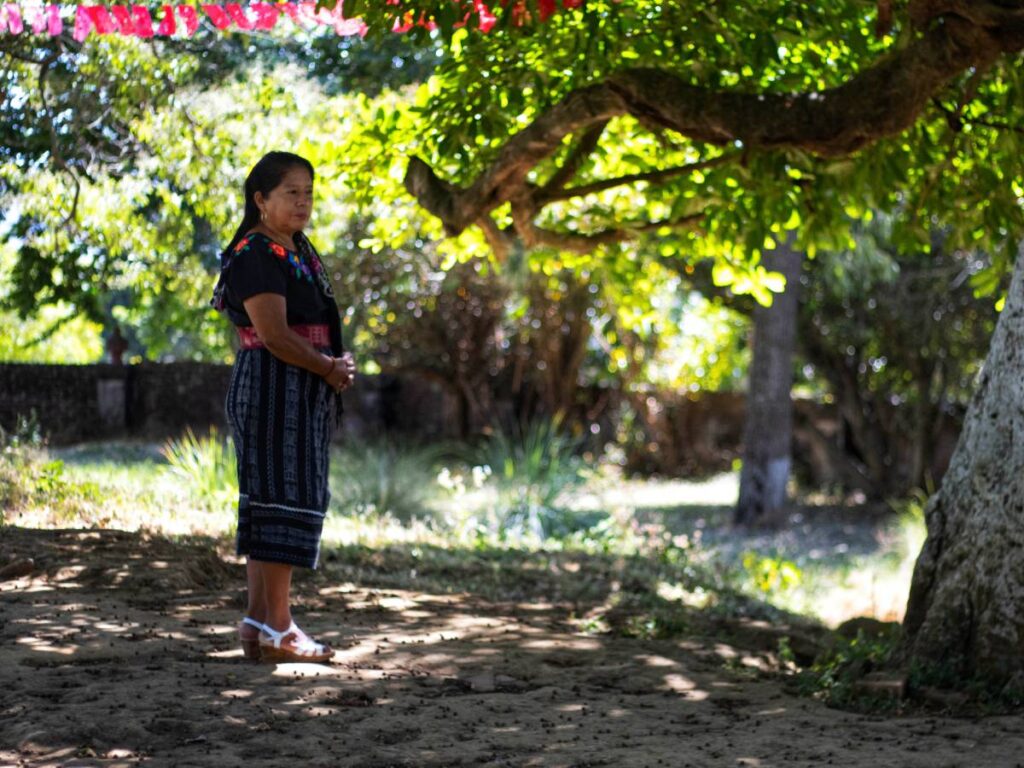
Photo: Paula Rosales.
An expansive punishment
State violence was also experienced in the municipalities of Nahuizalco and Juayua located in the department of Sonsonate , as well as some places in the capital San Salvador.
On January 28, Feliciano Ama was captured, and then hanged in the central square of Izalco as a warning to the rebels.
The word communism became torture for the indigenous people. It represented pain and death for them.
“There was a lot of terror, fear, and uncertainty during those acts of persecution by the civic police. They used a cart to go all over town collecting the bodies and bringing them to Llanito. At that time, they banned pork because the animals ate many of the victims abandoned on the property,” Juliana said.
The devastation
El Llanito is a property where the church of the Assumption once stood, destroyed in an earthquake in 1773. In those ruins, trenches were dug to bury the bodies from the massacre.
“Thousands of grandparents died, leaving the population with few men. My father used to tell me that they dressed ten-year-old boys in dresses and tied their heads with a scarf so they would look like girls and the troops wouldn't kill them,” Juliana said.
According to Thomas R. Anderson's book El Salvador , 1932 , the indigenous population in the department of Sonsonate was 34.6 percent in 1932. This contrasts sharply with the 0.44 percent recorded in the last population census, conducted by the General Directorate of Statistics and Censuses in 2007.
“Talking about 1932 is painful and quite moving. In Llanito we found teeth, fragments of jaws; they were part of the murdered grandparents,” Juliana recalled.
The loss of indigenous identity
“Please be silent because you are treading on sacred ground. Those of yesterday gagged my voice, my native language, my clothing, they burned my cotton shirt, they eliminated my surname and even my dancing to the four winds,” reads the monument in Llanito, where thousands of indigenous people murdered by the State lie.
After the bloody events, Indigenous women were forced by state security forces to stop wearing their traditional clothing and speaking their language. They had to survive under the stigma of being communist rebels.
“I witnessed all the discrimination my mother suffered. All the indigenous women who wore a refajo were called 'Marías'. When my mother went to sell at the market, the Ladinos treated her with contempt, that's why I decided to fight for her memory,” Juliana said.
He acknowledges that his brothers do not like to talk about the past, since contempt for indigenous people permeated many people who stopped recognizing themselves as native.
Indigenous peoples were not constitutionally recognized until 2014, thanks to the efforts of the Salvadoran National Indigenous Coordinating Council (CCNIS). During the contentious vote in Congress, there was arduous negotiation to secure the necessary votes for ratification. Since then, there has been no tangible progress in their rights.
Juliana received threats in 2001 when she began organizing the commemoration of the massacre.
Nahuat: the language that did not die with the massacre
A teacher by profession, Juliana received her primary education at an indigenous school in Izalco. She holds a master's degree in intercultural studies and has presented the world's first plan to promote policies for indigenous peoples to the United Nations (UN).
In his early years of teaching, he had to replace teachers who were killed during the armed conflict (1980-1992) in a school in the municipality of Chiltiupán , department of La Libertad, 41 kilometers southwest of San Salvador .
“When we arrived at the school, the walls were covered in blood, where the teachers had died,” Juliana said.
She promoted intercultural education in the public school system. She retired ten years ago and since then has dedicated her time to teaching the Nahuat language to children between the ages of three and five in western Mexico.
He started a “Nahuat without walls” school in Llanito, sticking teaching posters on the trunks of the local fig trees. His initiative caught the attention of the academy and together they founded the “Nahuat Cradles” or “Xutxikisa Nawat”, which in Spanish means “Nahuat flourishes”.
A school that set a precedent
Since it began, three nurseries have been created in the municipalities of Santo Domingo de Guzmán, Santa Catarina Masahuat and Nahuizalco.
It is the first school of its kind in Mesoamerica. Juliana, along with eight other Nahuatl-speaking Pipil women, or nantzin, teach classes daily. To date, more than 300 children from the communities have benefited from the program.
“Language is a legacy we must leave to future generations and a testament to the present. All of history is a memory we must not forget; I will die and I will leave satisfied,” said Juliana.
The Nahuat language is critically endangered because the number of speakers is very small and they are elderly. According to UNESCO's Atlas of Indigenous Languages, there are an estimated 200 Nahuat speakers left, representing the last generation of speakers in the country.
“I don’t feel defeated or beaten yet. I don’t think I’ll give up until I see a generation where the language is spoken fluently by children and young people because they are the future of our country,” Juliana added.
We are present
We are committed to journalism that delves into the territories and conducts thorough investigations, combined with new technologies and narrative formats. We want the protagonists, their stories, and their struggles to be present.
SUPPORT US

FOLLOW US
Related notes
We are present
This and other stories are not usually on the media agenda. Together we can bring them to light.