

Two women attacked for kissing in Mexico City: activists responded with #BesosLenchos (Lyngo Kisses).
The woman spat at the young women who were kissing, accusing them of being a "bad influence" on her child.


Share

MEXICO CITY . On January 11, a woman attacked two young people for kissing. It happened outside an ice cream shop in Chinatown, in downtown Mexico City. The woman spat on them and swatted at them, saying the kiss was a “bad influence” on her child. No one who witnessed the scene intervened to stop the attack.
Digital content creator Duddete shared a video showing the moment the woman spits on the two young women sitting in front of the ice cream shop.
The woman's attack was joined by at least four other people who responded by pulling hair, slapping, and punching the woman in the face. Throughout the incident, they tried to protect the woman who had attacked them first. In the end, the young women left the scene.
The reason the woman gave for the attack was that she considered a kiss between two women a "bad influence" on her child. This was confirmed by Presentes with eyewitness accounts. The identities of the young women are still unknown.
To date, only the Council to Prevent and Eliminate Discrimination in Mexico City (Copred) has condemned what happened and is looking for the young women so they can file a complaint and the institution can follow up on the incident.
“Regarding the video of an alleged lesbophobic attack, the Mexico City government institutions are closely monitoring the situation with the information available. It is necessary to hear the victims' version of events as part of the process,” reads a statement from their Twitter account .
Fear of showing affection in public
Lesbian women are the ninth most discriminated group, according to the most recent survey on discrimination in Mexico City.
Furthermore, in the 2018 National Survey on Discrimination Based on Sexual Orientation and Gender Identity ( ENDOSIG, 2018 ), 80.9% of lesbian people said they were afraid to show affection to their partner in public and 78.9% were afraid to freely express their sexual orientation.
The release of the video of the attack in Chinatown sparked a wave of reflections on social media about the violence lesbian women and lesbians have experienced when expressing affection in public spaces. To better understand this, Presentes consulted Sofía Poiré, a member of Marcha Lencha and a sociologist specializing in discrimination against women and LGBT+ people.
“On the one hand, watching the video brought to mind experiences we’ve had that may be identical or similar, such as simply experiencing aggression because we are perceived as two women in a romantic or sexual relationship. It certainly reflects the fact that this violence, which we have undoubtedly experienced in the past, is still present in 2022 in public spaces. And it happened between people who didn’t know each other, so again, it’s something that could have happened to any of us.”
Two similar attacks in two weeks
In addition to what happened in Chinatown, on December 29, 2021, two gay men were discriminated against for kissing at Six Flags, an amusement park located south of the city.
A Twitter user reported that his friends, Andrés and Luis, were discriminated against by members of the Banking and Industrial Police (PBI), affiliated with the Mexico City police, and by a man who introduced himself as the "park director" who argued that displays of affection were prohibited within the premises because "it is a family park."
The couple's friend reported, "They pointed us out, pulled us out of line, and threatened to kick us out of the park for not complying with the 'family-friendly environment' rules. At least 10 other couples in the same area were kissing, but they weren't singled out or intimidated."
The Six Flags Mexico code of conduct does not mention anywhere that kissing between same-sex couples threatens the "family atmosphere" and only mentions that "undisciplined, harmful or offensive behavior, including cutting in line or reserving places" is prohibited.
The case quickly went viral on social media, and individuals, activists, and LGBT+ organizations attended a "kiss-in" organized outside Six Flags on December 30. That same day, Six Flags issued two statements acknowledging that it "had a policy that discouraged visitors from being overly affectionate" and offering an apology for the "misunderstanding caused," adding that they would be meeting with city officials as a result.
The Copred announced it will seek reparations for the victims and guarantees of non-repetition. The Mexico City Human Rights Commission (CDHCM) launched an investigation, and Mexico City Mayor Claudia Sheinbaum addressed the matter on December 31.
#LenchoKisses in public spaces
For Sofía Poiré and other lesbian and lesbian activists, holding a kiss-in was indeed on their minds; however, exposing themselves to the new wave of COVID infections with record numbers in Mexico City is not, and was not, the best strategy.
In this regard, Porié added in his reflection that there is a "repetition factor" that can work against social movements and LGBT populations, explaining that it happens "in the sense that if people mobilize at first, they don't necessarily want to do it a second time, like this effect of getting used to it."
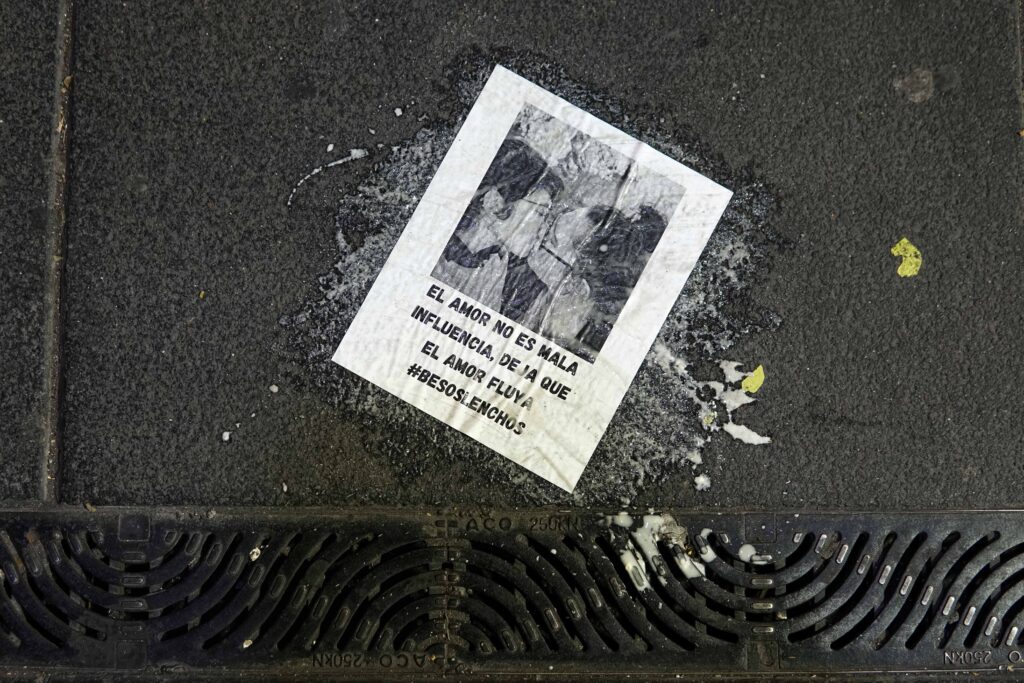
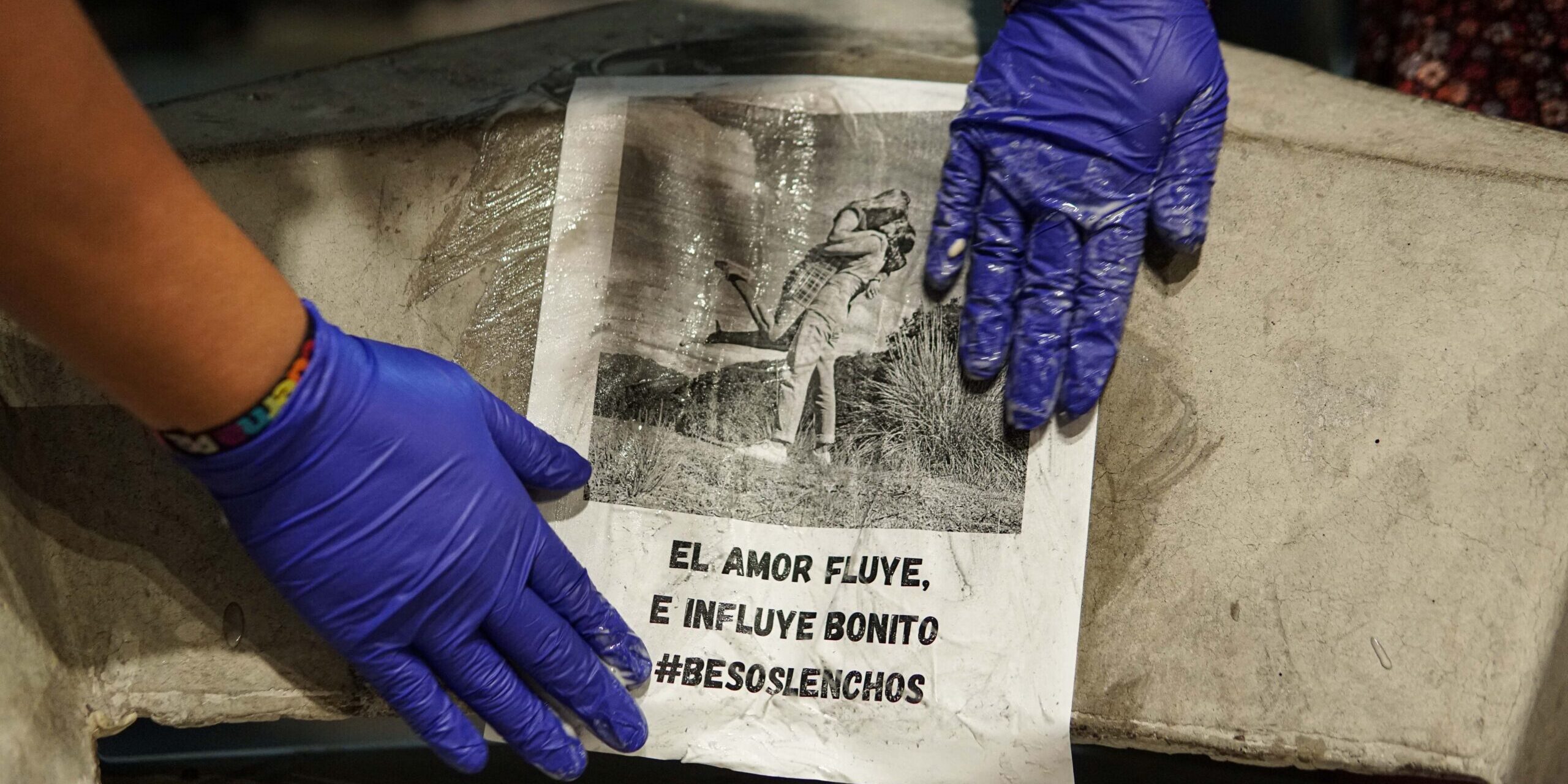
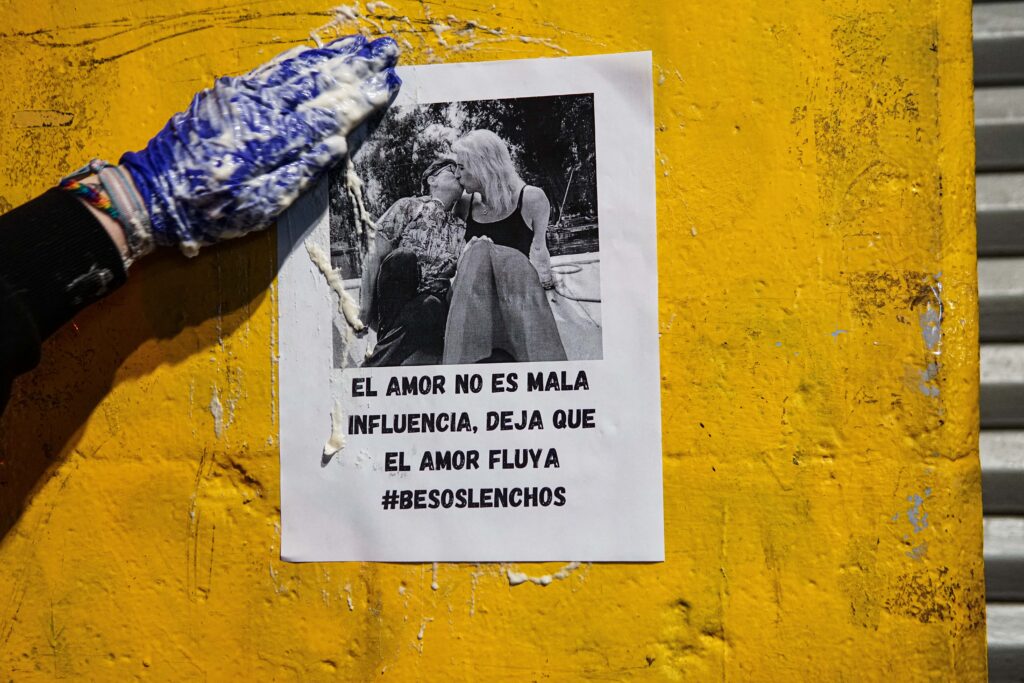
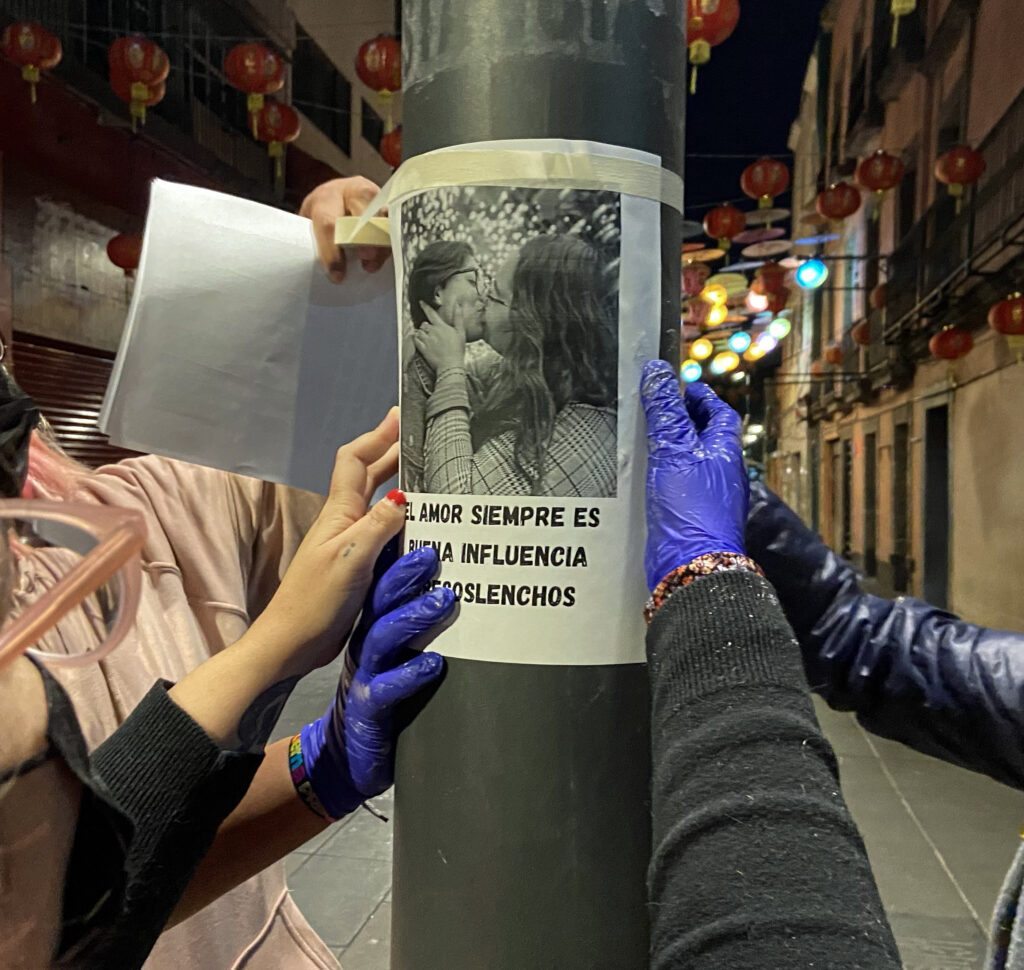
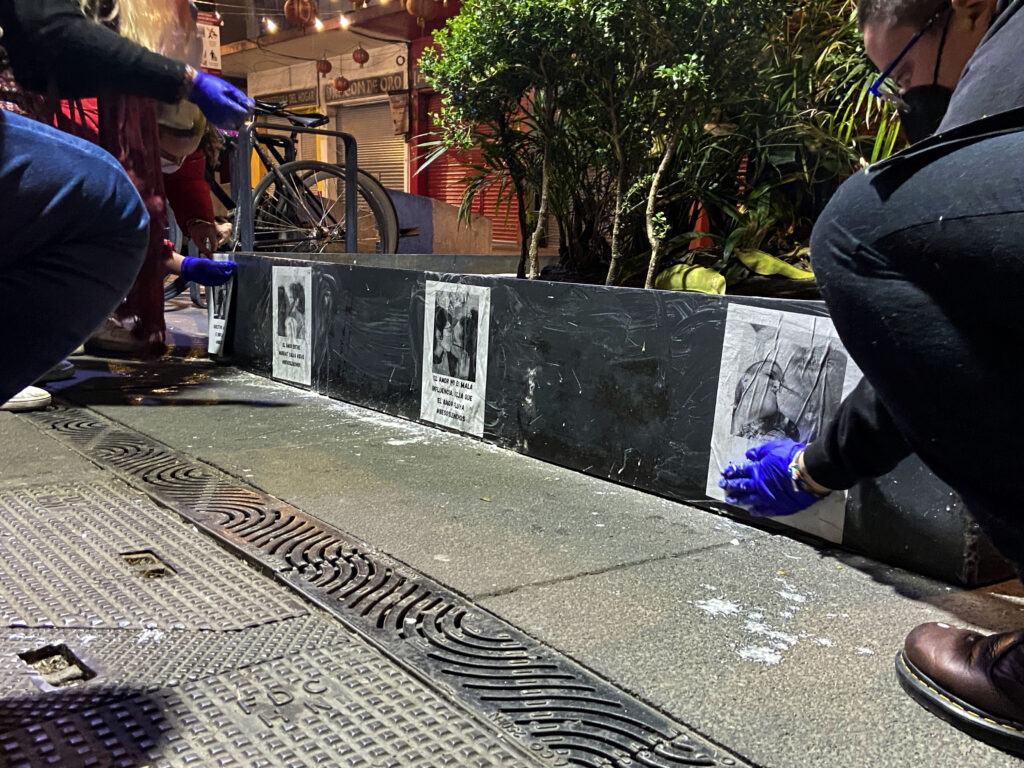
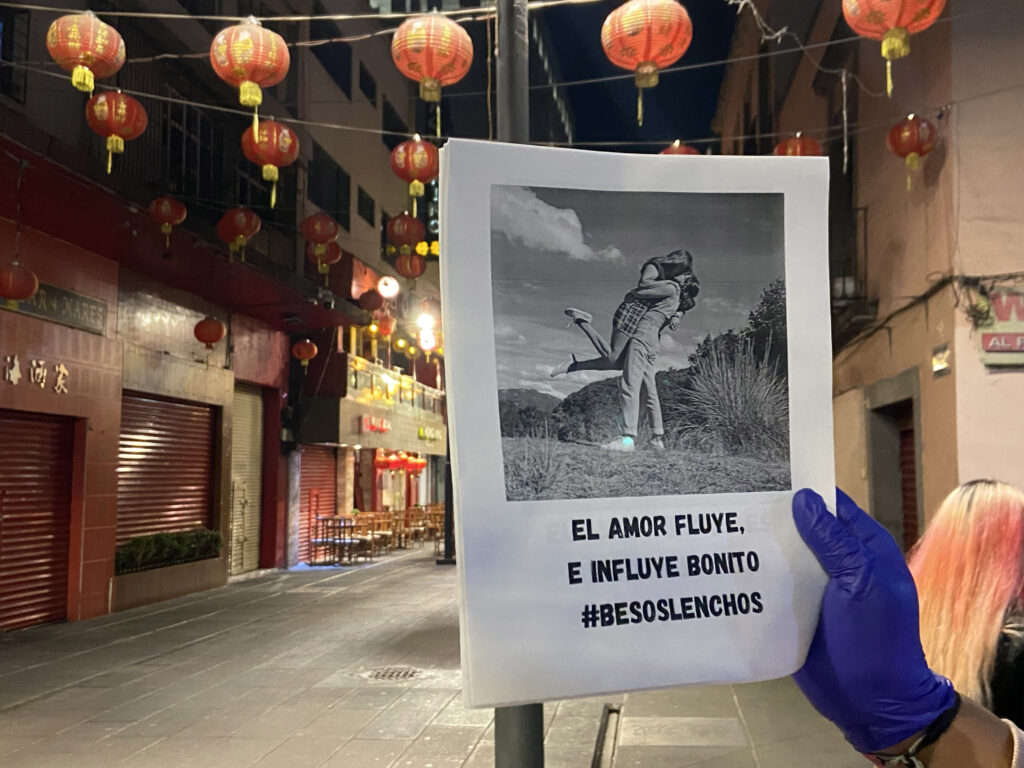
Instead of a kiss-in, on January 12, members of Marcha Lencha called on social media for lesbian, bisexual women and people who identify as lesbian to share photos of their kisses using the hashtag #BesosLenchos.
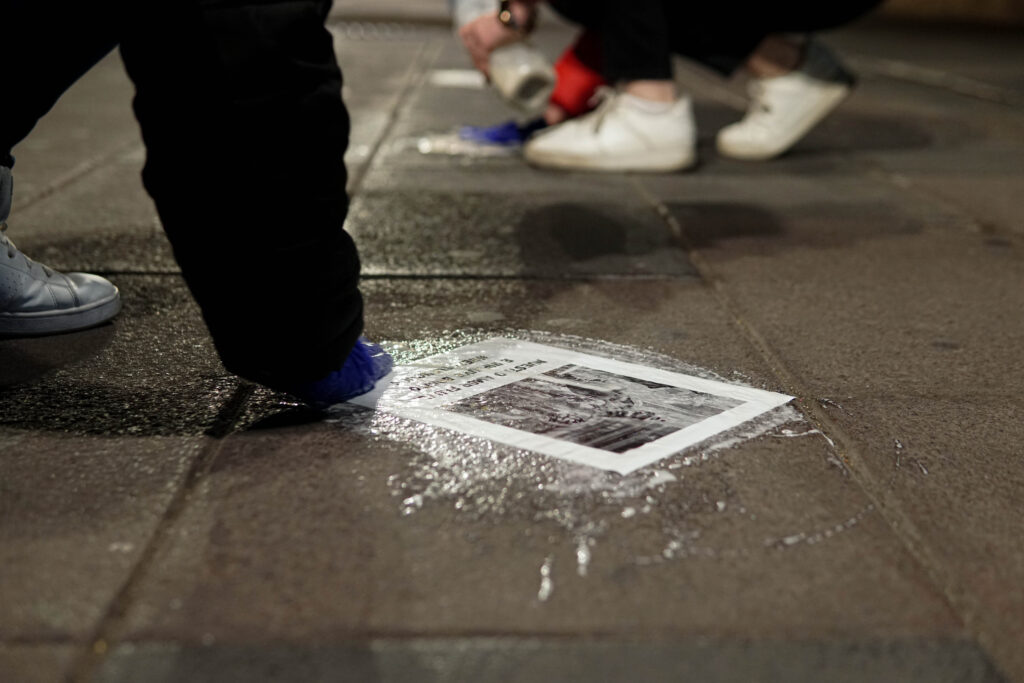
That same night, members of Marcha Lencha gathered on the street where the lesbophobic attack took place and posted some photos of those kisses on walls, benches, planters, and lampposts in Chinatown.
Social media also denounced how people react differently when acts of discrimination occur against gay men and lesbian women or other dissidents.
Regarding this, Poiré explains that “the gender factor also plays a role in the apparent figures for the LGBT population when mass surveys are conducted. The majority of respondents—just over 50%—are cisgender gay men, and this undoubtedly makes it easier for this population to become politically active, identify themselves, build networks, have spaces, and if this information circulates among them.”
Where can I report this?
The civil association Jóvenes por una salud integral (Youth for Comprehensive Health) has a first-contact and support hotline for lesbian and bisexual women, offering guidance and referrals to specialized institutions. The number is free and confidential: 55 75180565
Due to the pandemic, in Mexico City, the ways to report to Copred and to the Office of the Unit for Attention to Sexual Diversity (UNADIS) of the city government, remain by telephone or web.
At Copred:
Requested information: name, contact information and description of the event.
- Report from the website at this link
- Telephone support: 55 5341 3010 and 55 4600 8233
Monday to Thursday 10:00 – 18:00 hours; Friday 10:00 to 15:00 hours.
- Urgent Cases – WhatsApp 55 46008233
- Citizen Council's security hotline and trusted chat: 55 5533 5533
At UNADIS:
- unadis.atencion@gmail.com
- Non-discrimination hotline: 55 5658 1111
- Urgent care (Ulises Pineda): 55 2858 6265
- Channeling and containment (Gerardo Olivares): 55 4611 8811
We are present
We are committed to journalism that delves into the territories and conducts thorough investigations, combined with new technologies and narrative formats. We want the protagonists, their stories, and their struggles to be present.
SUPPORT US

FOLLOW US
Related notes


We are present
This and other stories are not usually on the media agenda. Together we can bring them to light.