

Neither public health nor community health: the neglect of Wichí girls in Pacará
The demand for access to health care intensified after the death of a 13-year-old Wichi girl and her newborn baby.


Share

SALTA, Argentina. Medical care is one of the major demands of the Wichi community, which has suffered for years from neglect by the healthcare system, among other issues. During the pandemic, there were several reports of inadequate care, and last year the case of a 13-year-old girl who arrived at the hospital pregnant, lost her child, and subsequently died, came to light.
The young mother was from Pacará , a Wichí community located in a wooded area about 50 kilometers from Tartagal. Access is via dirt roads that become impassable during the summer months due to rain. She died on August 17th in the public hospital, and her death was the culmination of a process in which, first, due to the remoteness of the community and other challenges faced by Indigenous people in the province, she lacked access to prenatal care .
During labor in the emergency room of the Juan Domingo Perón hospital, she suffered a blow when she fell off the stretcher while being transported.
At the time, the story quickly spread through the media in the non-Indigenous world. Attention focused on the young mother's age.
For its part, the community, which also noted the young age of the mother and the 16-year-old father, emphasized another aspect: the difficulties in accessing health services.
Neither hospitals nor services
The inhabitants of Pacará lack supplies and a permanent medical presence. When they manage to reach the city, they must contend with racist stares and a lack of willingness to receive assistance..
For the community, there was something of that in the fact that, when the girl was finally able to reach the hospital in Tartagal, she fell off the stretcher during the transfer.
“She fell face down, on her stomach,” said Enrique Basualdo, the community president. For him, that explains all the difficulties the young mother faced afterward.
On August 6, her son was stillborn. She was left in critical condition and was hospitalized for eleven days, after which she died.
“She was a very good person, and I always saw her like that, happy, I never saw her sad. Always smiling,” Basualdo describes her. The girl was in her first year at the Pacará annex of the Tonono Rural Secondary School, and for more than a year she had been in a relationship with a 16-year-old boy from the same community.
“It seems like the birth was a tragedy. Just a lapse in the nurses' control, she got out of hand on duty and fell off the stretcher. They performed a cesarean section on her right then and there,” and then she was left in a lot of pain. “Whether it was negligence or a bit of discrimination, I don't know, but the fact is that the girl ended up in this predicament,” Basualdo insisted.
Pacará , a forgotten town
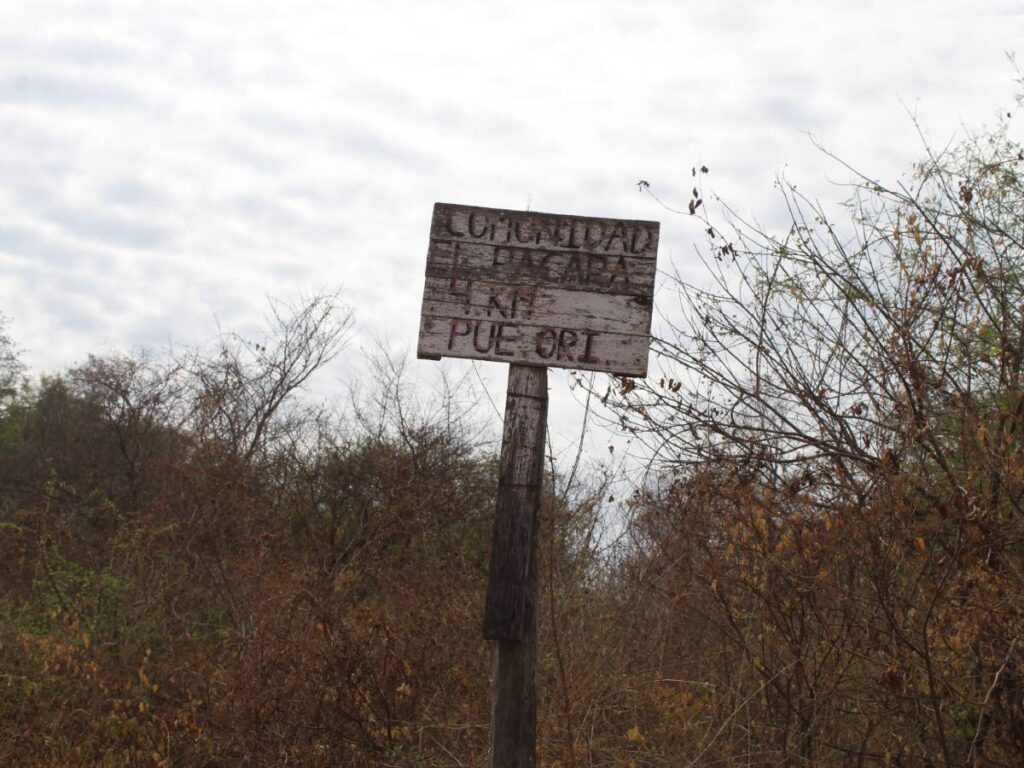
Starting from Tartagal, it's a long journey to reach Pacará. First, you take National Route 86, which is unpaved, then a local road until you finally reach the faded sign marking the entrance to the hamlet, several kilometers inland.
Seven large mistol trees frame the entrance to the central group of houses belonging to the 70 families that make up Pacará. The cool shade of the trees offers a respite. “This is the second Pacará. The first one was on the banks of the Itiyuro River and it was displaced by flooding,” explained Cresencio Miranda, one of the few residents who agreed to speak.
He'll also say, as the conversation progresses, that there's nothing there that can generate any income. Except cutting down trees and selling the wood.
At first glance, Pacará doesn't seem any different from other towns in this area, located on either side of National Route 86, which extends into the province of Formosa. In this case, the only thing that sets it apart is the young mother who died.
Her family also declined to speak to reporters. They are still reeling from some of the publications. Furthermore, “her father and the entire family say they can't do anything anymore because she's gone,” Basualdo stated. They are a religious family and “now they seek solace in prayers.”
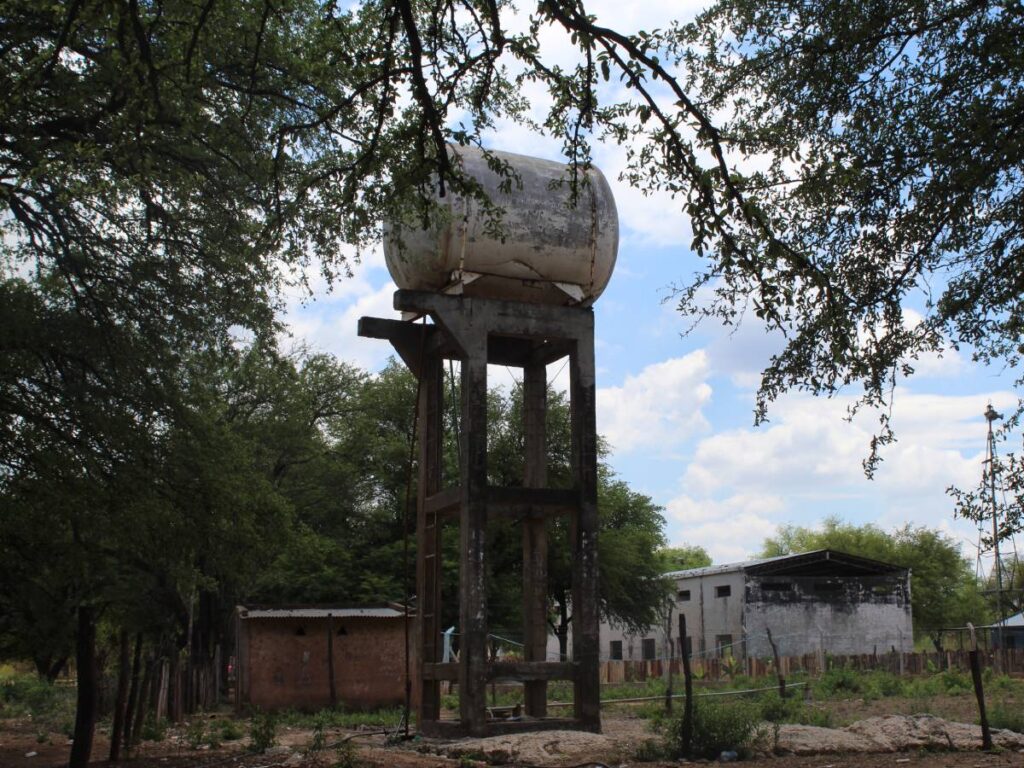
Photo: Mariana Ortega.
A hospital of its own
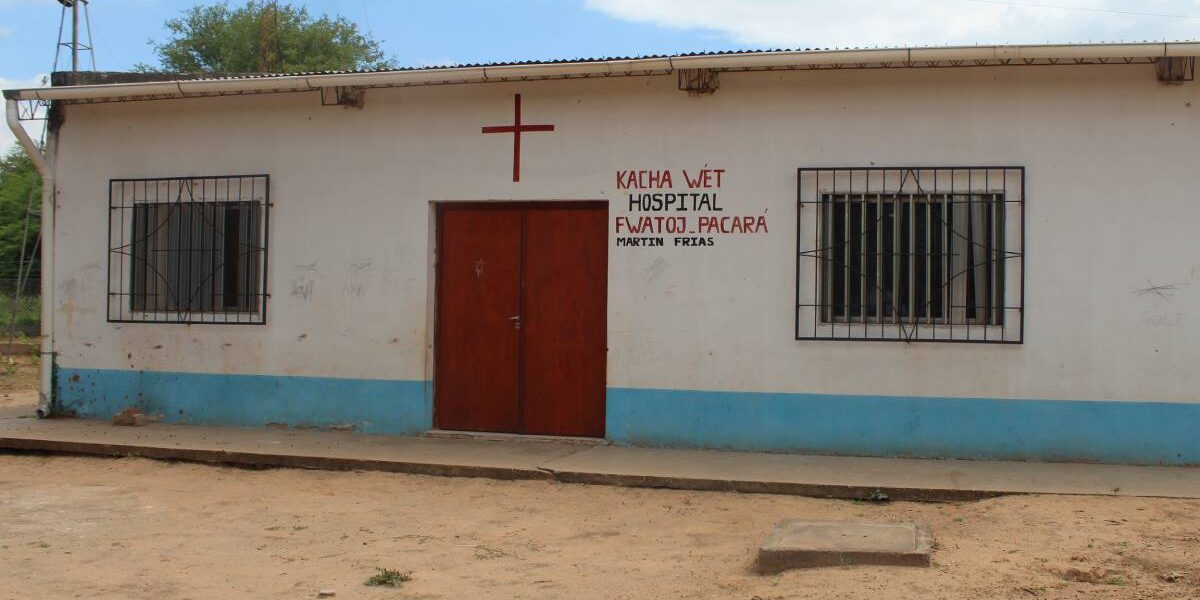
Basualdo said that in Pacará (or El Pacará, as it was originally called) there is a hospital, which only opens when the nurse in charge, who lives in Tartagal, comes. The "little clinic," as he calls it, doesn't have an ambulance, and the nurse "is sometimes not even there. He comes whenever he wants, Monday through Friday."
There's also a VHF radio in the room, but it's unusable if the nurse isn't there because only he has the key. "They say there were ambulances for this health center, but they never arrive," he says.
The ward is located within the healthcare service area of the Juan Domingo Perón Hospital in Tartagal. Since the nurse does not have his own transportation, he relies on the hospital's vehicle to get there. He is also limited by road conditions.
Staff shortage
The community has been urging the Ministry of Public Health of Salta to appoint another nurse. The position already has a name: Rosalía Galarza, 25 years old.
She is the only member of the community with a university degree. Her house is right across the street from the health center.
With her little daughter clinging to her legs, under the cool shade of the mistol trees, Rosalía emphasizes the need for a health worker in the area. “Just today, a one-year-old baby is vomiting,” she said. Since the nurse wasn't there, she took care of him.
When she learns the reason for the visit, Galarza explains that there is currently a 14-year-old girl who is pregnant and has decided to continue the pregnancy. She clarified that it is very difficult for her to access prenatal care, just as happened with the 13-year-old girl.
Until recently, Dr. Miranda Ruiz used to come to the area to perform checkups. But she stopped after a campaign launched against her by anti-rights groups because she was the only one in this large area of northern Salta who guaranteed the right to a legal abortion.
On the other hand, the Pacará hospital is the center of care for the inhabitants of the indigenous communities of Tonono, Monteveo and Arenal, and the Creole population of the El Sauzal area.
Galarza submitted all the necessary documentation for the position last August, and the Minister of Health of Salta, Juan José Esteban, promised to appoint her. They are still waiting.
As a community representative, Basualdo said he plans to speak with other leaders along Route 86 to promote the installation of a "large hospital" there where the residents of that area can be treated.
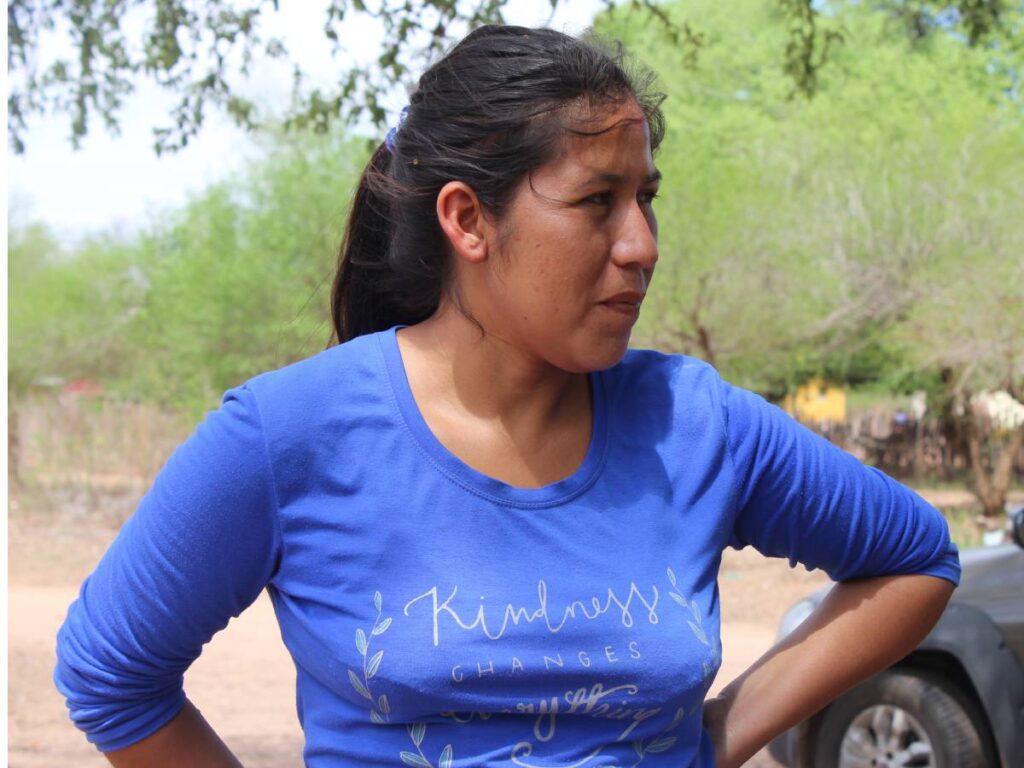
Photo: Mariana Ortega.
Ancestral culture and intermediaries
“They say it’s part of the Wichí people’s ancestral culture that girls begin their sexual lives after their first menstruation. What I know is that it’s not part of our culture,” Basualdo asserted.
She recalled that her grandparents' custom dictated that neither men nor women should marry before a certain age. They had to demonstrate the ability to support themselves, gather fruit, and hunt in order to begin a life as a couple and have children.
“Ancestrally or culturally, that’s how it was. Once you have your period, it’s the beginning of sexual activity. What happens is that later, due to all the changes that come with it, many parents and married couples prefer that their daughters not get pregnant so early or not get together so early, for many reasons. But this, as an ancestral practice, was like that. Like a rite of passage to another stage of life, to the possibility of participating in celebrations and rituals,” explained anthropologist Leda Kantor, who lives in Tartagal and has worked with indigenous communities for years, Presentes
Kantor agreed with Basualdo that becoming sexually active was one thing, and motherhood, which generally began at a later age, was another. "In general, women and men got together much later, that is, at 19, and only then did they have children."
Contrary to what some school textbooks claim, indigenous peoples are alive and their ancestral culture is inevitably mediated by the all-encompassing "white" world.
She also points out that with all the changes, some parents prefer to wait a while before starting sexual activity. “The old parameters are no longer clear. Often, young people want to get together at that age, and I think they feel they aren't mature enough to do so. Everything unfolds, then, within a context of enormous tension between what actually happened and the cultural transformations that have taken place.”
This mixture of local customs and "white" customs creates confusion. "People also try to prevent (sexual relations and early pregnancies) because they know it can be reported. Anyone, even a teacher, can report it, and the report is for abuse. There are a lot of elements that are also putting what little remains of our own system, of our own culture, into crisis."
In fact, in this case the Salta Justice system intervened, not to investigate the fall of the stretcher and whether this was the cause of the fatal outcome, as his relatives say, but because of the alleged sexual abuse, in order to determine whether it is appropriate to criminally charge his partner, also a minor.
Judge Sandra Sánchez ordered that an anthropological expert report be prepared, to be carried out by an expert from the Court of Justice of Salta.
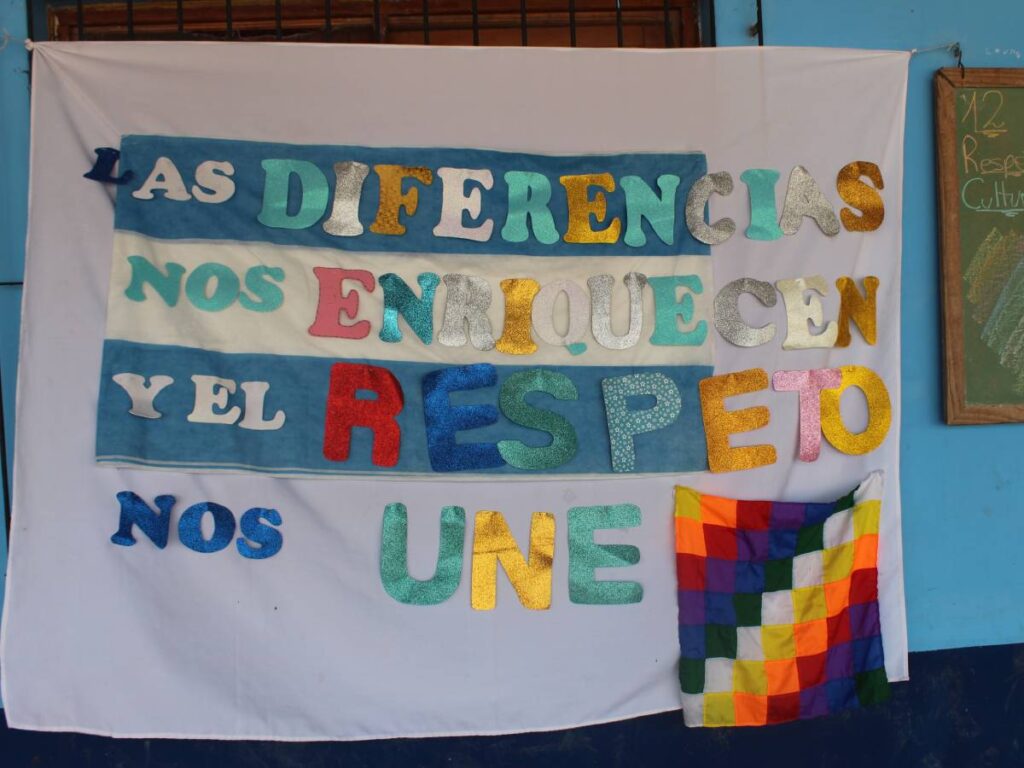
Photo: Mariana Ortega.
Access to healthcare, again
That death, Leda Kantor said, “is related to the fact that their entire system has also broken down. Because the Wichí, like all peoples, have always had excellent midwives, and they have successfully delivered babies. And in this case, the little girl suffers a whole series of accidents during the transfer.”
It is difficult for births to be attended by their own wise women, because if the child is born at home, they no longer have a live birth certificate and as a result, their family will not be able to request a birth certificate either.
Then he will not be able to access the national identity document, which in the future will prevent him from accessing any other State service.
Seen from the city and speaking the dominant language, it might not seem so complicated. The perception changes when viewed from the perspective of the communities: traveling along dirt roads and with no means of transportation other than one's own feet or a bicycle, it is difficult to reach the urban Civil Registry offices and difficult to process paperwork in a language and system that are not understood, or are only partially understood.
“It’s a long way to hospitalization,” the anthropologist stated. But it’s not just any hospitalization, she clarified. “It’s an absolutely remote healthcare system, not only because of the distance, but because of everything. It’s distant, it’s inaccessible, and until they reach Pacará, it’s incredibly far away.”
“So, first you take away their own system, you break their own system, but what do you leave them, what do they have left, what do they have of their own? And it is this. It is terrible that there is the death of another girl like this,” Kantor lamented.
Land and other urgent matters
Pacará is a community deeply influenced by religion, Anglican in this case. Its president, Basualdo, emphasizes that they do want comprehensive sex education to be taught at School 4276 “Escribano Héctor Juan Saa,” which is located right there, around the corner from the hospital.
The four teachers are white, two men and two women. But there are also three bilingual teachers from the same community , the principal, Francisco Vaca, told Presentes . The white teachers live in Tartagal and come every day, weather permitting.
Enrique Basualdo, José Galarza, a bilingual teacher and community leader, and Eleuterio Basualdo, a former chief, now president of the United Wichí People Territorial Organization of Argentina Route 86 Río Itiyuro, are more concerned about the lack of work and the uncertainty regarding the ownership of the territory they occupy, which they see shrinking at the pace of the advance of agricultural and livestock activity.
Towards the end of the conversation, Enrique returned to the point made by the young Cresencio Miranda. There are many hardships in the community: they have no electricity and water is scarce, coming from a well with a pump whose fuel is paid for, as a contribution, by the agribusiness company Desdelsur SA, whose fences border the indigenous territory.
“We are being discriminated against,” he concluded.
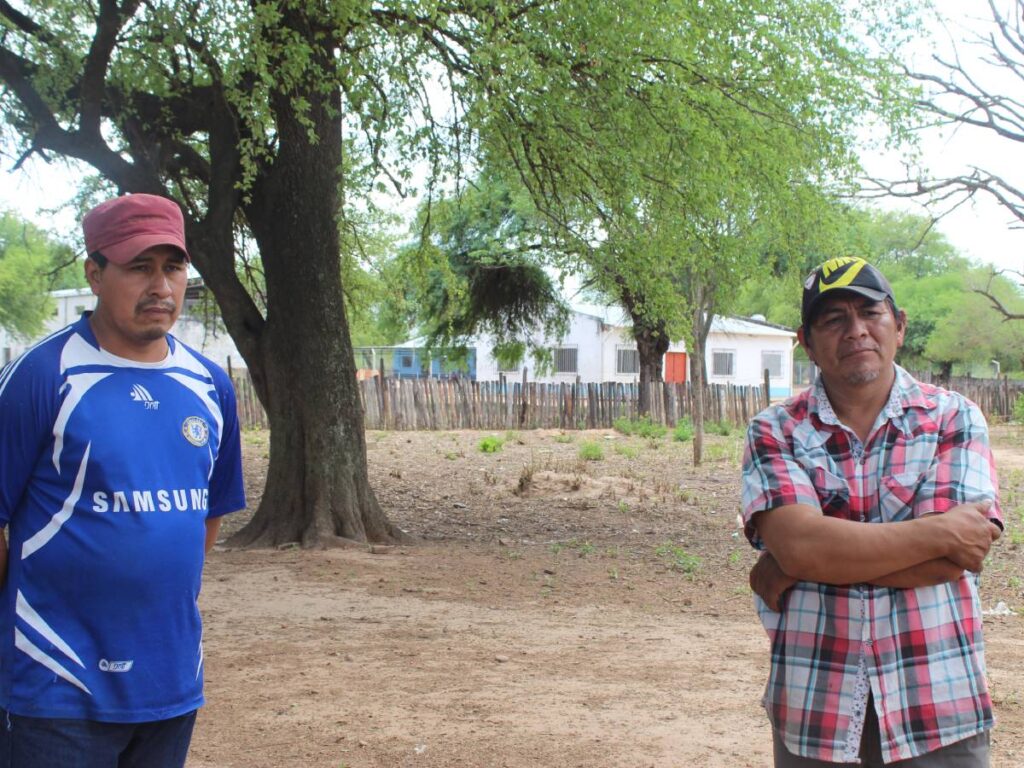
Photo: Mariana Ortega.
We are present
We are committed to journalism that delves into the territories and conducts thorough investigations, combined with new technologies and narrative formats. We want the protagonists, their stories, and their struggles to be present.
SUPPORT US

FOLLOW US
Related notes
We are present
This and other stories are not usually on the media agenda. Together we can bring them to light.