

Paula Trama, a profound universe of urban music and poetry
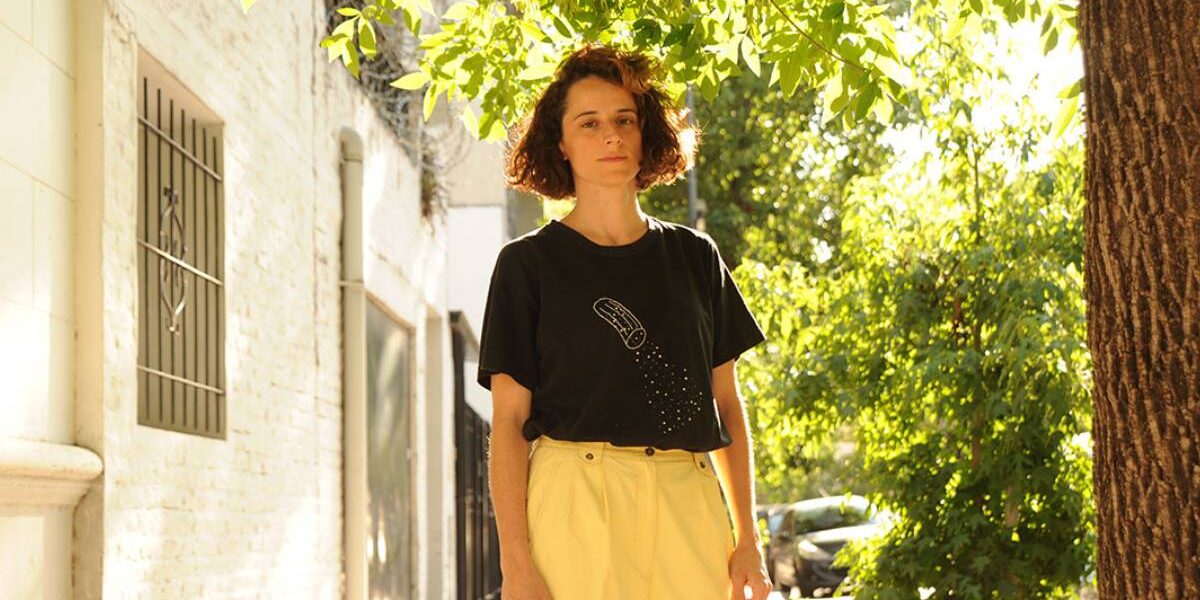
Singer, songwriter and poet, Paula leads Los Besos, one of the young bands on the Argentine music scene.


Share

The scene at a Los Besos , the band led by Paula Trama, is usually the following: the ever-growing audience of fans looks expectantly at the stage. They begin to chant for the band.
The first thing the audience sees when the band finally approaches the stage is their costumes, designed by Federico Castellón, always different, always coordinated among all the members of the group, always brilliant; literally, full of glitter.
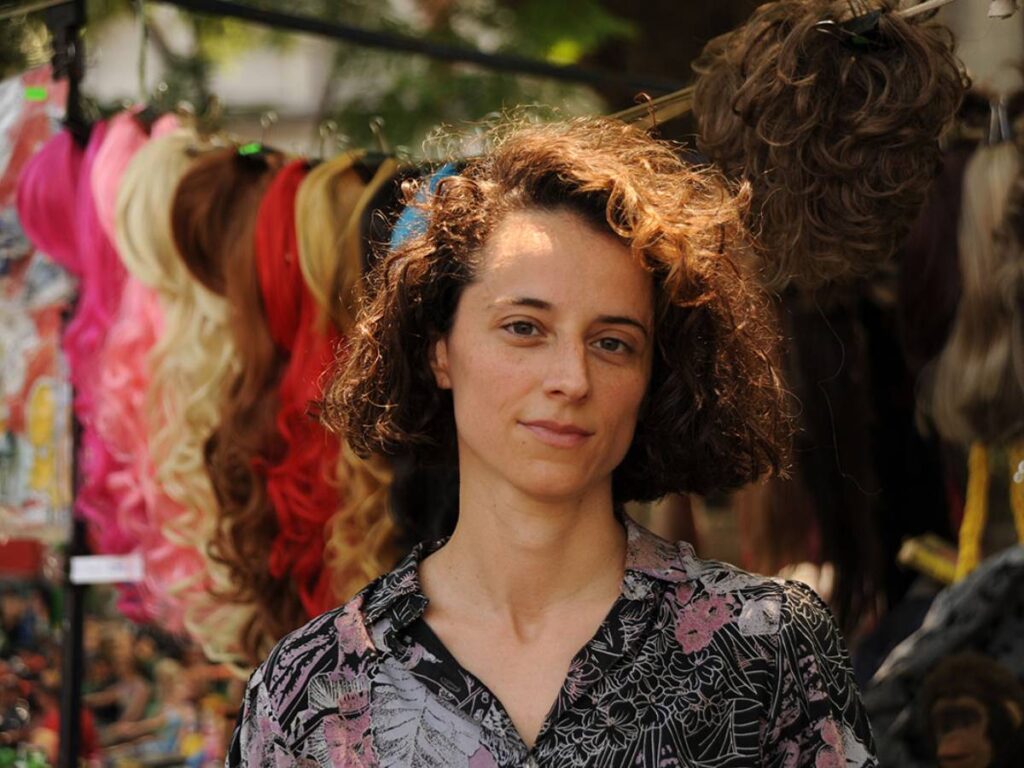
The first chords sound and it's official: we're transported to an eighties musical universe, rock and pop at the same time, with catchy melodies and sensitive, poetic lyrics. Because, as Paula Trama will tell us in the interview with Presentes , danceability doesn't preclude introspection.
No one who sees Los Besos live can deny that they are a true dream team , a group where each member perfectly embodies and transmits the band's spirit . And yet, the band came about almost by accident.
In 2010, Paula met Federico Fragalá, now one of the band's keyboardists, who mastered her first solo album, AAAAAAAAAAA . Federico introduced her to Rodo, the drummer, and then they teamed up with Sebi Rey, the current bassist.
They rehearsed at Fede's grandmother's house, around the corner from where Víctor Rallis lived. Víctor dropped by the rehearsal, and kept coming back until he knew all the songs and sang the choruses under his breath; that's how he became the band's current backing vocalist and trumpet player.
Fede started playing more shows as a keyboardist, and at one of those shows they met Dante; that's how he became the current sound engineer and producer. Peta was the last to join, and Rodo, who had a tendon injury, was replaced by Ariel Chisleanschi on drums. “I'm piecing together how it all came together, and it has more to do with friendship than anything else,” Paula told Presentes . “I feel like the songs were the magnet, attracting people who got hooked on the tracks.”
This week, the band released their new single "En la arena," featuring Roki Fernandez as a special guest on electronic percussion, and cover art by Mendoza-based artist Constanza Giuliani.
–How would you define the music of Los Besos?
-I'd say we make catchy songs. Songs in the traditional sense of the word, and catchy in the simplest sense: songs you can remember, songs you can sing along to. It's about the idea that simple isn't silly. We're that thing that's there but no one's ever said before, and it's really easy, it's something you experience every day. I love that idea of a simplicity that makes you think.
– Do you always compose the songs yourself?
– Yes, I compose the lyrics and harmonies. Then there's time to work on the arrangements and structures during rehearsals, and that started to change during the pandemic. Peta and I began working on the songs more collaboratively, and that's when productions emerged that are more focused on instrumental tracks, composed using non-analog technology. These are the more pop-oriented, danceable songs that are coming out now, reflecting this new production process, which was entirely remote. For "Modo Avión" (Airplane Mode), which was the first song we produced during the pandemic and had been written before it, we recorded everything separately, and that's how the song was released, produced remotely.
–What was the band's experience like going through the pandemic?
"It's strange because at our current shows, half the people who come up to us say they discovered us during the pandemic . For me, it has to do with a certain introspection in the songs. I feel that there's something about that introspective appeal that intensified during the pandemic and reached new ears because of that situation, which has to do with a different kind of listening. I feel that people also read more lyrics.
– Besides writing songs, you also write poetry. What difference do you see in the writing process between the two?"
When I'm writing poetry, I experience a very strong sense of completeness when working with the text. I feel that what I'm looking for is right there. There's also a very different emotional state, much more focused on thought. When writing music, the energy is very dispersed between the action, the power of the phrase, the feeling that lies between the phrase, the words, the sound… there's a clear sense of incompleteness in the text that is finally filled and made meaningful by the musical gesture. It's like the feeling of preparing to sleep or preparing to eat. That feeling of sleeping makes me think of writing poetry. The body shuts down in a sense, while a whole area remains ablaze.
– Like something dreamlike? Like the encounter with oneself that happens in sleep?
– I don't know if it's oneself. I think there's something there about getting lost. Getting lost is a constant in poetry or musical writing; I feel like I never work with the self. When I get fired up, it's because I'm as if I'm diluted among things, people, and I like trying to work with that disorientation. But yes, what you say about the dreamlike as its own language, as a language that doesn't have the logic of everyday language. I also think that music itself has a personal gesture that carries the words like a cart. Today I pick up a song and say, "This phrase doesn't have that much power," but the cart that carries it gives it a particular power. And sometimes in poetry there's a phrase that, beyond how you say it, is already incredible, it doesn't matter who says it. Maybe someone who has never read poetry says it, and any voice that says it already has some kind of power.
– When you write, do you set out to write about something in particular?
-No. I think my inclination towards writing, whether musical or not, is a kind of moment where I'm not really aware of it. It's more like a kind of luck. Like when you bump into someone. Like this feeling: the other day I was walking down the street with a friend and suddenly I looked up and saw a dog on a balcony. It was some friends' dog, Milanesa. And she started barking and suddenly I realized I was on the same block as my friends, who then showed up a little drunk and threw a couple of cans of beer at me from their balcony; I was really thirsty. That's like writing a song. The feeling is like: "how lucky."
– How did you experience the whole trajectory of Los Besos? What was that transition like to becoming the band with a wider reach after "Copia Viva"?
-Everything was a surprise overall. A beautiful surprise, because the growth was very organic, very slow. We moved in small cultural circuits that gradually disappeared. And at some point, it reached people we knew who were friends of friends, and we couldn't even figure out where they were listening from. I think "Helados Verdes" was the first song that started to happen. That was the year I met Ine, and her career and musical journey drew me much deeper into music. With Copia Viva , the whole idea of the book documenting the band's journey also came about, and what happened with that object was very interesting. It circulated a lot, and the songbook made sense to us; it wasn't just merchandise. It was very significant and helped us reflect on the band. Shortly after, we also met Pame Catalina, who became our new producer and friend, and she started to bring a more organized, more thoughtful approach to our work. I think that's when the process of growth and continued self-reflection really took shape.
The danceable aspect doesn't preclude the introspective one
– You are a representative figure as a lesbian musician in the underground scene. What do you think is the importance of that existing today?
-It's very important, especially for people who might listen to a song on YouTube or Spotify , but in their own environment it's something forbidden, or still frowned upon. I feel that the internet has a kind of cultural ghetto through which this sort of "culture of the future"—and I use that term loosely—reaches many places, but life is still very complex in those places. In that sense, I think it has a very interesting social function.
– What's it like working with Susi Pirelli, your musical duo with Inés Copertino?
-It's very different from the space with Los Besos. We started recording when we were already together. When we met, it was like a break to meet at the computer where Ine was producing; I'd show her songs and we'd work on them together. It was like part of our romantic encounters; waking up one day with an idea and recording it. That changed, especially during the pandemic, because we were living together, so suddenly it was all Susi Pireli. What was a bit more tiring was sitting at the computer because everything was on the computer during the pandemic. So we started composing, but we didn't want to focus on producing. We ended up with a lot of songs produced for when we wanted to get hooked on the screen. And now that life has returned a bit, that spirit has returned a bit. With Susi, anything can happen musically. It's more like laughing our heads off, playing around. Not because we don't play around in Los Besos, but because in that case there's more of a musical encounter, a rehearsal.
– What do you think was the role of music in this end of the world?
Perhaps the most amazing thing about music is that, as a poet once said, it's a kind of pill or capsule containing a series of modified emotions and experiences. The song passes them on to you, transmits them, you live them and experience them; you travel through time and space with that emotion. Then it ends, and you can be affected by something else. I think the role of music is to educate us in this feeling that emotions can be experienced and are fleeting, to have a breadth and a kind of plasticity for that. It's always necessary, and I feel it's one of the most beautiful things about music, but at that time when we weren't experiencing much or were constantly experiencing anguish, it was a way to keep that emotional body active, to experience things that weren't just what was happening to you. In music, as in literature, you go through the lives of others as if they were your own, and there you encounter problems that affect you, even though they are someone else's problems.
On Thursday, January 13th at 7pm, Los Besos, along with Marilina Bertoldi, will open the season at Parador Kónex, in Ciudad Cultural Kónex, Sarmiento 3131.
We are present
We are committed to journalism that delves into the territories and conducts thorough investigations, combined with new technologies and narrative formats. We want the protagonists, their stories, and their struggles to be present.
SUPPORT US

FOLLOW US
Related notes
We are present
This and other stories are not usually on the media agenda. Together we can bring them to light.