

The transfeminicide of Thalía Rodríguez shocks the LGBTI+ population in Honduras
Thalía's murder is the first violent LGBTIQ+ death of 2022. It is also the 402nd since the transfeminicide of Vicky Hernández in June 2009.


Share

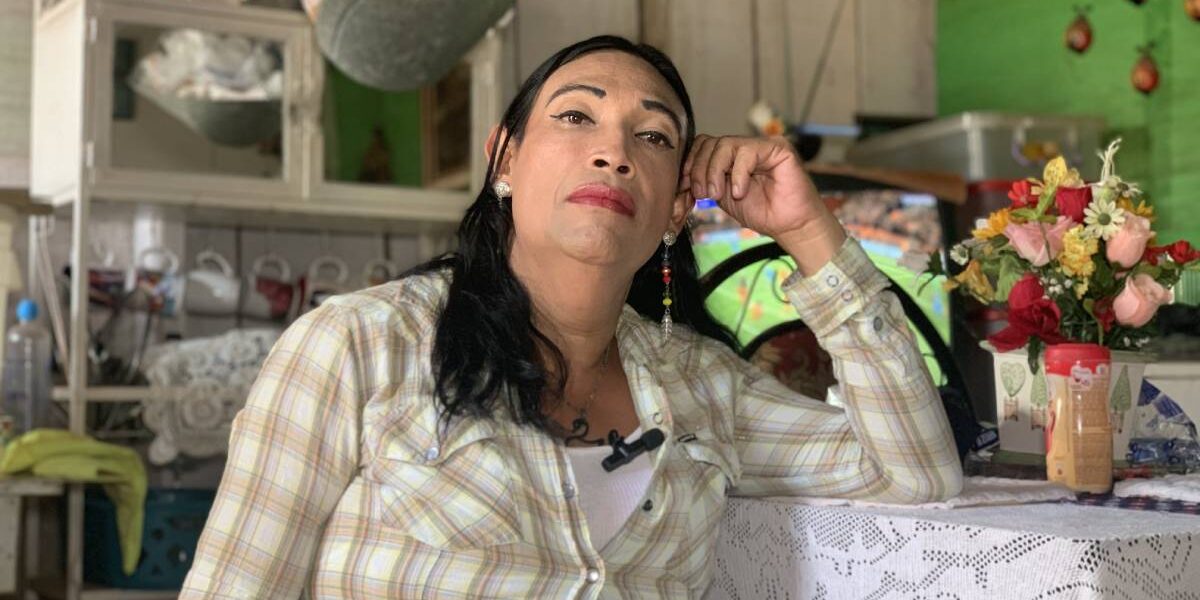
HONDURAS, Tegucigalpa . “I’m scared, come help me” were the last words of trans leader Thalia Rodríguez, 45, before two men murdered her on Monday at 11:30 a.m. with several shots to the head while she was at her home, on the slopes of Juana Laínez hill, south of Tegucigalpa, Honduras.
Her partner Walter, who was with Thalía at the time of the attack, suffered gunshot wounds to several parts of his body, but survived. An ambulance transported him to a hospital for treatment.
Forensic personnel removed Thalía's body from the house. Meanwhile, several police officers secured the area. In addition to the trans activist, other people were in the house, none of whom were injured in the shooting.
Thalía was wearing a white shirt when she died, according to Cristian Nolasco, spokesperson for the Directorate of Police Investigations (DPI) , who added that the removal of the LGBTIQ+ leader's body took place between 1:00 and 2:00 p.m. It was a "homicide by firearm" in which Thalía "died at the scene," Nolasco said. He added that Thalía lived in a common-law relationship and was originally from Olancho , in eastern Honduras.
Thalía, born in 1976 and a resident of Tegucigalpa since the age of two, had long worked in defense of the rights of trans women.
Furthermore, she was recognized as a leader by the community where she lived, on the slopes of Juana Laínez volcano . Her neighbors would greet her cheerfully as she walked along the steep streets of the neighborhood. Thalía was also known for her work advocating for the legalization of land titles in the neighborhood where she lived.
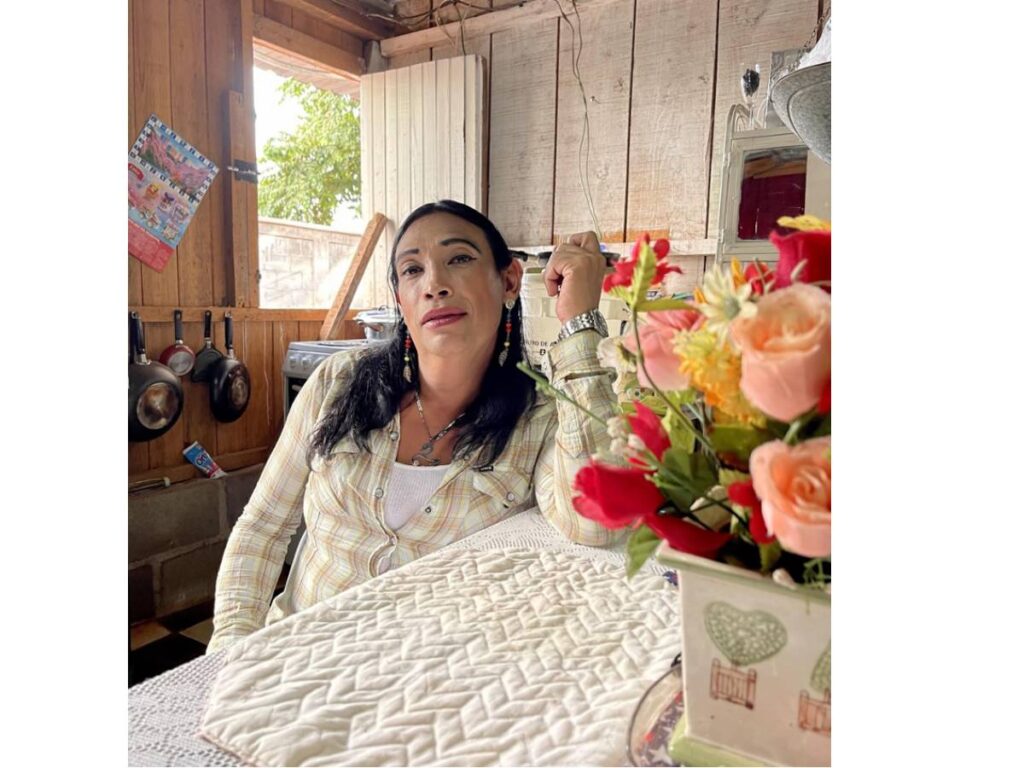
A leader recognized by the trans community
“We demand that the new president, Xiomara Castro , speak out about the murder of Thalía Rodríguez and show her commitment to building a more inclusive Honduras,” said Indyra Mendoza, coordinator of the Cattrachas Lesbian Network , regarding the murder of the well-known trans activist.
Thalía worked with the organization Cattrachas and volunteered with Cozumel Trans , among other LGBTQ+ advocacy groups. Cattrachas is one of the most recognized human rights groups in Honduras, where it has achieved remarkable successes.
One of those achievements was the condemnation, in mid-2021, of the Honduran State for the murder of trans activist Vicky Hernández, who died on June 28, 2009, during the curfew imposed by the coup that overthrew Manuel Zelaya.
“Thalía had been fighting for many years for the trans community in Honduras to have rights,” said JLo Córdova, trans association Muñecas de Arcoíris (Rainbow Dolls
“She was a warrior because she always fought for our rights. We condemn and repudiate her murder. No more hate crimes against our community. We are outraged by this vile murder,” Córdova added.
Entrepreneurship saved her
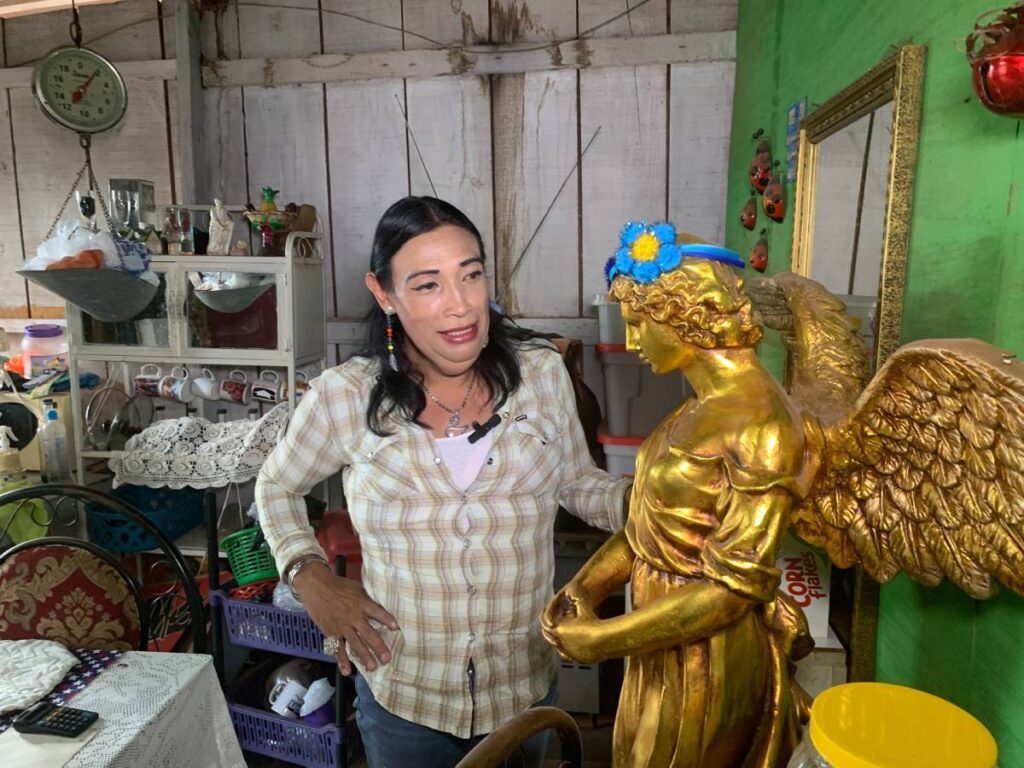
Thalía was one of the few trans women in Honduras who owned their own business. For over a decade, she ran a grocery store in the neighborhood where she had lived for nearly 30 years. Her business allowed her to leave sex work.
Just over a year ago, Thalía had to close her small shop made of white planks on the historic Juana Laínez hill due to debt, low sales, and problems stemming from the coronavirus pandemic. “It wasn’t easy, but it wasn’t impossible either” to keep her business going for so long, she confessed in one of her last interviews.
Thalía lived surrounded by her beloved dogs in one of the many impoverished areas of Honduras, where seven out of ten families live in poverty. That is, 74%, according to the National Institute of Statistics (INE) . Despite the precarious situation in which all trans women live, Thalía was able to maintain her optimism.
“There is still a long way to go. But I think that the new generations, through everything that has been achieved with the State, that ordinance that is given, that demand, there will be justice,” he said in an interview at the end of 2021.
“If the new generations of trans girls don’t take advantage of this, it’s because they don’t want to. Because there’s already a door that says ‘welcome’ to them. If that door had been there for me, what wouldn’t I have given? But there was nothing but beatings, psychological, verbal, and physical violence.”
The first LGBTIQ+ murder of the year in Honduras
The violent death of Thalía Rodríguez becomes the first murder of an LGBTIQ+ person in 2022 in Honduras.
Furthermore, with this bloody event, the number of murders against sexual diversity in the country since 2009 , the year of the transfeminicide of activist Vicky Hernández , committed during the curfew imposed by the coup d'état that overthrew the de facto government of Roberto Micheletti, reaches 402.
“It’s outrageous to start the year with the murder of an icon of the trans community,” said Eric Martínez, a member of the Diversity in Resistance Movement . “I met Thalía more than 20 years ago. Her commitment and solidarity with her trans peers were remarkable. She never boasted about her work. On the contrary, she did it selflessly and with humility. It infuriates me to know that the politics of hate implemented by the narco-dictatorship continue to claim lives in the country without investigation or accountability.”
Justice demanded for Thalia's death
LGBTIQ+ human rights organizations across the country protested the murder of trans leader Thalía Rodríguez.
“We demand justice for the terrible murder of Thalía Rodríguez,” the Cattrachas Lesbian Network wrote in a statement on its Twitter account. Thalía worked “for more than 20 years” as a “human rights defender, an advocate for the rights of LGBTI people and people living with HIV,” it added.
Regarding the investigation to find those responsible for the murder of the trans leader, police spokesperson Cristian Nolasco clarified that “first, all the work at the crime scene and the analysis are done. This case will be handled by a national violent crimes task force funded by the [United States] embassy to conduct a swift investigation.”
Meanwhile, Rihanna Ferrera, coordinator of the Cozumel Trans Human Rights Association, also spoke out about Thalía's death. “We condemn the murder of our colleague and leader of Cozumel Trans, Thalía Rodríguez. We demand justice,” Ferrera said.
“It’s a hate crime. No one has the right to take anyone’s life. The trans community is in mourning. We never imagined that ten days before the start of 2022 we would begin like this,” Ferrera lamented.
Furthermore, Cattrachas pointed out that the murder of the trans activist in Tegucigalpa “demonstrates how the State of Honduras does not protect LGBTI people, failing to comply with the decision of the Inter-American Court of Human Rights for the murder of Vicky Hernández.”
“This cannot be! Another trans woman murdered in Honduras! What a terrible start to 2022! Something has to change at all levels: prevention, justice, and culture,” said the UN representative in Honduras, Alice H. Shackelford.
Hate-filled coverage
Journalists and activists on social media condemned the hate-filled expressions by traditional media outlets that covered the event.
“If it were up to me, HCH wouldn’t exist. Her name was Talía Rodríguez; she didn’t have a nickname or alias, much less a pseudonym, as the supposed journalist who presented the story claimed. The use of quotation marks makes it clear there’s no respect. Sensationalists who don’t know how journalism is practiced,” said journalist Lizz Gabriela Raudales.
On the other hand, Wendy Funes, from Investigative Reporters , highlighted the work of independent journalism that tells other stories. “There is another way to tell the story of the cruelty that trans women experience without sensationalism or morbidity, but by portraying their humanity to put the murderers into perspective,” she said.
In more than 10 publications in traditional media, Thalía Rodríguez's gender identity and assumed name were not respected.
We are present
We are committed to journalism that delves into the territories and conducts thorough investigations, combined with new technologies and narrative formats. We want the protagonists, their stories, and their struggles to be present.
SUPPORT US

FOLLOW US
Related notes


We are present
This and other stories are not usually on the media agenda. Together we can bring them to light.