

The mural at the Mocha Celis trans, travesti, and non-binary high school in Buenos Aires was vandalized.
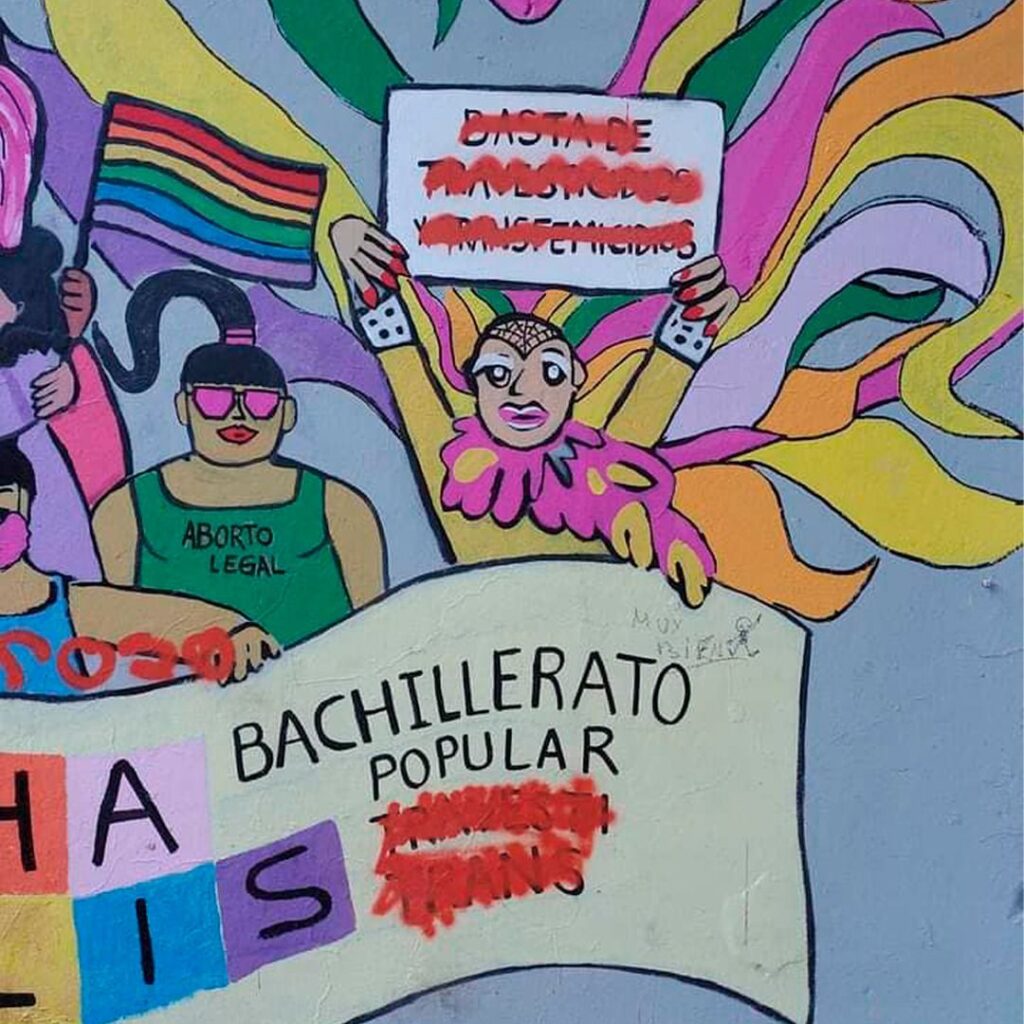
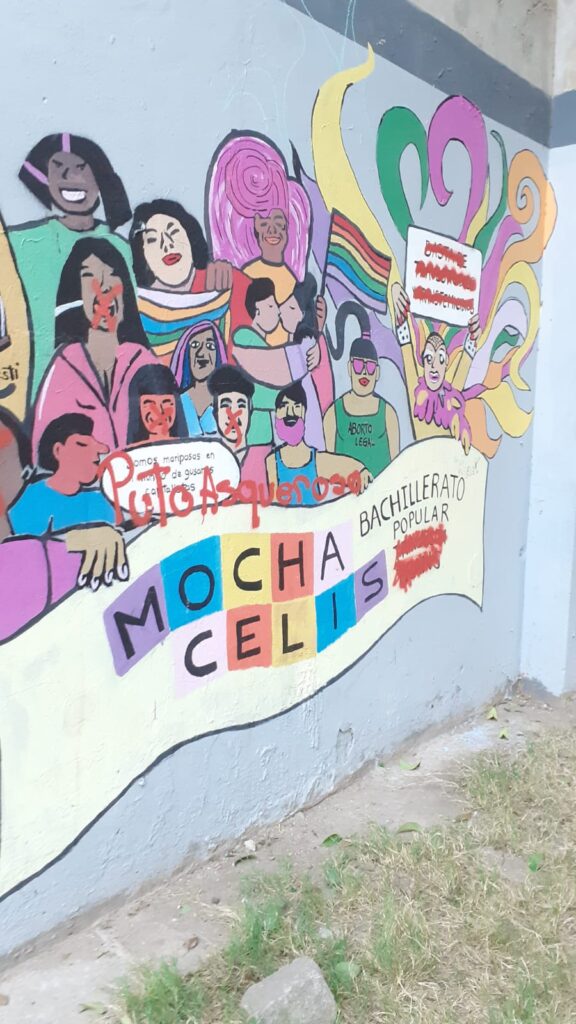
The mural that inaugurated the presence of the Mocha Celis Transgender Non-Binary Popular High School in the Balvanera neighborhood of Buenos Aires was vandalized this Tuesday in a "deplorable" act, which speaks of a "constant and latent violence" towards sexual diversity, the school stated.


Share

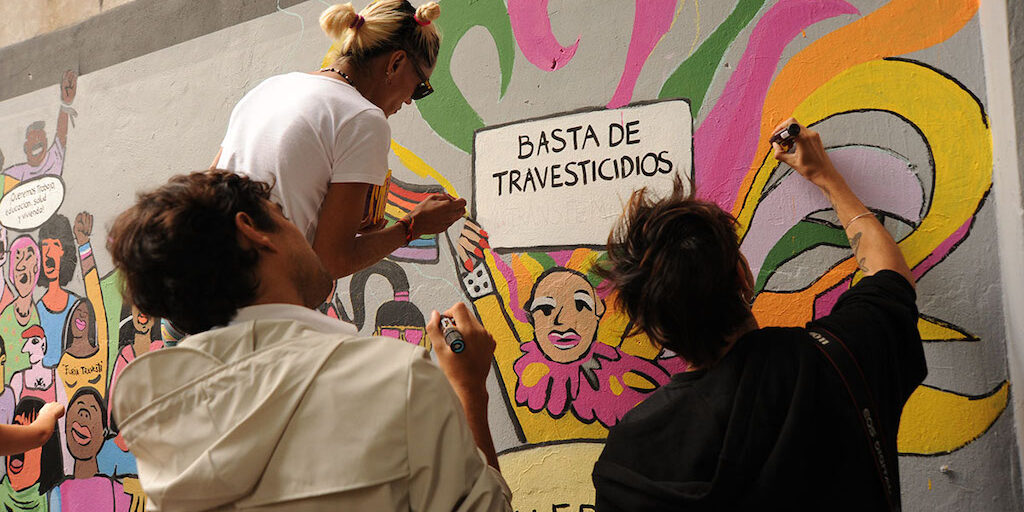
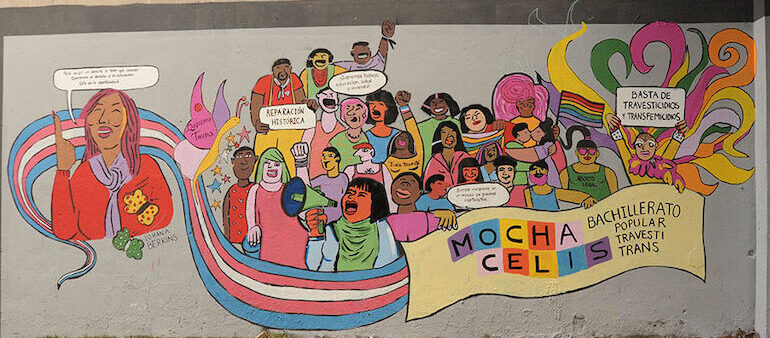
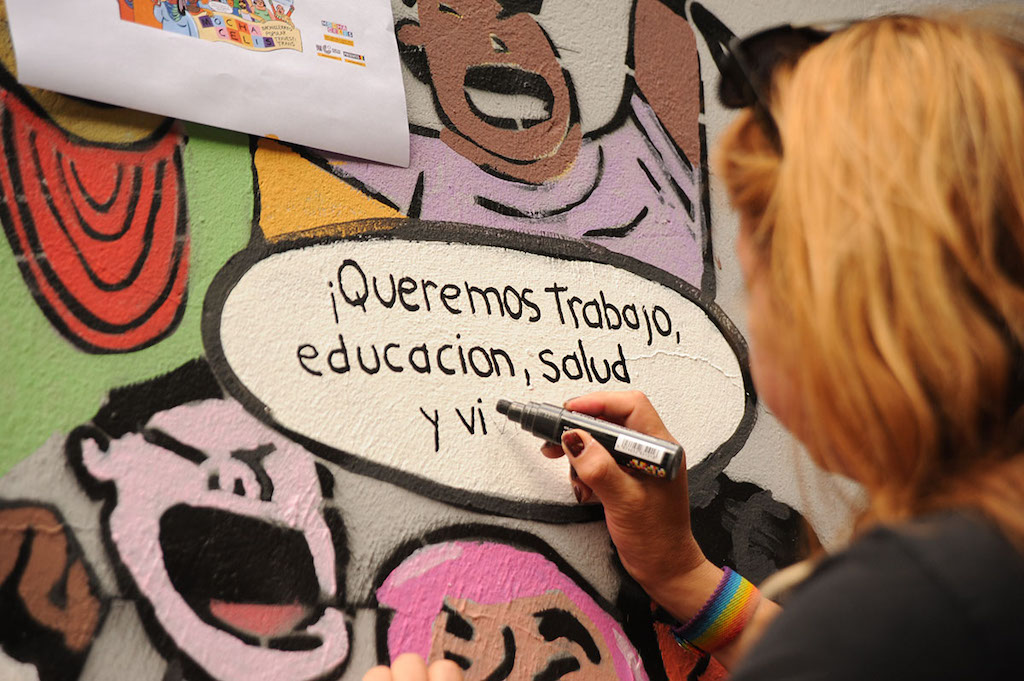
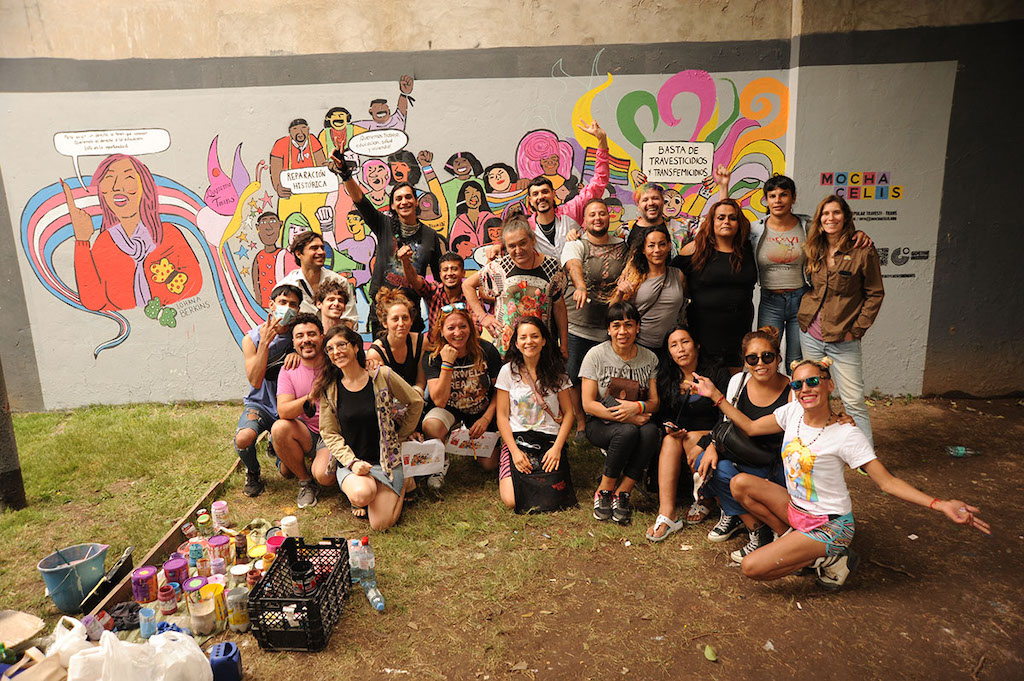
The mural that inaugurated the presence of the Mocha Celis Transgender and Non-Binary Popular High School in the Balvanera neighborhood of Buenos Aires was vandalized this Tuesday in a "deplorable" act that speaks to a "constant and latent violence" against sexual diversity, the school stated. The mural was created by students, alumni, and teachers on December 2nd and 3rd in González Tuñón Square, very close to Plaza Once. It was a way to celebrate the school's arrival in the neighborhood, where it will have its own building, and the institution's tenth anniversary.
“We understand that violence is a constant and latent presence in our existence, even when what we want is to build. Unfortunately, I must say that it is one of the most common things that happens to us. In recent years, the abuses by the security forces have not stopped, nor have the contempt, the dirty looks, the mockery. This is yet another mark that we are bearing as a collective,” Manu Mireles, academic secretary of Mocha, told Presentes when asked about the act of vandalism.
Right to public space
On this point, she continued: “Although there is a regulatory framework, public policies and organizations that do territorial work, we still have a great challenge ahead of us to be able to change this structure of patriarchal, sexist, transphobic, homophobic, lesbophobic domination that makes it unacceptable for many people to inhabit public space .”
Students and members of the high school, along with organizations, residents of the Balvanera neighborhood, and Agencia Presentes, came together in early December of last year and collectively created the mural . The action took place within the framework of the high school's tenth anniversary and also because it will have its own building in this neighborhood, although for the moment the location assigned to them requires renovations and they do not know where classes will begin in 2022.
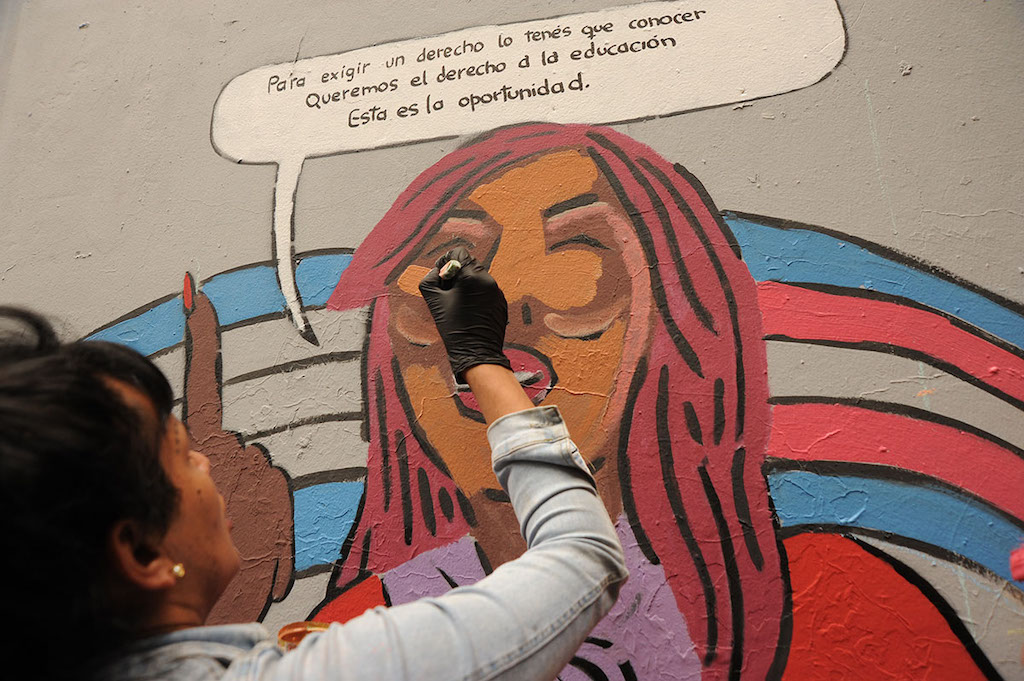
Visual artist and art teacher Ana Weisbeck coordinated the creation of the mural, which took two days. "During those days, neighbors came by and chatted with us, congratulating us, asking questions, and showing interest. That's why we were able to quickly organize a response when they saw the vandalism and notified us shortly afterward," Mireles commented.
Meanwhile, Florencia Capella is the illustrator who sketched the base of the mural, which was later enhanced by the students. The original drawing is part of a visual journalism piece that tells the story of Mocha Celis in comic book form . The script was produced with research and supervision by Mocha, along with Ana Fornaro and María Eugenia Ludueña, directors of Agencia Presentes. This piece was selected in the "Movements and Moments" Feminist Generation call for submissions to be included in a comic book anthology about Indigenous feminist activism and protagonists from the Global South , promoted by the Goethe Institute.
The attack occurred a month after the plaza's construction. The local government stated that it "must have happened during times when the plaza is not visible." They confirmed that they have "no information or record regarding who the perpetrator might have been."
“We deeply regret this. We believe we must encourage and emphasize these issues, and also that residents see this and commit to supporting these actions, because ultimately they speak to the possibility of diversity and coexistence we have within the neighborhood. It is important that this situation, which goes against the residents, their values, and coexistence, is not ignored,” Silvia Collin, president of the community board, told Presentes.
The reconstruction of the mural
From Presentes, we express: “The vandalism of the mural pains us and, in a way, brings to mind all that remains to be done. It pains us not only because of the enormous work carried out by the world's first Trans, Travesti, and Non-Binary High School for the past decade, but also because May will mark the 10th anniversary of the passage of the Gender Identity Law in Argentina, a pioneering and progressive law. These kinds of messages make it clear that the law is excellent, but on its own, it is not enough. We need more Comprehensive Sexuality Education (CSE) at all educational levels, and above all, public policies that aim for a comprehensive transformation and inclusion in all areas.” We also want to highlight two points: that this is happening in the City of Buenos Aires, which is often promoted as an LGBT-friendly space, and that we cannot lose sight of the fact that in recent times, the new right wing has gained ground in Argentina, and its hate speech has even achieved legislative representation.
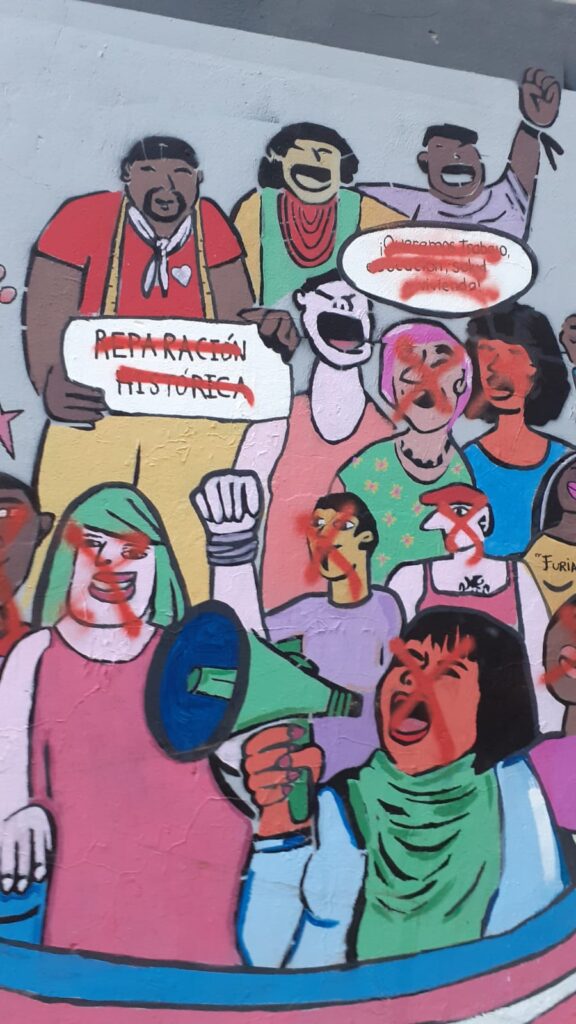
The Mocha Celis High School and Agencia Presentes intend to rebuild the mural. “We will surely respond with a celebration, with popular education, with a proposal that critically addresses and values dissent,” Mireles stated.
And she concluded: “For us, the mural is a very important symbol of our arrival in the neighborhood. An arrival that has to do with inhabiting public space from a perspective that incorporates art, community, the imprint of territorial work, and the love we have long dedicated to being part of generating meanings and significance that challenge the violent logic of the society in which we live.”
We are present
We are committed to journalism that delves into the territories and conducts thorough investigations, combined with new technologies and narrative formats. We want the protagonists, their stories, and their struggles to be present.
SUPPORT US

FOLLOW US
Related notes
We are present
This and other stories are not usually on the media agenda. Together we can bring them to light.