

The court upheld the eviction of the Mapuche community from Cuesta del Ternero: it ruled in favor of forestry companies
The court upheld the forced eviction of the Mapuche community by ruling in favor of the forestry companies claiming the land.


Share

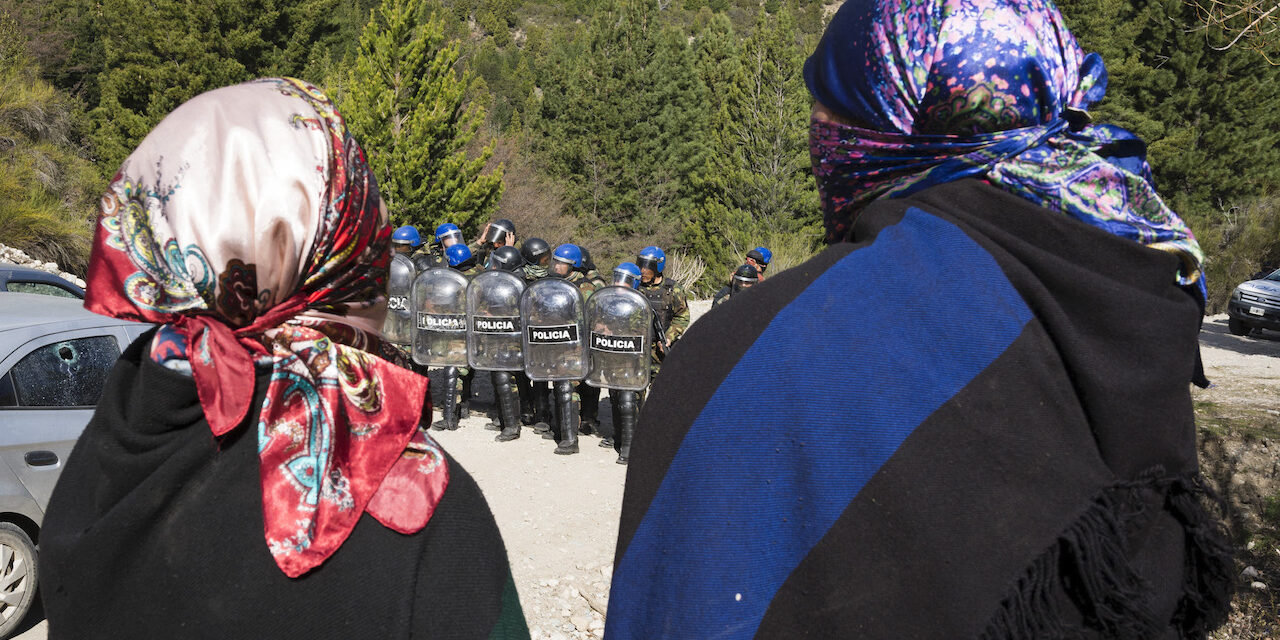
It all began on September 18th when the Mapuche community of Cuesta del Ternero, located 15 kilometers from El Bolsón, reclaimed a portion of the land they consider their ancestral home . There were violent eviction attempts, a police cordon that tried to break their resistance through hunger and cold, encampments, and solidarity caravans. The tension and violence escalated until November 21st when the young man Elías Garay was murdered and Gonzalo Cabrera was seriously wounded. Two businessmen linked to the alleged owner of the land, forestry businessman Rolando Rocco, are accused of the murder. This businessman actually holds a permit from the province of Río Negro to reforest those hectares by planting pine trees on the public land. However, he is the one who filed the complaint against the members of the Lof Quemquemtrew community, including several women accused of "usurpation."
On Monday, December 27, the appeal process began, initiated by Andrea Reile, the Lof's legal representative, to halt Judge Ricardo Calcagno's order for the forced eviction of the reclaimed territory. A 48-hour recess was declared that day to allow the parties to attempt to reach an agreement through negotiation. However, on Thursday, December 30, the parties stated in a hearing that no agreement had been reached.
"Key players are missing from the conflict"
At that hearing, Judge Gregor Joos stated that businessman Rocco is “a victim of dispossession, therefore the restitution of the lands is urgent .” Lawyer Reile, a member of the Argentine League for Human Rights , responded to the judge that he has the power to “ order the formation of a broader dialogue table , where a conflict that transcends the parties involved can be resolved.” The lawyer believes that “fundamental actors are missing from this conflict: the provincial and national governments; the Mapuche Tehuelche Parliament of the province, represented by Orlando Carriqueo; the INAI (National Institute of Indigenous Affairs ); and the National Secretariat for Human Rights .”
“The restitution order—the eviction issued by Judge Calcagno—is duly justified,” the judge stated. He added that “it does not imply a waiver of the Lof’s rights, but these rights fall outside the jurisdiction of this criminal court… The province must intervene to resolve the land ownership issue,” but through other means. “There is a body of national, provincial, and international law on Indigenous rights. Applying these laws does not imply accessing them through violence,” he said, alluding to the territorial recovery. In other words, he acknowledges that this Indigenous community has certain rights, but refers them to a different forum where its members already know they will not receive a response.
Identity and rights
There are numerous collective lawsuits and legal actions filed against the provincial government of Río Negro by various Mapuche and Mapuche-Tehuelche communities and grassroots organizations, such as the CAI (Indigenous Advisory Council), which have been stalled and delayed by the judicial system itself for over 10 years. “There is no access to justice for the Mapuche,” Romina Jones, a member of the Lof Quemquemtrew, had stated on several occasions in recent weeks before Judge Calcagno.
On December 29, the governor of Río Negro, Arabela Carreras, met with Pablo Pimentel, a representative of the La Matanza branch of the Permanent Assembly for Human Rights (APDH). He requested, on behalf of the Lof Quemquemtrew community and various human rights organizations in Argentina, the establishment of a Dialogue Table to address the conflict in Cuesta del Ternero. Orlando Carriqueo, the werken (spokesperson) of the Mapuche Tehuelche Parliament of Río Negro, was unable to participate in this meeting at the provincial Government House.
Pimentel emphasized that, while the provincial government committed to sending its Secretary of Human Rights, Dino Minieri, to meet with the Lof, this in no way constitutes a Dialogue Table. “There must be representation from agencies such as the Land Directorate, the Forestry Directorate, and the Human Rights Secretariat. Furthermore, the participation of the National Government through its relevant agencies is necessary to reach a solution regarding the land, which should also include the demilitarization of the territory and the participation of the Río Negro government to begin a good-faith dialogue leading to a definitive solution.” However, Governor Carreras says that the conditions for a Dialogue Table are not in place, unless mandated by the courts.
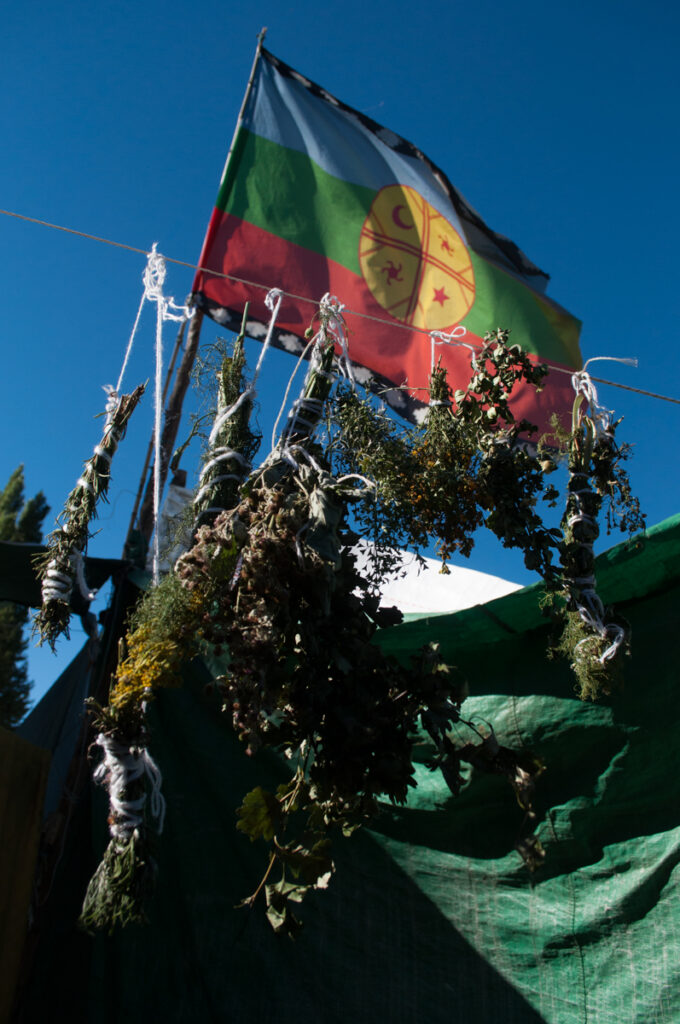
For his part, Carriqueo was received by the Minister of Government of Río Negro, Rodrigo Buteler. After the meeting, he said: “ You can’t resolve a land dispute with a private individual who isn’t the owner. And you can’t resolve a historical conflict between the State and Indigenous communities . The path forward is dialogue, which the Río Negro government refuses, and repression is unacceptable because it won’t solve anything.” The representative of the Mapuche Parliament discussed the matter with Minister Buteler. He argued that “ Argentine Patagonia and other countries are experiencing a social process where the right to identity is in force, where there is recognition of that identity, and a need for suitable and sufficient land .”
The voice of the Lof Quemquemtrew
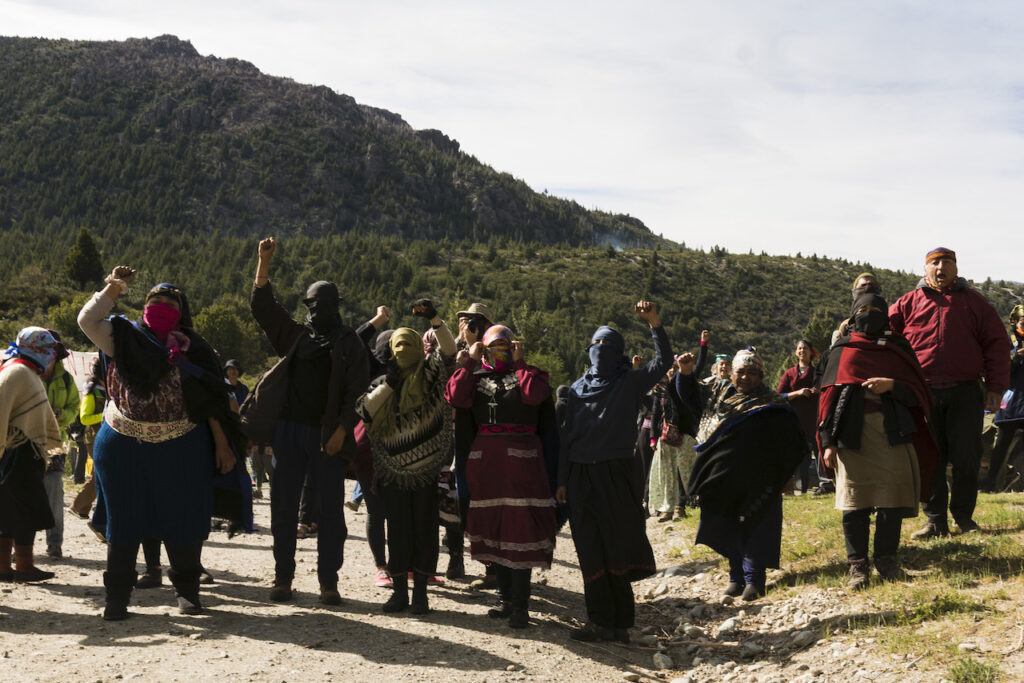
The Lof Quemquemtrew issued a statement declaring that “Rolando Rocco is a concessionaire, a front man for political power, who has no interest in reaching an agreement. He only wants us to be his slaves and for the government, with the help of the prosecutor's office and our defense, to obtain a property title for him.” They further stated: “Nothing will be resolved with him, since it is the province that hands over territories through shady deals. Once again, we tell the government that we are open to dialogue, but we will no longer tolerate manipulation, falsehoods, and perverse agreements.”
The community warned that “the territory will remain protected; the blood of our brother/sister was spilled there, and the government is responsible for what happened and also for what is happening today at the solidarity encampment and in the territory. They left a new mafia-style message on the road signs near the Lof, riddled with bullet holes.”
What happened at the El Bolsón Tourist Office
An act of vandalism overshadowed the community's demands with an attack on the El Bolsón Tourism offices on December 30th, where unknown masked individuals caused damage and left graffiti: “Rocco Murderer, Pogliano accomplice. If they evict Quemquemtrew, goodbye tourism.” The mayor of El Bolsón, Bruno Pogliano, condemned the incident, while those close to the community distanced themselves, understanding that these acts will be held against them under the governor's threat to apply the Anti-Terrorism Law, but that they had no involvement in them.
“It’s a lie that they recognize the indigenous law and the native peoples, all they do is kill them because they want to take everything, they want to make us disappear because we are the ones who put our bodies on the line to defend water and life, you are at the service of powerful people who don’t even give you a penny, they kill us all the time and they don’t care,” shouted a Mapuche woman through a loudspeaker at one of the entrances to the regional fair.
Fires, weapons and death
The Lof Quemquemtrew community began its process of territorial recovery after the 2021 fire that ravaged thousands of hectares of native forests and alerted the population of the Andean Region about the uncontrolled expansion of pine plantations into native forests. This species burns and rapidly spreads forest or interface fires (in populated wooded areas). On September 18, an official statement was issued to the general public, and those involved were immediately reported. On September 24, an operation to identify people turned into a violent eviction, resulting in four arrests. During this operation, two women, Ariadna Mansilla and Romina Jones, along with her 8-year-old son, were subjected to physical, mental, and spiritual abuse.
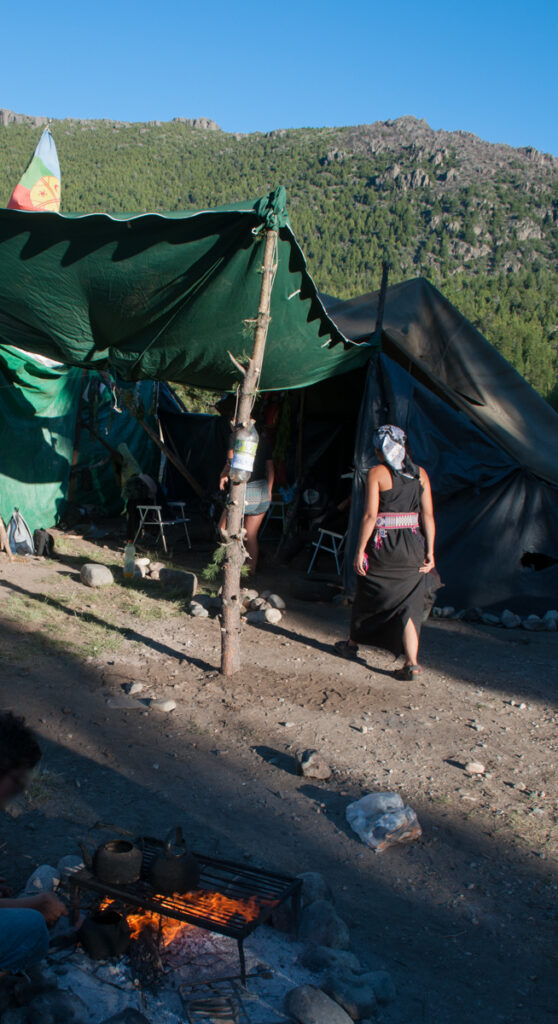
From that moment on, a repressive perimeter was established throughout the Cuesta del Ternero area, with a permanent police checkpoint that kept the zone isolated on the orders of the provincial Minister of Security, Betiana Minor. This was met with a humanitarian encampment that lasted for more than two months. After various incidents of harassment reported by the community, in which they held police officers deployed at the site responsible for violence against the women participating in the encampment, it was decided to dismantle the encampment and maintain a guard on a neighbor's property.
On November 21, Martín Cruz Feilberg and Diego Ravasio crossed the police cordon onto the reclaimed territory. They did so with at least one weapon, which they fired, and then fled. This resulted in the murder of Elías Garay Cayicol (29) and the serious injury of Gonzalo Cabrera (26). Feilberg is an associate of Rolando Rocco and was the one who filed the initial complaint against the community. He and Ravasio are currently in pretrial detention at the Viedma city prison awaiting the conclusion of the investigation and the start of their trial, where they will be charged with homicide and attempted homicide as co-perpetrators.
What is the situation like in Cuesta del Ternero?
In this context, and with an imminent eviction order, members of the Mapuche communities and concerned neighbors have once again encamped along Route 6, the only road that crosses the area. A police checkpoint remains in place, preventing access to the site. They are demanding the cancellation of the eviction order, a political dialogue that addresses their demands, and the demilitarization of the territory.
We are present
We are committed to journalism that delves into the territories and conducts thorough investigations, combined with new technologies and narrative formats. We want the protagonists, their stories, and their struggles to be present.
SUPPORT US

FOLLOW US
Related notes

We are present
This and other stories are not usually on the media agenda. Together we can bring them to light.
2 Comments