

#HIV Bill: about to lose parliamentary status for the third time
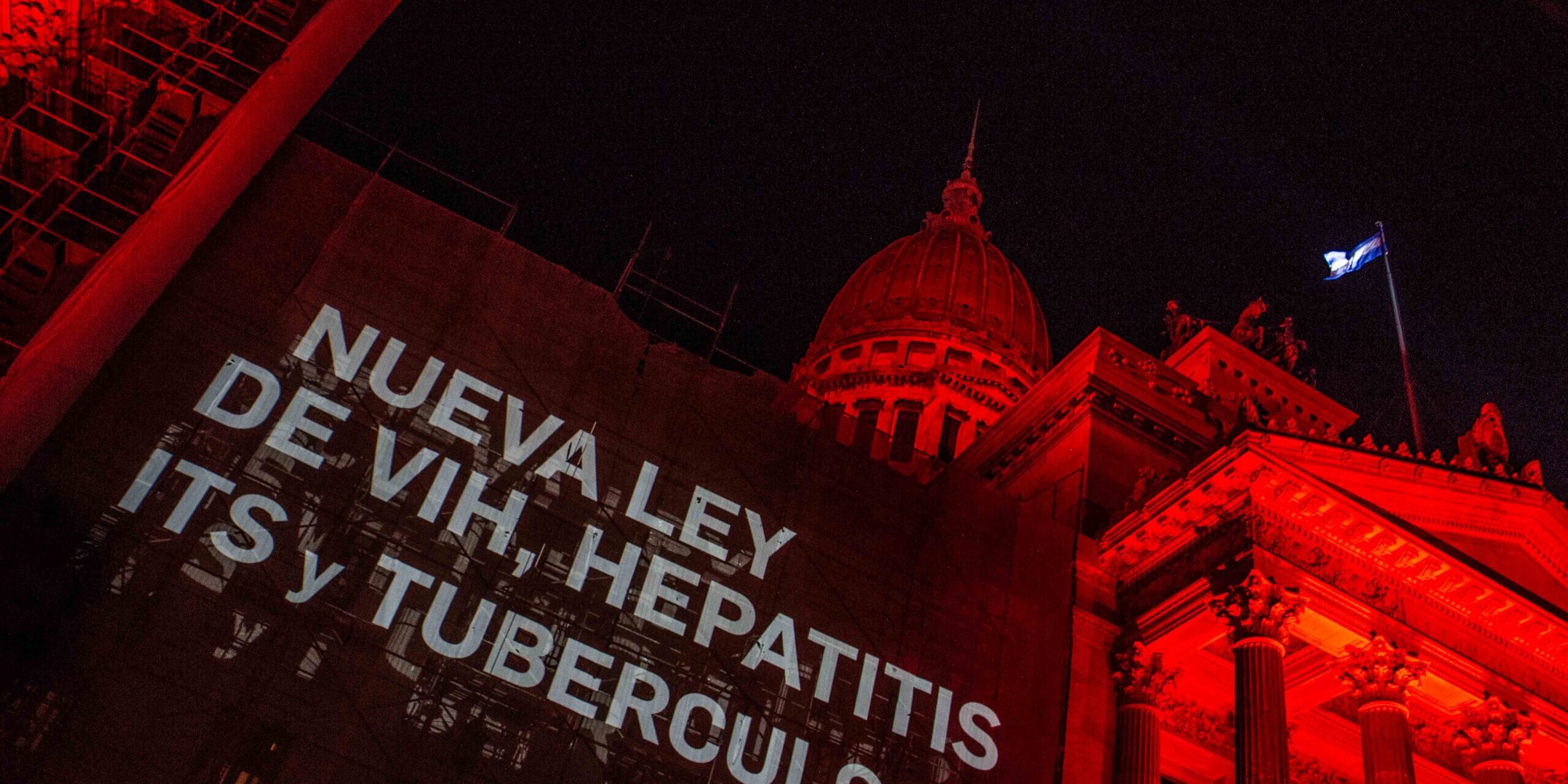
For the third time, the bill on HIV, Hepatitis, Tuberculosis, and STIs is at risk of losing its parliamentary status. This is according to activists who have long been demanding its urgent consideration by the Chamber of Deputies.


Share

For the third time, the bill on HIV, Hepatitis, Tuberculosis, and STIs is on the verge of losing its parliamentary status. This is according to activists who have long been urging the Chamber of Deputies to address it urgently. Although it received a favorable opinion in committee, now that the ordinary session has ended, the Executive Branch is being asked to include it in any potential extraordinary sessions for consideration in the coming weeks.
With the end of the extended ordinary sessions, the only remaining option would be for the Executive Branch to include it in the extraordinary sessions to be held in January and February of next year. The National Front for the Health of People with HIV and the Argentine Hepa-Network are circulating a request to President Alberto Fernández urging him not to abandon the proposal.
“ If the president doesn't include it in the extraordinary sessions, the bill is about to lose its parliamentary status. What does this mean? It means it won't be able to be addressed in this session; it will have to be reintroduced next year ,” explains , president of the Positive Cycle Association on his social media .
Why we need a new HIV and STI law
At every march, someone else is missing. We miss friends at the table. They're no longer on social media. We won't be able to write to them and wait for a reply. Even though they ignore AIDS, tuberculosis, and hepatitis, these health conditions continue to claim lives. And once again, the responsibility lies with them.
As happened in 2016 and 2018, the draft bill for a new law on HIV, hepatitis, tuberculosis, and STIs (Sexually Transmitted Infections) may die without being passed. The current law dates back to 1990; it was groundbreaking at the time, but today it is incomplete and outdated. Thirty-one years ago, the priorities were different. For example, it wasn't thought that children with HIV would live long lives. A new law is needed that addresses their rights . But for the third time, they were told no.
One of my biggest fears when I received my HIV+ diagnosis was not being able to find a job because of it. For years I only applied for informal jobs. The bill that expires on December 31st takes with it the possibility of more strictly implementing a ban on the pre-employment HIV tests that are still being performed.
“It is not widely known that this is a law that legislates on four health conditions. That it provides guarantees of access to health and rights. That it will mean a better quality of life for people who currently have these health conditions or who may have them in the future,” explains María Eugenia De Feo Moyano, president of the HCV Without Borders Foundation , which is active in hepatitis issues.
In Argentina, according to that organization, more than 500,000 people suffer from Hepatitis B or C, and there is no legal framework to address their needs. “ Hepatitis B and C in our country continue to be underdiagnosed diseases . Diagnosis is not routinely offered during medical consultations, and when it is obtained, the bureaucratic processes inherent in our country often result in delayed diagnosis of the liver disease, with all the implications that entails,” they say.
The project had never progressed as far as it did in 2021.

“If there’s a reason the bill didn’t pass the lower house, it’s not because of a lack of political consensus. It’s more due to a failure to put the issue on the agenda,” explains Matías Muñoz, president of the Ciclo Positivo Association . The bill already had the backing of the working committees in the Chamber of Deputies, having progressed further than the previous two times; it only needed to be debated in the full chamber.
What does the new HIV and STI bill propose?
The new bill, which lapsed in parliament, offered a superior proposal to the current law. It incorporated human rights, a gender perspective, and sought to address social determinants and eliminate stigma. It incentivized domestic production of medications and medical supplies and proposed inter-ministerial collaboration with civil society and scientific organizations.
“There’s a political pettiness at play in thinking this isn’t a priority, that it’s a thing of the past, or that it’s a minor issue. Unfortunately, AIDS is still killing people,” explains Matías Muñoz. In a recent letter sent to President Alberto Fernández by the National Front for the Health of People with HIV and the Argentine Hepa-Network, they reported that in the six years since the bill was first introduced, 15,000 people have died from HIV and viral hepatitis. There were 28,800 new HIV diagnoses, 12,600 new viral hepatitis diagnoses, and 65,000 new tuberculosis diagnoses .
40 years of AIDS
In 2021, AIDS marked 40 years since its first alert in the United States, a time when it was considered a "gay cancer." Four decades later, we continue to demand and are still being denied basic human rights. In times of new pandemics, society as a whole chooses to forget its history and unlearn. Because this bill, which has lost its parliamentary status, doesn't just address HIV, viral hepatitis, tuberculosis, and hepatitis. It addresses an entire healthcare system, national production, access to healthcare, and rights; it is a collective effort that seeks the dignity that has been owed to us for so many years.
For a long time, the deputies delayed the bill's consideration in committees; now the Executive Branch is ignoring the urgency of debating it, and this December 31st we return not to zero, but to less, to the horrible possibility of many fewer lives.
People are still dying from AIDS and hepatitis
“We need to get back to work in 2022 to reach the necessary consensus again. And it's really about convincing not only the political leadership but also society that this project is urgent and that it's unacceptable for people to continue dying from AIDS and hepatitis-related illnesses ,” Muñoz explains.
“From civil society, we will continue, as always, to help people with chronic hepatitis gain access to a health system that constantly excludes them. In 2018 alone, more than 5,000 people died,” De Feo adds.
It's the end of the year, and we raise a toast to the memory of those who are no longer with us, to the strength of those of us who remain and continue fighting. To the end of pandemics, but also of pettiness. Today we raise a toast—and take action—to reaching a cure alive.

We are present
We are committed to journalism that delves into the territories and conducts thorough investigations, combined with new technologies and narrative formats. We want the protagonists, their stories, and their struggles to be present.
SUPPORT US

FOLLOW US
Related notes



We are present
This and other stories are not usually on the media agenda. Together we can bring them to light.