

Investigation: How the Argentine justice system deals with transfemicides and travesticides
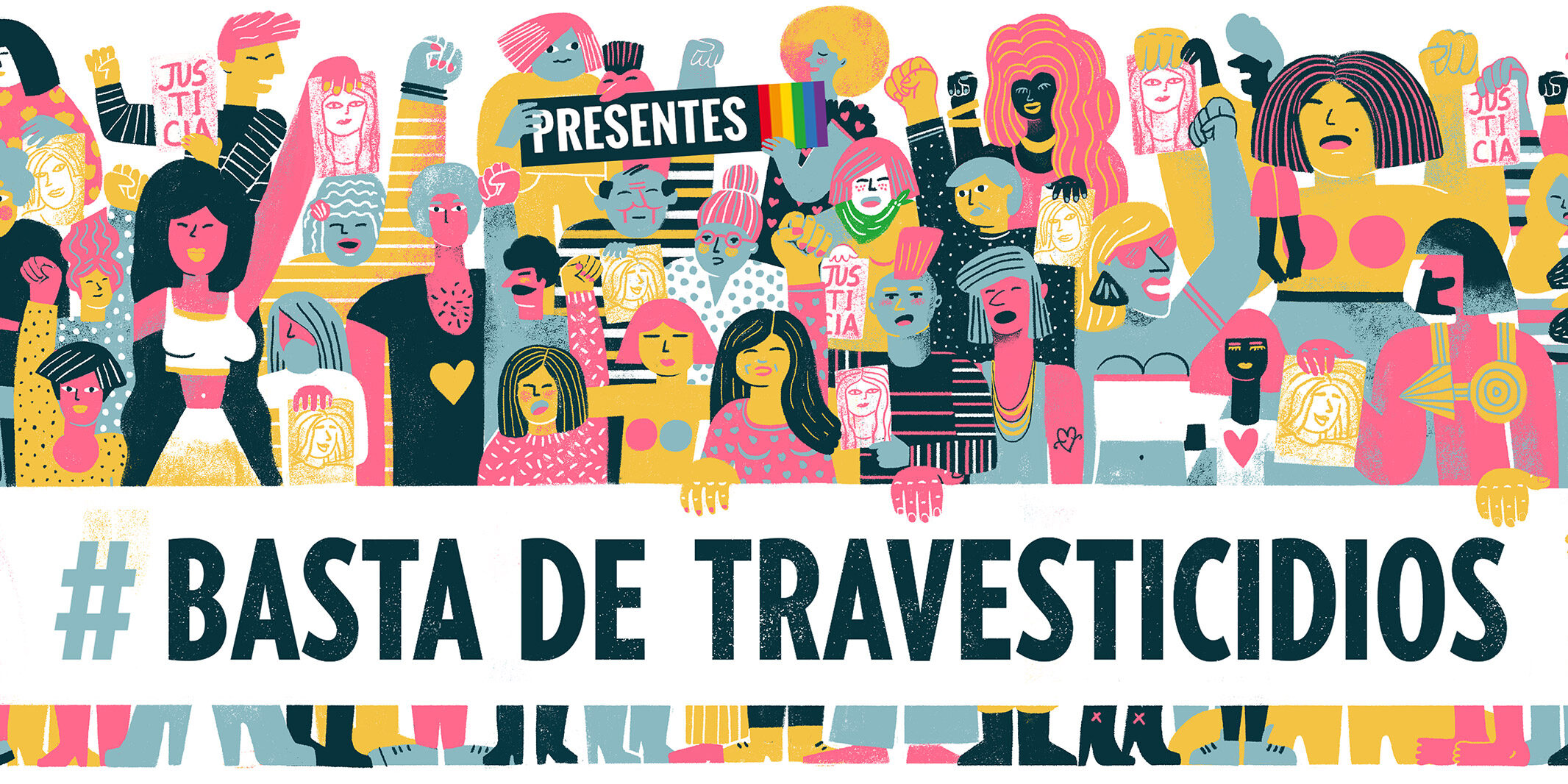
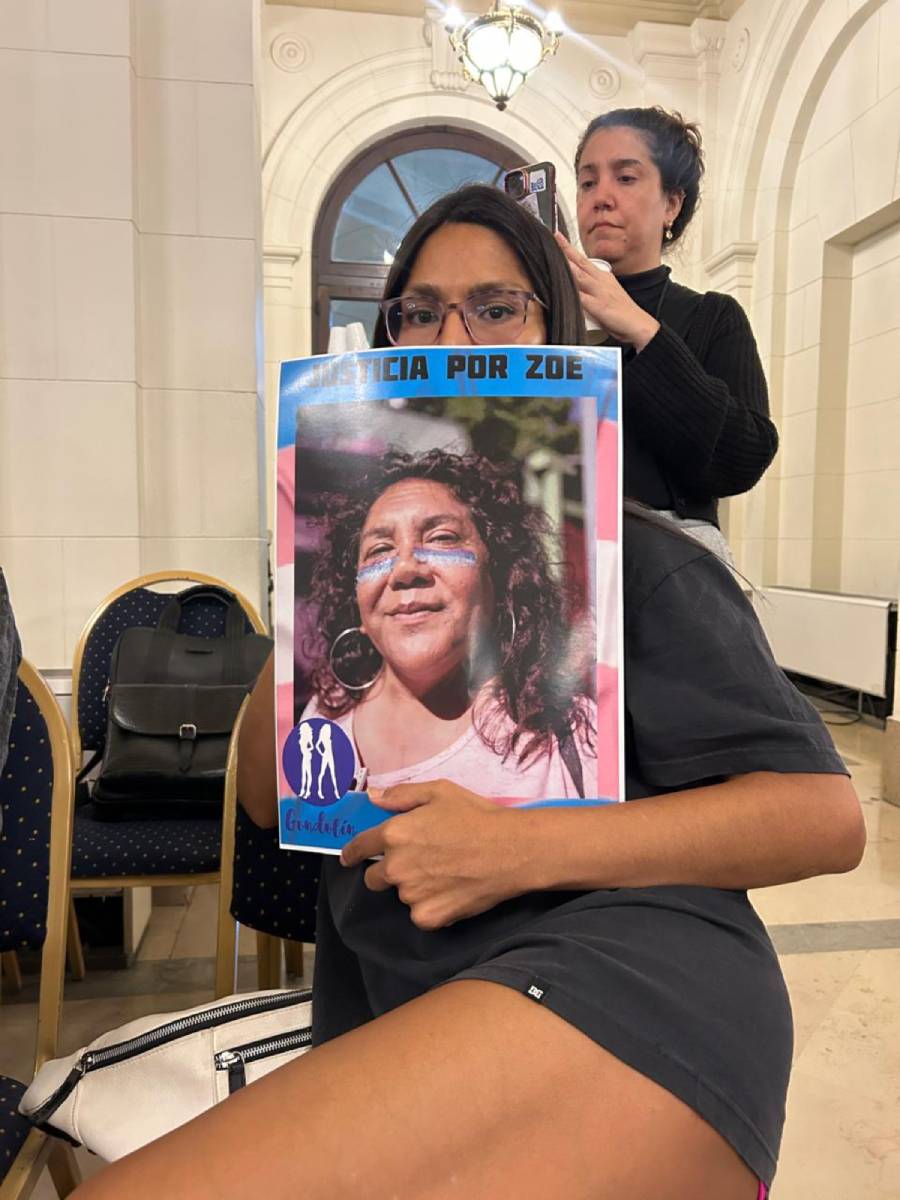
Is there justice for trans women and trans people who are victims of the most extreme violence? This investigation examines what happened in the Argentine justice system with each of the hate crimes against trans people in 2020. One key fact: only one case went to trial, and the accused was acquitted.


Share

LA PLATA, Argentina. In 2020, at least nine trans women were murdered in different parts of the country, according to records from various LGBTIQ+ organizations. Hate crimes reach the courts, but what happens there? How are these cases classified? Are they considered to be crimes linked to prejudice-motivated violence, thus classifying them as aggravated hate crimes based on gender identity? Is that identity respected? Is there justice for trans women and transvestites who are victims of the most extreme violence? These are some of the questions we attempt to answer in this investigation.
Main findings of our research
- By the end of 2021, only one of these crimes committed in 2020 had gone to trial. And it ended with the defendant's acquittal.
- Other cases were brought to trial, but that was more than seven months ago, and there are still no updates.
- Most of the crimes occurred in the City of Buenos Aires and the province of Buenos Aires. The average age of the victims is 37, and almost all of them were sex workers.
“The fact that the majority of trans femicide victims were sex workers (or people in prostitution) points to another element of vulnerability for the victims: the unprotected situation of sex workers,” trans lawyer Cristina Montserrat Hendrickse, the first trans woman to run for Family Court judge in the province of Neuquén, told Presentes. It should be noted that for many trans people, this is not a choice but a means of survival.
- In most of the cases that have gone to court, there are people arrested for the crime: all of them are men between 20 and 40 years old.
“Preventing a transfemicide or femicide is very difficult because human behavior is unpredictable; you can’t lock people up because they’re dangerous. The issue isn’t just legal. It’s primarily cultural,” she explains. And she adds: “What should the State do? Collaborate in deconstructing 5,000 or 7,000 years of patriarchy.”
- Two of the cases of trans/travesti people murdered in Argentina in 2020 are being investigated as transvesticide, another as femicide, and one more as a hate crime. The rest are classified as homicide.
For Ricardo Vallarino, executive director of 100% Diversity and Rights, it is essential that the investigation and determination of responsibility include the concept of hate based on gender identity. “Therefore, these cases should be classified as transfemicides and travesticides. And accordingly, the entire context of violence and exclusion faced by trans people should be considered.”
Of these extreme acts of violence in 2020, the Specialized Prosecutor's Unit for Violence against Women ( UFEM ) is only involved in one case. For it to intervene in the City of Buenos Aires, the investigating prosecutor's office must request its collaboration, either for a specific measure or for assistance during the oral trial. Alternatively, the prosecutor's office can delegate the case to the Unit.
“For the rest of the country, we can intervene in federal crimes with some manifestation of gender violence. That is to say, in femicides, unless it is within the framework of a federal case, we would not have jurisdiction in the rest of the country,” explained representatives from UFEM to Presentes.
Who they were, what happened, and what the justice system is doing (or not doing).
Roberta Carabajal : Two arrested, to trial without a date set
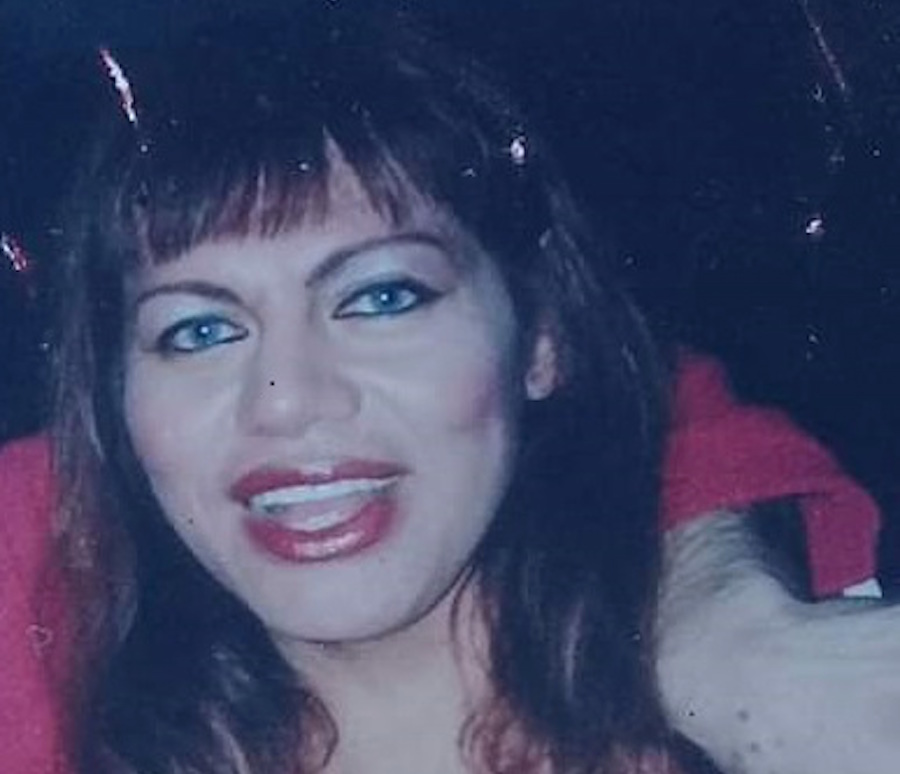
On February 1, 2020, Roberta Carabajal was stabbed to death at the corner of 1st and 62nd streets in La Plata, Buenos Aires province, an area frequented by sex workers. Roberta was 45 years old. After the attack, her companions took her to San Martín Hospital, where she died hours later.
Almost ten months later, on November 3, the investigation was closed. Two brothers—Ignacio and Julián Garay, 26 and 23 years old, respectively—were arrested for “double aggravated homicide due to premeditation and intent to conceal another crime, and armed robbery with a bladed weapon.”
The investigation was led by the on-duty prosecutor, Juan Cruz Condomi Alcorta, head of UFI 16. Initially, he requested security camera footage from the area and was able to identify a white Chevrolet Corsa at the scene. According to witnesses interviewed by the Sudaka news agency at the time, two men had been loitering around, harassing the girls, and asking for Roberta.
The investigation also included the testimony of a 23-year-old woman who said she witnessed the crime. “I killed her. I killed her. Look where I buried it.” That’s what the witness said her boyfriend told her when he got into the car. Her boyfriend was one of the killers.
The brothers who killed Roberta are from Berisso, a city near La Plata. Two pieces of evidence helped lead to their capture: blood-stained clothing and their car, which was found near the homes of relatives of the detainees. According to local media, one of the killers had recently been released from prison on parole.
“The case has been sent to trial. It doesn't have a date yet. It now depends on the Court of Guarantees 2. The two defendants are in custody. I opposed any kind of leniency,” explained prosecutor Condomí Alcorta to Presentes.
Karly Sasha Palomino: to trial but without a date set

Karly Sasha Chinina Palomino was born on May 20, 1988, in Peru, and was a sex worker. In the early morning of March 5, 2020, she was murdered on the street in Ciudadela, Tres de Febrero district, Buenos Aires province.
In the legal case investigating her death, her gender identity is not respected: she is referred to by her birth name. However, it is the only case in which the word "femicide" appears on the case file: "Aggravated homicide due to the use of a firearm and gender-based violence committed against a woman."
That night, around 2:30 in the morning, police from the Ciudadela Sur station found her lying on Rivadavia Avenue and Granaderos Street, near a train crossing. But they said they still didn't know who she was: she wasn't carrying any identification. They took her fingerprints. Her friends recognized her: it was Chinina, they had no doubt.
Some people reported seeing two men running away near the train tracks. The San Martín Prosecutor's Office No. 5 intervened at the crime scene.
According to information provided to Presentes by the Provincial Attorney General's Office, one person has been arrested. His name is Santos Diego Chavarría Condomí. The man, originally from Bolivia, shot Chinina that morning.
The investigation led to his arrest within days, and he is currently in custody, being held in pretrial detention. The autopsy states that the cause of death was traumatic cardiac arrest due to damage to a vital organ, the lung, from a gunshot wound.
The case was sent to trial on April 22, 2021: one year and three months after his death. Almost eight months after the trial was sent, a date has still not been set.
The trial will be conducted by the Oral Criminal Court No. 2 of San Martín. The case number is 5068. However, a date has not yet been set, as confirmed to Presentes by sources within the court.
Vanesa Solorzano: on trial for hate crimes based on gender identity

Vanesa Solorzano was 20 years old and survived by working as a sex worker/prostitute in San Miguel de Tucumán. In the early morning hours of August 11, 2020, a resident of the southern part of the city found her body, mutilated and lifeless. Hours later, officers investigating the homicide found the weapon believed to have been used to kill Vanesa: a butcher knife.
Local media covered the incident, mentioning that it had been an attempted robbery, but the investigation ruled out this stigmatizing hypothesis, which outraged family and friends.
Daniel Alejandro Díaz, a 30-year-old taxi driver, was identified and arrested as the person responsible for the death of the young trans woman. The car keys and the weapon were found, the taxi's GPS data was verified, and stains, presumably blood, were found inside the vehicle. Security camera footage from the area was also reviewed, further implicating the suspect.
In December, after four months of investigation, the Homicide Prosecutor's Office, headed by Carlos Sale, requested that the case be brought to trial.
Díaz will be the first person to face trial for aggravated homicide motivated by hatred of gender identity in Tucumán. The case concerning the transfemicide of Vanesa is classified as "homicide" and, since October 19, has been in the First Chamber of the Homicide Court awaiting trial.
Melody Barrera: a police officer arrested and the first jury trial for the murder of a trans woman

Melody Barrera was 27 years old and in the early hours of Saturday, August 29, 2020, she was found dead with at least six gunshot wounds, in one of the "red zones" of Greater Mendoza, an urban and populated area at the intersection of Costanera and Correa Saá in the western zone.
Analysis of security camera footage and initial forensic investigations revealed that the shots were fired from a car window by a man who fled the scene. Most of the bullet wounds were to the chest, resulting in immediate death. Darío Jesús Chavez, a senior officer at the 34th Police Station in the Bancario neighborhood of Godoy Cruz, was arrested in connection with the incident.
The accused faces charges of homicide motivated by hatred of gender expression, aggravated by his status as a police officer, by the use of a firearm, and now aggravated by treachery.
The case, labeled as "transvesticide ", will have a request for elevation to trial next year and a date will be defined months later.
Viviana Bergel, the plaintiff's lawyer, tells Presentes: “It will be a jury trial. During the investigation, we tried to make the case as complete as possible, with a gender perspective, taking into account all the aggravating factors related to hatred based on gender identity and everything we can contribute in that regard. It will be the first jury trial for a hate crime based on gender identity in Mendoza.”
For Bergel, the investigation is “going quite well.” He adds, “The media is talking about a transphobic murder, and that's related to all the work we're doing on the case as plaintiffs. It's work we did together with LGBTI organizations so they could support us. When you have the support of these organizations, it makes a difference and helps to raise awareness. We demand justice for Melody in every situation we can.”
Priscila Ponce Nieto: on trial, without a date or gender perspective
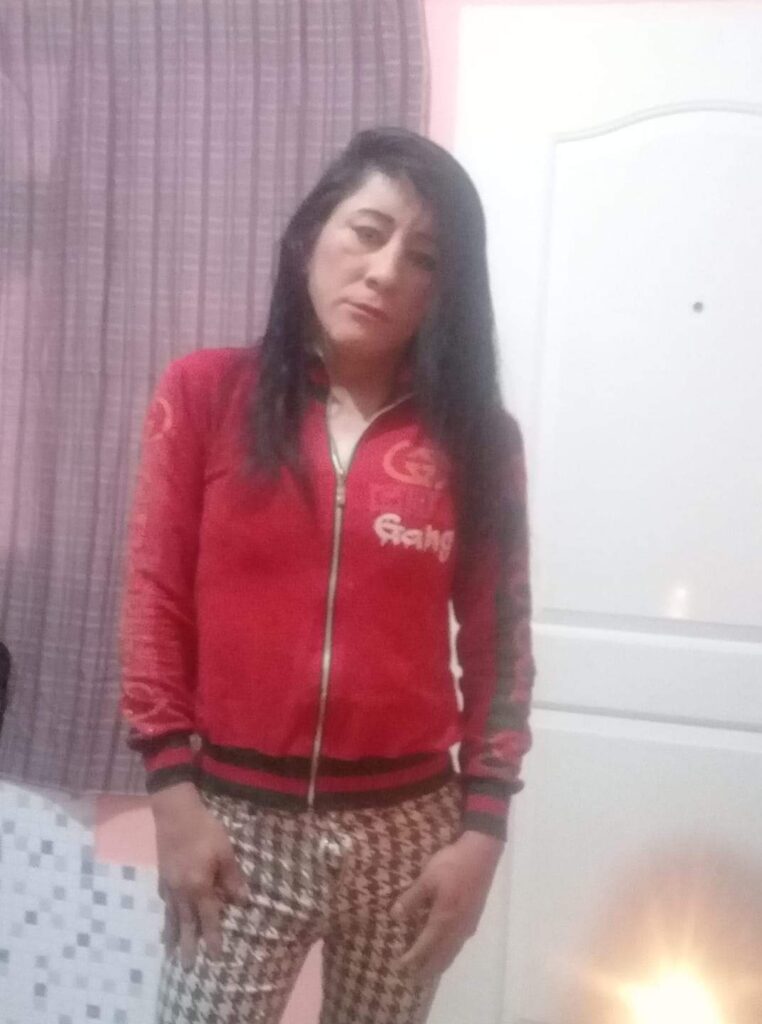
Priscila was 33 years old and was stabbed to death on September 14, 2020, in Zavaleta, a neighborhood in the City of Buenos Aires. A few days later, the grassroots organization La Garganta Poderosa posted a tweet demanding justice for her death.
Georgina Orellano, General Secretary of AMMAR (Argentine Sex Workers Union), wrote on her Facebook page: “Waking up to your phone exploding with messages. Again. One less trans woman. Again, and in the most brutal way.”
“We knew her as ‘Michu from Santa Cruz.’ The Santa Cruz was the hotel where she lived, and she had to leave because she couldn’t keep paying for her room. Michu, who used to stay in Salta, was always with her inseparable friend Lala. She has no family here; they’re in Peru. Her family are her friends and colleagues who mourn her today and demand justice. She didn’t deserve that end, she didn’t deserve such savagery and cruelty,” Orellano wrote. Priscila’s sister authorized her friends to claim her body and say goodbye.
The crime was investigated by the National Prosecutor's Office No. 30, headed by Dr. Marcela Sánchez.
Criminal and Correctional Court No. 30 confirmed to Presentes that the case was sent to trial on June 25, 2021. Now, the Oral Criminal Court No. 22 must set a date. The accused is Piero Lucero Rodríguez, and the crime: aggravated homicide with cruelty.
Francesca Cornejo: it is still unknown what happened
Francesca Cornejo was found dead by a relative on the night of Saturday, September 26, 2020. She was in her home, in the Parque Liceo 1° Sección neighborhood, in the city of Córdoba, lying on the bedroom floor next to the bed, with her hands and feet bound. Francesca was 63 years old, lived alone, suffered from some health problems, and was in a situation of poverty, which was aggravated by the isolation caused by the COVID-19 pandemic.
Because the house was in disarray, the investigating prosecutor, Patricia García Ramirez, presumed that the victim had been robbed. At first glance, there were no visible injuries.
Currently, the case remains under investigation in District 3, Shift 5 of the City of Córdoba: “proceedings related to the death of Francesca Cornejo.” Sources from the Córdoba Public Prosecutor's Office indicate that an expert report was prepared, but it could not be determined whether the motive was robbery or hate, nor could any suspects be identified.
Alejandra Benitez "La Power": an unpunished crime

Alejandra Benítez was shot in the back and killed on November 5, 2020, on the sidewalk in front of her home in San Miguel de Tucumán. Known as "La Power," she was 34 years old and, like most trans women, worked as a sex worker to survive. Her murder was the second in the province during the COVID-19 pandemic lockdown. Her friends remember her as fun-loving, cheerful, compassionate, and committed.
At the time of the incident, Alejandra was with her friend, Diego Mercado, on the sidewalk in front of her house, a kind of housing complex where most of the renters are transgender. Mercado became the main witness and also a victim.
In her initial statement, she described how a man, later identified as Ricardo Puenzo, got off a motorcycle, argued with Power, pulled out a gun, and shot her after she had turned around. Mercado tried to run inside the complex and was shot four times. Since he was lying on the ground, the suspect assumed he was dead and fled.
Almost seven months later, on May 31, 2021, the trial began against Ricardo Horacio Puenzo, the only defendant facing a life sentence. In his opening statements, prosecutor Carlos Sale mentioned the commitment to raising public awareness that Alejandra belonged to a high-risk group.
“This group is going through difficult times, and the State has taken action, raising awareness and requiring all public employees across all three branches of government to be aware of the gender perspective we must have in our lives. The State has modernized by allowing the right to change one's name, to effective judicial protection, and to self-perceived gender identity. Despite all this effort, unfortunately, Alejandra became just another number on the list of victims of gender-based violence.”
But Puenzo was acquitted in a unanimous ruling by the court composed of Judge María Balcazar, Judge Rafael Marorito, and Judge Isabel Menéndez, because Mercado changed his story during the trial and cast doubt on the entire hypothesis of the prosecution and the plaintiffs. The court maintained that the investigation had been deficient, and the crime went unpunished.
Carlos Garmendia, the plaintiff's lawyer, told Presentes: “We have filed the last remaining legal recourse here in Tucumán, an extraordinary appeal, which is a hearing that must be held before the Tucumán court so that it can review the sentence. We are waiting to be notified of when that hearing will take place to see if the court will reverse the decision. The lower court rejected our appeal.”
Garmendia again describes the events to demonstrate that the investigation could not have been considered deficient: “At the time of the incident, there were three people present: Alejandra, her friend Mercado, with whom she was drinking beer, and the killer, who pulled out the gun and shot them both. The only one who witnessed this was Mercado, and during the investigation, in his statement to the prosecutor, while he never explicitly said, ‘Puenzo was the one who fired the shots,’ it was clear that no one else was present. But at the trial, Mercado introduced the idea that he had heard other voices, stating it indirectly. It then became absolutely clear that something had happened to make him lie at the trial.” Puenzo never testified.
“The review we requested is in the hands of the Court and we are waiting for them to notify us when the hearing will be,” Garmendia concludes.
Alejandra Salazar Villa: to be tried for hate crimes based on gender identity, but no date has been set.

At first, they suspected Alejandra was dead . Before anyone else knew, her neighbors called the police to report a strange smell in the hallway of the building at 2200 Corrientes Avenue, in the Once neighborhood of Buenos Aires. When officers from the Summons and Prevention Brigades Division of the 3rd Precinct of the City Police entered the apartment, they found her.
Alejandra Salazar Villa lived alone, was Peruvian, 54 years old, and had been asphyxiated. They would learn that later, through the autopsy. At first, what they saw that day was a naked woman lying on the floor with a black bag over her head. The same bag her killer had carried a week earlier filled with apples.
The apartment door wasn't forced, but the place was completely ransacked. The investigation, led by prosecutor Ignacio Mahiques of Criminal and Correctional Prosecutor's Office No. 35, also pointed to a possible robbery.
Security cameras were key. A man had accompanied her home the previous week with a black bag of apples. Minutes later, he was seen leaving the building with a television. His uncle was waiting for him outside. They left in a taxi and sold the television.
The police arrived quickly. Two weeks later, Rodrigo Keilis—the killer—20, and Pablo Getar—the man waiting outside—40, were arrested. Keilis worked unloading trucks and was homeless.
According to the investigation, Keilis killed Alejandra on December 6, 2020, between 6:47 p.m. and 8:22 p.m. At 6:30 p.m., Alejandra had left the Coto supermarket and encountered the two men. Keilis accompanied her home and carried the bag with which she would later suffocate her.
“We classify the motive for the attack as hatred based on gender identity,” explained prosecutor Mahiques to Presentes. The case file refers to “aggravated homicide motivated by hatred based on gender identity, in conjunction with simple robbery.”
The indictment respects both Alejandra's name and gender identity. The Specialized Prosecutor's Unit for Violence Against Women (UFEM) also participated in the investigation.
The prosecutor requested the case be sent to trial in January 2021, but as the year draws to a close, a date has still not been set. This decision rests with the Oral Criminal and Correctional Court No. 26. Meanwhile, Rodrigo Keilis remains in custody. His uncle, Pablo Getar, charged only with the robbery, is free.
“It was a transphobic murder. They strangled her. It was horrible, horrible,” Marcela Tobaldi, president of the La Rosa Naranja Civil Association, told Presentes. Marcela knew her because Alejandra had once consulted the organization for advice: she wanted to change her gender identity on her ID: “I didn’t hear from her again until this news.”
Yaelin Maydana Olmedo : structural and unresolved violence

Yaelin Maydana Olmedo was known as Yaqui. On December 16, 2020, she was beaten and suffocated to death. She was 31 years old, lived in Bahía Blanca, and, according to a friend who had known her for many years, had had a very difficult life.
Local media reported that Yaelin died because she was experiencing a nervous breakdown, which her brother and a neighbor tried to stop. They said that during the struggle, her brother placed his knee on her neck, causing her to suffocate. He was charged with manslaughter, as it was argued that he acted in self-defense, but according to a source close to the case, the prosecutor was considering charging him with murder because there was excessive force used in self-defense. The suspects are currently free.
Yaqui was a cardboard collector. When she had money, her family accepted her, but otherwise, she lived in a shack with a dirt floor and a corrugated iron roof. Adabel Montenegro, a trans activist, knows all the trans women who live in Bahía Blanca and points out that the situation for the LGBTI community “is terrible.”
The Public Prosecutor's Office indicates that the case was initially filed as an investigation into the cause of death. It was then transferred to the Specialized Prosecutor's Office No. 5 (UFIJ N°5), under the direction of Prosecutor Jorge Viejo, and is still ongoing. “Several testimonies have been taken, and some measures have been requested, which are currently pending and have not yet been received by the Prosecutor's Office. The individuals connected to Yaelin Olmedo's death have been fully identified, and once the prosecutor receives all the pending information, he will take the appropriate action. The investigation is currently underway. When the Prosecutor makes a decision, it will be based on a specific classification that is not yet included in the case file,” they explained to Presentes.
Why a trans-feminist judicial reform
How can we ensure that the identities of murdered trans people are respected, that these crimes are classified as hate crimes, and that justice is served sooner? Lawyer Hendrickse explains that a more humane, accessible, and trans-feminist justice system is needed.
“A trans-feminist judicial reform must reach those sectors where there is the greatest vulnerability. Where women, in addition to the vulnerability caused by their gender, are even more vulnerable due to poverty and migration. There should be neighborhood judges, lay judges who resolve conflicts between people, an impartial third party with a state presence to peacefully resolve conflicts,” Hendrickse stated.
“Femicide is the tip of the iceberg of countless acts of violence that occur every day, and there is no approach to this problem,” she warned.
After analyzing each of these cases, Ricardo Vallarino, executive director of 100% Diversity and Rights, came to the same conclusion: “Death is the culmination of a whole chain of violence that they had been suffering based on their identity.”
We are present
We are committed to journalism that delves into the territories and conducts thorough investigations, combined with new technologies and narrative formats. We want the protagonists, their stories, and their struggles to be present.
SUPPORT US

FOLLOW US
Related notes
We are present
This and other stories are not usually on the media agenda. Together we can bring them to light.