

Chile 2021 Review: More violence towards LGBT+ people, marriage equality, and political change
The legalization of same-sex marriage and Gabriel Boric's victory have ushered in a hopeful year for Chile. However, the escalating violence against LGBTI people remains a major concern.


Share

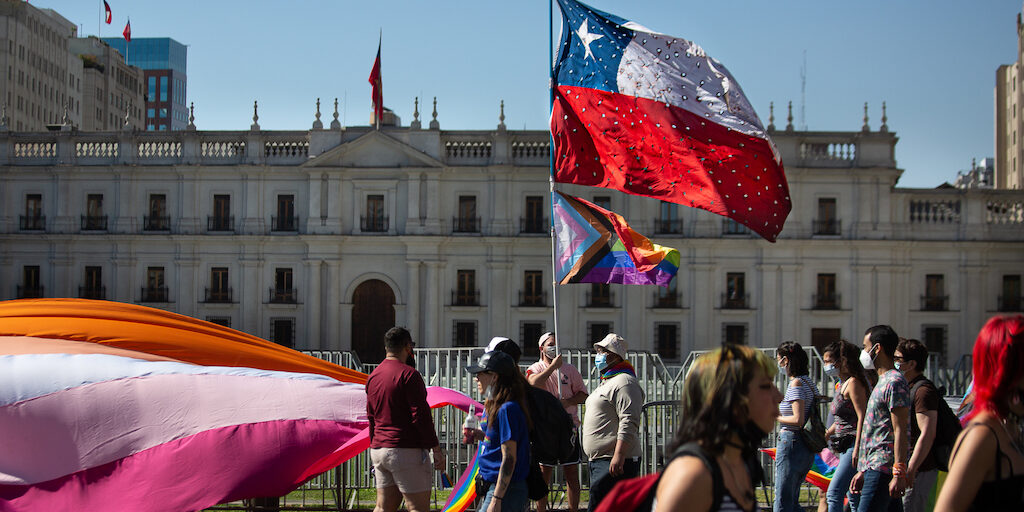
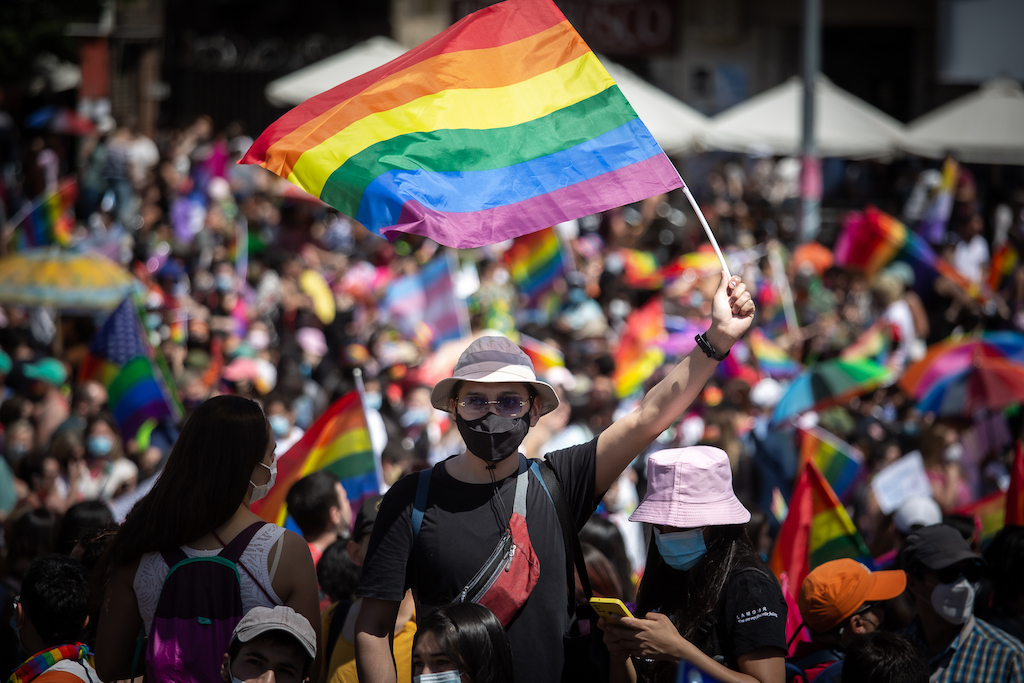
Santiago, Chile. Although same-sex marriage has been legal in Chile since December 2021 and is a milestone in terms of rights, the LGBTIQ+ community continues to be exposed to violence, dangers, and discrimination.
In the second year of the pandemic, living conditions and job insecurity, far from improving, worsened. This is the perception of local activists and organizations, and it is supported by the figures from the first state study on LGBTIQ+ people, presented this year by the Undersecretariat for Crime Prevention, in collaboration with the Movement for Homosexual Integration and Liberation (Movilh) and the Iguales Foundation .
The numbers of hate
The survey was administered to 3,271 people. Movilh says the results “clearly and forcefully reflect the drama and vulnerability of LGBTIQ+ people in Chile”: 89% suffered discrimination at least once in their lives and 64.4% experienced the same in the last year, while 71% believe that the rights of LGBTIQ+ people are “poorly” respected in the country.
In the past year, the five most common forms of discrimination were insults (49%); shouting and harassment (35%); being pressured to change one's appearance (26.2%); disrespect for gender identity (18.4%); and sanctions for expressing gender identity or sexual orientation (7.8%). Those who most frequently perpetrate these acts are strangers (57.9%); members of the nuclear family (44.1%); and members of the extended family (30.6%).
And although the study was conducted in the last quarter of 2020 and the results were revealed in 2021, activists believe it may be a very similar reading of how the community lived during the last 12 months.
“It has been an extremely difficult year. We see that violence is increasing and that there has been no campaign against HIV/AIDS for the second or third year in a row,” Isabel Amor, executive director of Fundación Iguales, told Presentes .
For Erick Salinas, head of the Office of Inclusion and Non-Discrimination at the Municipality of La Florida, part of this situation stems from misinformation and a lack of education on the subject, especially among the families of transgender people: “Schools also contribute to this. At this point, some schools have zero knowledge of the issue, and although there is a lot of information available, it doesn't reach them due to a lack of educational content on the topic. That, too, is a form of violence.”
The Kast effect
On Sunday, December 19, 3,650,088 people voted for José Antonio Kast in the second round of the presidential election. Kast is the leader of the Republican Party, a proponent of radical anti-immigration policies, a staunch critic of abortion and LGBTQ+ rights, and a close ally of Augusto Pinochet's dictatorship.
The winner was Gabriel Boric , a former student leader who believes in feminism and who arrives at La Moneda with a concrete plan to advance LGBTQ+ rights. But the mere fact that a figure like Kast went so far in an electoral contest generated fear in the community and marked the last months of the year.
Kast opposes same-sex marriage and has always been against comprehensive sex education. In 2017, he supported the so-called " Freedom Bus ," promoted by conservative groups who wanted to block the passage of the Gender Identity Law. He considers the fight for equal rights to be "a gay lobby."
He opposes the morning-after pill and other contraceptive methods. He forbade his wife, María Pía Adriasola, from using them: today they have nine children. If elected president, one of his proposals was to repeal the Law on Abortion in Three Circumstances.
In 2005 and 2012, she voted against the Anti-Discrimination Law, better known as the Zamudio Law. She also voted against the processing of the Civil Union Agreement (AUC).
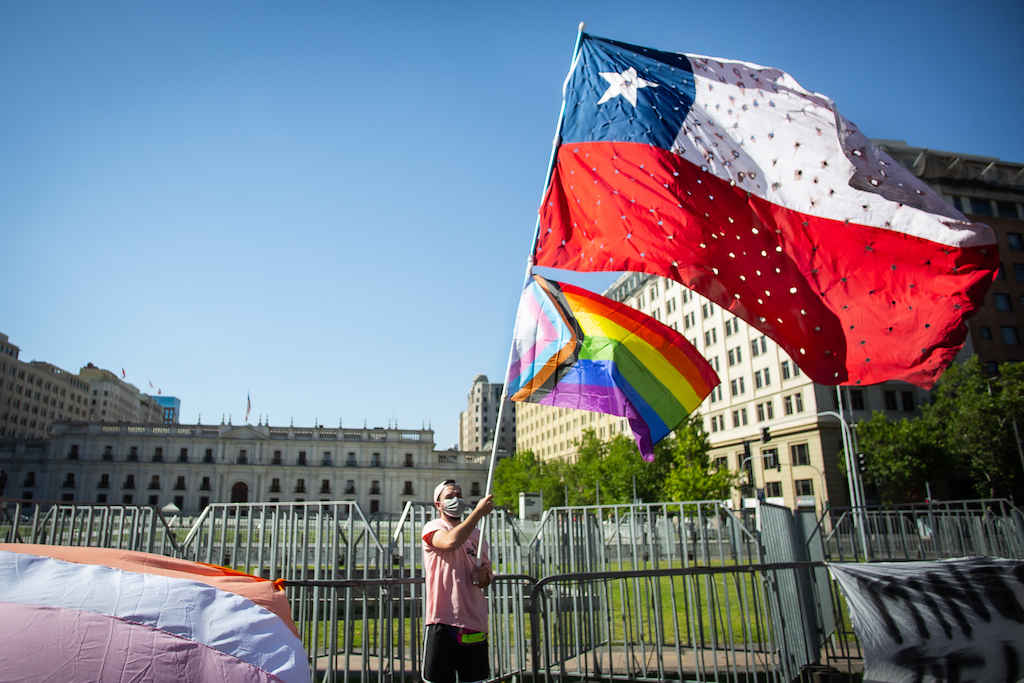
During Pride Month in 2017, when the La Moneda Palace was illuminated with the colors of the rainbow flag, he spoke out against it on his Twitter account: “La Moneda surrenders to the gay dictatorship. Public institutions belong to all Chileans, not to minorities.”
In 2018, he published a column in the newspaper La Tercera where he referred to the trans actress and star of A Fantastic Woman , the Oscar-winning film: “Daniela Vega is a man,” he wrote. During the last presidential debate, he was asked about it and said that today he “wouldn’t write it in those terms again.”
A few days earlier, in a program broadcast on YouTube, right-wing deputy Johannes Kaiser, a fellow party member of Kast, mocked the fact that his Republican counterpart, María Gloria Naveillán, would have to "share a bathroom" in Congress with Emilia Schneider , the first trans deputy recently elected in Chile.
Isabel Amor, from the Iguales Foundation, is concerned about the rise of this sector: “There are discourses that condone violence and that have been gaining ground. A fierce far right is growing, willing to make us regress and that has no qualms about denigrating us.”
“To all the Chileans who voted for us, I want to say rest assured. We will be there. Our project is not fleeting,” Kast said after conceding defeat.

Violence is on the rise
Throughout these years, Nicole's family insisted to the courts that the case should be investigated as a hate crime. It took the police three years to reach Pulgar, who was already serving a sentence for other crimes committed after Nicole's murder.
Nicole Saavedra's family had to wait five years for justice to be served in her murder. In October, the Quillota Criminal Court sentenced Víctor Pulgar to life imprisonment without parole for the kidnapping, rape, and murder of the young lesbian woman, which occurred in June 2016.
The court unanimously dismissed the hate crime and discrimination aggravating circumstance under the Zamudio Law in the homicide case. Instead, it determined that Pulgar acted with premeditation.
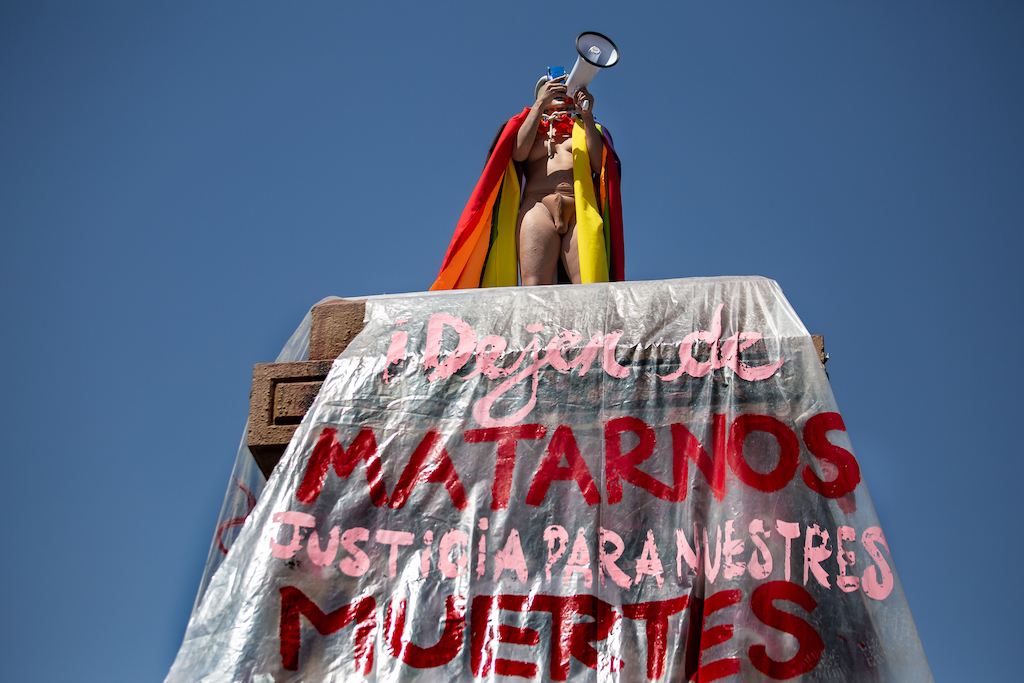
During the last months of the year, Movilh has been reporting an increase in violence against the community: in the second week of December, a trans woman was the victim of an attack that left her with fractures in her temporal bone and nose.
In the last week of November, two men stabbed a young man in Pucón who defended his partner from homophobic insults. In October, a gay man living in Santiago lost part of his chin and cheek tissue after another man bit and punched him during a homophobic attack.
That same month, three men attacked and set fire to Alejandra Soto , president of the Amanda Jofré Union of Trans and Travesti Sex Workers.
There are many other cases like these , but they cannot be quantified at the moment. There are no official figures in Chile, and MOVILH is responsible for monitoring the local situation regarding rights and violence. Its reports are published every March.
The Justice System's Response
Under the auspices of the National Prosecutor's Office, since 2019 there has been an Observatory in the country to monitor crimes committed against LGBTIQ+ people.
The social unrest and the pandemic hampered the work in the last two years and what they have on file today is an underreporting that “does not reflect reality,” Roberto Rodríguez, a social worker and advisor to the Human Rights, Gender Violence and Sexual Crimes Unit of the National Prosecutor's Office, Presentes
“During the pandemic, cases of gender-based violence increased, and we had to focus on that,” Rodríguez explains.
According to a recent report from the institution, 4,593 people died as a result of homicide in the last four years. The report indicated that 12% of these deaths occurred in the context of domestic violence, which primarily affects women.
Another reason for the slow quantitative progress in the area of LGBTIQ+ violence is that from the beginning it was established that the Observatory should work based on the report of the local prosecutors.
“But the truth is, that’s not happening,” admits Rodríguez, worried about the escalating attacks against the community. “We are certain that today, violence is directed primarily at trans people, trans sex workers, and lesbians with male gender expression, as they are the tangible expression of non-binary identity, explicitly 'transgressing' gender mandates and stereotypes.”
One of the victims the Observatory is supporting this year is Alejandra Soto, from the Amanda Jofré Union . The case is being investigated by prosecutor María José Viveros, from the Specialized Prosecutor's Office for Gender Violence and Domestic Violence (VIF).
Rodríguez explains that the Observatory intervened by coordinating the initial actions: launching an investigation on its own initiative, although a lawsuit was also filed in parallel. They then located and contacted Alejandra and some of her colleagues to obtain protected statements.
They succeeded in having the crime reclassified from assault to non-intimate femicide, applying the new Femicide Law and a gender-sensitive investigation, which also included the aggravating circumstance of the Zamudio Law . Rodríguez explained that one person has already been charged in this case and is in pretrial detention.
In November they received a case from the OTD , regarding a transphobic attack in San Francisco de Mostazal, a commune in the O'Higgins region.
The victim is a trans man who was beaten by six people. He suffered a broken jaw. When it happened, he didn't even know where to go to report it.
OTD advised him, but later they learned that the Carabineros (Chilean police) had registered the case as a fight. “Most of these cases are registered that way,” says Rodríguez. “As soon as we received the report, we contacted the prosecutor's office in that area, referred the young man, and explained to the prosecutors that this wasn't a fight, but a transphobic attack.”
At the same time, they contacted the Regional Victim Assistance Unit and managed to get a psychologist to join them to support him.
“Before the Observatory existed, these types of situations were left completely unattended,” says Rodríguez.
Among the goals for 2022, the Observatory plans to continue advancing with training, an area where they also concentrated their efforts in 2021.
Together with some diversity organizations, they are starting a project around the Gender Identity Law to provide training within the prosecutor's offices in all regions of the country.
Rodríguez says they also have a work plan to increase the effectiveness of the Public Prosecutor's Office in the exercise of criminal action, in investigations and in the area of protection of LGBTQI+ victims, incorporating the rights perspective in each case; strengthen the communication channel with civil society and sexual diversity organizations; and carry out permanent monitoring and advice to prosecutors in investigations related to the community.
Advances in rights and visibility
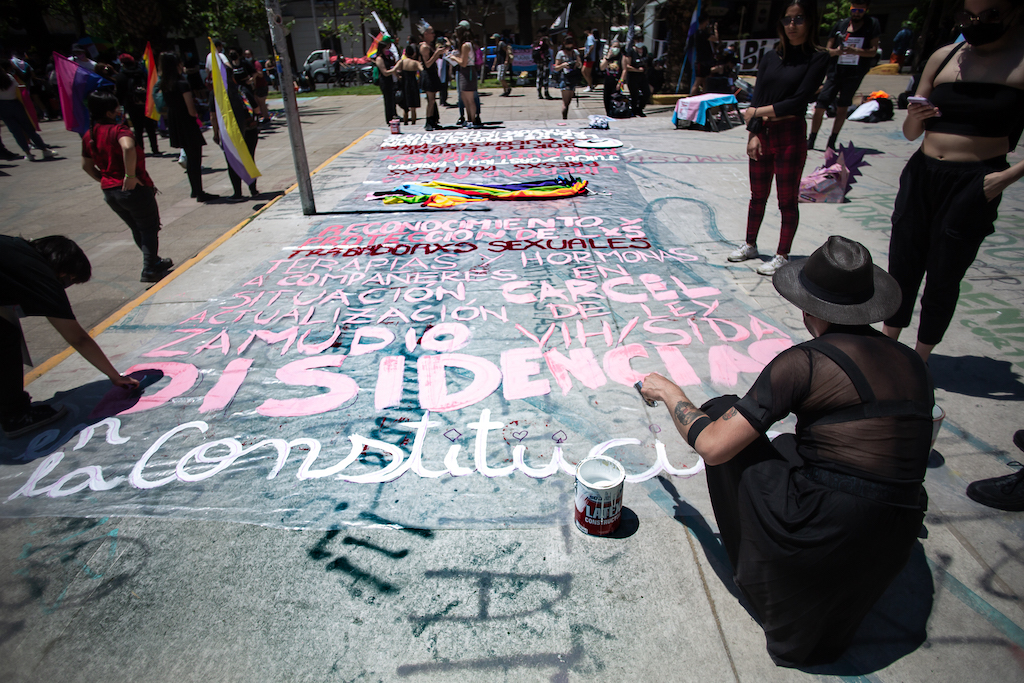
In 2021, sexual diversity dominated the political agenda like never before. At least 47 candidates who identify as LGBTQ+ ran for election to the Constitutional Convention tasked with drafting a new Constitution for Chile.
For the first time, a significant number of LGBTQ+ individuals ran for office in the country. Eight of them were elected. Seventy-seven women were also elected, with strong participation from feminists.
Another milestone Erick Salinas mentions is the proposed creation of the Regional Network of Offices for Sexual and Gender Identity Diversity in the Metropolitan Region, promoted by Governor Claudio Orrego, as well as several inaugurations of offices supporting the LGBTIQ community in different municipalities across Chile, such as the one he leads. He notes that the obstacle lies in continuing to “depend on the will of the mayors.”
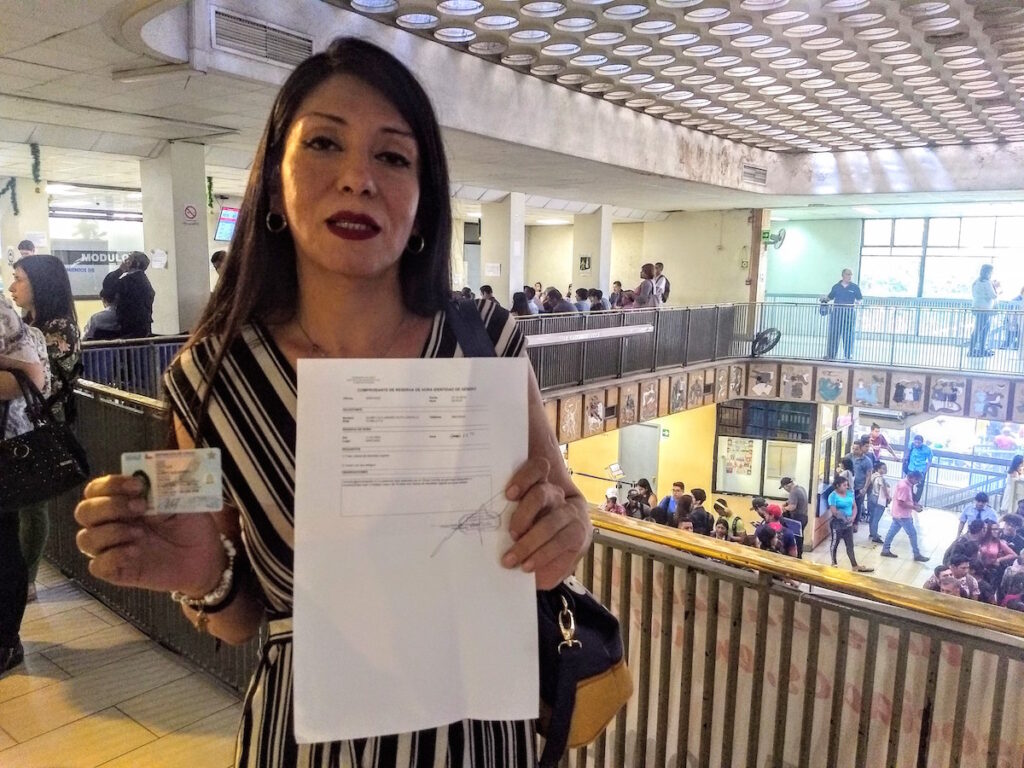
In March 2022, with the installation of the new Congress, four women who openly identify as part of the LGBTQ+ community will begin working to promote bills that, among other things, benefit the community. Emilia Schneider is one of them, the first transgender member of parliament in Chile.
During that month, the first same-sex marriages will also begin to take place, when the equal marriage law finally comes into effect, following its historic approval at the end of the year.
The project was constantly postponed and its debate lasted four years, amidst intensive work by sexual diversity organizations, especially Movilh and the Iguales Foundation.
Faced with such a complex scenario, marked by fear of what might have happened to Chile's political future after a historic presidential election, and with expectations of what is to come, this milestone is an engine to continue fighting, says Isabel Amor, from Iguales: "With all the rights it entails, it is a hope and a balm in the face of so many difficulties."
We are present
We are committed to journalism that delves into the territories and conducts thorough investigations, combined with new technologies and narrative formats. We want the protagonists, their stories, and their struggles to be present.
SUPPORT US

FOLLOW US
Related notes
We are present
This and other stories are not usually on the media agenda. Together we can bring them to light.