

United to care for the forest, they make Christmas trees and prevent fires
Women United for Forest Conservation tell how they care for the trees of the Cofre de Perote and transform them into Christmas trees.


Share

VERACRUZ, Mexico. The moment the Christmas bells begin to ring loudly marks the most special time of year for the sixty members of Women United for the Conservation of their Forests. For them, Christmas means caring for the forest, working together, and earning income for their families. They have become artisans, crafting their wares from the forest. In return, the forest receives a chance to thrive, and they gain the financial resources to ensure their survival.
The first thing they have to do, says Lucía Valdez Cruz, is go out into the oyamel —a native fir that grows in the mountains of central and southern Mexico—to prune the lower parts of the trees. With the branches they obtain, they return home to make wreaths and small Christmas trees. People will buy them to decorate their homes during the holidays and give them that characteristic pine scent, without harming the environment.
The Women United for the Conservation of Their Forests group was formed with the help of a professor from the University of Veracruz. They began in 2007 in the town of El Conejo in Perote , a site considered highly vulnerable. The 1,044 people who, according to the National Institute of Statistics and Geography, live in El Conejo, are linked to the oyamel fir forest that forms part of the Cofre de Perote ( Nauhcampatépetl from the Nahuatl word meaning "four-sided hill "), which has been a National Park since 1937 (encompassing several municipalities), officially protected by Mexican mechanisms.
The National Commission of Natural Protected Areas reports that 551 species of wild flora and fauna inhabit the area. Four river basins originate there, making it a very important water source.

From domestic workers to forest guardians
Lucía Valdez explains that she and most of the other members of the group were domestic workers, so when she was invited to the project, she wanted to know what it was about. “We were housewives, we didn't do anything else. In 2007, the university started coming here. They began giving us classes on how to grow vegetables and things like that, and then a teacher (the researcher María del Rosario Pineda López) arrived. She started to see the needs of the community. She asked us what we did for a living and all that, and she told us, ' You need help, and we're going to see how we can help ,'” Lucía tells Presentes.
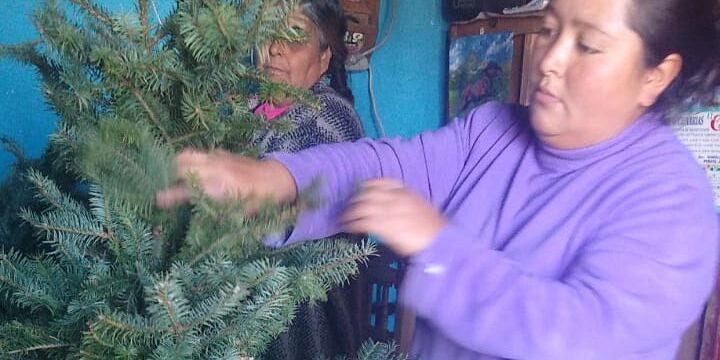
It was the teacher who gave them the guidance. And with their hard work and persistence, the women of El Conejo made it a reality. Blanca Itzela laughs when she remembers it. She confesses that she didn't believe they could actually accomplish a project like the one they've done, but she decided to have faith. Along with her companions, she was assembling the first Christmas decorations of the year and holding one of the thickest branches, which she needs to work with to make the little tree they're building.
Back in 2007, they first had to obtain permits, says Pineda López, because the National Park does not allow the collection or use of any natural resources. That's why they approached government agencies seeking support. The support came as part of the Conservation Program for Sustainable Development (Procodes). This program provides financial assistance to promote ecosystem conservation because the protected natural area faces a major problem: wildfires. According to the National Commission of Natural Protected Areas (Conanp), these fires are caused by agricultural burning of pastures, the use of fire for poaching, and disputes over poorly defined boundaries.
To give an example of the severity: Conanp points out that in 1998 a fire affected more than 3,000 hectares of the 11,530 hectares that comprise the area. Since that year, they have been pruning the pine trees on 23 hectares. They cut them down two meters in June and November, in exchange for a stipend that is divided among the members of the group.
How they work against tree burning
Lucía Valdez explains that the two-meter-wide area is where the branches dry out, and when fire approaches, they are more likely to ignite. Thus, the fire spreads little by little, engulfing more and more trees, halfway through the forest, unnoticed until the damage is extensive. By removing that section, she explains, a kind of natural barrier is created, preventing the next tree from catching fire, and the one after that, and the one after that, thus preventing the fire from spreading.
“We have to take care of the forest, and that’s why we do these things, so we don’t take the life out of the trees. If we cut down the forest, there won’t be water for the children. (…) This pruning removes the branches that could dry out. Then, when there’s a fire, the tree doesn’t burn because it’s pruned from below, preventing the branches from catching fire,” says Alba Martinez. Her four-year-old daughter plays beside her, sometimes asking to go play in the woods.
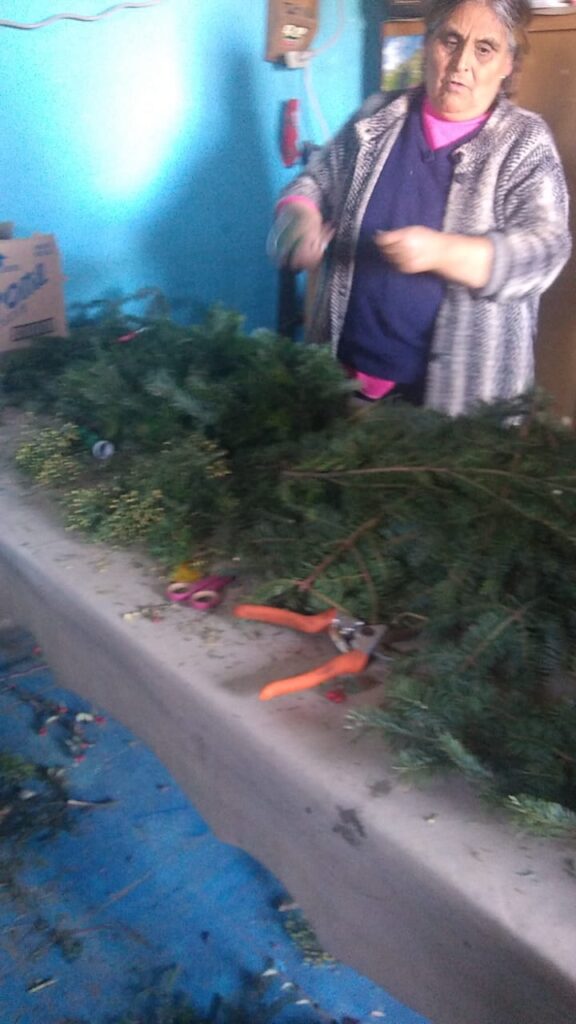
Alba is a homemaker and joined the group when Lucía asked her for help assembling some pieces she was responsible for. Over time, she became more involved and now receives a portion of the proceeds from sales. On the other end of the video call, Alba works on a triangular base, braiding the twigs while trying to make it resemble a small pine tree. The process can take about an hour and a half, if she doesn't make a mistake, because if she does, the shape is lost and she has to start over.
The pandemic affected sales but not the desire
The last two years haven't been easy: they say the federal government didn't provide the funds for pruning. They say they weren't given reasons, although they are allowed to continue pruning and collecting the supplies they need for wreaths, small pine trees, and other crafts.
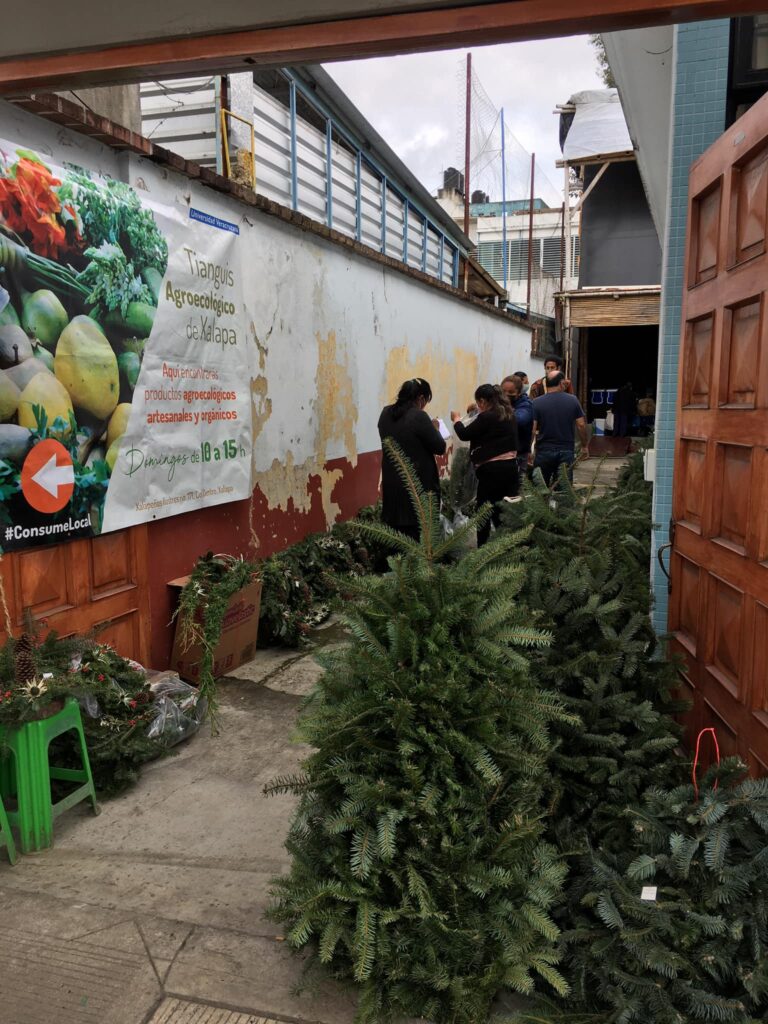
Furthermore, the pandemic hit them hard. They can't get their products into the sales outlets they had been securing. Although the professor from the University of Veracruz helps them with online orders, the quantities aren't the same.
“Sales are slow because before this whole Covid thing, we used to get orders for tons and there was no problem. But now there is, because people aren't going out and we don't even have markets to go to to sell to,” says Blanca Itzela. She jokes: if she got a lot of orders, it wouldn't matter how sore her hands got, as she tries to show the camera the small cuts and blisters left after hours and hours of handling the oyamel branches.
There are few job opportunities in the area. Potato farming is the predominant activity. Most of the couples in the area work in this field, but the pay isn't enough to cover household expenses, much less to achieve financial independence.
Impact and expansion
The professor from the University of Veracruz stated in the university newspaper that one of the project's greatest contributions has been its impact on women . She shared that they now have greater freedom of expression, self-confidence, and economic resources.
“This brings a little bit of money into our family. We don't have any resources here, and we only grow potatoes, but then they don't sell well. Thank God this helps us a little, even if it's just once a year,” says Lucía. They are expanding and now make baskets, which they hope to sell year-round to earn some extra income.
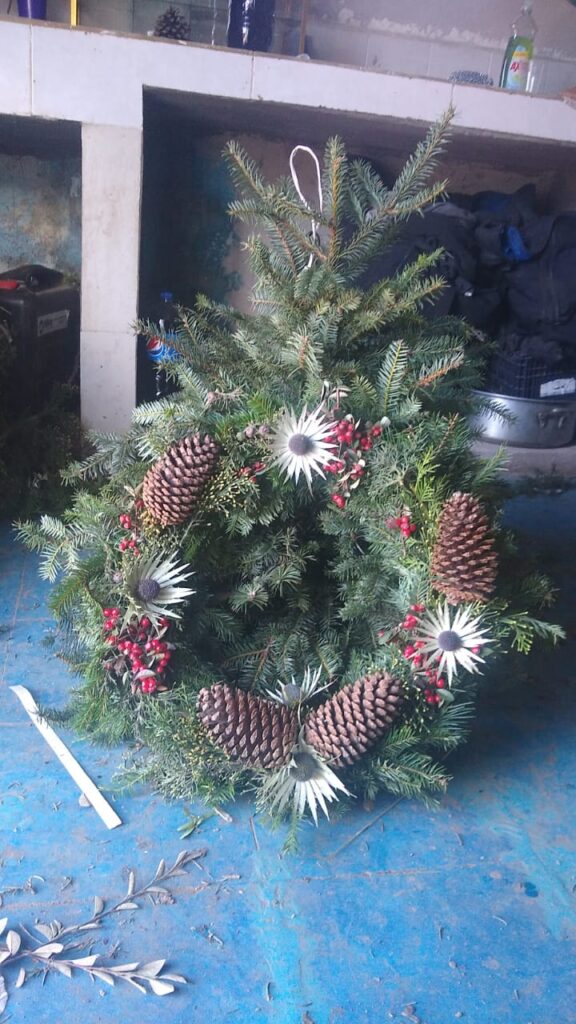
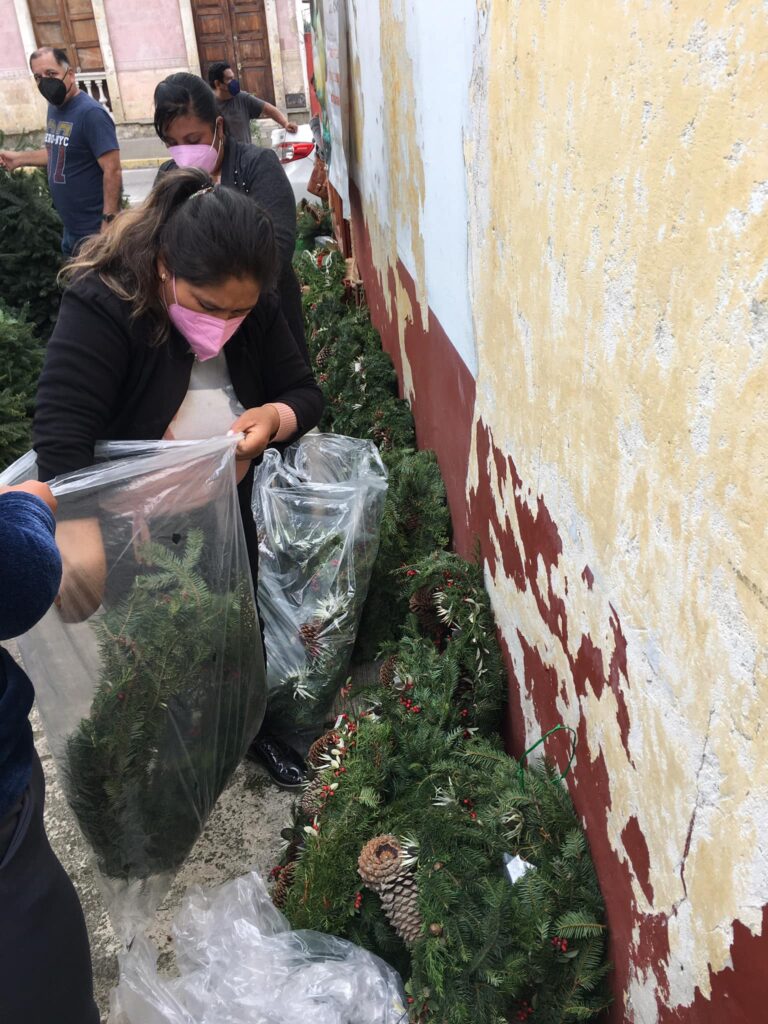
Her colleagues show the camera a decorated wreath. They've added bows, fir cones, and flowers, while they finish the first little tree. They want buyers to take home a blend of handcrafted and natural products while supporting forest conservation.
CONTACT: https://m.facebook.com/tianguisagroecologicodexalapa/
Share
We are present
We are committed to journalism that delves into the territories and conducts thorough investigations, combined with new technologies and narrative formats. We want the protagonists, their stories, and their struggles to be present.
SUPPORT US

FOLLOW US
Related notes



We are present
This and other stories are not usually on the media agenda. Together we can bring them to light.