

Boric: What the millennial president proposes to dissidents and indigenous peoples
Chile will have a president who is committed to defending the rights of women, LGBTQ+ people, and Indigenous people. Why is he considered an ally, and what expectations are placed on the youngest head of state in the country's history?


Share

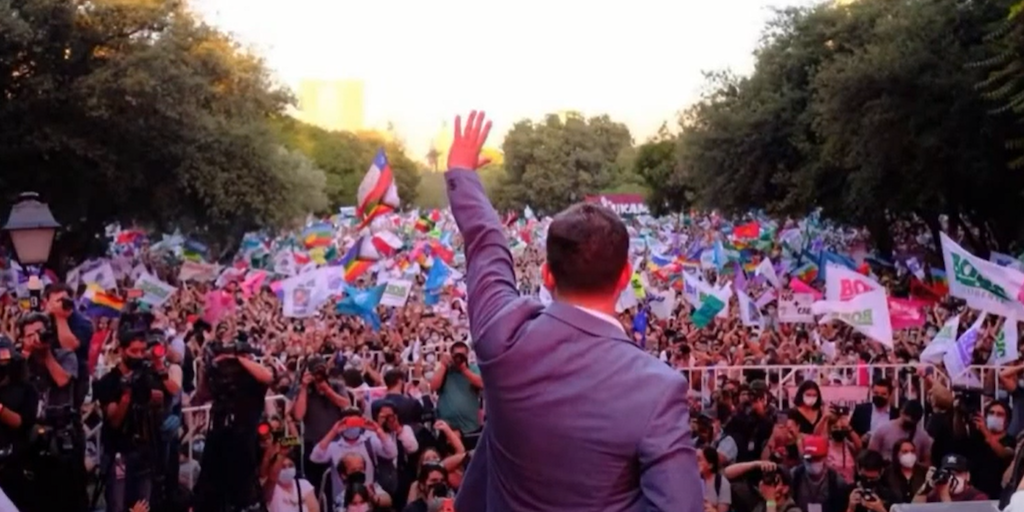
SANTIAGO, Chile. During his presidential campaign, Gabriel Boric repeatedly said that hope had to triumph over fear. And last night, he won. The 35-year-old former congressman will be the next president of Chile, after defeating far-right candidate José Antonio Kast in the second round of elections, with 55.87% of the vote, compared to 44.13% for the Social Christian Front candidate.
Since voting ceased to be mandatory in 2012, no election—except for the 2020 constitutional plebiscite—had exceeded 50% turnout. This milestone made Boric the most voted-for president in the country's history . In March 2022, he will succeed Sebastián Piñera, becoming Chile's youngest head of state ever, the first millennial.
Who is Boric and where does he come from?
A decade ago, Boric wasn't very well known. His leap into politics occurred in 2011, when he established himself as one of the leaders of the student movement that took to the streets of the country demanding free, quality education, when Piñera was president for the first time.
A year later he was elected president of the Student Federation of the University of Chile. In 2013 he became a member of parliament, winning the most votes in his district.
Last night, the streets of Santiago were packed. Thousands of people came out to celebrate and join him in his victory. They gathered around a stage that his campaign team had set up on the Alameda, the capital's main avenue. Chilean flags, rainbow flags, and Mapuche flags waved among the crowd.
First gesture towards indigenous peoples
Boric began his first speech as president with a gesture to the indigenous peoples: "Good evening, Chile. Po nui, suma aruma, pun may Chile ." "Po nui" means good evening in Rapa Nui; "suma aruma" is the same in the Aymara language; and "pun may" in Mapudungun.
She highlighted the role of children, women, and diverse groups. “I want to express my special gratitude to the women of our country who organized throughout the territory to defend the rights they have fought so hard to achieve. From basic rights like the right to vote, which some dared to question, to the right to decide over their own bodies or the right to non-discrimination based on the type of family they have chosen to form. Count on us; you will be key players in our government,” she said.
"Boric has always been an ally"
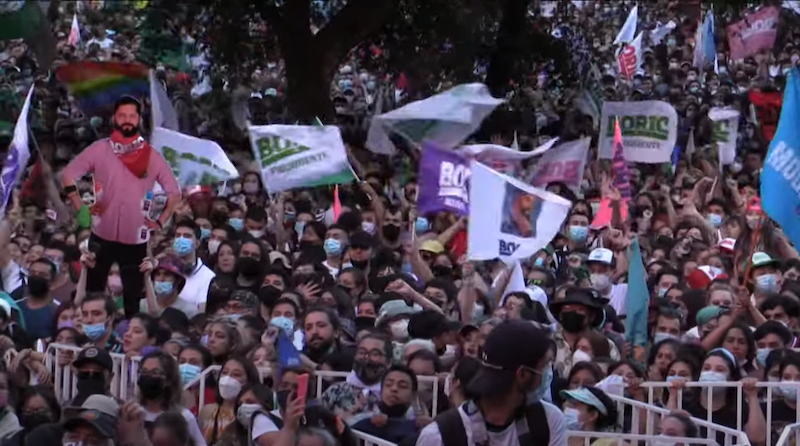
In that first speech, she also addressed dissidents and diverse groups. “ In our government, non-discrimination and stopping violence against diverse groups and women, together with feminist organizations, will be fundamental .”
In a country where violence against the LGBTIQ+ community and hate crimes are on the rise year after year, Boric's words offer reassurance to organizations and activists. In recent weeks, many have felt the threat of setbacks in the few gains and spaces they have won.
Alessia Injoque , a trans activist and director of the Iguales Foundation tells Presentes . “Boric comes with a commitment to fight discrimination and violence, so that we can move towards full equality and inclusion for LGBTIQ+ people in Chilean society . He has always been an ally.”

Alessia says she also feels relieved: “José Antonio Kast was an active defender of all the discriminatory barriers we painstakingly dismantled in recent years. A promoter of the 'gender ideology' conspiracy theory and other hate speech,” Alessia explains. She confesses that after his defeat, she sleeps “more peacefully.”
Hopes and challenges of the new government
For Claudia Ancapán, a trans activist, midwife, and Mapuche woman , Boric's victory serves to uphold and reaffirm the commitment of individuals and institutions to human rights. “There is great hope in his government. The main reason is that he helped to avert this trend toward extreme, biased totalitarianism disguised as progressive. It is a triumph of reason over ineffectiveness and negligence.”
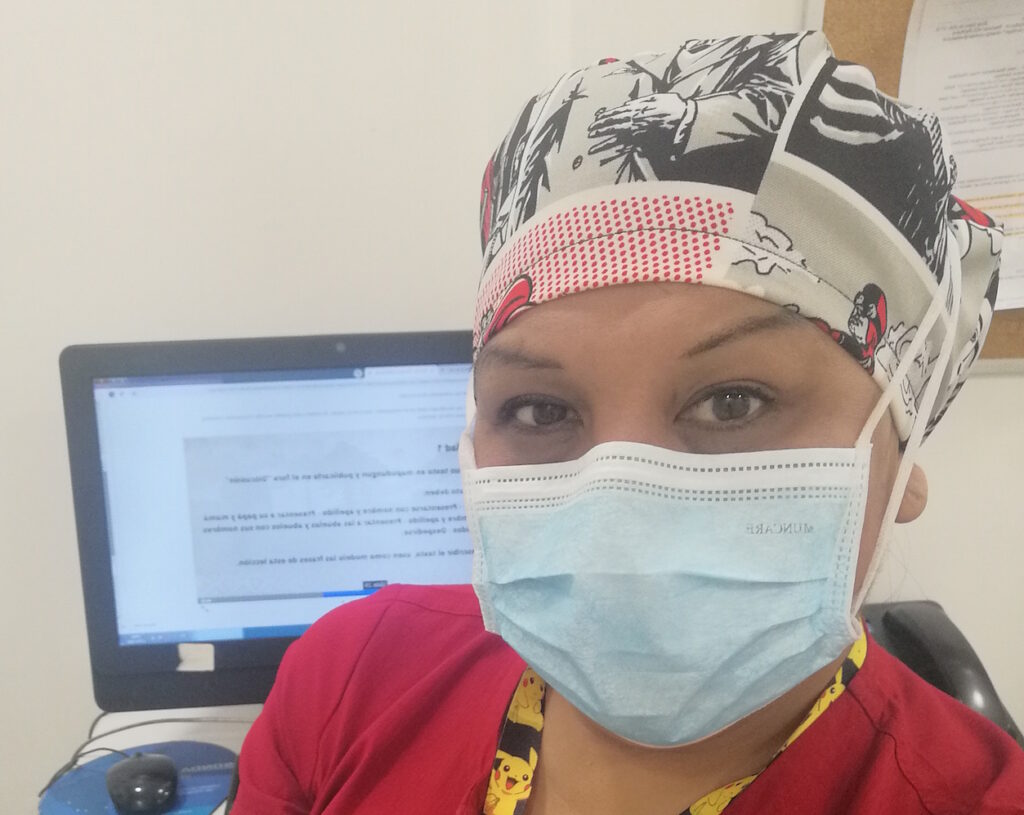
But the challenges are not easy, Claudia says. “She has the task of promoting human rights-based laws that will allow us to consolidate the social and cultural change of respect for everyone who feels different in this country.”
This includes sexual diversity, and especially the trans community. For Claudia, it needs to be protected by a comprehensive law that addresses health. But also Indigenous peoples: “When a large part of the country refuses to see reality, the differences and cultural richness, and the urgency of social change, we need laws that promote an intercultural perspective and the recognition of our Indigenous peoples . That is why the work of the Constitutional Convention is so important. Hopefully, Boric will also align himself with this.”
Constanza Valdés, a trans lawyer and co-director of the Chilean Association of Feminist Lawyers (Abofem) , celebrates the fact that Boric's government program gives women and sexual minorities a prominent place and that they can benefit from the support it provides. For example, she highlights the Comprehensive Law Against Gender Violence and the Comprehensive Trans Law: "Our goal is to never again allow fascism or campaigns of terror to have such a place in our democracy and society ," she asserts.

The proposals : women, dissidents and indigenous peoples
One of the main pillars of Boric's program is the feminist, cross-cutting, and intersectional perspective he promises to incorporate into his government, with concrete plans and laws to benefit women, LGBTQ+ people, and Indigenous communities. These are some of the key initiatives for women, LGBTQ+ people, and Indigenous communities highlighted in the 18 pillars of his proposal, which are available for review at https://boricpresidente.cl/propuestas :
Comprehensive sexual and reproductive health
“We will present a framework law on sexual and reproductive rights that recognizes the diversity of people and their different needs, and establishes the duty of the State to ensure the full exercise of sexual and reproductive rights.”
“We will create a policy with an emphasis on strategies for the prevention of HIV and other STIs, within the comprehensive sexual education plan, with a perspective focused on protecting the rights of people living with HIV and ending the stigmatization of the disease.”
“We will legalize abortion, establishing it as a guaranteed health service and providing health centers with recommended methods of uterine evacuation (mifepristone, misoprostol and AMEU).”
“We will guarantee specialized health services focusing on groups that have historically been marginalized in sexual and reproductive health services, such as LGBTIQ+ people, older people and adolescents.”
Mental health as a priority
“We will increase the number of mental health trained workers in health teams (for example, in psychological first aid), training to improve the accessibility and acceptability of mental health services for the LGBTIQA+ population.”
“We will strengthen mental health care for LGBTIAQ+ people from primary care, recognizing the specific needs of sexual diversity with a focus on adolescents and young people, guaranteeing care from a human rights and gender perspective approach.”
“We will strengthen our work with the National Care System, and we will create comprehensive programs that address the mental health consequences of gender-based violence in women, children, adolescents, and dissidents.”
School inclusion
“We will promote a Comprehensive Sexual Education Law at all levels of education as a pillar of an equal education that recognizes sexual diversity, challenges gender stereotypes and teaches the sexual and reproductive rights of people.”
“We will create training programs in the area for education workers, focusing on safe environments and the prevention of sexist and homophobic violence and youth suicide among the LGBTI+ population.”
“We will move forward in recognizing the plurality of cultures in kindergartens and schools, respecting the principle of multilingualism of indigenous peoples and communities with deafness.”
Equality in diversity: National LGBTIAQ+ Social Rights Plan
“We will promote a plan that guarantees the protection and promotion of the social rights of sexual and gender diversities and dissidents.”
“We will promote affirmative action that guarantees the right to employment, quality career paths, and curbs workplace harassment of LGBTIAQ+ people through training and skills development programs. The government will develop protocols and circulars that guarantee non-discrimination policies and will promote the Trans Employment Quota.”
“We will promote a Comprehensive Trans Law that guarantees an end to the exclusions, discrimination, and historical injustices suffered by trans people. We will promote the participation of the LGBTIAQ+ population in union representation bodies, including collective bargaining, regardless of the employment status.”
“We will safeguard a non-sexist and inclusive education. We will promote programs for schools free of discrimination for sexual diversity. Official data on violence against LGBTIAQ+ people in school communities will be available, and those with the worst indicators will receive support.”
“We will reformulate the circular on trans children in educational spaces, demanding non-discrimination and integration protocols.”
“We will incorporate a package of trans and non-binary benefits as an explicit health guarantee, from a care perspective. This will include specialist care, surgeries, medications, and psychological support. We will prohibit gender-normalizing surgeries on newborns, establishing associated civil and administrative liabilities. Compliance with Circular 18 will be guaranteed in the case of intersex children.”
“A cross-cutting approach to gender and the inclusion of LGBTIAQ+ people will be incorporated into the curriculum of health careers. Research with a biopsychosocial approach to health care for the LGBTIAQ+ community, especially trans and non-binary people, will be promoted.”
Recognition of identities
“We will amend the Gender Identity Law to allow minors under 14 to change their name and registered sex and establish the administrative procedure as the general rule. We will recognize in the identification document those identities outside the gender binary (non-binary card).”
Indigenous and Afro-descendant tribal peoples
“We will generate a plurinational dialogue with all indigenous peoples to agree on the terms of territorial restitution. This will include the issue of ancestral lands and access to natural resources, in order to allow them to exercise their right to autonomy, preventing and repairing the fragmentation of their territories.”
“Together with the indigenous peoples, we will create a new institutional framework for indigenous participation and consultation.”
“We will incorporate autonomous intercultural health initiatives into the National Health System, surpassing the current funding based on DFL 36 of 1980.”
“We will replace Law 18.314, the Anti-Terrorist Law, with legislation that safeguards democratic life from real organized threats against the life and integrity of individuals. This legislation will be aligned with international human rights standards, so as to preclude its use as a tool for political persecution.”
We are present
We are committed to journalism that delves into the territories and conducts thorough investigations, combined with new technologies and narrative formats. We want the protagonists, their stories, and their struggles to be present.
SUPPORT US

FOLLOW US
Related notes

We are present
This and other stories are not usually on the media agenda. Together we can bring them to light.