

ILGA Report: Sexual diversity in the world remains under threat
The association documented hundreds of instances worldwide in which state agents imposed fines, imprisonment, and other penalties on people of diverse sexual orientations, gender identities, and expressions.


Share

Around one third of United Nations member states have laws that criminalize consensual sexual acts between adults of the same sex.
This was indicated in the report Our Identities Under Arrest , which the International Lesbian, Gay, Bisexual, Trans and Intersex Association (ILGA) presented on Wednesday, December 15.
The research focused on recording how in the last two decades some countries continue to criminalize LGBT identities based on laws that remain in force, even though they are considered "inactive regulations".
The role of governments
“To date, around one-third of United Nations member states criminalize consensual same-sex sexual acts between adults,” said Kellyn Botha, research consultant for ILGA World and author of the report.
He added: “Governments often underestimate these criminalizing laws as 'dormant regulations,' but laws never truly sleep.”
It also states that “this report provides ample evidence of how criminalizing provisions have been effectively used against our communities around the world , sometimes being reactivated after years as a mere threat written into legal codes.”
“It is based on these rules that the security forces, and then the judicial branch, judge and convict these people,” added Lucas Ramón Mendos, editor of the report and research coordinator for ILGA Mundo.
Video: ILGA
The preparation of the report
The document compiles approximately 900 instances of criminalization in 72 countries , although “there are clear indications that the actual number of arrests and prosecutions is considerably higher than those recorded in all regions,” warns ILGA World.
“What we did was document case by case all the instances, especially regarding the techniques by which people fall prey to police action, the evidence used, and see how there are certain patterns in various regions,” Mendos explained to Presentes .
In this regard, one of the main findings recorded in all the countries observed was "that in all instances where the security force intervenes, there is physical and psychological violence as a rule ," the project editor indicated.
He emphasized: “We could not find any documents or testimonies from the victims that did not include insults, humiliations, requests for sexual 'favors', bribes, torture, beatings.”
The security forces, the main agents of violence
Another finding revealed by the report was that gender expression “plays a key role in numerous cases of criminalizing law enforcement ,” the document states.
“The prejudice that still runs very deep within the security forces is seen all over the world,” Mendos said.
“This prejudice is particularly triggered by diverse gender expressions. Anyone who doesn't simply conform to what is culturally expected of a man or a woman in binary terms arouses a rather furious animosity, especially from the security forces, and we also see this transferred to the judiciary in many countries,” Mendos said.
A population subjected to violence and abandonment
Furthermore, the research reveals the revictimization and helplessness experienced by many LGBT people.
“There are people who want to report crimes they have suffered, and in the vast majority of countries, when they approach the police, their gender expression, or the suspicion that their gender expression may generate among the police, often ends in the person's arrest. This has happened even when the person wanted to report serious crimes, such as rape, when obviously what they should receive is protection from the State,” explained the research coordinator for ILGA World.
Among other findings in the report, it is found that binary and essentialist notions of gender increase the criminalization of trans and gender-diverse people.
It also states that the media plays an important role in how states apply criminalizing provisions.
Finally, it details that consensual sexual acts between adults of the same sex "continue to be punished with fines, imprisonment, corporal punishment and (possibly) the death penalty."
In the case of Argentina, there is currently no legislation that criminalizes sexual diversity . Between the 1950s and 1990s, there were regulations that were not part of the Penal Code but operated at the local level . These were police edicts or local ordinances.
This is the only mention of the country in the report.
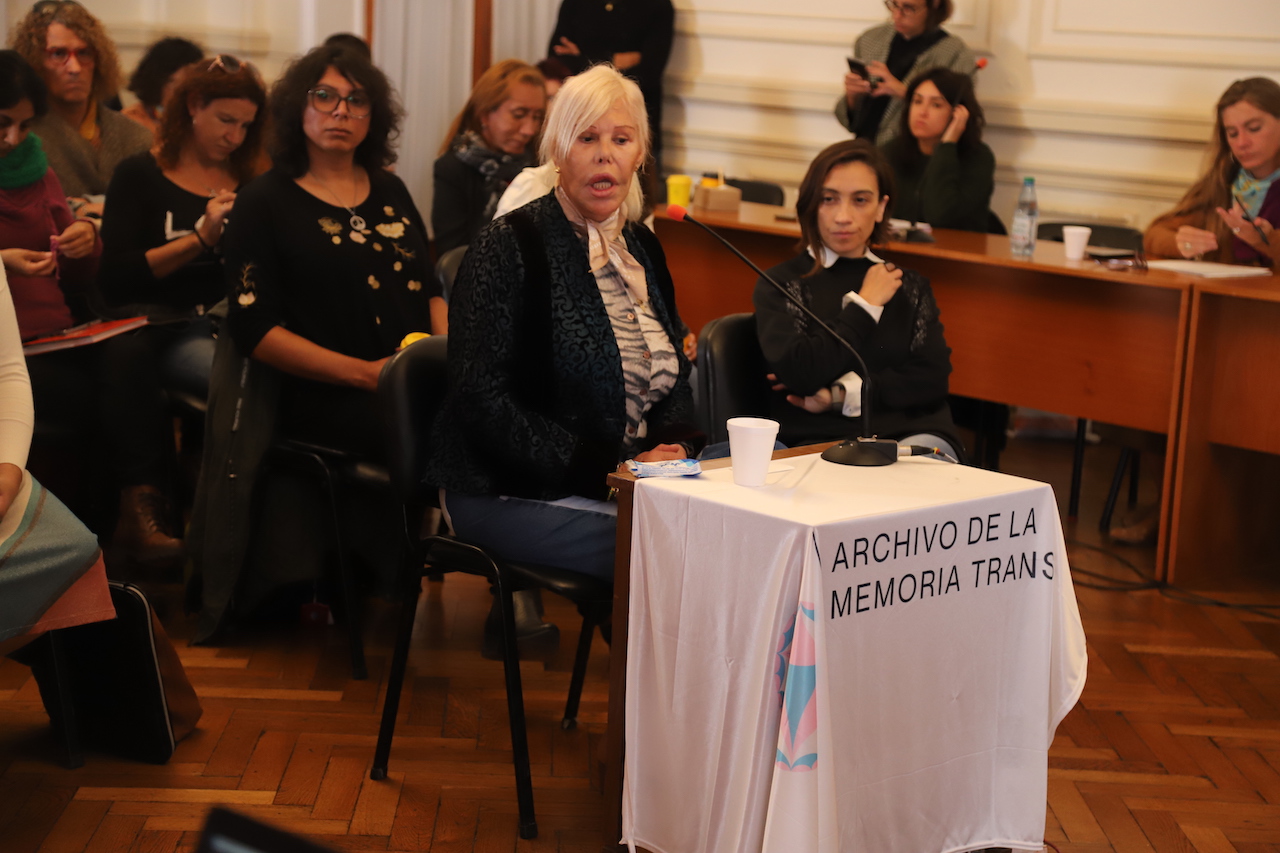
This refers to the arrest on March 29 of this year of 63-year-old trans activist Ivanna Aguilera, on charges related to a ban on wearing clothes of the “opposite sex” that had been repealed in 1988.
What's happening in America?
Although this type of legislation no longer exists in several Latin American countries, other laws are used to indirectly criminalize sexual diversity..
“In Argentina, laws against petty drug dealing and drug trafficking are disproportionately used to criminalize transgender people, especially those involved in prostitution or sex work,” Mendos stated. She clarified that the report does not, however, address this type of legislation.
On the other hand, the most common forms of arrests in countries with criminalizing legislation are raids, street arrests, internet ambushes by security forces, and reports from third parties .
There is also a mention of Cuba for police attacks on women during the Covid-19 pandemic.
Other countries mentioned from the continent are Antigua and Barbuda, Dominica, Grenada, Guyana, and Jamaica.
Irregular causes
Furthermore, certain types of "tests" are used to justify arrests, such as forced anal examinations. These are considered a violation of human rights and a form of torture by the UN Special Rapporteur on Torture and the International Council for the Rehabilitation of Victims of Torture.
Confessions obtained through torture or, directly, the lack of evidence are also recorded.
“The very existence of laws that criminalize LGBT people is a risk. It puts LGBT people in a situation of criminalization simply for being who they are or for their gender expression. We try to focus on these countries especially so that it is still taken into account that while we debate issues that are perhaps much more advanced in some regions, in these places there are still critical situations,” Mendos concluded.
The report can be downloaded at this link .
We are present
We are committed to journalism that delves into the territories and conducts thorough investigations, combined with new technologies and narrative formats. We want the protagonists, their stories, and their struggles to be present.
SUPPORT US

FOLLOW US
Related notes
We are present
This and other stories are not usually on the media agenda. Together we can bring them to light.