

Another trans femicide in Mexico: a young trans woman was murdered and found in a canal in Colima.
Saray was 31 years old and her murder is one of five that have been recorded this year in the area of the west coast of Mexico.


Share

Saray Ramos Izaguirre, 31, was murdered . On the morning of December 11, her body was found in the irrigation canal leading to the town of Lo de Villa in Colima, a state located on Mexico's west coast. This is the fifth transfemicide recorded in Colima in 2021, according to the Orgullo Disidente .
On social media, Saray's friends and family shared messages of love for her and outrage at her murder.
“You have left a great void in the family (…) Once again, I see that feeling different about our bodies or belonging to the LGBTQ+ community is not well-received by others, and expressing yourself is even more dangerous. Your family always accepted you and gave you so much love. I will cherish the beautiful memories (…) thank you for being that unique aunt who taught us that being different doesn't define you as a person; on the contrary, it adds a little more joy to your life. I love you, and you will always be remembered,” wrote a relative of Saray.
For the Dissident Pride , Saray's murder occurs in a context where the security strategy, that is, the presence of the armed forces in the streets - with the supposed objective of confronting drug trafficking groups - is further exacerbating the violence against LGBT+ people in Colima.
“This news fills us with pain and anger. We demand justice from the Colima State Attorney General's Office for Saray Atenea and for all the murdered women. And we demand a real change from the state government in the security strategy that is killing us,” they declared .

Traces of torture and a narco-message
Local journalist Roberto Macías told Presentes that Saray was about to turn 32. He recounted that passersby found her body near the Juárez canal.
The young woman's body showed signs of torture, and a piece of cardboard with threatening messages was found next to her. "In slang, we call them narco-messages; it's unknown who it was addressed to or what it said," the reporter commented.
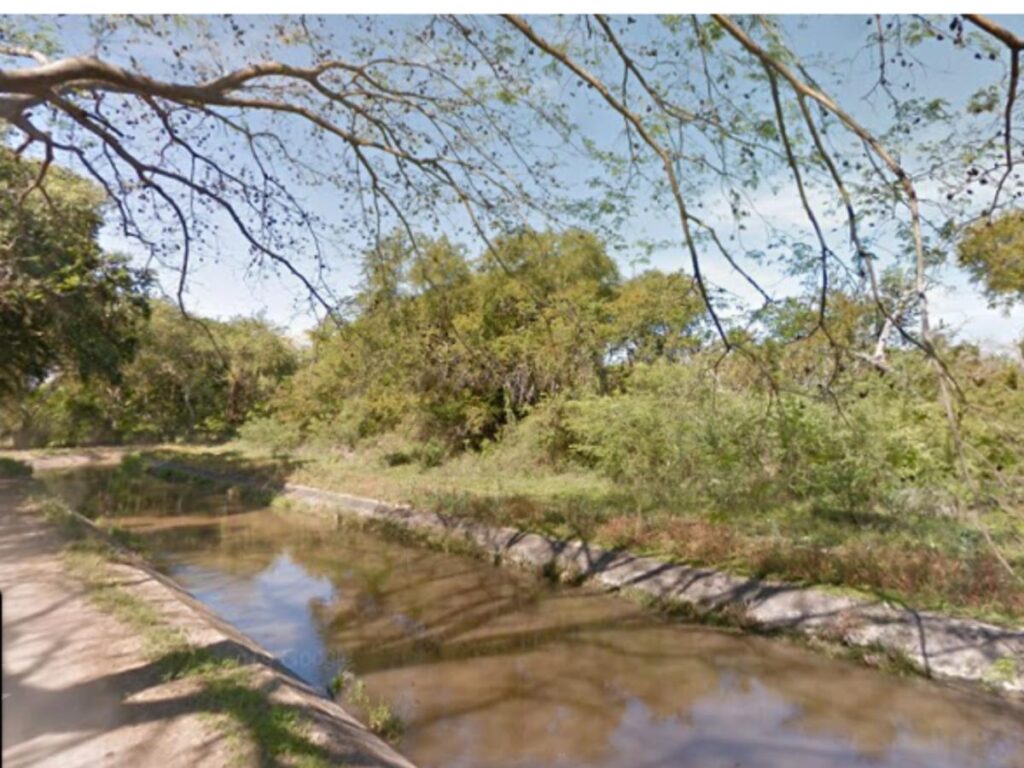
Photo: Google satellite image.
The collective claim
“The way she was found leads us, as a collective, to emphasize that it's related to the state's security strategy, militarization, and the presence of drug cartels. Discussing this with trans women who work in the sex industry, we believe this could be a message for them. Furthermore, simply because she was found in a public space, this crime should be investigated as a de facto femicide ,” Carlos Ruiz, a member of Orgullo Disidente, an LGBT+ human rights collective in Colima, told Presentes .
Colima is one of the few states in the country that has a protocol for action on the crime of femicide that explicitly includes trans identities.
It states that all femicides must be investigated “with a gender perspective, a differential approach and a human rights approach” and applies “to all women, including trans women: transvestites, transsexuals and transgender.”
Furthermore, since 2015 the penal code and the crime of homicide includes the aggravating factors of "hate, rejection or discrimination towards the sexual orientation or gender identity of the victim".
Despite the existence of the protocol and the classification of hate crimes, it is unknown how many people have been arrested and sentenced under these crimes.
And the Mexican State continues to fail to collect information on violence and crimes against LGBTI+ people.
“Death Row”
The Juárez Canal, where Saray was found, connects with the town of Lo de Villa, which is part of the southern area of the state capital.
Marco Antonio Gaspar, current advisor to the Human Rights Commission of Colima and human rights promoter, says in an interview that this area where the canal is located is called "the corridor of death".
“In that area, where Saray was found—which is already the rural zone of Colima—they have found other women, trans women, and men,” she explains. “It’s common to find bodies in this area, often linked to organized crime killings. But it’s also important to mention that the sex work zone, located in the southern part of the city center, extends almost a mile toward the canal. This makes trans women who work in the sex industry even more vulnerable.”
Because of his work as a human rights advocate, Gaspar distributes condoms in the red-light district in the early morning hours. Given the increase in violence in that area, the owners of the neighboring bars warned him—"Don't risk it anymore, it's better to support us at other times," they told him.
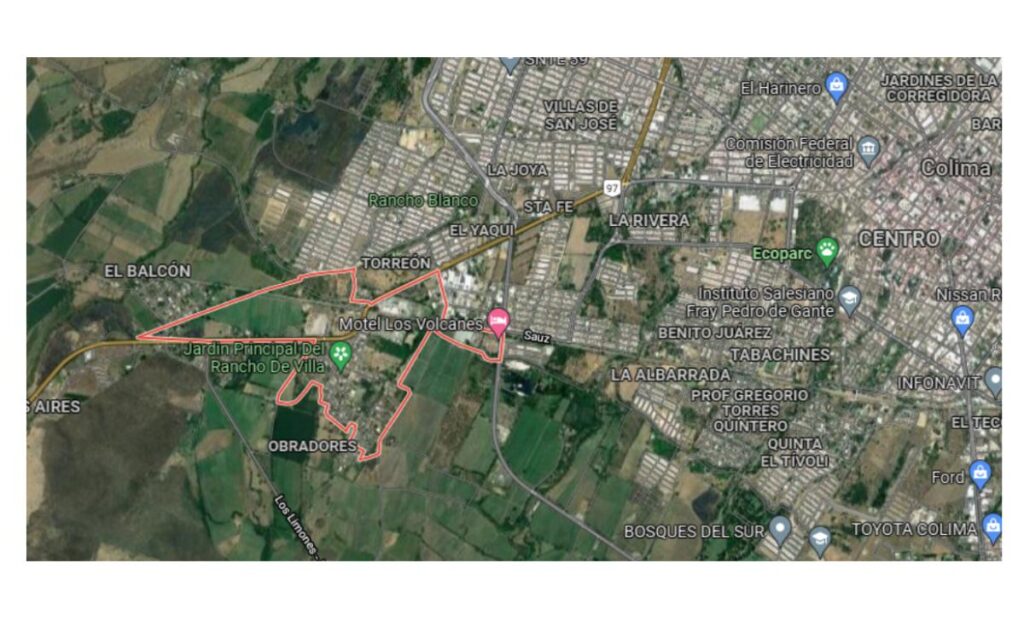
Photo: Google Maps
“Violence is more brutal towards LGBT people with the presence of drug traffickers, the police, and the army.”
Marco Antonio Gaspar, in addition to being a human rights promoter, has been recording hate crimes in the state for twenty years.
According to their statistics, at least 30 LGBT+ people were murdered during that time .
Both the Dissident Pride collective and Gaspar point out that the security strategy has been a factor in the increase of violence against LGBTI+ people.
In his exercise of memory, Gaspar tells Presentes what he calls "emblematic cases" that illustrate how "violence is more brutal towards LGBT people with the presence of drug traffickers, the police and the army."
The cases
“A young psychologist was beheaded, and from the information I've gathered, especially from people in the town who saw him, his penis was also cut off and left in his mouth in Comala (north of Colima). Four years ago, a trans woman and her partner were found kneeling with their throats slit. Vanesa, who worked as a sex worker, was stabbed 48 times; that was in 2005.”
Furthermore, in her analysis and documentation of these acts of violence, Gaspar states that there are organized crime groups that engage in “social cleansing.” She explains it this way: “It’s a process. Trans women are first targeted as users, then recruited to sell drugs or collect protection money. And when they don’t meet their sales quota, they are eliminated.”
Violence is not only perpetrated by people involved with criminal groups linked to drug trafficking, but also by the police.
“The same police officers arrest trans women simply because they see them 'dressed as women' or anyone who, in their view, 'dresses as a woman.' And the fact is, the officers here continue to use regulations from the 1980s to arrest trans women, even if they are not engaged in sex work, but they link them to sex work,” she adds.
Public policies are urgently needed.
Colima is a state that has legislation on same-sex marriage; recognition of the identity of adult trans people and recently criminalized so-called “conversion therapies”.
Marco Antonio Gaspar insists. “Beyond rights, for real change to occur, public policies are needed to provide employment for trans women, access to healthcare and justice, and the creation of a state council to prevent discrimination. This is a demand we have been making for over ten years because we have a state law, but there is no body to enforce it.”
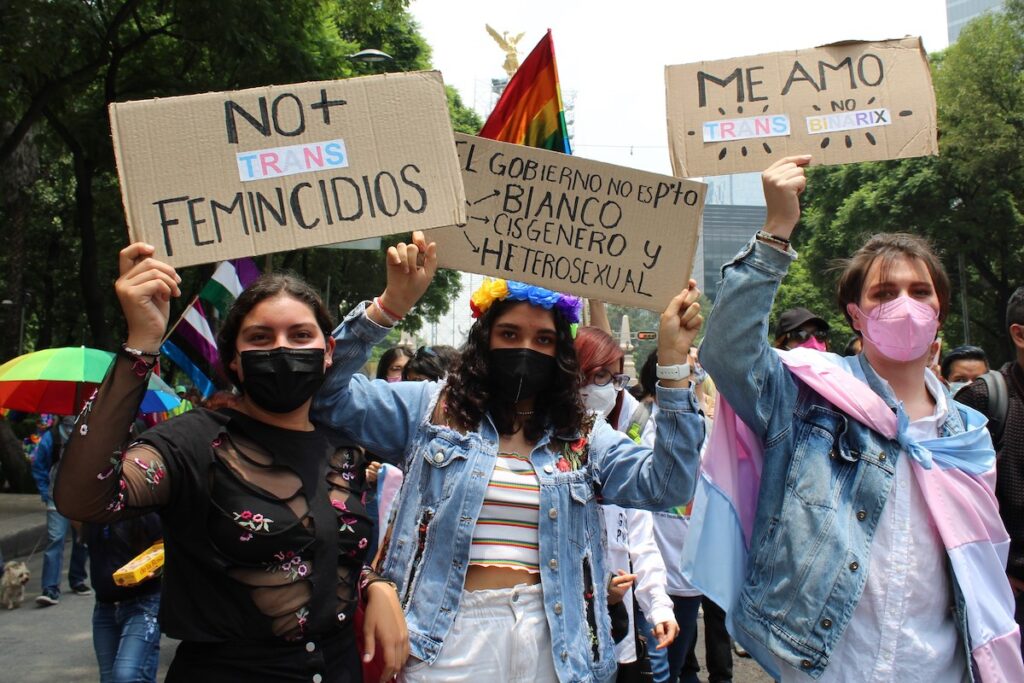
They are protesting for the lives of trans women.
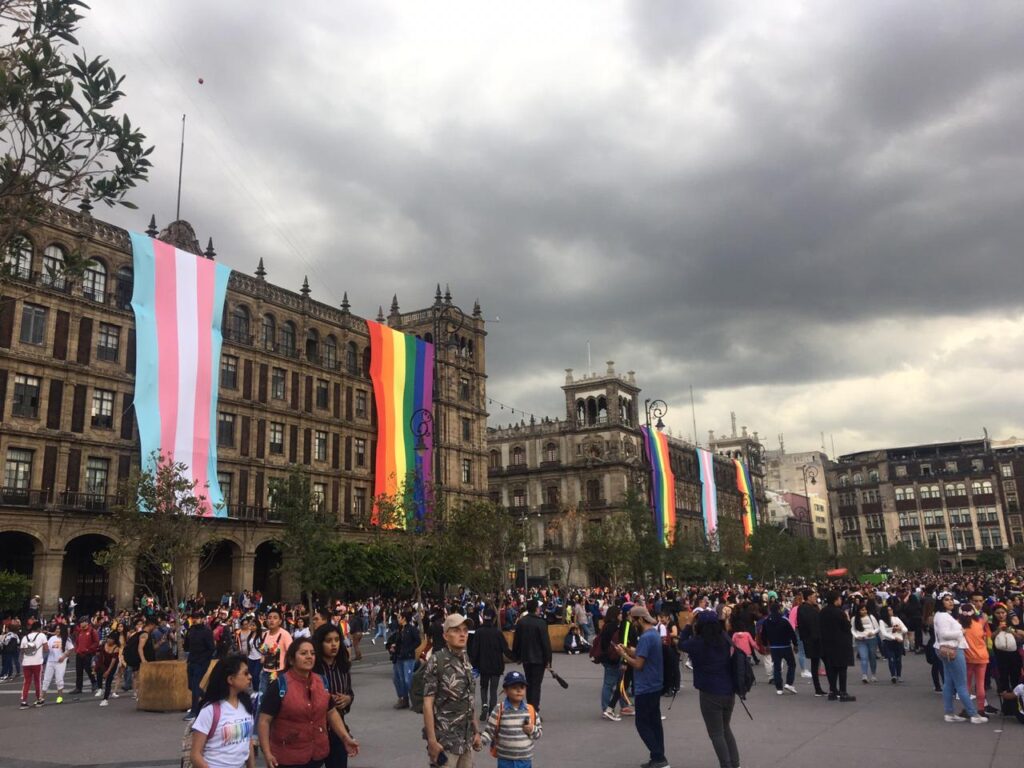
On December 12, the day after the murder of Saray Ramos and on the day of the Virgin of Guadalupe, a group of drag artists performed a “queer art intervention” in the Colima cathedral.
In addition, there was vogue as a form of protest, and according to the website Voces Diversas , “the artists danced and presented a banner with the phrase 'How difficult it is to be alive in Mexico, trans women exist and resist'.”
The Prosecutor's Office does not respond
To find out the status of hate crimes against LGBT people in Colima and specifically about the murder of Saray Ramos, Presentes tried on four occasions to contact the Colima State Prosecutor's Office, without success.
Gaspar says that since he started his registry of hate crimes, the Prosecutor's Office has refused to provide information and even to acknowledge that this violence exists.
“Even though I carry the folder with (newspaper) clippings of the cases, previous prosecutors label them as 'crimes of passion',” he says.
Furthermore, given the existence of a protocol for addressing femicide cases that includes trans women, Gaspar states that the number of femicides committed against trans women in Colima is unknown. She also demands that public officials within the justice system "urgently need sensitivity."
“They have a transphobic, homophobic view towards the victims, and they may be receiving training but it is not enough, because beyond being trained they are not sensitized and that is the problem we have with revictimization and the justice process,” she says.
At the time of publication, the Colima State Prosecutor's Office had not responded to our communication and had not released any information regarding the murder of Saray Ramos.
We are present
We are committed to journalism that delves into the territories and conducts thorough investigations, combined with new technologies and narrative formats. We want the protagonists, their stories, and their struggles to be present.
SUPPORT US

FOLLOW US
Related notes
We are present
This and other stories are not usually on the media agenda. Together we can bring them to light.