

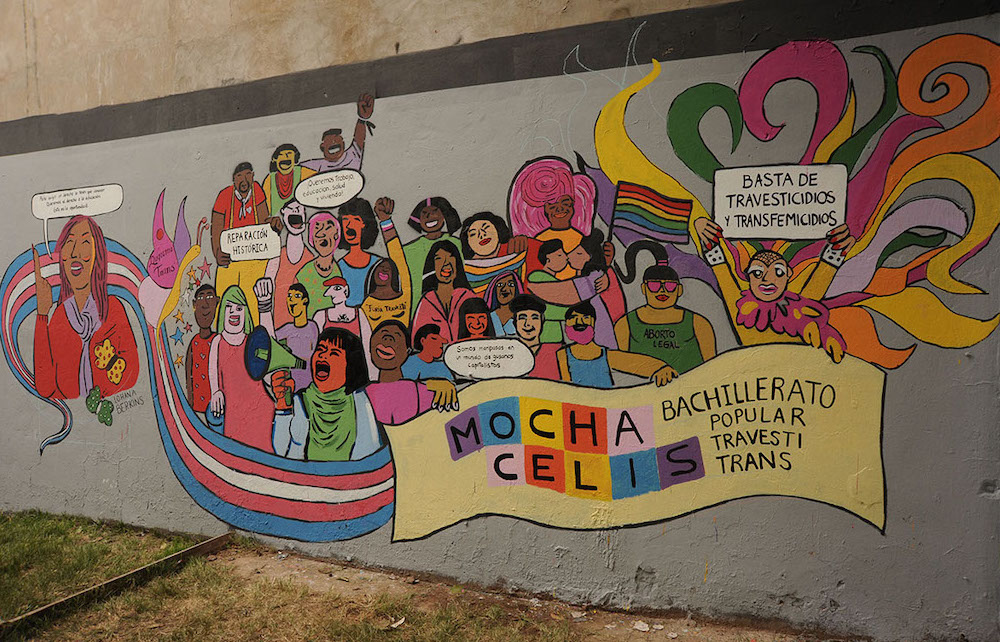
The Mocha Celis trans high school inaugurates its arrival in the new neighborhood with a mural
La Mocha Celis is the world's first inclusive, non-binary, transvestite, and non-exclusionary community high school. While they wait to move into their own building, after 10 years in Buenos Aires, they arrived in the Balvanera neighborhood with a mural depicting their struggles and demands.


Share

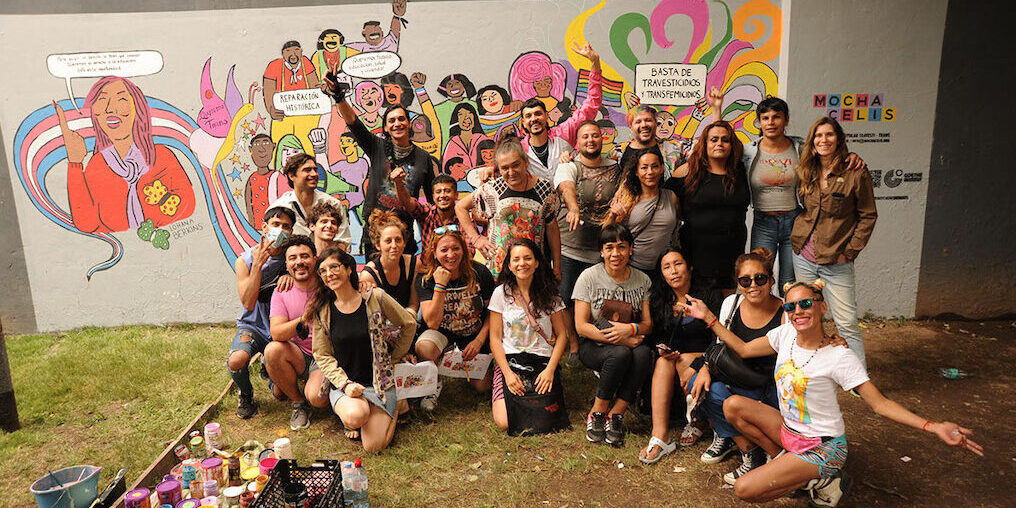
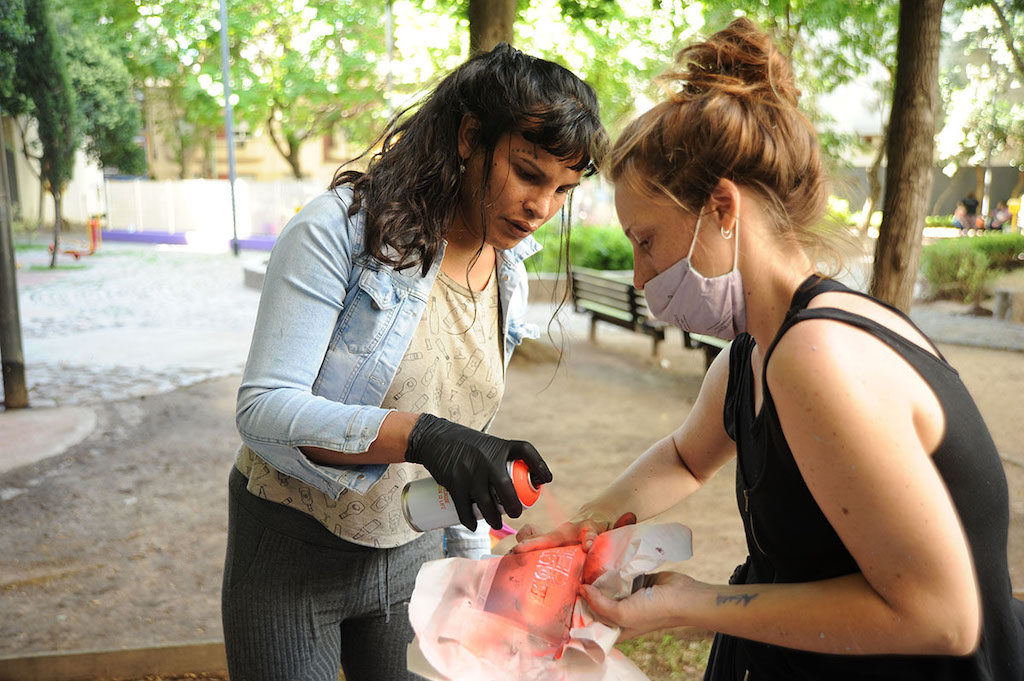
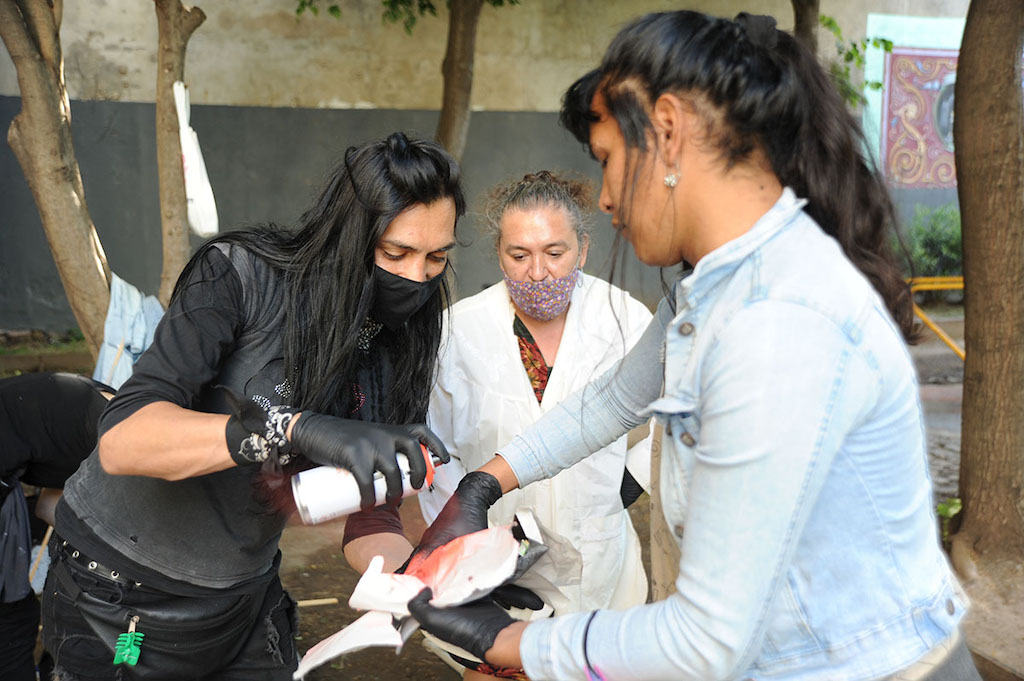
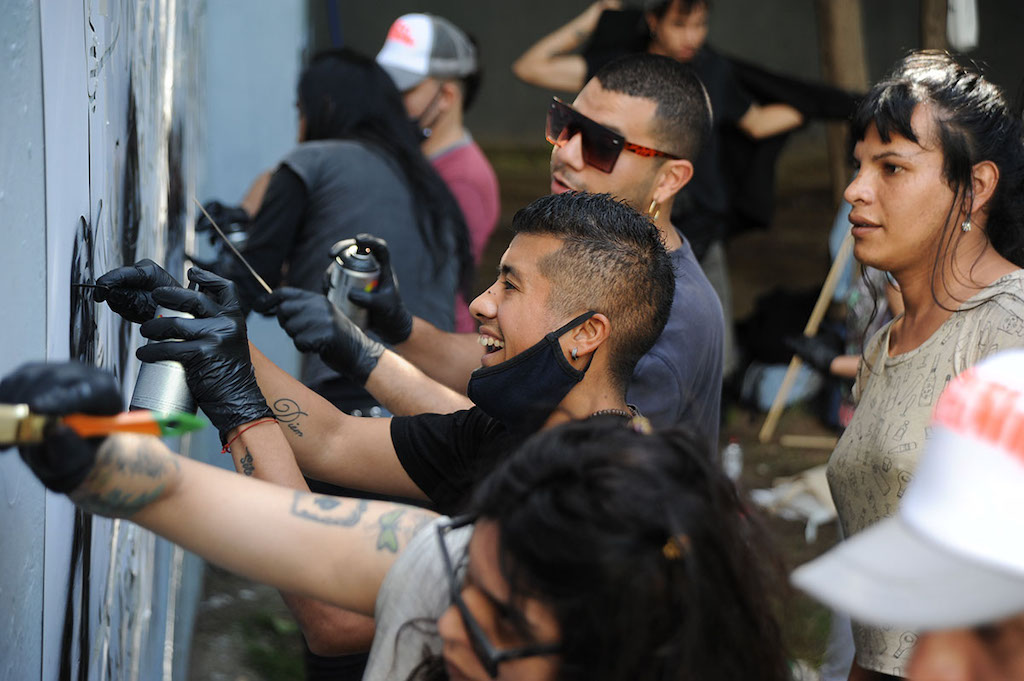
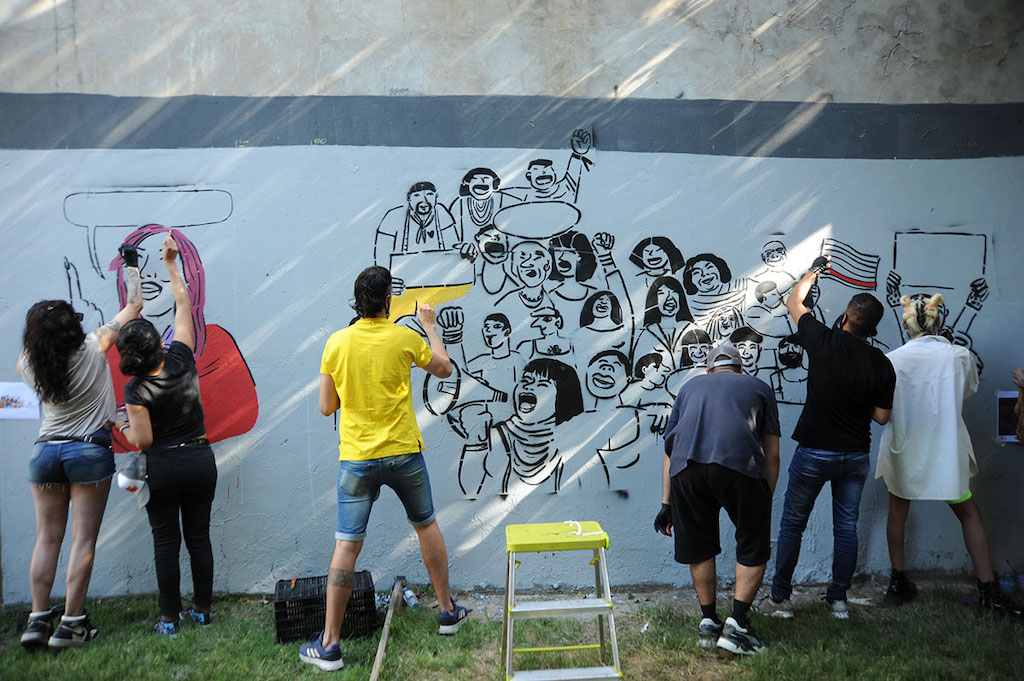
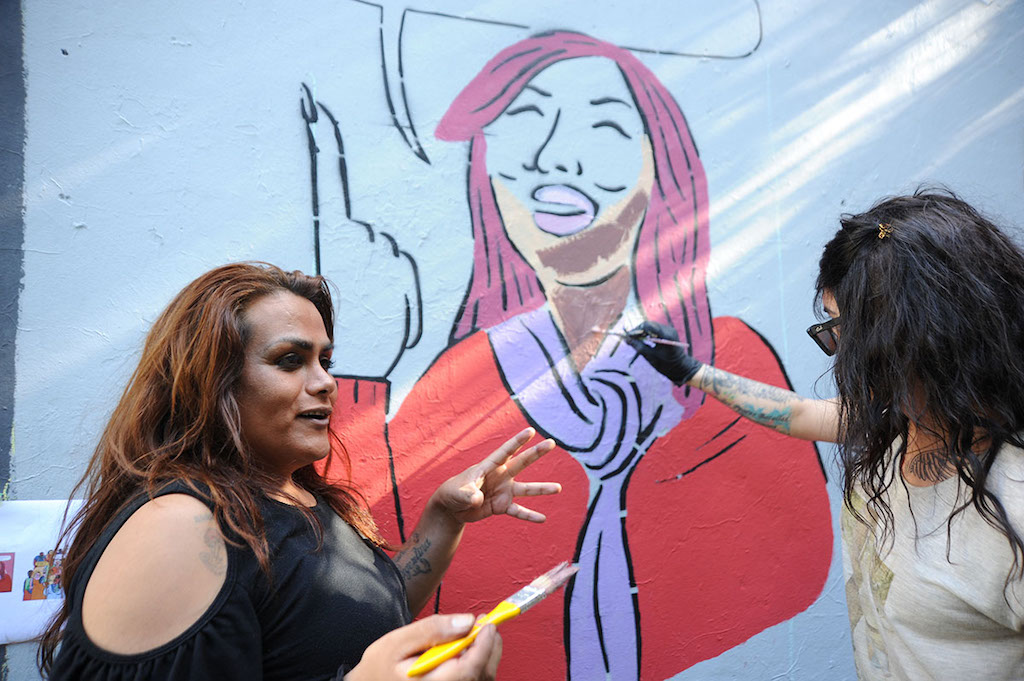
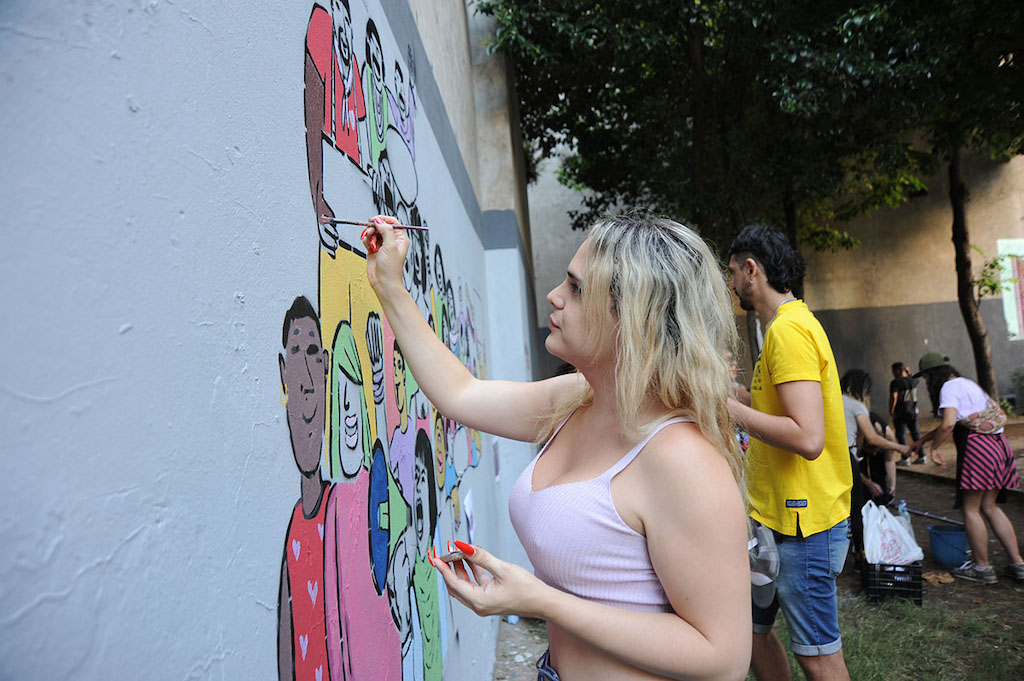
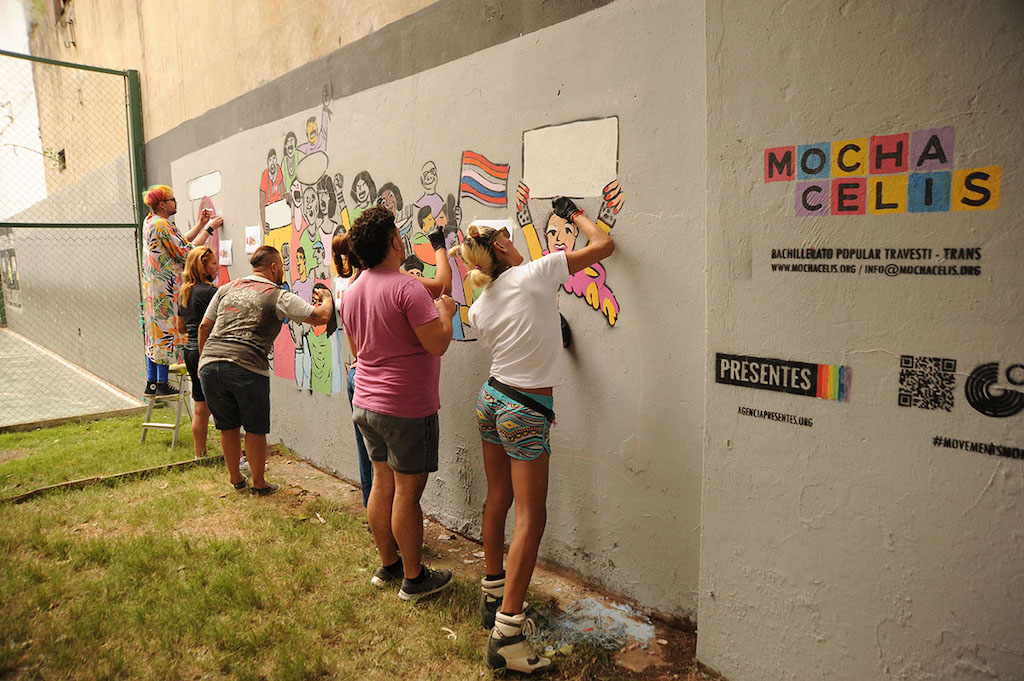
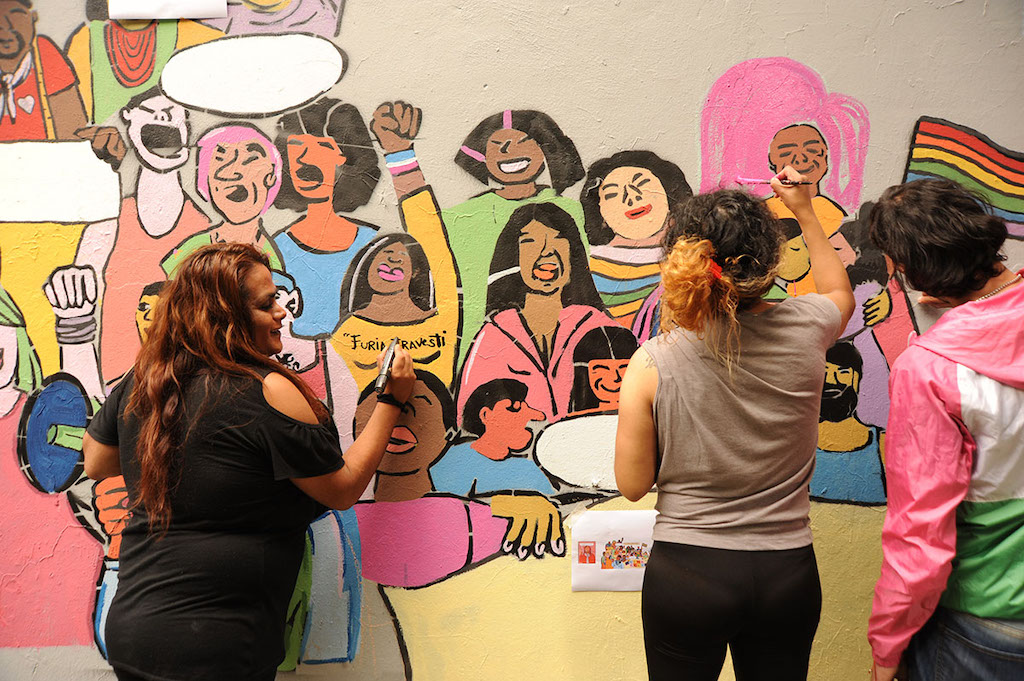
Buenos Aires, Argentina. In these final days of 2021, as we emerge from quarantine, trans students and graduates of Mocha Celis, the world's first trans and non-binary community high school , gathered in a plaza in the Balvanera neighborhood, near Plaza Once (City of Buenos Aires). Invited by the Mocha Celis administration in conjunction with Agencia Presentes, we met to paint a mural in a plaza in the Once neighborhood as a way to begin raising awareness of the arrival of the trans high school, which, although it has been operating for 10 years in the City of Buenos Aires, will have its own building in this neighborhood. However, the location assigned to us currently requires renovations, and once again, we don't know where classes will begin in 2022.
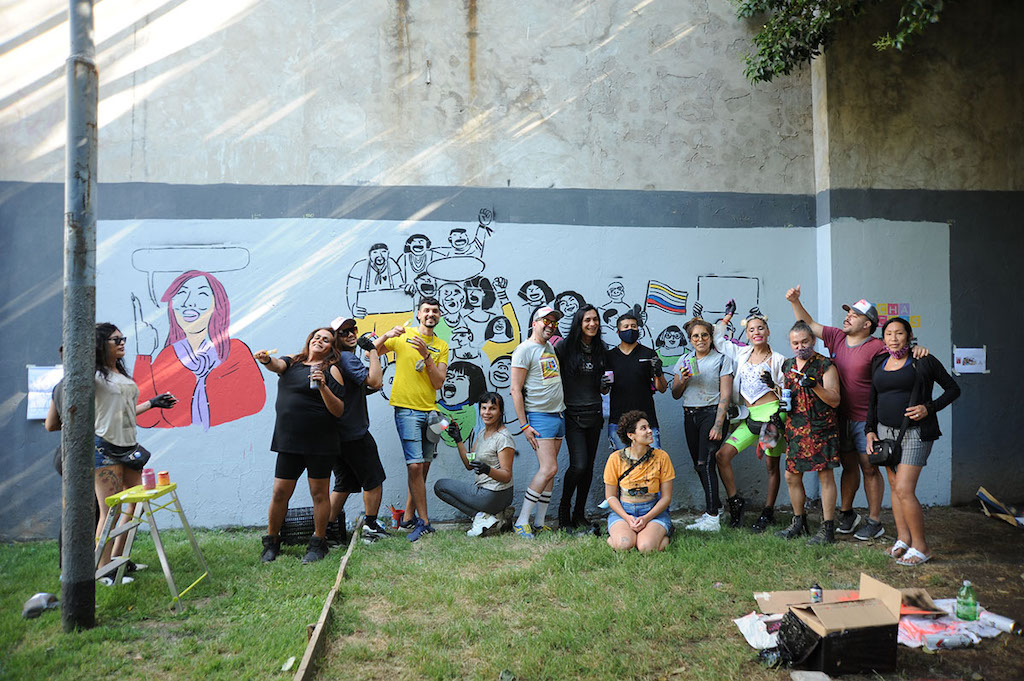
The idea was to meet to paint the mural and share among students and some of the more than 200 graduates who once passed through Mocha , where our lives were transformed forever.
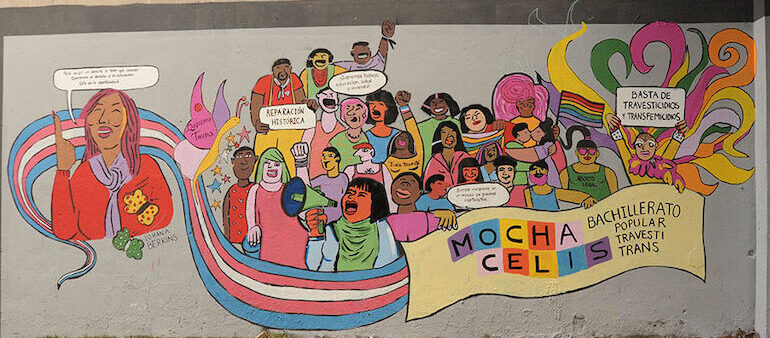
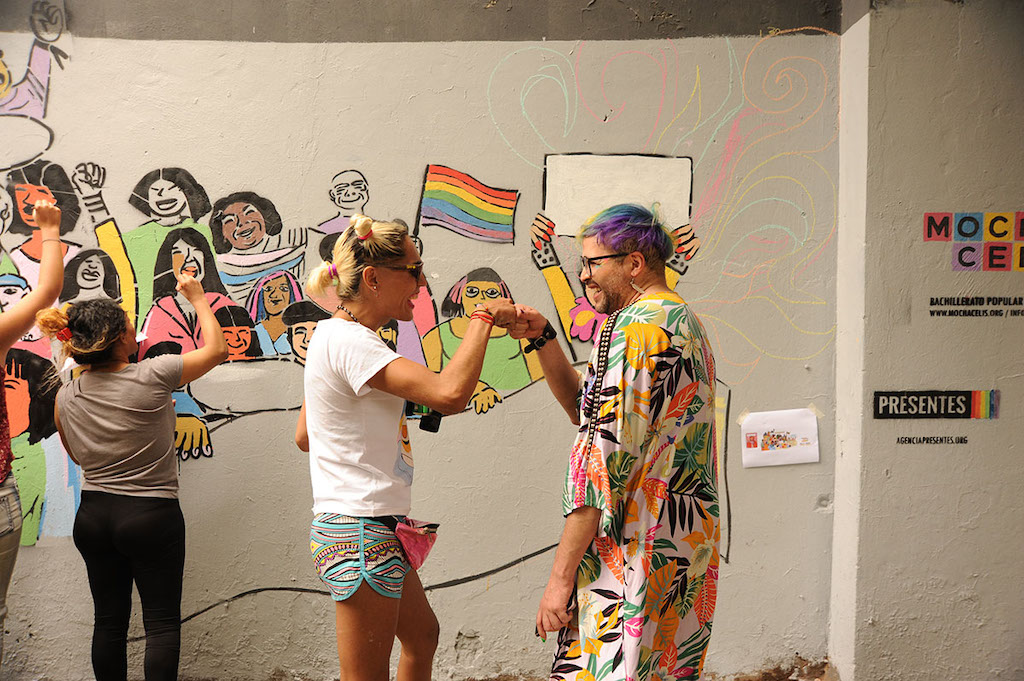
For academic secretary Manu Mireles, painting the mural with her friends from La Mocha was a very moving experience. “The joy of meeting up, hugging each other, and being together doing an activity in the neighborhood. There’s no better welcome for us than arriving in the neighborhood and starting to transform the public space,” says Manu. “We at La Mocha deeply believe in the power of art to transform, to engage in dialogue and conversation with our neighbors. The best part was being there, leaving our mark and message, sharing our story,” Manu explains.
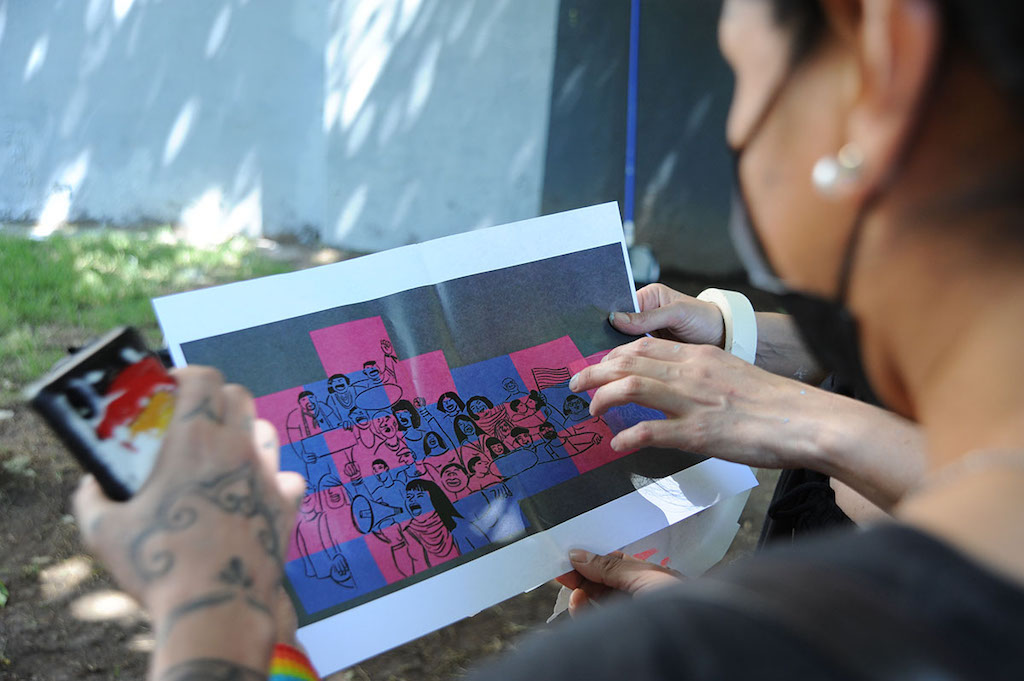
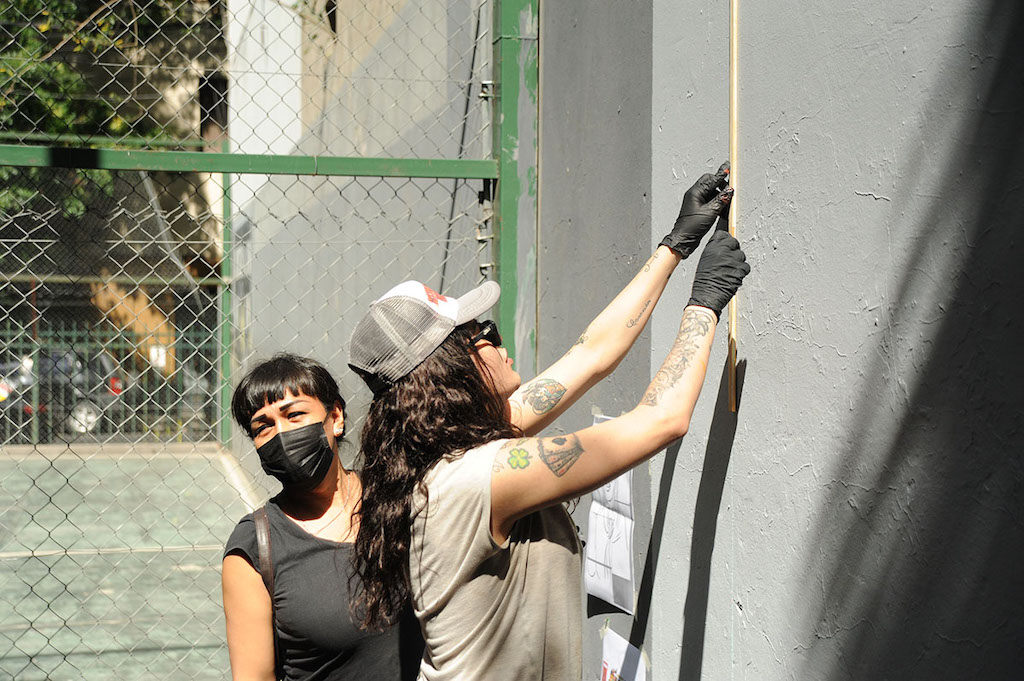
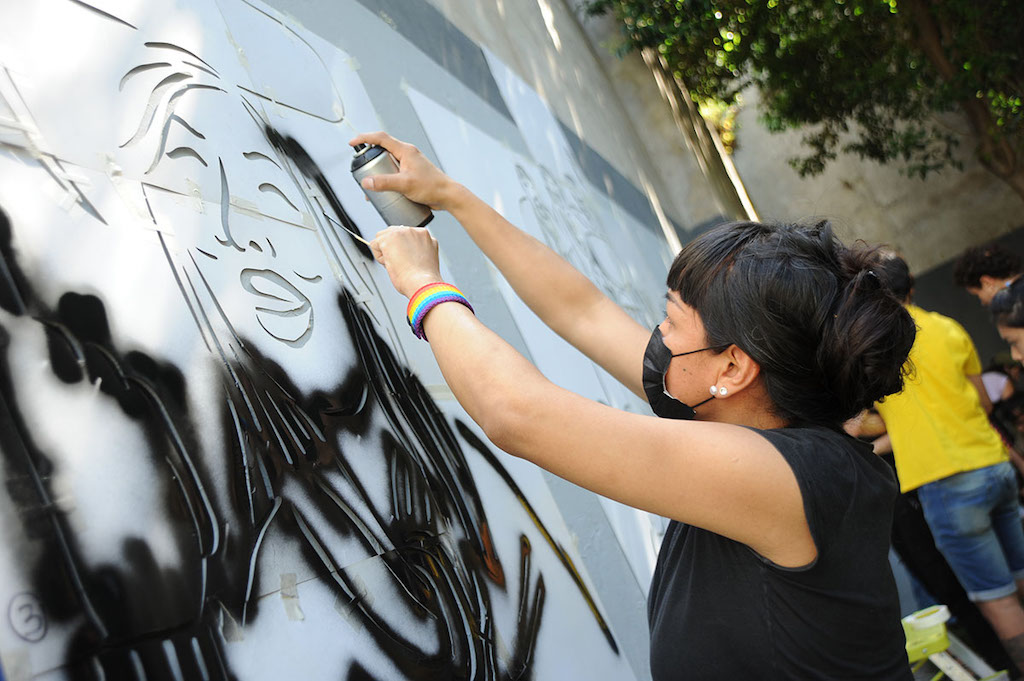
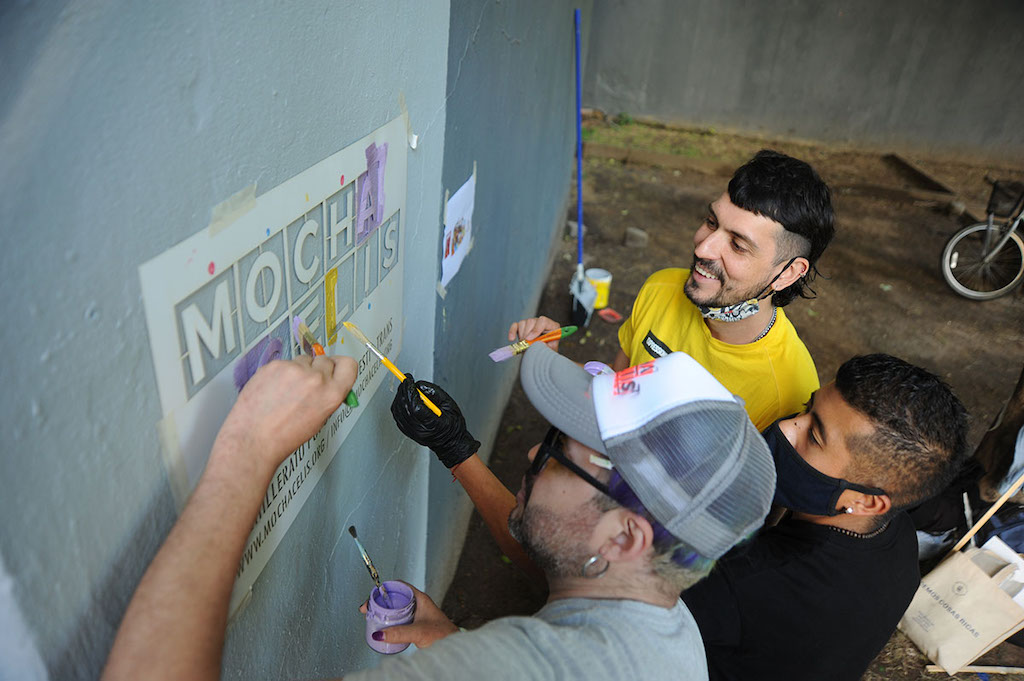
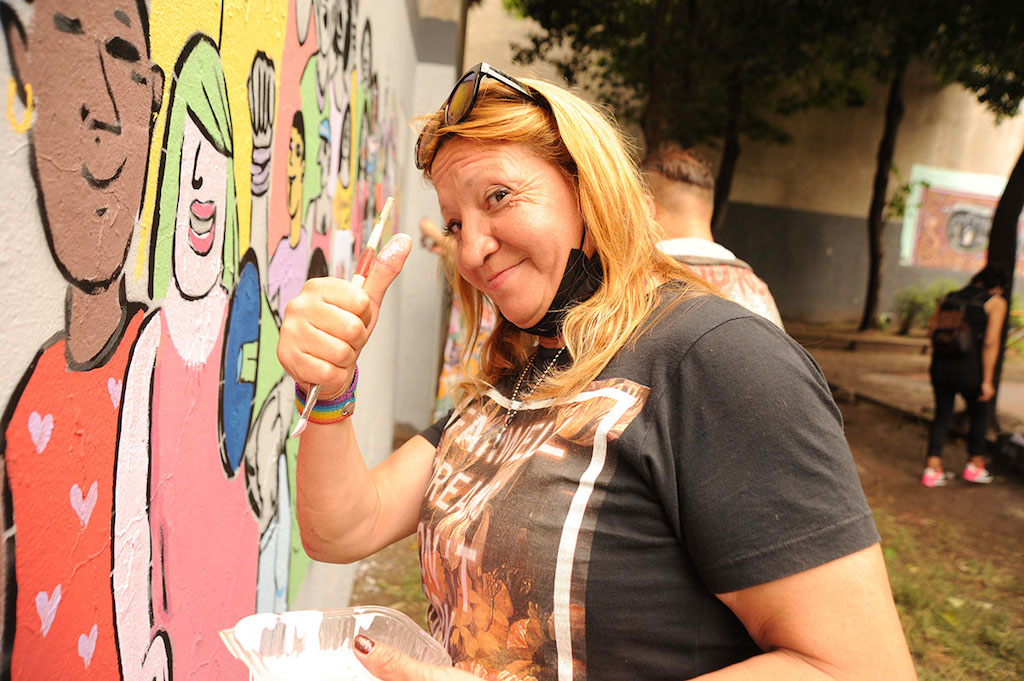
The mural painting took two days. And as the drawing filled with color, “many neighbors approached us and asked: ‘What are you doing? What is La Mocha?’” says Manu. “How lovely! It’s a great joy to be able to rethink community communication, to be able to think about art in these territories, and to be able to think from the perspective, from the feelings, from the transvestite and trans history ,” she reflects.
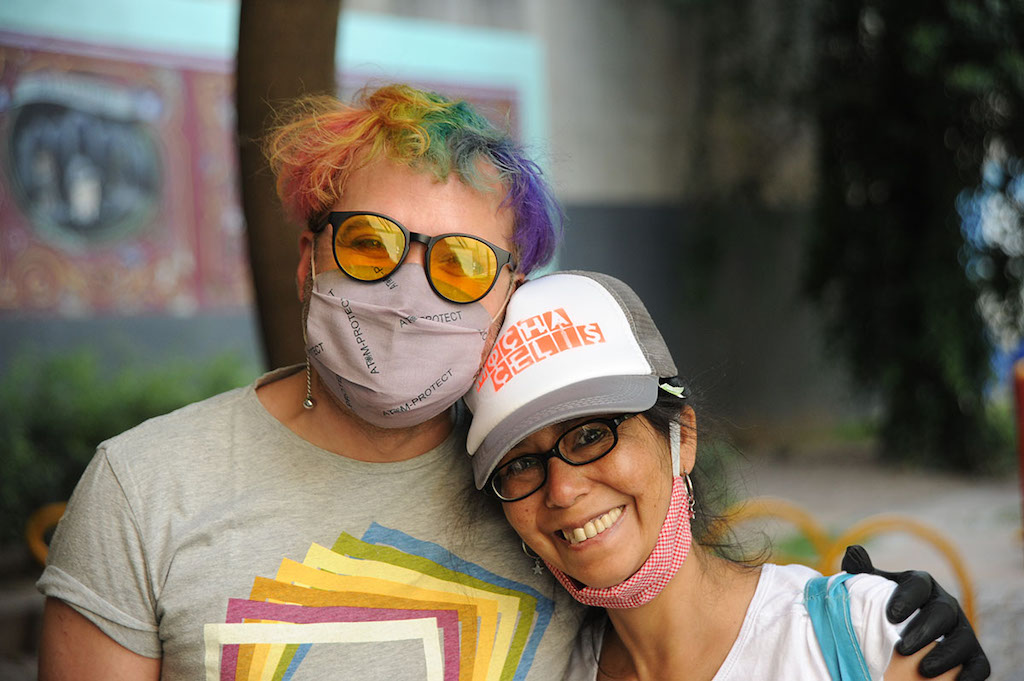
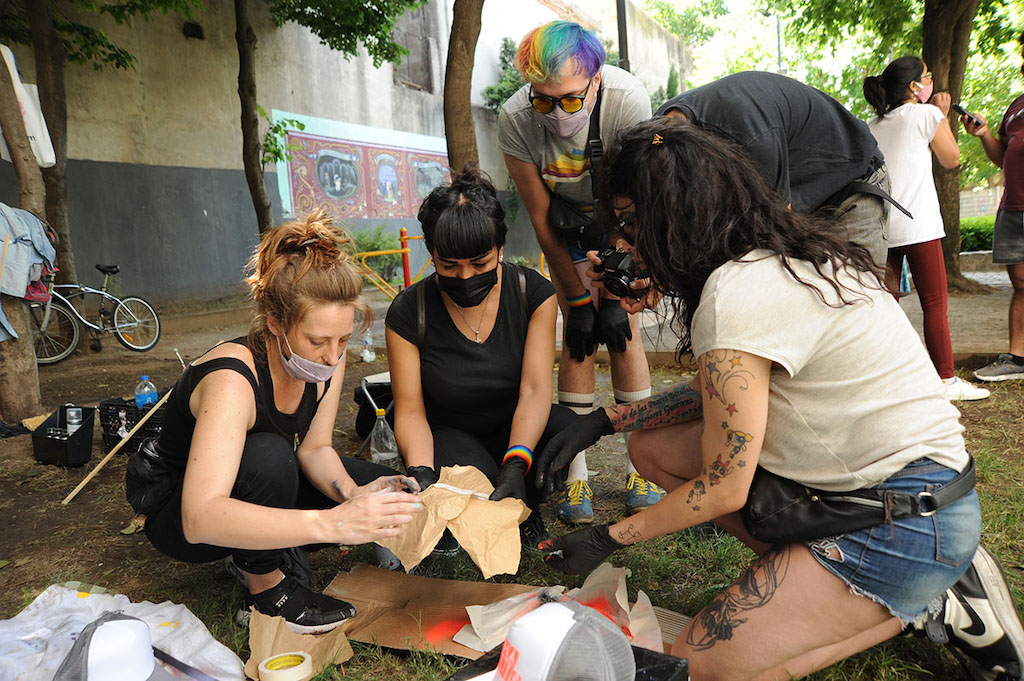
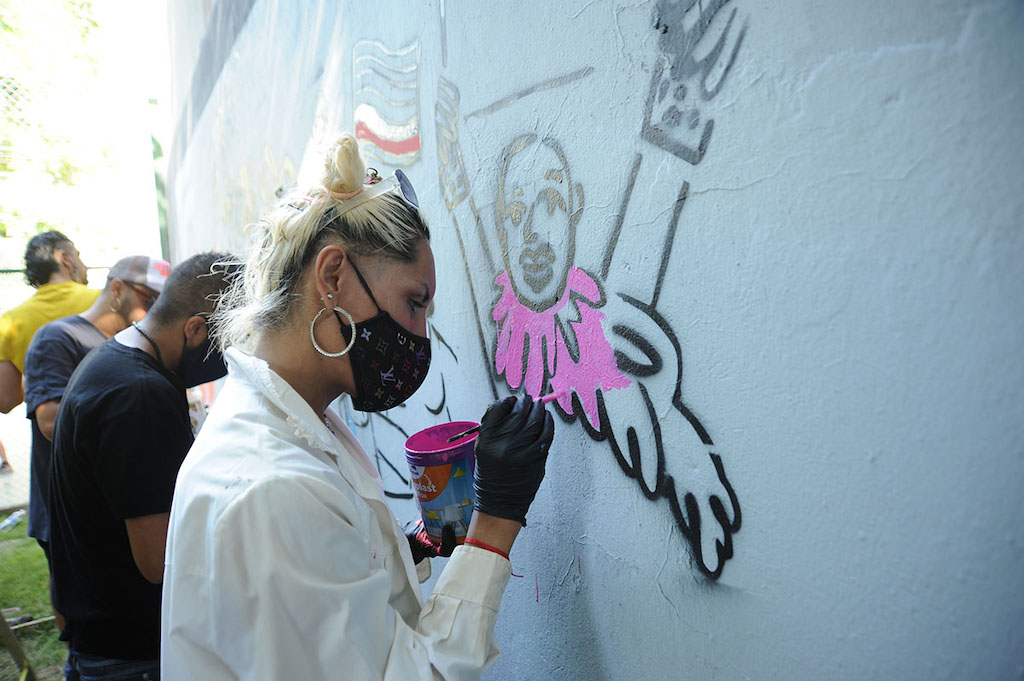
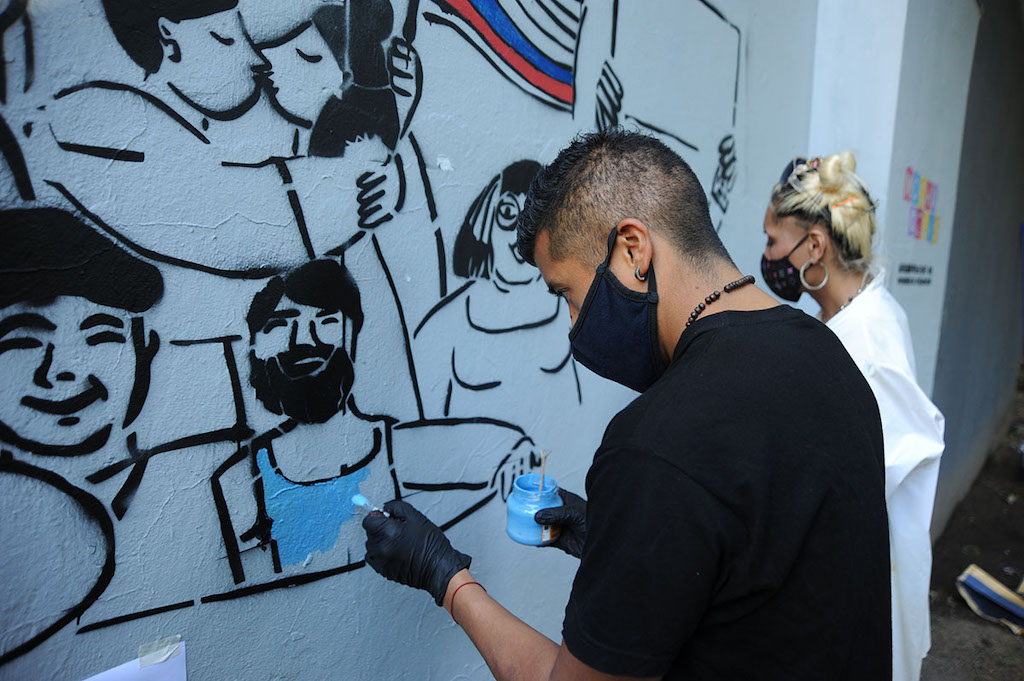
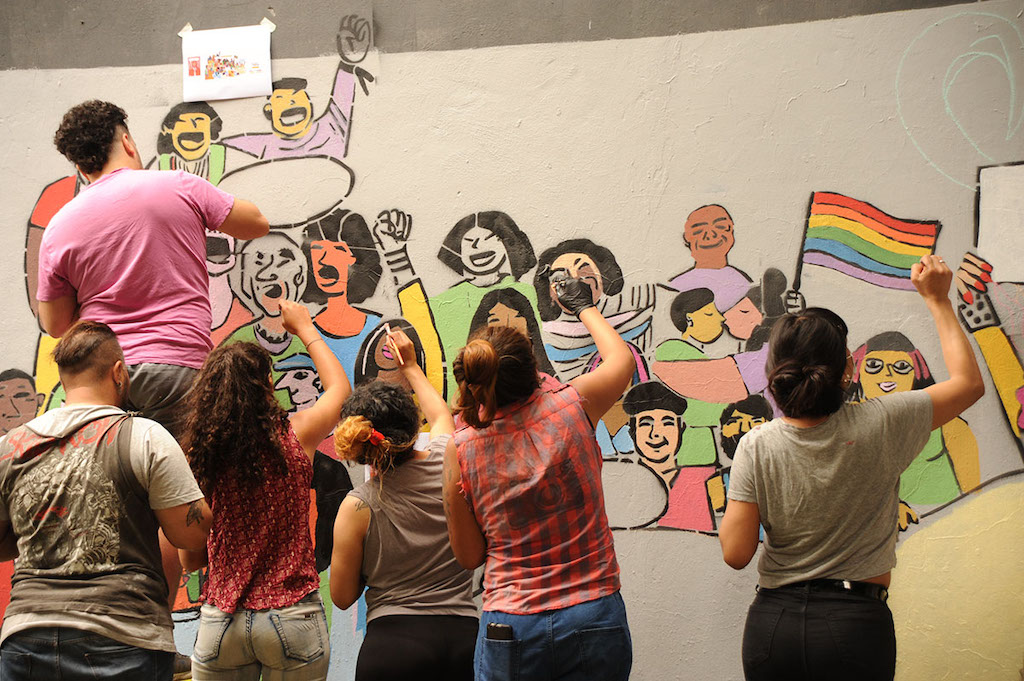
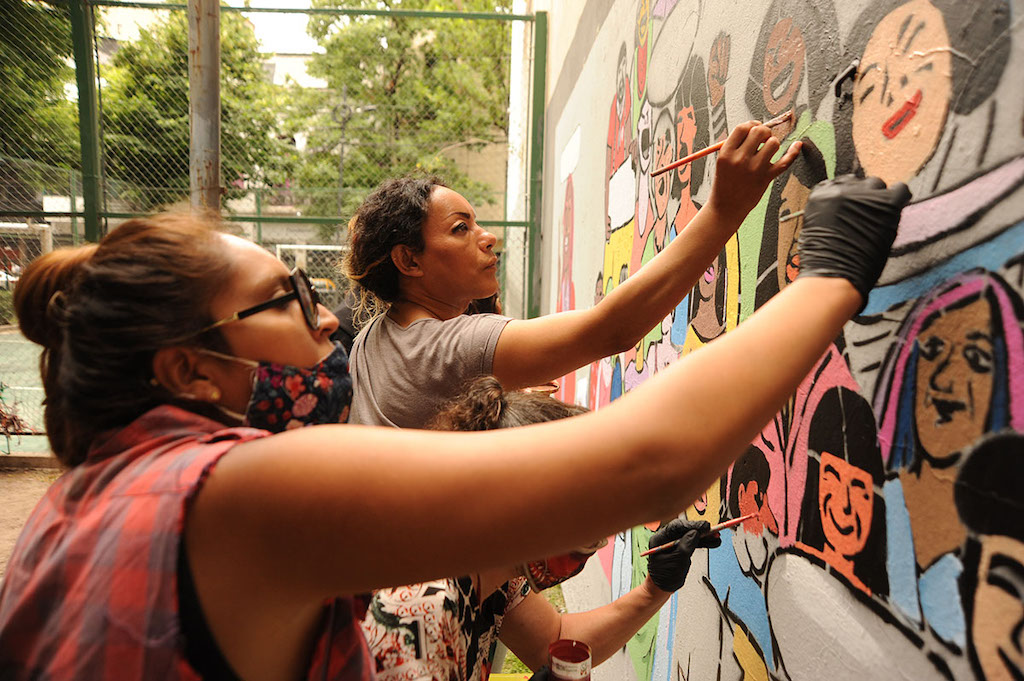
Painter and art teacher Ana Weisbek was in charge of coordinating the mural. “Creating a mural involves a process that doesn't end with the time the intervention takes place. This entire manifestation becomes a tangible and concrete action, yet sensitive and symbolic, almost a ritual. Collective participation generates sensations that expand throughout its entire context. And that's how it was experienced during the days we shared this action; all the participants made themselves present, got to know each other, assisted each other, and together created something immense,” Ana told Presentes.
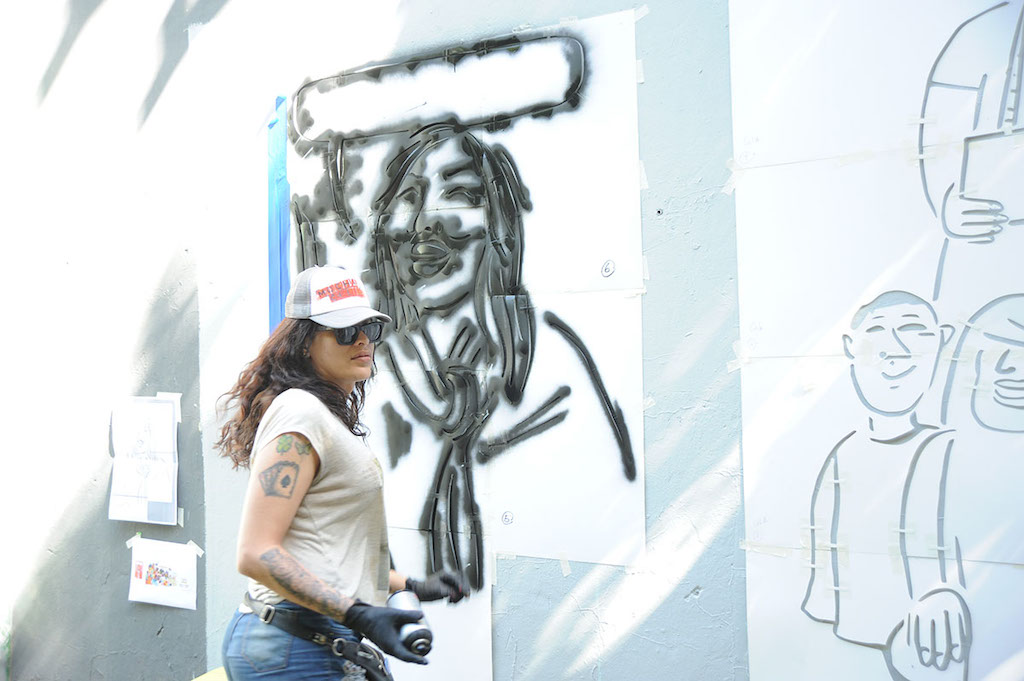
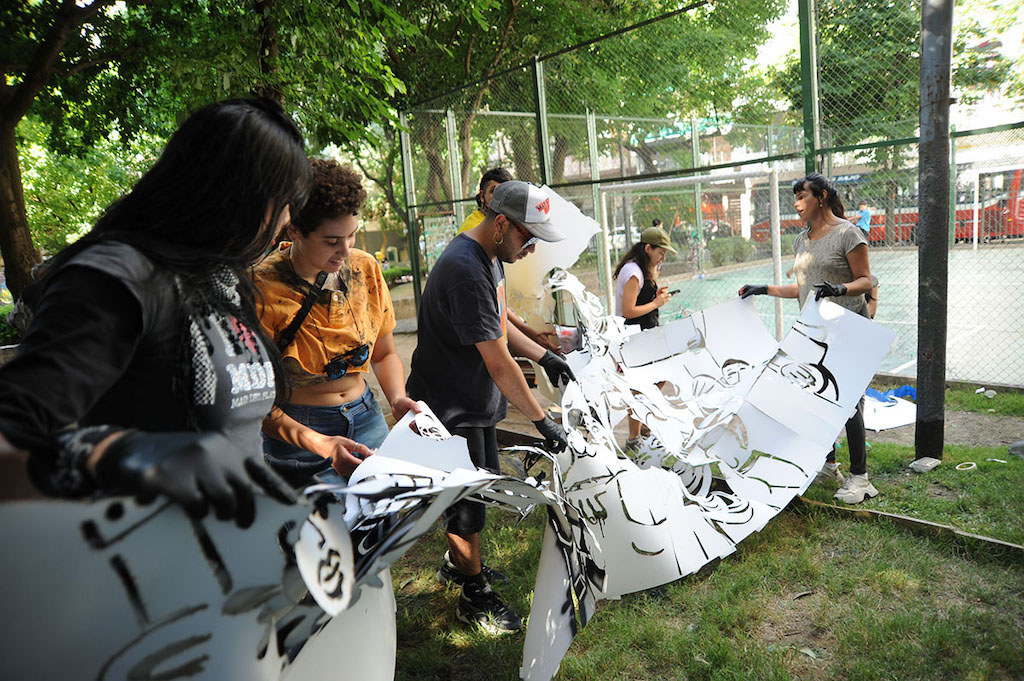
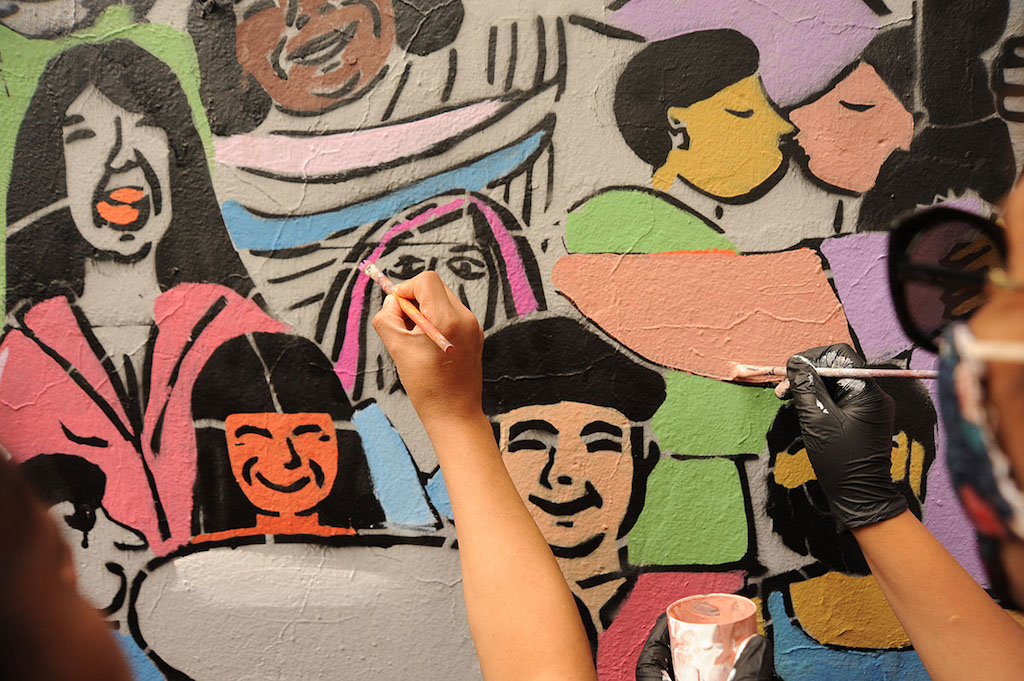
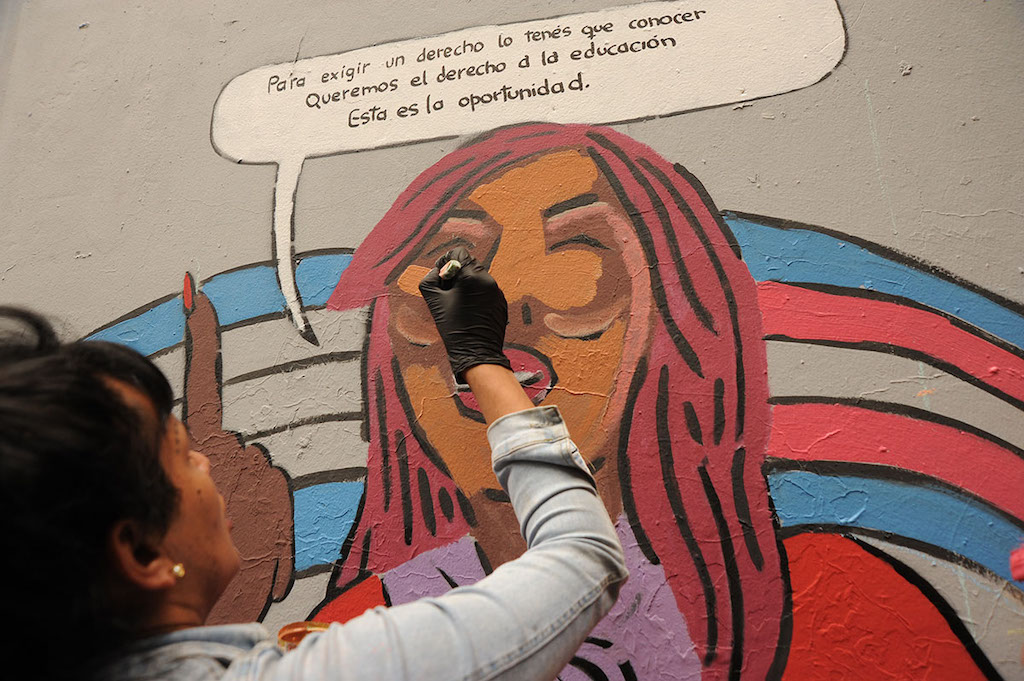
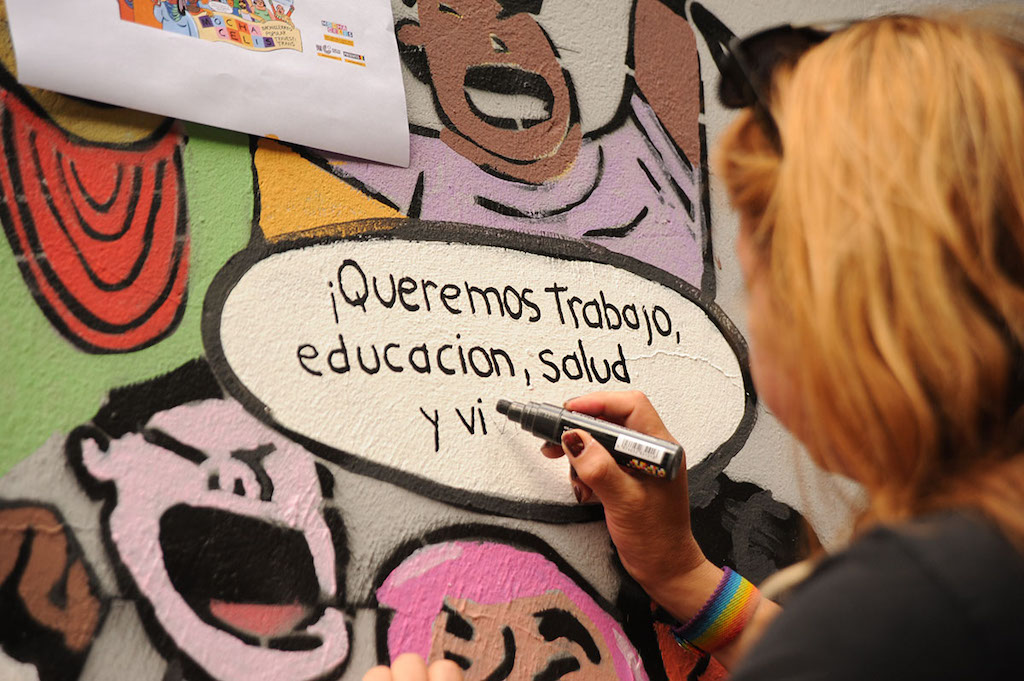
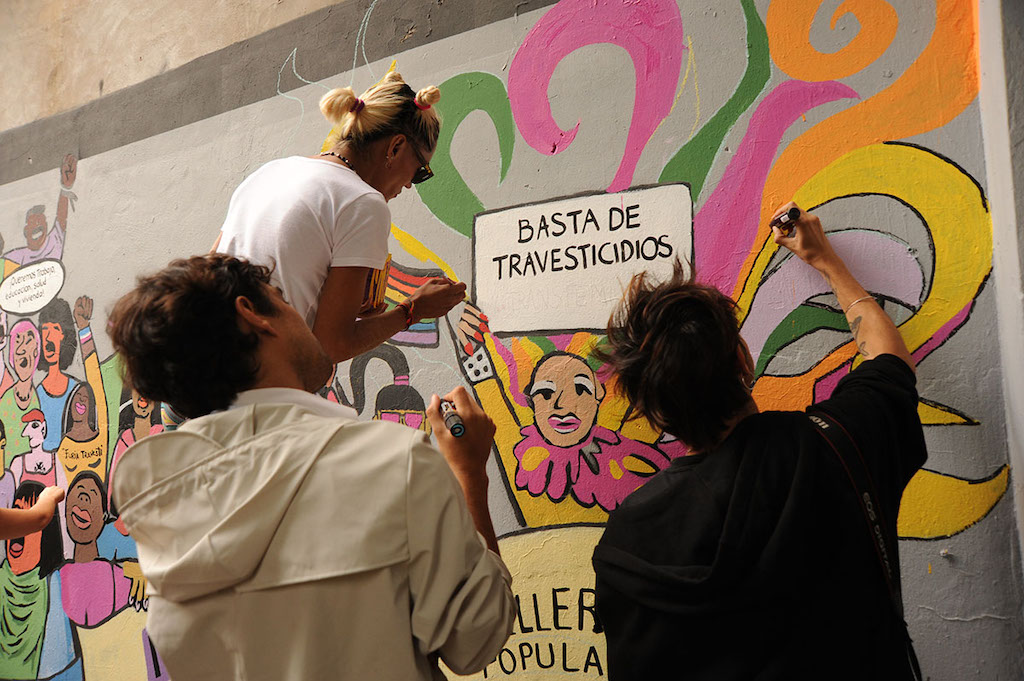
The illustrator and artist who created the mural's base design is Flor Capella. Students added their own lines to her initial sketch, expanding the colors and co-creating with new interventions. Flor's original drawing is part of a visual journalism piece that tells the story of Mocha Celis in comic book format . The script was produced with research and supervision by Mocha, along with Ana Fornaro and María Eugenia Ludueña, directors of Agencia Presentes. This piece was selected in the "Movements and Moments" call for proposals for the Feminist Generation initiative to be included in a comic book anthology about Indigenous feminist activism and protagonists from the Global South , promoted by the Goethe Institute.
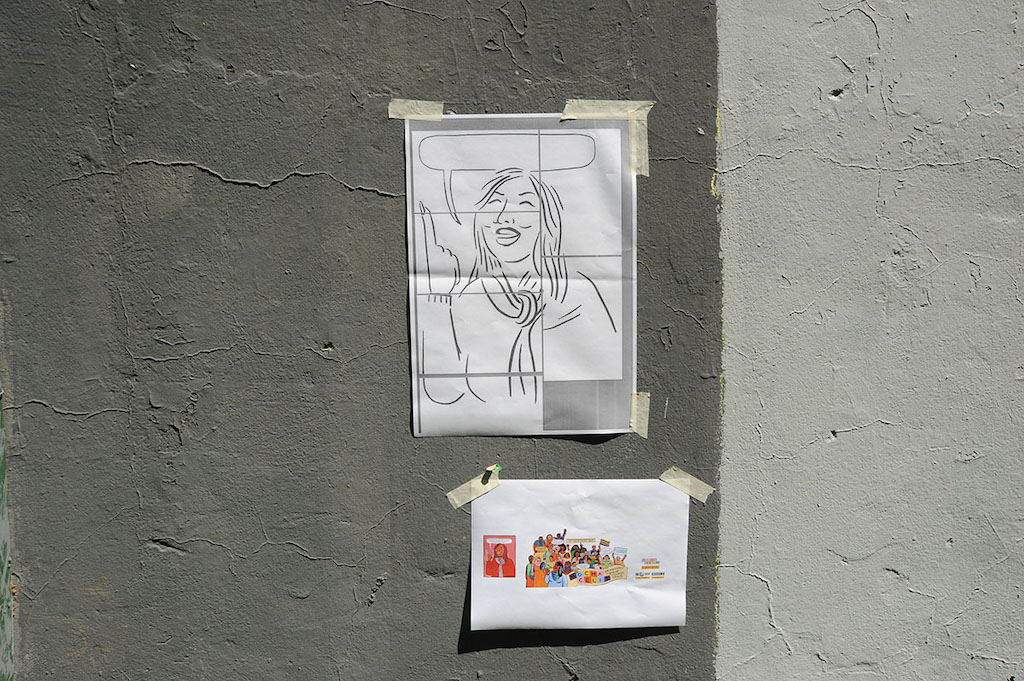
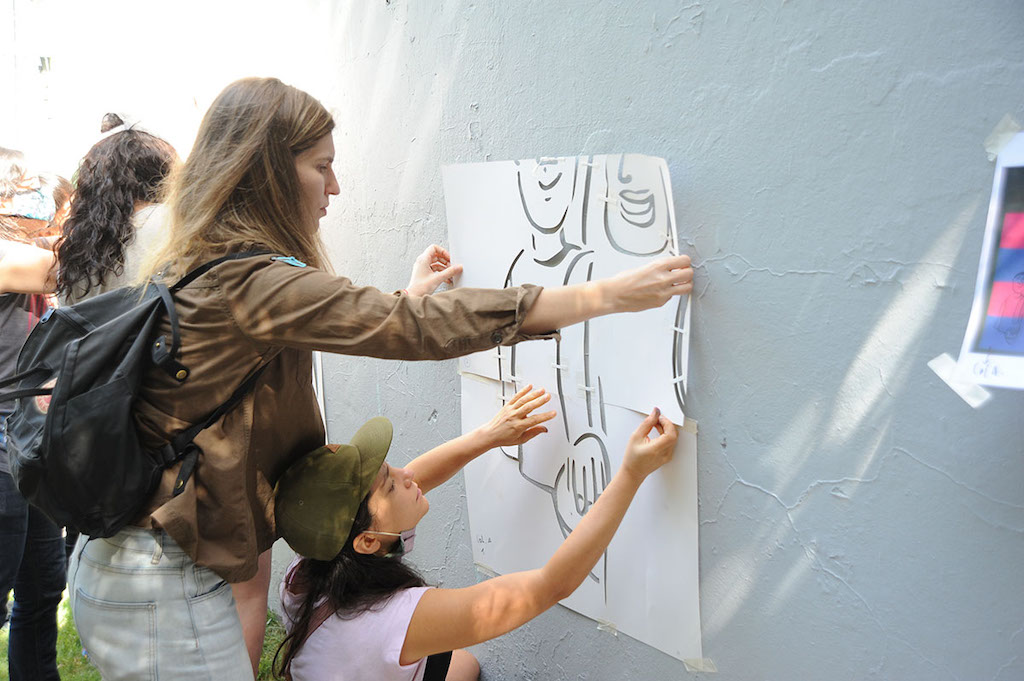
Florencia was attentive to every request and proposal from the trans women who joyfully gathered for two days to create and trans-paint the history of our community. “I became involved with the Mocha Celis High School after reading Lohana Berkins's work, which I found fascinating, and because of the work I do with Agencia Presentes. The trans women helped me truly understand feminism; for me, it's transformative, which is why I was interested in working with you,” says Flor. She adds, “The issue of identity always resonates with me; these are identities in transformation and resistance. It's about refusing the constant traps of having to choose between false options, embracing discomfort, and fighting for the trans-feminist homeland (or motherland).”
During the pandemic, the project was worked on remotely part of the time, with face-to-face meetings between Mocha and Agencia Presentes when it was permitted to meet.
“I had only met a few of my colleagues before. Finding them now, working on the mural together, felt magical. The best part was the transformations of the original drawing. The changes in appearance, the colors, the trans flag they added, the butterflies. It’s a collective work, pure learning and beauty,” she concludes.
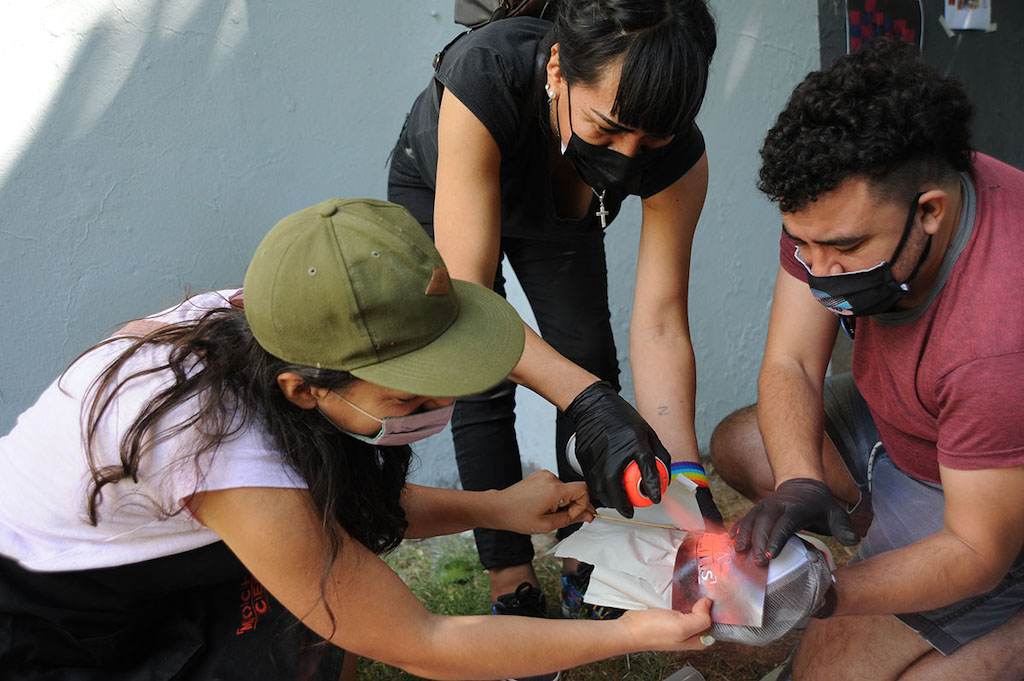
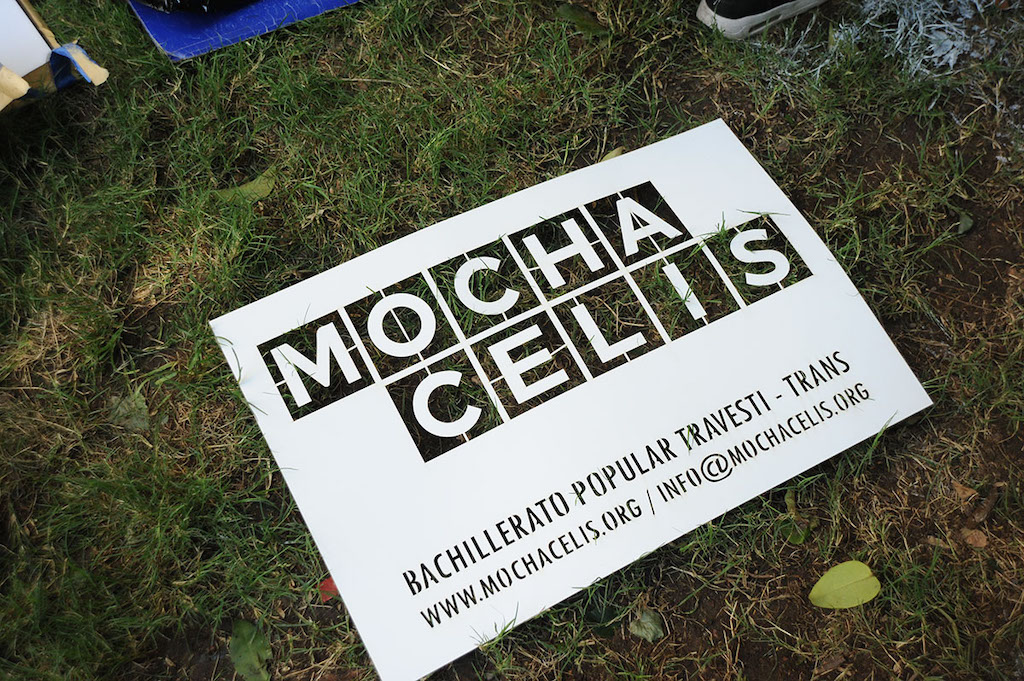
While the mural celebrating diversity and advocating for inclusive education in our country was being painted, curious onlookers and those interested wanted to know what this display of dissident bodies was all about. What were they doing there, writing on the wall of the plaza near their homes? And there they were: the people who had studied there in the past, those who study there today, students and graduates alike.
We, the graduates, are always ready to participate in supporting the school in any way we can. It's a way of remembering and giving back everything the institution helped us with during our time there. Sometimes those steps are quiet, calm, and peaceful, and other times they are giant strides that travel the world, shaping history.
The only thing we, those of us who went through Mocha Celis, ever wanted was to leave our mark on everything we did. That's why we also left our history and our work on this mural, using materials produced by transvestites and trans people. This mural adds to and builds upon the countless pieces of content generated by the students who passed through Mocha Celis: books, films, plays, Pride Marches, and protests against transvesticide and transfemicide. And also crucial statistics and data that help shape public policy.
This mural isn't better or worse than any of the other activities at Bachi, we know that, and it fills me with such love. With our perspective, always keeping in mind that we are called to build the trans and non-binary mystique, that's what we did those December afternoons, drinking plenty of fresh water.
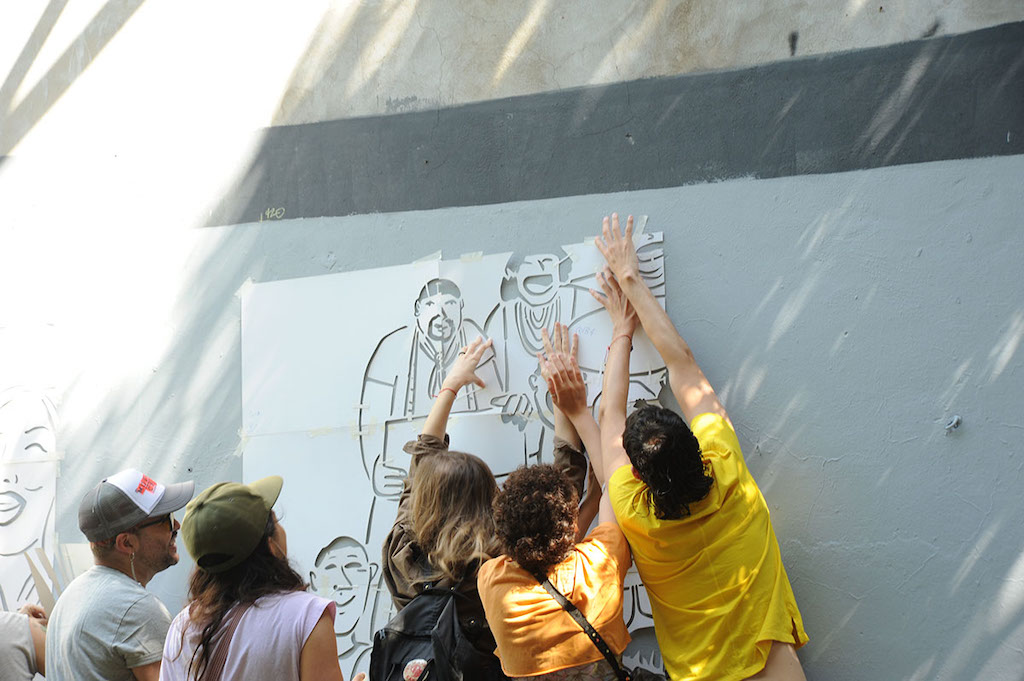
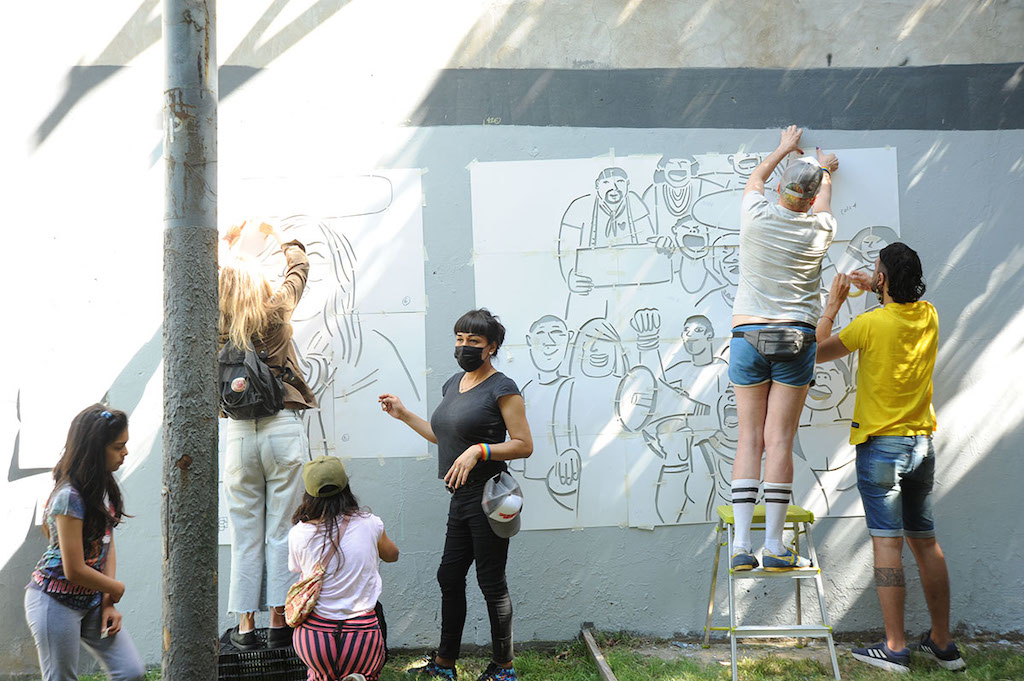
Those that are here, those that have passed, those that will come
Daniela Mercado is a trans woman who works in the Judiciary and graduated from one of the first classes at the Mocha Celis school. Committed to continuing to support future students, she says:
“The mural we did of La Mocha is beautiful. It came to represent the struggle of the trans community. The mural speaks of the entire LGBTQ+ community. And there I see the great role models: Lohana, Diana Sacayán. This mural plays with whether you want to see yourself in it or not.”
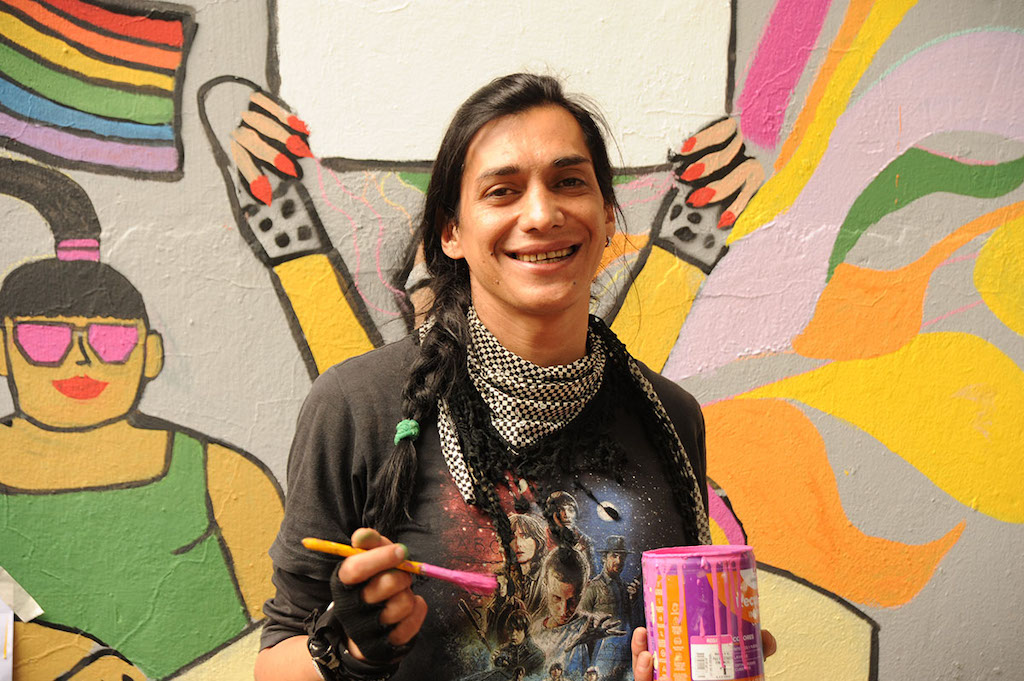
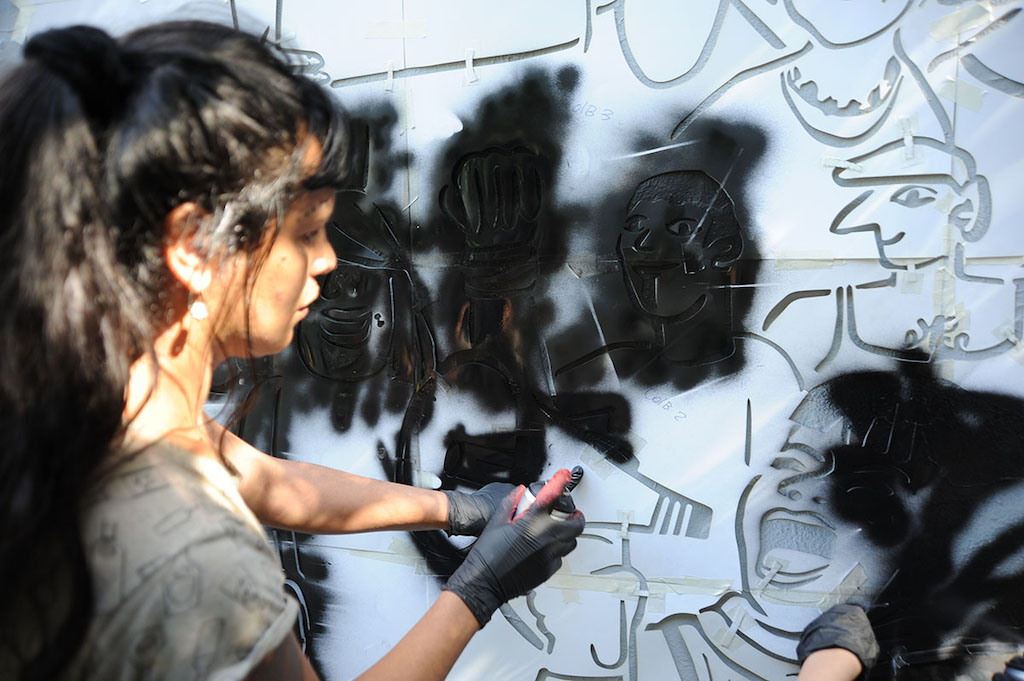
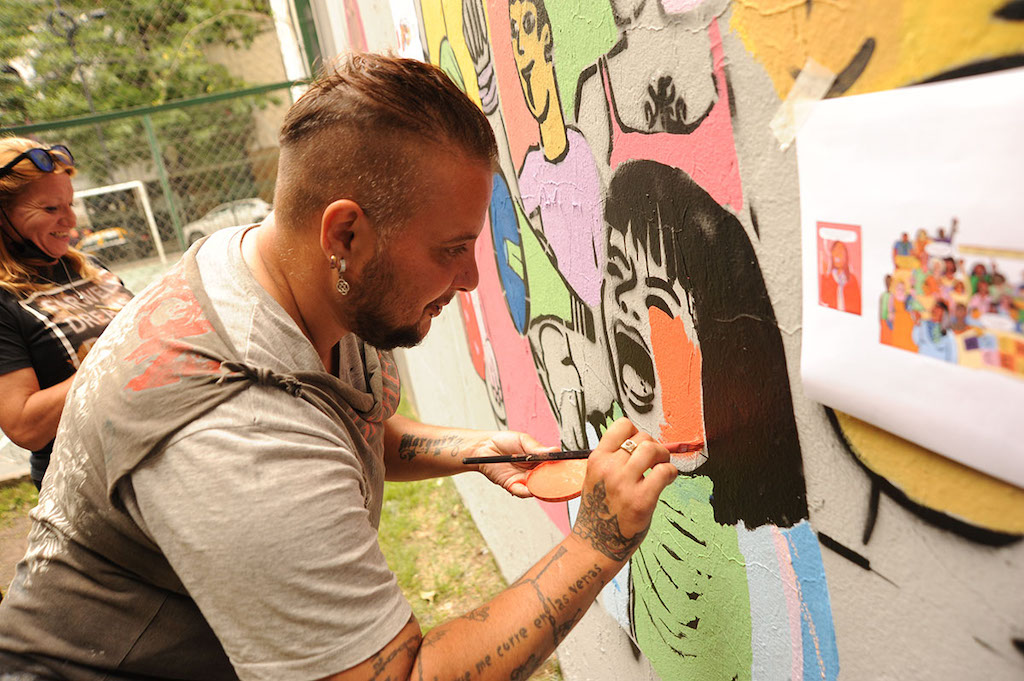
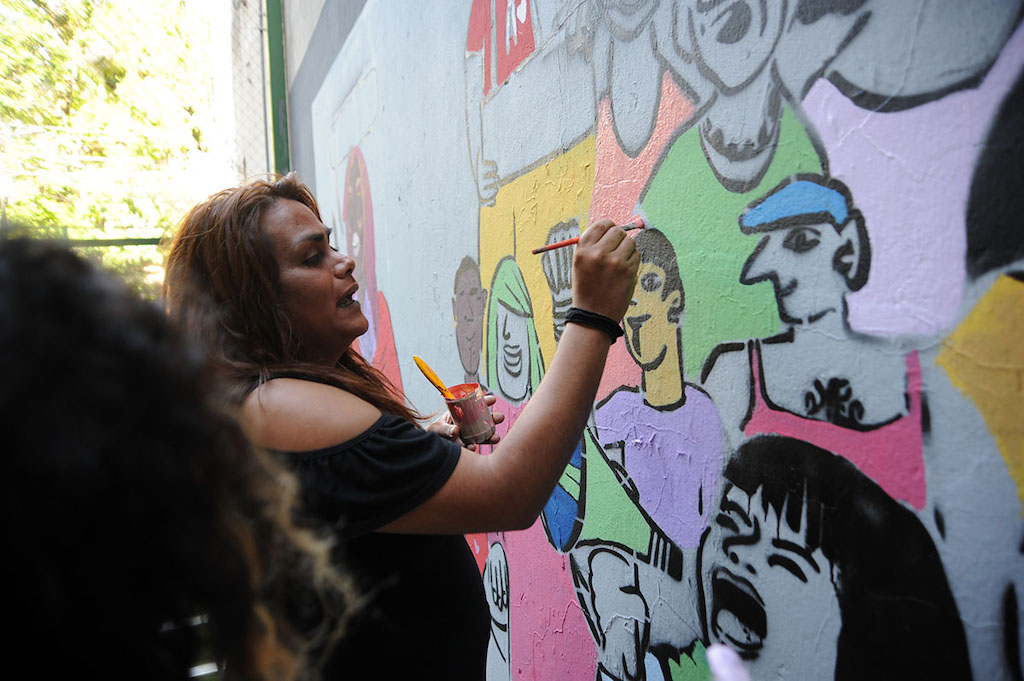
She explains it like this: “In the mural, there’s one with bangs, and when I see it, I say: that’s me . There’s also one with a megaphone, and I think that ’s you . Then there’s a t-shirt that says ‘Travesti Fury,’ and that could be you too. The mural has that trans mystique; we’re a little bit of each of us. You look at it and say, ‘ Hey, this reminds me of one of the many marches we did when we lived at the school .’ That’s what the mural is for me. It vindicates the struggle of the trans community, and we were able to bring it to life in a public square; it was unthinkable years ago. Seeing a mural in a public square, made by kids, of trans activists fills me with love. You can see that fighting spirit and trans fury in the image, the result of years of work to win rights. I love that this mural serves as a reminder of the struggle and this paradigm shift that diversity represents in this society. It also changes the paradigm of how people see transvestites and trans people. Sometimes they directly associate us with the streets, and we’re not. That’s not who we are. Doing this activity It teaches people that things aren't like that anymore."
A mural made by us for our community
Luana Paula Vélez is a student at Mocha and one of the new leaders voicing our demands. “I am one of those requesting reparations/compensation by emergency decree from President Alberto Fernández for our 40- and 50-year-old classmates,” she says.
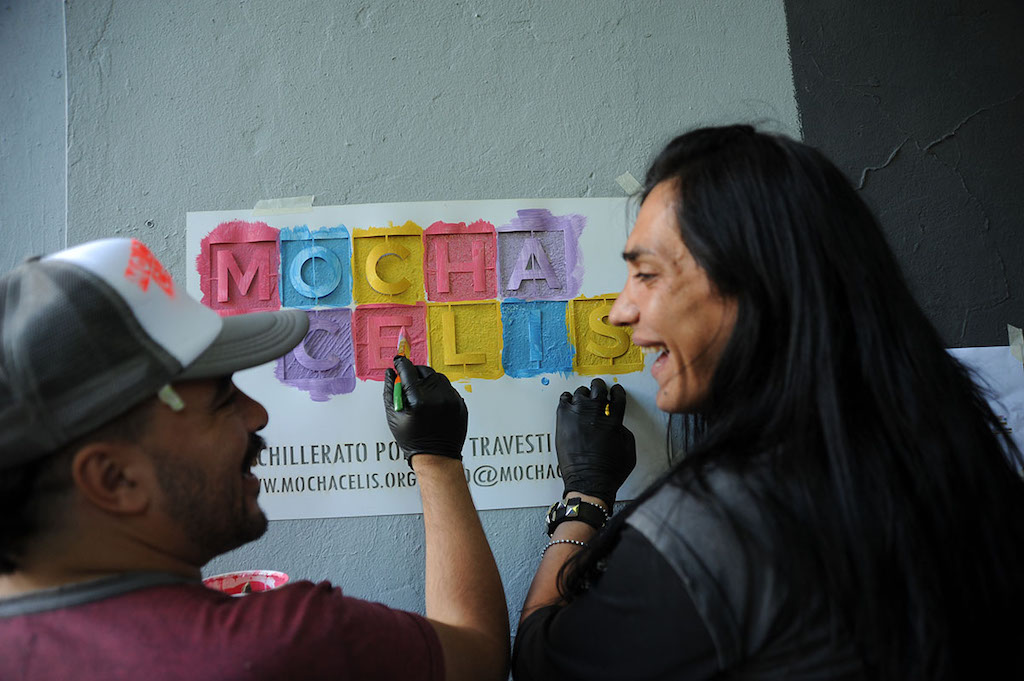
Luana studies at Mocha and was there during the mural painting, sharing anecdotes amidst laughter and laughter. “Several topics came up, we also talked about reparations, finding work, and being together. I experienced a moment I hadn't imagined, sharing it with my sisters and role models. Many of us have the same history. We were excluded from our homes, from society, without any rights. We never studied, we didn't have this opportunity. Now we do. Thanks to the efforts of Pancho (Francisco Quiñones) and the school administrators. This space and this mural belong to us, built by us, with our stories, for our community . That fills me with pride, as does the fact that my sisters can study in this time and in this society. Today, at forty-one, I have this opportunity, and I advocate for all my sisters to be able to study, to never abandon their dreams,” she concludes.
Mocha's companions forever
Hamir Santillán is a graduate of the third generation of the Mocha Celis school and now works at the National Institute of Cinema and Audiovisual Arts (INCAA). The day we painted the mural, Hamir finished work and went “with my partner, Dani Mercado, to enjoy the process. I was super excited; doing this activity really touched my heart. We're the same faces that passed through Mocha, and we see each other in different contexts and with different opportunities.” Hamir also met Lautaro Rosas, “a trans guy like me, and also Professor Manu and Francisco (the director). I love them all,” he says.
Hamir looks at himself, five years after graduating, and believes there's a big difference between the Hamir who started in school and the one who went to paint the mural. “When I went to high school, I didn't have an ID card and hadn't legally changed my gender. Now I've achieved all that, even a formal job and my surgery, so I'm thrilled with Mocha!” Hamir also wants to mention that he never lost touch with Dani, Morena Contreras, or the author of this story. “We graduated together, and after so much time, we met again, to continue getting to know each other, inhabiting our identities, and also remembering: we'll be high school classmates forever!”
I was struck by the fact that I didn't see any trans kids at Mocha. I'd like to see many more of us there. Let all trans kids know that we're here to support each other and keep walking together,” she concluded.
As the children ran through the plaza and enjoyed the games, they smiled and watched expectantly as the mural of trans women filled with color. Those glances made us, and still make us, feel part of a future that embraces us under a sky that also deserves to be ours. When the task was finished and the brushes rested on the canvases, I thought that those brushes know that trans women are fetishists and perfectionists when it comes to capturing trans identity.
Between the photos, the video we recorded, and the friends and allies who came to say hello, the mural gradually took shape and transformed, transforming the neighborhood in the process. Balvanera will soon have a school unlike any other in the world.
The first action in the territory
Francisco Quiñones Cuartas, director of La Mocha, also participated in these events. “The mural aims to initiate actions to raise awareness of the area. We want people to know that the high school will soon be opening in the Balvanera neighborhood,” says Pancho. Meanwhile, they await the completion of the works being carried out by the National Ministry of Women, Gender and Diversity, along with the National Ministry of Education.
“It’s an initiative that helps us get our name out there and bring together our fellow students from the neighborhood. It’s the starting point for the activities we’ll be doing until we inaugurate the building,” he adds. “We felt it was very important that the students themselves, along with alumni, develop the community. That they begin by doing neighborhood outreach and familiarizing themselves with the area,” says the director of this unique school.
The value of the trans struggle
Another Mocha graduate who participated in the event was Viviana González, also a former student union president, writer, and advocate for trans inclusion in sports. She was always there, offering her warmth and trans love. The afternoon faded into evening amidst screen printing and cigarettes, the smoke turning into a glow on the mural. “We wanted to be involved in every detail, adding the butterflies, the political banners of Saint Lohana. We wanted to be there and remember everything that shouldn't be forgotten, because otherwise, the trans mystique that saves you so much is lost.”
Other times, Viviana was the face of a mural conceived as a display of love, struggle, and gratitude from feminist comrades in this country. “Sometimes when I think of the trans woman depicted—naked, clothed, pagan, and saintly—I feel both berate myself and rejoice, thinking how beautiful it is to see you emblazoned on a gorgeous mural, and I begin to judge the privileges. From these few privileges, sisters, friends, role models, high school girls, comrades: I would like to ask you to begin to understand the value that each one of you contributes to the trans struggle. Let's go out and paint, let's campaign, let's demand and deepen this progress in our rights. In times when I sometimes feel that our last victory for trans and travesti labor inclusion is a dead letter. Let's do it with love, from a mural or by celebrating the many trans and travesti comrades who are now our ancestors and deserve the same recognition, because before, those trans women didn't live or weren't seen.”
We are a mural of love, struggle, and resistance.
We defend public space because we don't have access to private space. The only space we have is in the streets, the plazas, the neighborhoods. Prostitution wasn't a choice for us; the State has thrown us into it and condemned us to it. Lohana Berkins said this as a transvestite protest etched in her chest. And while that discourse was taking hold in feminisms, political parties, marches, human rights movements, and the world; in many of us, that same discourse became flesh, winked at us, taught us, and embraced a multitude of trans women.
Lohana's teachings made us aware of our place in this society. With this newfound understanding, transvestites and trans people began to make their presence felt in the neighborhoods, the plazas, and the street corners. We learned to observe the movements of the city blocks and streets: the handsome guy who lives in the building, the old man who sleeps with trans women, the grumpy old ladies, the friendly women, the kids going to or coming from school, the schedules of the baker, the garbage collector, and the milkman. As the days went by, we learned to be part of the place, and what was once unknown became commonplace. When something becomes commonplace, it becomes the cunning of transvestites who empower and liberate themselves.
That's what visibility means to me, and that's what Lohana's words are about—words that sought to inhabit feminisms, like the streets always inhabited by trans women in this country. Inhabiting and making visible our trans bodies, standing in our neighborhoods and territories, is fundamental in this society that desires us and hides us. That's what the struggle is about for us: creating actions to make trans and travesti visible from every possible and habitable social and cultural space. We are all a mural of struggle, love, and resistance in this society. Travesti fury!
We are present
We are committed to journalism that delves into the territories and conducts thorough investigations, combined with new technologies and narrative formats. We want the protagonists, their stories, and their struggles to be present.
SUPPORT US

FOLLOW US
Related notes
We are present
This and other stories are not usually on the media agenda. Together we can bring them to light.