

What are “conversion therapies” like in Argentina: stories behind the lack of legislation
Presentes' research reveals that in Argentina there are organizations that offer techniques to "guide" sexual identity.


Share

“God showed me that the next time you stray, you’ll get AIDS and you’ll die.”
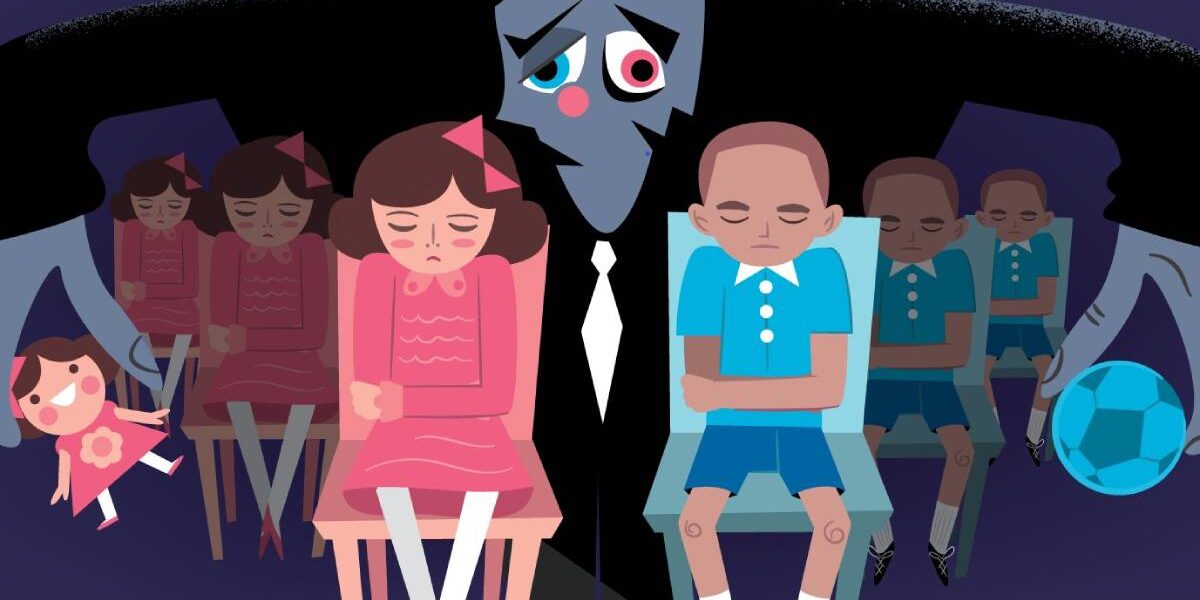
Leonel was about to leave the church, already near the door, when he heard Pastor Cristian Méndez call him. The pastor told him to stop “playing with having one foot in the world and one foot on God’s path.” And then he uttered that phrase, which sounded more like a threat, or a bad omen. Leonel was 15 years old; he had only been at the God is Love Christian Center for a few months. He froze, stunned. And he thought it was true, that he had to change.
For a few weeks, she had stopped going to church because of a “relapse.” “They made you feel guilty if you were with a guy,” she says now, after almost twelve years. Pastor Méndez is a Pentecostal evangelical and still leads that church along with Pastor Jorgelina Montero. Recently, they gained so many followers that they moved to a larger location, a property that used to be a nightclub: Rodríguez 887, right in the center of Tandil, a tourist city in the hills of Buenos Aires province.
The first thing you see upon entering the building is a huge hall, two staircases on either side, and above it a kind of raised platform that occupies half the room. Security personnel are stationed at each corner, ensuring no one approaches the pastor or the areas off-limits to the public. The other half of the upper level is open, offering a view of the stage where the preaching, the shouting, and the “exorcisms” take place.
It was 2011. Leonel was having problems at home, at school, and with his partner. He was looking for refuge. A friend told him that strange things happened there, that he had to go. They welcomed him with hugs and great joy, until they learned more about him. One day, he took his boyfriend to the pastor for counseling, just the two of them. He wanted to see if he could pray for them.
“This relationship is not from God”
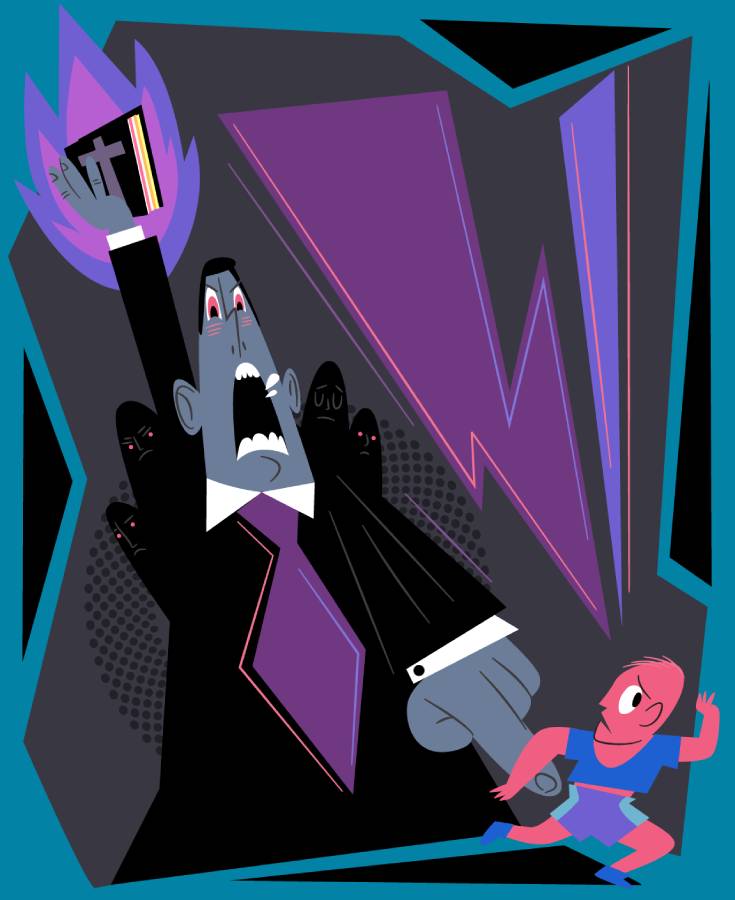
“I told him about my situation: ‘He’s my partner, we’re having problems.’ Like a naive, innocent kid, since he seemed so peaceful and loving, such a good person who accepted everything, I thought he was going to say, ‘Well, everything’s fine, I’ll pray for you, I’ll give you some advice.’ But no, the guy grabbed it, opened the Bible, and said, ‘This relationship isn’t from God.’ The Bible says this, this, and this about homosexuality. And he started asking my partner at the time if he’d been abused as a child, what his relationship with his father was like. All things the pastor thought could have led him to become homosexual.”
That day the relationship ended. Leonel believed them: “They were performing exorcisms. All with the laying on of hands. Shouting. Far from doubting it, I believed everything. I saw it in movies. I thought: he doesn't want to change, he doesn't want to stop being gay. I broke up with him. I spent weeks crying, depressed. I was grieving to kill that part of me, my desires, the desire to be with a guy again. They call it dying to the desires of the flesh and the ego. So basically I accepted what they told me and went into that process.”
He had to stop looking at and talking to other kids, distance himself from "the gatherings," from his friends, from his family. He had to stop listening to music the pastor called "worldly" (Arjona, Evanescence, The Rasmus). Then, away from all that, he had plenty of time to serve at the church. He started handling the microphones and even got his hands on the pastor's social media. He also collected cardboard with other kids and spent entire days painting the new building. Without any kind of financial compensation.
Leonel found out nine years later, when he managed to get out: at that time, being a minor, he was a victim of “conversion therapies”.
What is “conversion therapy”?
“A ‘conversion therapy’ is any sustained effort over time that seeks to modify a person’s sexual orientation or gender identity , with a predetermined goal: always to go from non-heterosexuality to heterosexuality. Or to prevent a person from transitioning, or if they have already transitioned, to prevent them from transitioning,” Lucas Mendos, a lawyer, professor, and researcher specializing in international human rights law and sexual and gender diversity, Presentes
Presentes was able to confirm that these therapies, which seek to "convert" gay, lesbian, bisexual, and transgender people, continue to exist in Argentina. However, neither the national government nor any human rights organization has yet systematically documented how many organizations practice them, how they operate, or how many people they have affected.
“ Very little is known and documented in Argentina. There is a certain normalization of these issues, which can be very subtle,” Ricardo Vallarino, Executive Director of the organization 100% Diversity and Rights, Presentes
The so-called therapies were named by the UN LGBT rapporteur as Sexual Orientation and Gender Identity Change Efforts (ECOSIEG).
Pablo Salum is the founder of the Free Minds Network, and he supports victims and families of what he calls coercive organizations (commonly known as “cults”). He himself was a victim of one. According to Salum's research, these “conversion therapies” operate in a wide variety of guises : they appear behind popular activities such as religious groups, organizations or foundations, yoga, philosophy, multi-level seminars, coaching, leadership courses, spiritual retreats, martial arts centers, cultural centers, addiction treatment centers, ufology, and alternative therapies, among others.
In most cases, they leave lasting effects, harm, and disorders, both physical and psychological, on their followers, to varying degrees. As the years passed and LGBTQ+ organizations gained ground, the people and groups who carried out these therapies changed their names, no longer openly presenting themselves as "cures of homosexuality," but instead speaking, for example, of helping you "abandon a degraded lifestyle."
The Mental Health Act
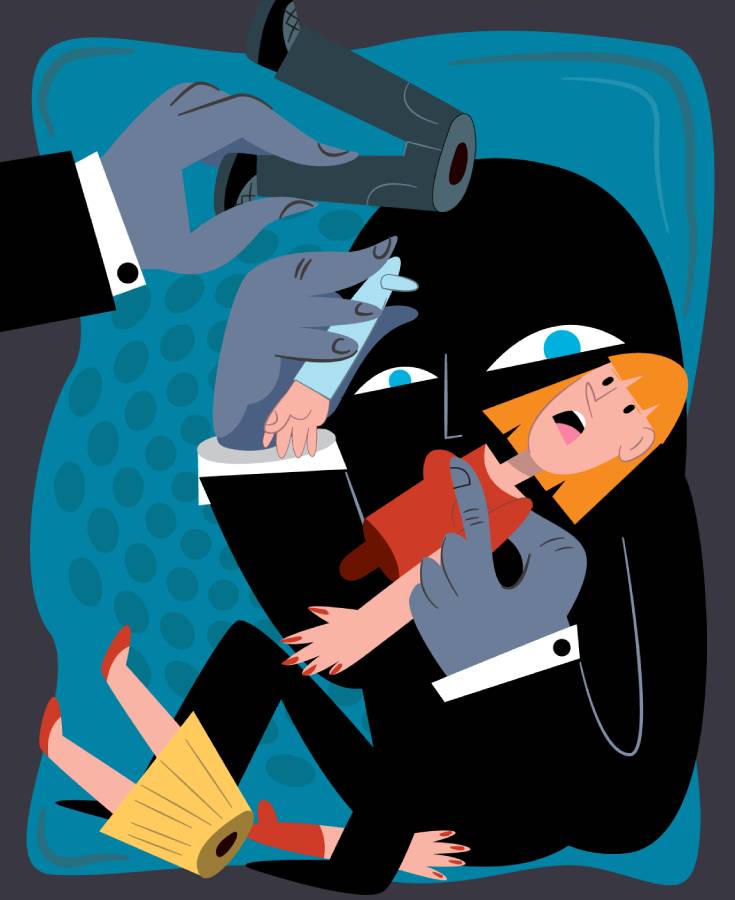
The laws regulating mental health services in Argentina state that a person cannot be diagnosed with a mental health condition solely based on their sexual orientation or gender identity . However, these laws do not explicitly prohibit conversion therapies. The Mental Health Law was passed and enacted in 2010.
“This means that at an institutional level it is quite widespread that it is not legitimate to question or associate sexual identity or orientation or gender expression with an illness, and therefore it is not susceptible to treatment,” Ricardo Vallarino, Executive Director of the organization 100% Diversity and Rights, Presentes
However, according to the report “ Putting Limits on Deception: A Global Legal Study on the Legal Regulation of So-Called ‘Conversion Therapies ’” by ILGA World: “It can be argued that the fact that ‘conversion therapies’ are not explicitly named diminishes the symbolic effect of the law, as there is no clear message condemning these practices .”
The death of Federico Gómez
Federico Gómez died on January 19, 2021, in the city of Puerto Rico, Misiones province. His family stated that he had been persecuted, harassed, and discriminated against by members of the Jehovah's Witnesses congregation he attended , and that he had been summoned to a "court hearing" to address his "shameless conduct."
In March 2021, 100% Diversity and Rights intervened in the legal case . They asked Judge Leonardo Manuel Balanda Gómez to "consider as a hypothesis of the investigation the prejudice against his sexual orientation as a central element of the possible subjection to conversion therapy and the consequent incitement to suicide of which he may have been a victim."
They also requested that he ask for technical assistance from the Specialized Prosecutor's Unit for Violence against Women and LGBTI+ people (UFEM) to help in the investigation of the case.
“In Misiones, we went out to denounce it. It was clear that there had been harassment from his community; they had summoned him because of his so-called 'lifestyle .' He was a gay boy. They were Jehovah's Witnesses in the NEA region,” Vallarino told Presentes .
At that time, activist Jorge Víctor Ríos expressed in a note published by 100% Diversity and Rights that “Federico’s death generated a shock in the LGBTI+ community of that province because there is a possibility that it is related to his sexual orientation, since it occurred in the context of a complaint of harassment for his sexual orientation by religious groups.”
Other situations the organization is aware of occur in certain evangelical communities in the province of Chaco , which openly promote stigma against LGBT people. The subtle way they express this is: “love the sinner, but not the sin.”
“In many places, this approach continues: saying no to harassment or open violence, but saying that people are wrong and the cure is love. This is the public discourse that is visible, not hidden. They imply that something is wrong. They don't say it's an illness outright, but they somehow indicate it as a moral or sinful deviation ,” Vallarino explained.
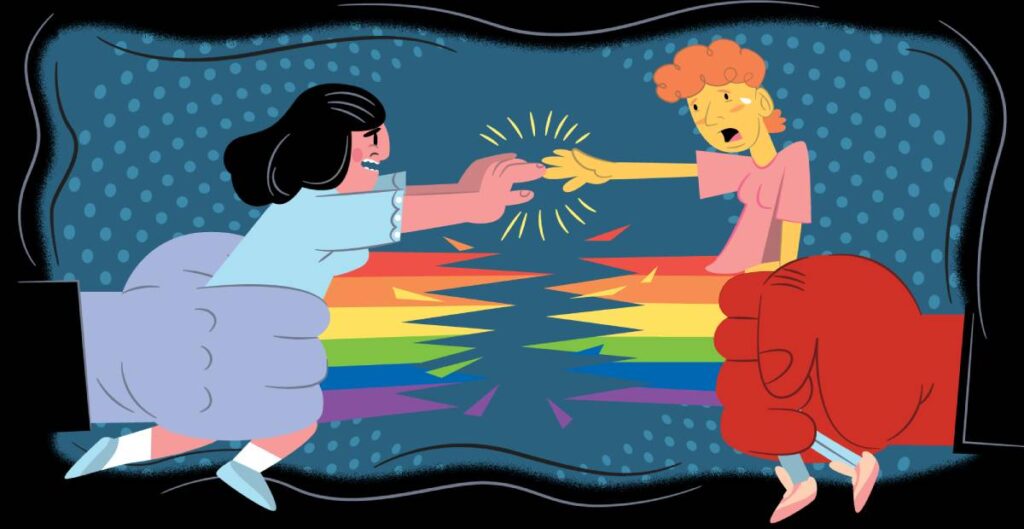
In those communities, according to what was recorded by 100% Diversity and Rights, the practice of pressuring is very widespread : there are testimonies of lesbian couples who were pressured to separate.
Among the challenges in reaching more people who have suffered this pressure and harassment, these attempts to "correct" their sexual orientation or gender identity, is the difficulty of gaining access to these very closed communities. And also, getting LGBT people to recognize their rights and that there is nothing wrong with them.
Among the testimonies collected by the organization are those of people who had to leave their town or neighborhood, move, and sever ties . “We still need to continue spreading the word that this is an exercise in psychological violence,” Vallarino pointed out.
Hidden under the banner of “love”
The 2nd International Congress on Education in Love took place in Santiago del Estero on June 22nd and 23rd, 2018. It was organized by the provincial delegation of the Federal Network of Families.
The congress was declared of municipal and provincial interest and had the support of the Faculty of Exact Sciences and Technology of the National University of Santiago del Estero. The keynote address was titled “There Is Still Hope,” and the topics were “Psycho-Affective Immaturity – Same-Sex Attraction (Experiences and Testimonials in Treatment) .” It was presented by Dr. Marcela Ferrer Farnier from Chile.
“At first they tried to hold a couple of meetings on the subject, but we reported them, and they had to cancel them or change their format . Every now and then something comes up, and we report it, but it's rare that they talk about it openly,” María Rachid, a member of the board of directors of the Argentine LGBT Federation, explained to Presentes .
“They hide behind supposed professional organizations, but there’s always a church behind it ,” Rachid added.
On June 19, 2019, following the congress, complaints were filed with the LGBT Ombudsman's Office (managed by FALGBT and the Ombudsman's Office of the City of Buenos Aires), expressing concern. The office then filed a complaint with the National Institute Against Discrimination, Xenophobia, and Racism (INADI).
That same year, a gay boy came to the Ombudsman's office and alerted them to the existence of fundamentalist religious groups that recommended material against sexual diversity - "sexual reconversion" groups - in Argentina and requested information about these situations and the mental health law.
On December 28, 2016, a lesbian girl sought advice from the Ombudsman's Office because her girlfriend's family, who belonged to a religious group, were promoting "conversion therapies" for LGBT people.
Last year another girl also contacted us requesting advice and support because when she told her mother and father that she was a lesbian they threatened to take her to conversion therapy.
What do international organizations say?
The Pan American Health Organization (PAHO) and UN human rights experts have questioned alleged psychotherapeutic treatments aimed at changing a person's sexual orientation or gender identity.
“ So-called ‘conversion therapies’ or ‘reparative’ therapies lack medical indication and represent a serious threat to the health and human rights of the people affected. They are unjustifiable practices that must be denounced and subjected to the appropriate sanctions and penalties ,” the PAHO stated in 2012 in the report . ”
In 2015, the Inter-American Commission on Human Rights (IACHR) published a report entitled “ Violence against Lesbian, Gay, Bisexual, Trans and Intersex Persons in the Americas ,” which explains that it had received information about LGBT individuals who were subjected to purported psychotherapeutic treatments, confined in “clinics” or camps, and victims of physical abuse. “ These therapies are harmful, unethical, lack scientific basis, are ineffective, and could constitute a form of torture ,” the IACHR states in the report.
“Your case can be rectified”
When Lucas Mendos, author of the ILGA World report, decided to tell his family he was gay, they set a trap for him. “They sent me to a psychologist who, after listening to my whole story, told me that my case was 'rectifiable' and that we could start treatment to correct the issues. 'Correct' in that language,” Lucas told Presentes . “ The psychologist told him that his sexual orientation could be 'reoriented,' that he could eliminate 'certain vices and deviant tendencies.'”
This happened in Buenos Aires when Lucas was 23 years old. Today, at 38, with a history of activism and study of LGBTQ+ rights, he has decided to tell his story. He knows that the psychologist who told him his “case” could be changed is still working. His name is Julio César Labaké. In 2019, he published a book called “Homosexuality, Post-Truth, and Gender Ideology.”
The Buenos Aires City Legislature joined the International Campaign “Cures That Kill” of the International Day Against Homophobia and Transphobia Committee (IDAHOT), declaring that “conversion therapies” are prohibited under local anti-discrimination law. But this was only the case in that city. In the rest of the country, there is no general and explicit legislation eliminating them.
Manipulation and mind control
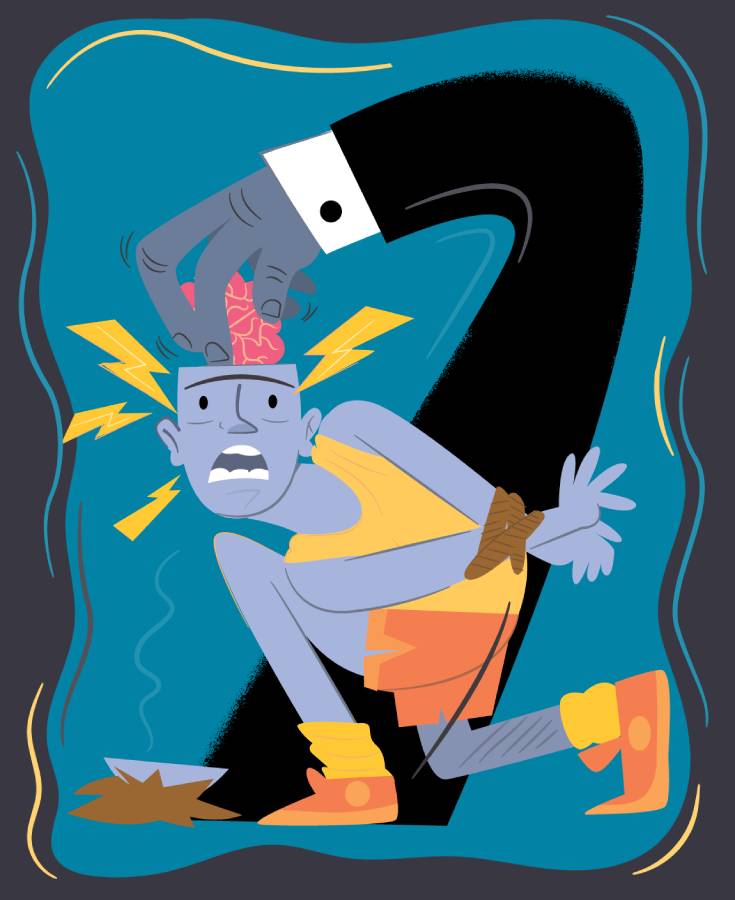
“ One day I felt I was cured. I went on stage and everyone applauded. That feeling lasted two months; it was horrible . I felt like an idiot afterward,” Leonel told Presentes . He was 17 or 18 years old. But by that time, he was already mentoring other gay men: he was supposed to help them become heterosexual again.
They made him believe he could end up in hell. And Leonel was afraid. “I even thought I came from a family of cursed people ,” he says today, finding the courage to speak after two years of having left this church.
The process of getting out of that situation wasn't easy. A few years ago, she got a job that took up all her time. She had stopped going to church; she no longer had the time. Besides, she was dating an atheist. But one day last year, before the pandemic started, she was having a really bad time with her boyfriend and asked him to go to church with her.
"God shows me that there are people who feel down, with bad thoughts. Come forward so I can pray for them," said Pastor Cristian Méndez.
Leonel went downstairs and stepped forward. He said he felt down because things were bad with his boyfriend. He closed his eyes so they would pray for him, but nothing happened. “To be able to pray for you, you have to let go of what displeases God. Are you willing to let go of it? If you do, I will pray for you.” Leonel felt worse than when he had arrived.
“I started to see every instance of manipulation, of control. They use a lot of mind control. They shut down your mind : they teach you to suppress reasoning, discernment, and critical thinking . If they tell you something, take it as fact,” Leonel recounts. He then describes more techniques: isolation from family and friends, physical exhaustion (“they had you constantly doing things, praying for hours, handing out pamphlets, we walked a lot”), changes in diet (fasting from one meal), and so on.
He's not the first, nor will he be the last. That much is clear to him. "What I am, though, is the first to dare to speak out and tell all this . There are a lot of boys and girls who went through similar things but left this organization in silence, they acted as if nothing ever happened," says Leonel.
The church is no longer called what it was when Leonel first joined. Now it's called the King of Glory International Ministry. They have over a thousand members. There, Leonel met many gay men and one trans man. They tried to change the sexual orientation or gender identity of all of them. They made the trans man dress as a woman and found him a male partner.
Leonel considered filing a complaint, but he doesn't know how. “In the religious sphere, it's even more difficult than in the healthcare field. We'd have to carefully examine whether we could construct an argument that this necessarily ends up affecting the person's mental health. The legal framework doesn't offer much support,” Lucas Mendos stated.
What is a coercive organization?
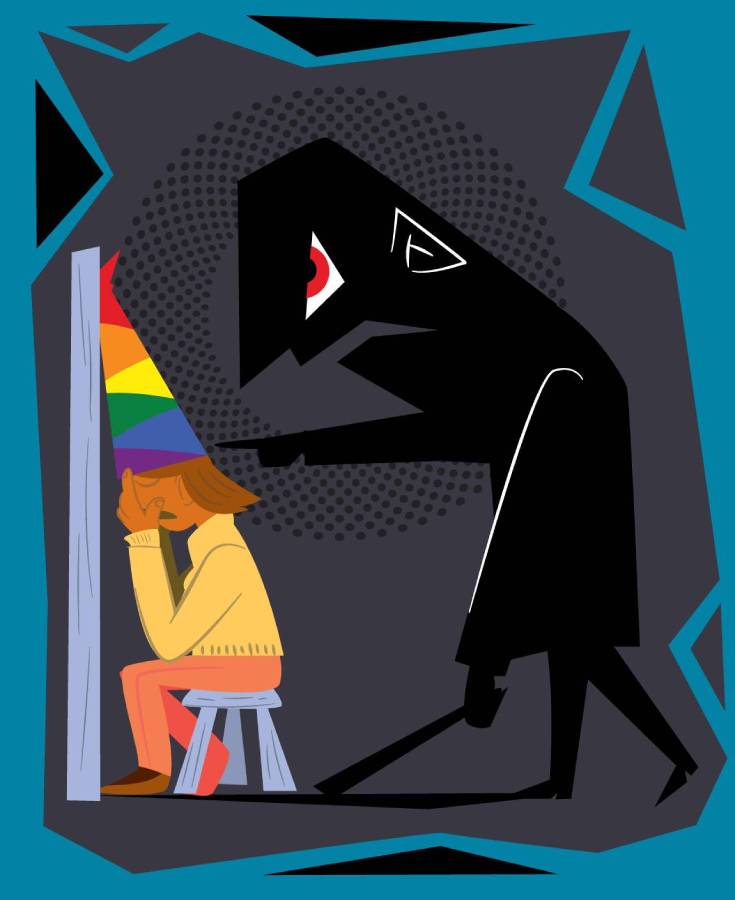
“They are coercive individuals, groups or organizations that use coercive persuasion techniques to recruit, subdue and violate human rights, children's rights, animal rights and public health ,” says Pablo Salum on his YouTube channel where he talks about sects, and explains what these organizations are.
“Today, almost no one reports these crimes, due to a lack of awareness, and also because these organizations tend to blame the victims. And when their loved ones are treated as if they've been kidnapped, it becomes even harder for a victim to report,” explained Salum, from the Librementes Network. For him, the biggest problem is the invisibility of the issue.
A new bill in Argentina
On August 23, a bill was introduced that aims to create the national program of assistance to victims of group dependency , and group or individual leaders who exercise coercive persuasion and abuse.
In the justification, National Deputy Mónica Macha, who signed the bill, explains: “For LGBT people there is a special vulnerability within these coercive organizations, since in many cases they are considered sick and must be converted, which causes situations of physical and mental torture with consequences that lead to suicide or expulsion from their family and community.”
The project has four fundamental pillars: comprehensive assistance to victims, the development of monitoring and evaluation programs for the situation of each victim, medical, psychological and legal assistance, and finally the investigation of all cases that come to light.
Conversion therapy ban: only 3 countries in the world
According to the ILGA World report only 3 countries explicitly prohibit conversion therapies: Brazil, Malta and Ecuador .
Since 1999, Brazil has had a nationwide legal restriction on conversion therapies, through a resolution of the Federal Council of Psychology, which prohibits the “pathologization of homoerotic behaviors and practices.” Furthermore, it states that licensed psychologists “must refrain from offering coercive or unsolicited treatment to homosexuals.”
In Ecuador, on the other hand, the legislation emerged much later, in 2012. The previous year, the State found many rehabilitation centers where people were being forcibly interned to be “cured” or treated for their attraction to people of the same sex.
Therefore, the Ministry of Public Health issued a Ministerial Agreement which, in Article 20, prohibits rehabilitation centers for people with addictions to psychoactive substances from offering, practicing, or recommending “treatments or therapies that aim to affect the human rights of individuals, especially the free development of personality, gender identity, sexual orientation (such as dehomosexualization) (...)”. This legislation does not cover conversion therapies that occur outside of these rehabilitation centers.
In 2016, Malta became the first European country to ban conversion therapy. This law contains the broadest prohibition enacted to date and is the first national law specifically designed, drafted, and passed with a comprehensive approach to prohibiting and preventing these practices.
We are present
We are committed to journalism that delves into the territories and conducts thorough investigations, combined with new technologies and narrative formats. We want the protagonists, their stories, and their struggles to be present.
SUPPORT US

FOLLOW US
Related notes

We are present
This and other stories are not usually on the media agenda. Together we can bring them to light.