

The Jáuregui Awards returned and recognized 11 activists from Argentina
The awards ceremony was held again after 22 years as part of Pride Month, during the Manzana Igualdad event in the City of Buenos Aires.


Share

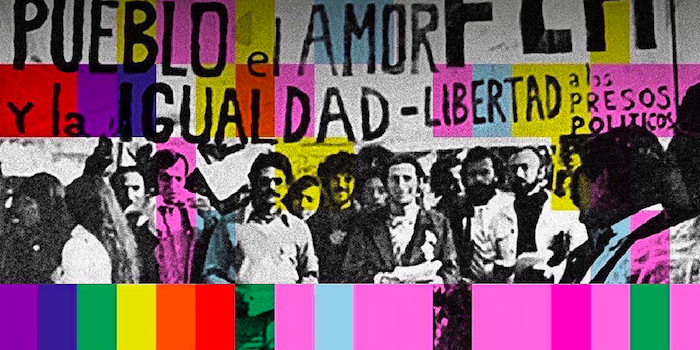
The Carlos Jáuregui Awards were held again after 22 years as part of Pride Month and the 50th anniversary of the founding of the Homosexual Liberation Front (FLH), the first sexual diversity organization in Argentina, which was celebrated from last Sunday until this Wednesday at the Manzana Igualdad event.
"At the Foundation, we wanted to create the Carlos Jáuregui Awards with the idea of reviving memory, truth, and justice, and with the conviction of continuing to recognize those who fight for equality and against discrimination, from a perspective of historical memory, human rights, gender, and diversity," Pedro Paradiso Sottile, president of the Equality Foundation, which promotes the awards, told Presentes.
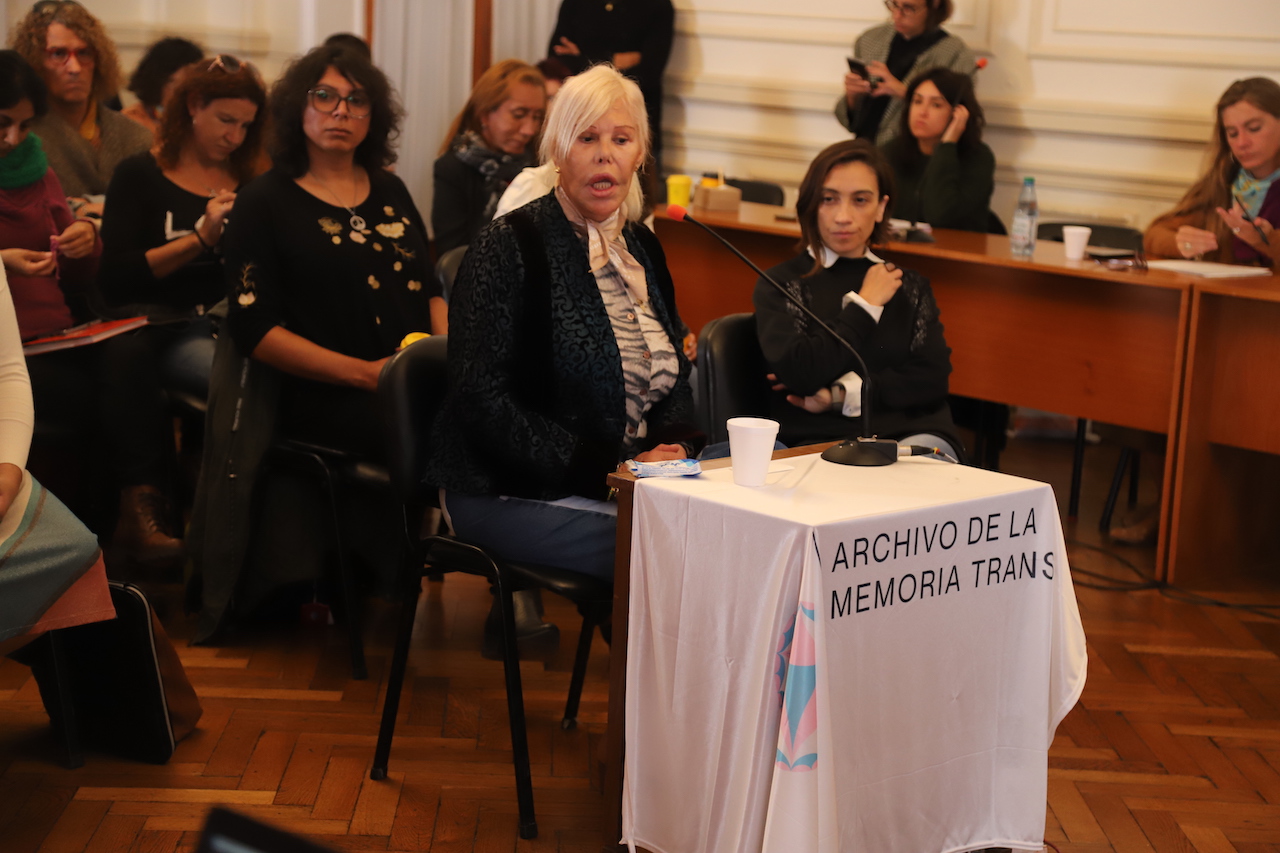
The event took place this Wednesday, December 1st, in the Representatives' Hall of the Manzana de las Luces and 11 awards were given, chosen by consensus and unanimously, to outstanding activists and communicators from the LGBTIQ+ community.
"The intention is for people to be able to participate and be recognized while they are alive," Paradiso Sottile said, adding that "it wasn't difficult to come up with names because there are many, many people already on a list to continue receiving awards in the coming years."
Those recognized were Estela de Carlotto, the grandmother of Plaza de Mayo, "an emblematic figure for memory, truth and justice"; Ilse Fuskova, "for a historical aspect of the movement, for her great activism and for being part, along with Carlos Jáuregui and César Cigliutti, of the first march in 1992"; and Nelly Minyersky, "an important ally of the movement and above all a historical reference for women's rights, feminism and the right to legal, safe and free abortion."
Also recognized was trans activist Alba Rueda "for being the first official with the rank of Undersecretary of the Nation in a Ministry that is historic"; Vilma Ibarra, the current Legal and Technical Secretary of the Nation, also recognized for being "an ally of the LGBTIQ+ movement in her work as a legislator from where she promoted the Equal Marriage Law."
"An activation mechanism"
The award was also given to activists and communicators Diana Zurco, "for her work on Public Television and her commitment to the subject matter" and Franco Torchia, "a social communicator who put his body, face and visibility on many issues and gives voice to many people and events that are historically invisible or forgotten," added Sottile.
Finally, there were also the organizations Ciclo Positivo, which "are young people who have been working very hard for years on Comprehensive Sexual Education and HIV prevention"; Casa Brandon, because, in the words of Paradiso Sottile, "we know that cultural transformation is the fundamental tool we have from organizations to be able to achieve our dreams and ideals"; and Ciervos Pampas Rugby Club, which "came to break through from sports, another important space to work on non-discrimination, equality and human rights."
“I am surprised, honored, and moved. Especially because it is being received by people with extensive experience and immense importance to our history of human rights and diversity,” said journalist and activist Franco Torchia, who has hosted the radio program about sexual diversity, “You Can’t Live on Love,” on LaOnceDiez for almost 10 years. He also recognized the award as a “very powerful initiative” because it is a “mechanism for activating and expanding the scope of activism.”
Matías Muñoz, who accepted the award on behalf of the organization Ciclo Positivo, told Presentes: “We are happy, very excited, and full of hope. I believe that recognition like this is a real boost of energy, showing us that this is the right path: to provide information and work to end this pandemic of discrimination.” This award comes as they celebrate their third anniversary as an organization and also on World AIDS Day.
History of the awards
The Carlos Jáuregui Awards were created in homage to and memory of one of the leading historical figures of the LGBTIQ+ community, and therefore bear his name. They were inaugurated in the city of Rosario, in the province of Santa Fe, in July 1999 during the First Gay Games of Argentina, organized by the Arco Iris collective.
At that time, the award recipients were the then mayor of Rosario, Hermes Binner; the Rosario Municipal Council, which had declared the Gay Games of interest to the city; Guillermo Lovagnini, an activist from Arco Iris, for his work in the fight for people living with HIV; the Diversity Group; the Ecumenical Movement for the Liberation of Sexual Minorities; the Argentine Homosexual Community (CHA), the National Network of People Living with HIV and AIDS and allied Buenos Aires legislators such as Adriana Zaccardi, Facundo Suárez Lastra, Eduardo Jozami and Dora Barrancos.
"Those days in Rosario are legendary. I remember seeing some video clips where, among others, Lohana Berkins was present," recalled Torchia; while Paradiso Sottile, who participated in the event, assured that it was a "beautiful" day that ended with a marathon "not as a competition, but to take over the streets."
For this reason, Paradiso Sottile explained that three bills were submitted to the Buenos Aires City Legislature. One seeks to declare Héctor Anabitarte, founder of the FLH, an illustrious citizen; another proposes placing a plaque on the building where the FLH was founded in August 1971, located at 169 La Rioja Street in the Once neighborhood; and the last seeks to establish August as "LGBTIQ+ Remembrance Month," also in his honor.
Therefore, in addition, after the awards ceremony, the film Sex and Revolution, directed by Néstor Ardito, was shown, about the activism of the community during the '70s, with a focus on the Homosexual Liberation Front, which published its manifesto called "Sex and Revolution" in 1973.
We are present
We are committed to journalism that delves into the territories and conducts thorough investigations, combined with new technologies and narrative formats. We want the protagonists, their stories, and their struggles to be present.
SUPPORT US

FOLLOW US
Related notes


We are present
This and other stories are not usually on the media agenda. Together we can bring them to light.