

El Salvador forced the sterilization of women with HIV
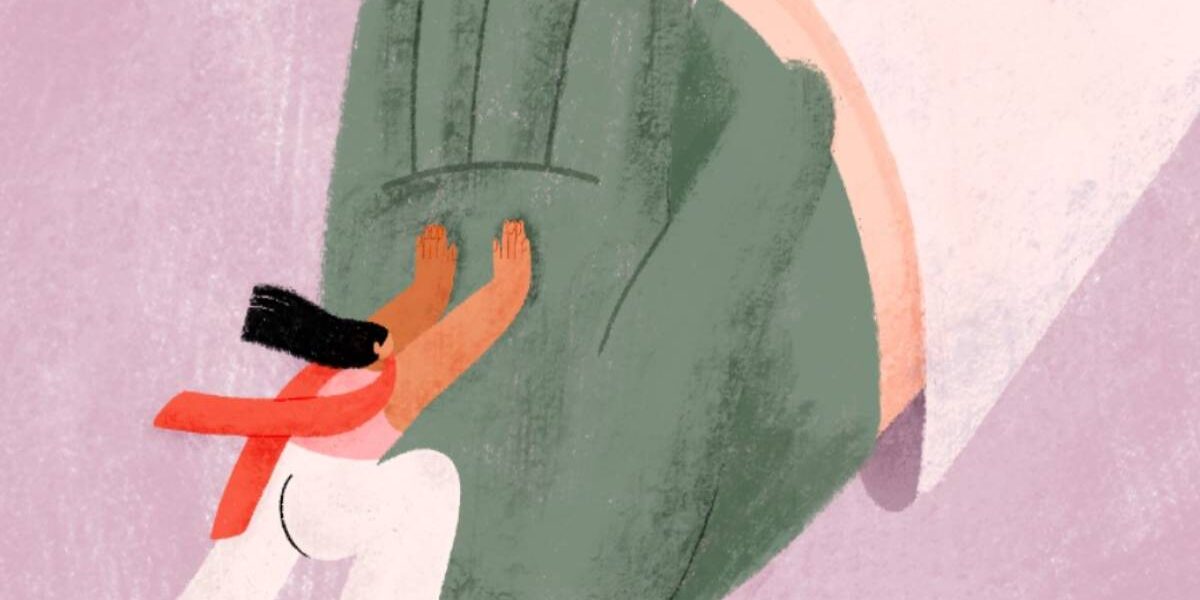
When Lizz learned she was pregnant, she was also told she had HIV. At the age of 17, when she gave birth to her only daughter, she was forcibly sterilized by medical staff at one of El Salvador's main public hospitals. The Constitutional Chamber of the country's Supreme Court only acknowledged that her reproductive health rights had been violated. Eleven years later, she still longs to become a mother again.


Share

Illustrations: Wilber Salguero
Lizz had received the news of her pregnancy and a positive HIV test result months earlier. She says she was more worried about the pregnancy than the HIV diagnosis.
One morning in December 2010, Lizz* felt her baby kick strongly in her womb, demanding its arrival into the world. Her pregnancy, marked by the despair of an unexpected diagnosis, was about to reach its end.
Upon her arrival at the Dr. María Isabel Rodríguez National Women's Hospital, the most important women's healthcare facility in El Salvador, medical staff asked Lizz if she wanted to be sterilized, but she declined. Because of her HIV status, she required a cesarean section and was taken to the operating room that night.
Minutes before she was given anesthesia for the cesarean section, a nurse asked her again if she wanted to be sterilized and gave her a form to authorize the procedure. Lizz signed it without having been fully informed of the consequences.
Eleven years after the incident, she speaks about that day via video call. She pauses, looks away from the screen, and says: "They were practically going to let me die. They told me that if I didn't sign, they wouldn't treat me. I signed because I couldn't stand the pain."
After giving birth to her only daughter, Lizz had part of her reproductive organ mutilated in a surgical procedure to prevent her from having children again when she was only 17 years old.
Four years later, Lizz's case was taken to the Constitutional Chamber of the Supreme Court of El Salvador, where it was proven that she did not have the full capacity to give her informed consent to be sterilized because she was a minor.
I A pillar of support
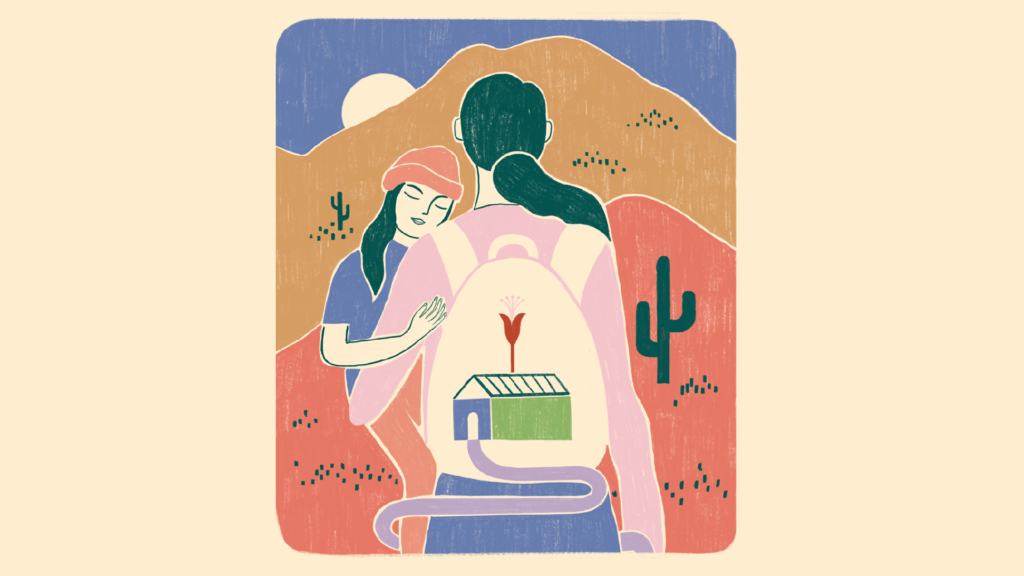
When Lizz was just 16 years old, she had a relationship with a man eight years her senior. A few months later, she began to feel unwell and experience intense headaches. She went to the doctor in the community of Cojutepeque, less than an hour from the capital, and after tests, she was told she was pregnant and also HIV-positive.
“At that moment, what worried me most was being pregnant. I didn’t grasp the magnitude of the HIV diagnosis,” she recounts.
When she told her partner the news, he wasn't surprised. He already knew she was HIV-positive and offered to live with her. Lizz left her parents' house and dropped out of school. Today, she believes she became pregnant as a result of rape because she was still a minor.
From her community, she had to travel for the next few months to the Women's Hospital, the only one in the country for maternal care, where she received antiretroviral treatment. At birth, her baby tested negative. He was free of the virus.
The human immunodeficiency virus attacks the immune system and weakens the body's defenses against infections and certain types of cancer. It is transmitted through the exchange of bodily fluids from an infected person, such as blood, breast milk, semen, or vaginal secretions.
State data indicates that the likelihood of a child being infected with HIV at birth is very low. According to the Salvadoran Ministry of Health (MINSAL), only one in every 100 babies born to mothers with HIV are diagnosed with the virus. This data aligns with that reported by the Joint United Nations Programme on HIV/AIDS (UNAIDS), which states that the risk of a woman with HIV transmitting the virus to her child is reduced to 5% or less with effective treatment.
Lizz received the treatment stipulated by the Ministry of Health. Furthermore, the same report states that by 2010, 100% of known pregnant women with HIV in the country received antiretroviral medication to reduce the risk of transmission to children. These figures indicate that Lizz could safely have more children.
In 2019, the Ministry of Health of El Salvador reported 26,893 people living with HIV in the country, of which 34% were women.
Lizz monitored her health and that of her baby at her local hospital, about 18 km south of the nation's capital, and there she connected with organizations that support people with HIV when she went to her medical appointments.
“I used to go to checkups at the Cojutepeque Hospital, and that's where I joined a support group and some feminist NGOs. He (her ex-partner) was an alcoholic and he beat me. I suffered a lot of physical abuse. But joining these groups empowered me. I became incredibly empowered,” she says emphatically. When her baby turned three months old, she decided to separate from him and moved back in with her parents.
At the hospital, she met members of the Atlacatl Vivo Positivo Association, which works to defend the rights of people living with HIV. They offered her a scholarship to finish her secondary education. Psychological therapy and group sessions contributed to her development and empowerment. She says that after a very difficult healing process, she can now talk about it more easily.
II More women with HIV sterilized
Lizz's case is not unique. Other women with HIV and minors have been systematically sterilized in El Salvador.
In their legal challenge, it was established that “in hospital practice, girls and adolescents are sterilized with the sole requirement that they sign an authorization form for that purpose.” The ruling, which Alharaca accessed, documents that one of the doctors questioned in the proceedings stated that “a minor under twelve years of age can be sterilized according to family planning regulations.”
The Technical Guide for Care in Family Planning (GTAPF), mentioned in the injunction, does not stipulate that there are sterilizations of certain patients based on age, it only requires that there be informed consent from the patient.
Lizz's case was brought to the Judiciary thanks to the National Association of Positive People Vida Nueva (ANP+VN), focused on reducing HIV morbidity in El Salvador.
Together with other civil society organizations and authorities, they participated in the creation of the Stigma Index in People with HIV ( INDEX ) 2019, conducting interviews with patients in 19 hospitals of the public health system.
The report documented that 23 out of 514 people surveyed were sterilized without their knowledge or consent in the past year. All of those who reported this were women. Most of them are from low-income backgrounds and have limited access to education, notes Catherine Serpas, executive director of ANP+VN.
The same study showed that 7.2% of those surveyed were advised not to have children, and 5.6% reported being pressured, motivated, or induced to undergo permanent sterilization through tubal ligation or vasectomy.
Serpas added that the study also found three more cases of minors who recounted their experience.
“It was alarming to find cases of forced sterilizations. The first case we collected was of a woman who experienced this in 1998. We also found cases of girls, minors,” says Serpas. She explains that the association didn't keep records of everyone, but when they contacted some of the women, many decided not to pursue legal action for fear of the stigma.
One of those who did manage to follow up was Lizz, after conducting the INDEX 1.0 study. “The case occurred in 2010, but she didn't speak about it until 2014,” she explained.
III The legal battle
Organizations that protect the rights of people living with HIV are often part of support groups like the ones Lizz attended. There she met other women who had gone through the same thing and had been pressured by medical staff to be sterilized. This motivated her to speak out and begin a legal process with the support of ANP+VN.
In 2014 they filed a lawsuit to have the violation of Lizz's reproductive health rights and discrimination based on HIV recognized by the medical staff of the National Women's Hospital "Dr. María Isabel Rodríguez".
A key element in pursuing the case was obtaining the medical records, which they requested from the hospital through the Institute for Access to Public Information (IAIP), but were denied. It wasn't until they filed for amparo (a constitutional protection action) that the hospital authorities released the records, which contained no evidence to justify the sterilization.
Lizz's defense had access to statements from the medical team indicating that "it made no sense" for people with HIV to continue having babies.
The hospital director denied before the court any act of discrimination based on HIV or that the patient had been forced to undergo sterilization.
The Constitutional Chamber declared in 2015 that there was indeed a "violation of her fundamental rights to reproductive health, reproductive self-determination and personal integrity —in relation to the fact that, being a minor, and therefore not having the full capacity to give her informed consent to be sterilized."
“We did manage to prove that there was discrimination (based on HIV), but the Court did not admit it,” lamented her lawyer and legal representative, Crissia Pérez.
The court ruling ordered the initiation of proceedings for material and moral damages and guaranteed adequate psychological treatment to overcome the aftereffects of the sterilization procedure.
IV. Maternity. A denied right
Lizz suffered from recurring bouts of depression. After the trial, she wanted to regain her fertility.
Surgical sterilization is a procedure in which the fallopian tubes, which carry the egg from the ovary to the uterus, are blocked. This can be done by tying and cutting the tubes, by cauterizing them, or by closing them with a ring or clip.
Twenty percent of women who undergo sterilization regret their decision, but some cases are irreversible. Lizz's was one of them.
"There are different ways to cut the fallopian tubes, but the cut the doctor made was flush. There was no way to reconstruct the tubes. We interpret this as an act of violence and a crime against humanity," says Catherine Serpas.
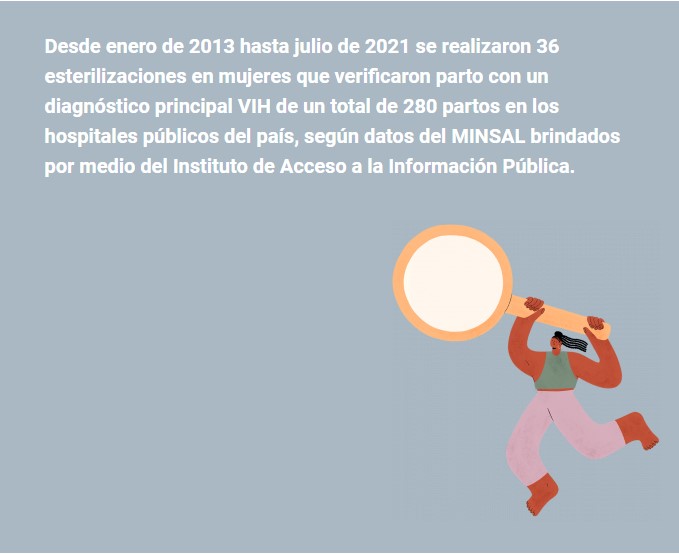
Between January 2013 and July 2021, 36 sterilizations were performed on women who gave birth with a primary diagnosis of HIV out of a total of 280 births in the country's public hospitals, according to data from the Ministry of Health provided through the Institute for Access to Public Information.
***
A gynecologist who works for the public health system, whose name she wishes to omit for her safety, warns that recommending a woman with HIV not to have children is a debatable issue.
“If we go back to the 1980s, a diagnosis of HIV infection was practically a death sentence. Today, we have the advantage of various support programs for these patients, including antiretroviral therapy, monitoring tests, and social and psychological support groups,” he explains.
The doctor assures that if the patient is responsible for her health and her medications, she can get pregnant and have regular check-ups during her pregnancy.
“Now, if the situation is different with a patient who has had poor adherence to her treatment or is irresponsible in her check-ups, who has uncontrolled secondary diseases or a poor prognosis,” she warns, “it becomes necessary to avoid pregnancy to prevent maternal or fetal complications.”
Serpas explains that reproductive health issues are not seen as a problem. “That’s because we live in a world that is seen as entirely masculine, especially when it comes to issues like HIV,” she says.
ANP+VN frequently receives complaints about the lack of support in terms of family planning, she adds. “There’s still a belief that once a person receives a diagnosis, they can forget about their sex life… We’ve found that when they get their Pap smear (a test to detect the human papillomavirus, which causes cervical cancer), they’ve been mistreated by healthcare staff, always with the interpretation of ‘Why are you still having sex?’ The response to HIV has evolved, but the thinking remains mediocre.”
IV Migration
Lizz not only faced obstetric violence in her country, but during the trial she also received anonymous calls threatening her life. During her visits to the hospital for psychological treatment, some medical staff tried to persuade her to drop her lawsuit.
The head of the HIV and Human Rights Department at the Human Rights Ombudsman's Office, Jaime Argueta, acknowledged that “there is no protection system in place to guarantee the person who has had the courage to file the complaint, to protect her against the state itself. She even began to be questioned when she started receiving her treatment.”
Stigma in the health or work environment is becoming less frequent, he says, but HIV testing is still required for employment as part of the battery of tests.
In the community sphere, he warns that there is still a lot of discrimination and people's diagnoses are being shared in the places where they live.
“Perhaps they work in a beauty salon and someone starts to spread the diagnosis and they lose their clients. Or they sell any kind of prepared food and their livelihoods are also affected,” she explained.
Lizz lived in an area declared a high-risk zone for gang violence. This became yet another reason that led her to migrate to the United States with her daughter and her current partner. There, more than 10,000 kilometers from the country that expelled her, she is now trying to rebuild her life.
“I wanted a better life for my daughter. Fear also played a part in my decision to migrate,” she said.
V A new life
Despite her irregular immigration status, Lizz has managed to access antiretroviral treatment through a protocol at a Research Center in the United States, which she accessed through a hospital.
For now, she works, studies English, and wants to return to university to study law to help other people: “My dream is to work in an organization that helps with human rights or migration.”
According to the International Community of Women Living with HIV/AIDS (ICW Latina), El Salvador's legal framework for penalizing healthcare personnel involved in forced sterilization of women with HIV is considered positive; that is, according to this organization, doctors do face penalties in these cases. However, those who treated Lizz did not receive any penalties.
At the close of this investigation, an interview was requested with the head of the National STI/HIV/AIDS Program, Dr. Ana Isabel Nieto Gómez, to learn her position regarding Lizz's case; however, no response was received. Dr. Nieto held the same position in 2010, when Lizz was forcibly sterilized.
Nieto currently serves as an official in President Nayib Bukele's government. His administration has been criticized for its lack of accountability, limited press access, and for classifying public information as "confidential."
Currently, ANP+VN works to provide legal support, training, psychological care, job reintegration, and income generation for people living with HIV. It also maintains close ties with HIV support groups within the national hospital network. Hundreds of people have benefited from its projects. Its lawyer shared that when the press covered Lizz's case, they became aware of other cases they could follow up on and bring to justice if they had the necessary funding.
*This article was originally published in the media outlet Alharaca .
*Lizz's real name is not revealed to protect her privacy.
We are present
We are committed to journalism that delves into the territories and conducts thorough investigations, combined with new technologies and narrative formats. We want the protagonists, their stories, and their struggles to be present.
SUPPORT US

FOLLOW US
Related notes

We are present
This and other stories are not usually on the media agenda. Together we can bring them to light.