

Who can live to find a cure for HIV?
In a first-person account, journalist Lucas Gutiérrez emphasizes the value of activism in the progress made against the virus. He expresses hope for a new law.


Share

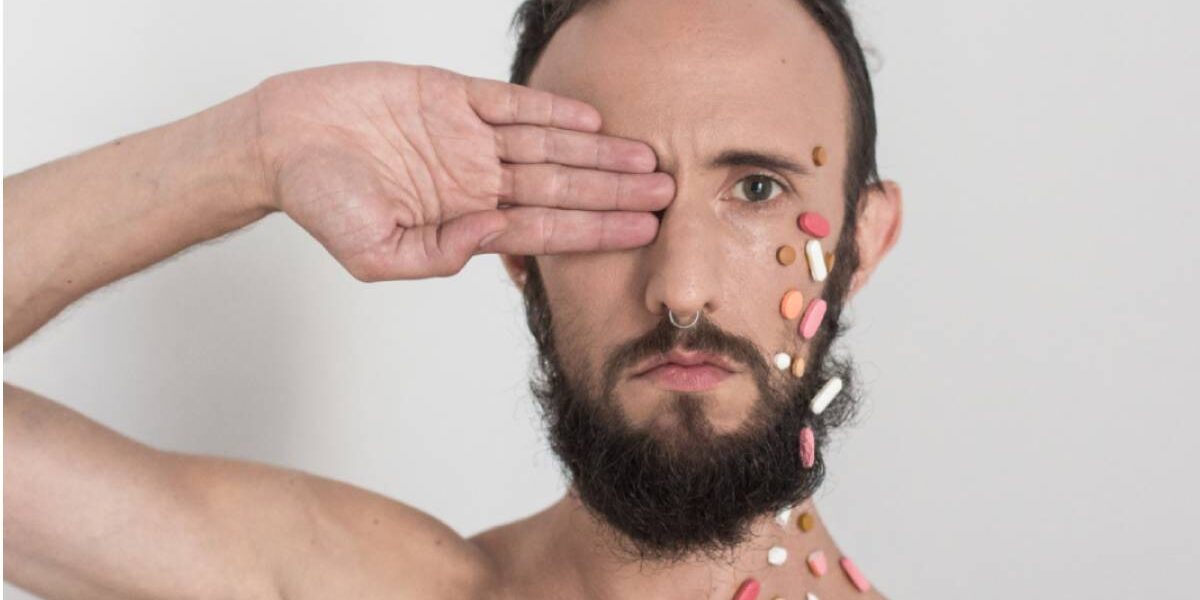
One of the first mantras I learned in 2009 when I began my HIV activism was: “We need to live until the cure.” I read it on a banner in 2016 when medication shortages were severe.
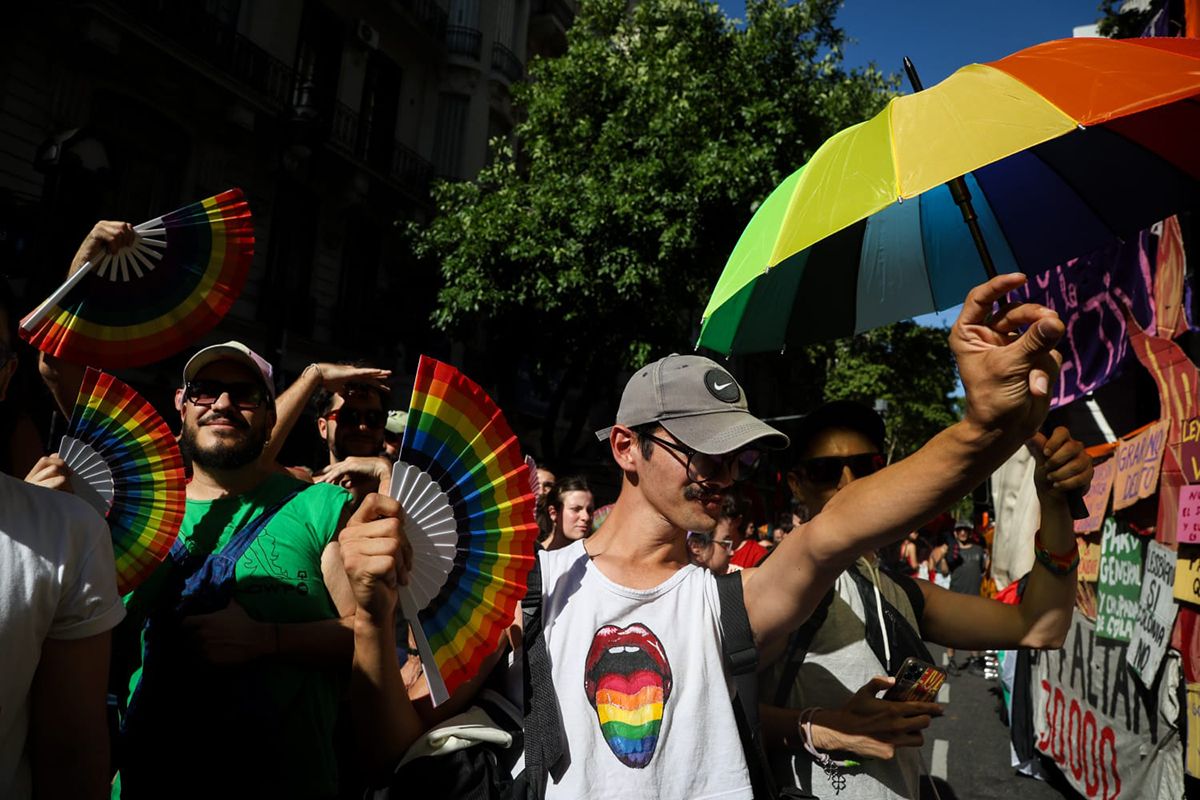
The phrase was raised to the sky by another activist who prayed to no god or state. The message of the signs at marches enters through the retina and is etched into the skin. The phrases we see and hear play a very important role in our health. Over time, I learned to take the "you're sick" insults head-on, to deflect them and dribble them around the field until I scored a goal, shouting: "I'm not sick. I'm a person living with HIV. The sick one is the system that hates us." My immune system sometimes tires of fighting a virus; let's not force it to also combat so much prejudice and stigma.
While in Argentina the project for a new HIV law finally seems to be moving forward, in Mexico the fight continues to repeal laws that criminalize people living with HIV, and these are undoubtedly achievements to celebrate. All of these advances are possible thanks to activists who constantly raise their voices, develop strategies, disseminate information, and highlight the urgency of the situation.
But let us also remember that our activism was born in response to attacks, crimes, erasure, and denied rights. And that on the path to the passage of laws and the achievement of rights, many, many activists and friends have lost their lives. In every march, there is an empty space; their absence is palpable. They are missing from our dinner tables, our desks at work, and our everyday embraces.
May this memory never be lacking when we demand and shout for everyone.
Double pandemic
We, as people living with HIV, have been living in a pandemic for 40 years. In 1981, the first alert arose about cases of a rare disease, known as "gay cancer." If non-heterosexuals died, nothing else mattered. If the world had responded with its full force at that time, perhaps the virus could have been controlled, so many deaths could have been avoided, and a path to a better quality of life could have begun much sooner.
Four decades later, a new pandemic is sweeping through. And it's abundantly clear how a swift, global response makes all the difference. It's not that we've learned anything; we're reacting out of fear. Even amidst this terror, solidarity hasn't fully taken root. Vaccines continue to be stingy; people seem to prefer a pandemic to a global response.
HIV during the preventative isolation period further highlighted the vulnerability of people living with HIV. With the double pandemic upon us, we had to find creative ways to build networks to help us reach hospitals to pick up our medication; we couldn't get tests and checkups for a long time. Today, in this "almost" post-pandemic era, we still can't access healthcare services. We had to relearn that our right to confidentiality couldn't be violated, especially not in COVID-19 vaccination centers.
At the end of last year, the Pan American Health Organization (PAHO) reported that HIV cases in Latin America had increased by 21% between 2010 and 2019. And those figures don't even include the years of COVID. Beyond the numbers and percentages, I wonder about those diagnosed and forced to live in the closet. What happens to those who are HIV-positive and must silently live their lives because society perceives them as a threat? My childhood in the 1980s neighborhood sometimes echoes the year 2021 when I hear, "He died of a rare cancer," or "Well, you know how he was." Time and stigma are trapped in an endless cycle that we help break every day when we advocate with love and information.
The road to a cure
Every so often, a new discovery promises to bring us closer to a cure for HIV. A patient somewhere with a transplant, a new medication in a simpler form, a study that connects the dots, and so on.
We recently learned that in Argentina there is "Patient Esperanza ," one of only two known people in the world who have been able to fight the virus without medication. She lives in the city of Esperanza, Santa Fe. But this isn't about faith or waiting for providence; it happens when there is research and a functioning healthcare system. The path to a cure requires funding, professionals, and supportive governments. And every day that passes without a cure is another obituary. But since metaphors don't exist, here we continue building strategies, networks, hugs, and of course, hope.
I have no doubt that the answer will come. But it will be the result of collective work. And the meantime cannot be an excuse for neglecting the quality of life of those of us living with the virus. Because our eyes, which are burning with fear as we stare at that horizon that is the cure, cannot ignore what is happening to our lives today. If we don't have jobs, if we can't take our medication, if we don't have access to the best healthcare, if we can't live a free, fulfilling, and social life, if we continue to be criminalized, if we don't have all of this, the cure will be just another flower on our graves.
Our mission is to reach the day the virus no longer exists, alive and in the best possible condition.
We are present
We are committed to journalism that delves into the territories and conducts thorough investigations, combined with new technologies and narrative formats. We want the protagonists, their stories, and their struggles to be present.
SUPPORT US

FOLLOW US
Related notes

We are present
This and other stories are not usually on the media agenda. Together we can bring them to light.