

Poetry from the periphery: the Arrecife Arte Trans Slam on its way to the national circuit of Mexico
The initiative was born during the pandemic due to the need to connect the scenes of visual art, plastic art, and body and word art to the digital world.


Share

Of all the questions raised by the pandemic, the first to emerge in the world of performing arts was how long it would be before artists could return to the stage. In the case of Mexico's vibrant and diverse performance poetry scene, which has been thriving for ten years, that question quickly transformed into another: how long would it be before a group of poets organized themselves to translate the logic of live performance to the digital world?
Very soon, in the midst of the pandemic, Arrecife Arte Trans emerged as a response. The initiative stemmed from “the need to connect the visual, plastic, and body and word art scenes from gender and sexual dissidence perspectives,” Canuto Roldán, co-manager of the project, told Presentes. Coral, also a co-manager, added: “I would define the project as an exercise from gender and sexual diversity to unite and multiply rather than simply add up our efforts, to present a solid image and create safe spaces and moments, as well as environments of listening and radical tenderness through poetry and the plastic and performing arts.”

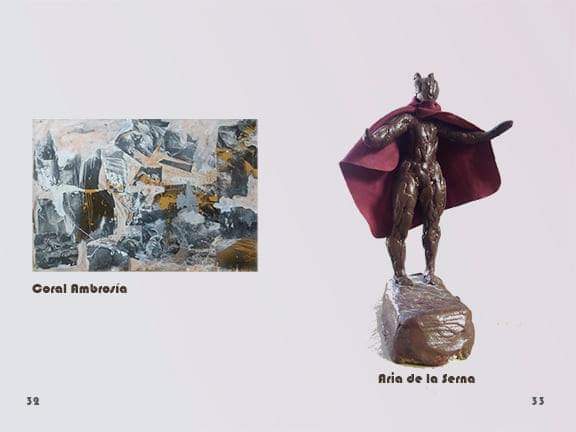
The initiative has several facets. On one hand, it includes a magazine for trans children and families called Anémona, and another publication for trans and dissident youth from Mexico and the region called Arrecife. In both cases, the magazines feature poems and texts by trans and non-binary authors from across Latin America, as well as images of visual art.
Arrecife Arte Trans functioned as a space for collective construction when inhabiting spaces collectively proved impossible, and took advantage of digital technology not only to produce a publication with massive reach, but also to exploit the interdisciplinarity that virtuality allows.
Poetry and group experience
However, for slam poetry, simply publishing the texts isn't enough. After all, performance poetry can be defined as poetry intended to be recited, where the staging of the text is as important as the words themselves. Furthermore, slam poetry—a competition where poets are scored by audience members—is a collective game, a perfect excuse to transform poetry, historically a solitary exercise, into a group experience.
The slam poetry scene in Mexico has proven to be especially prolific, with a national circuit that unites people across the country through spoken word. “At Poetry Slam, we’ve been doing essential artivism for the past ten years to create a kind of refuge, a place for exchange, collaboration, and denunciation for poetry from the periphery,” Canuto explained.
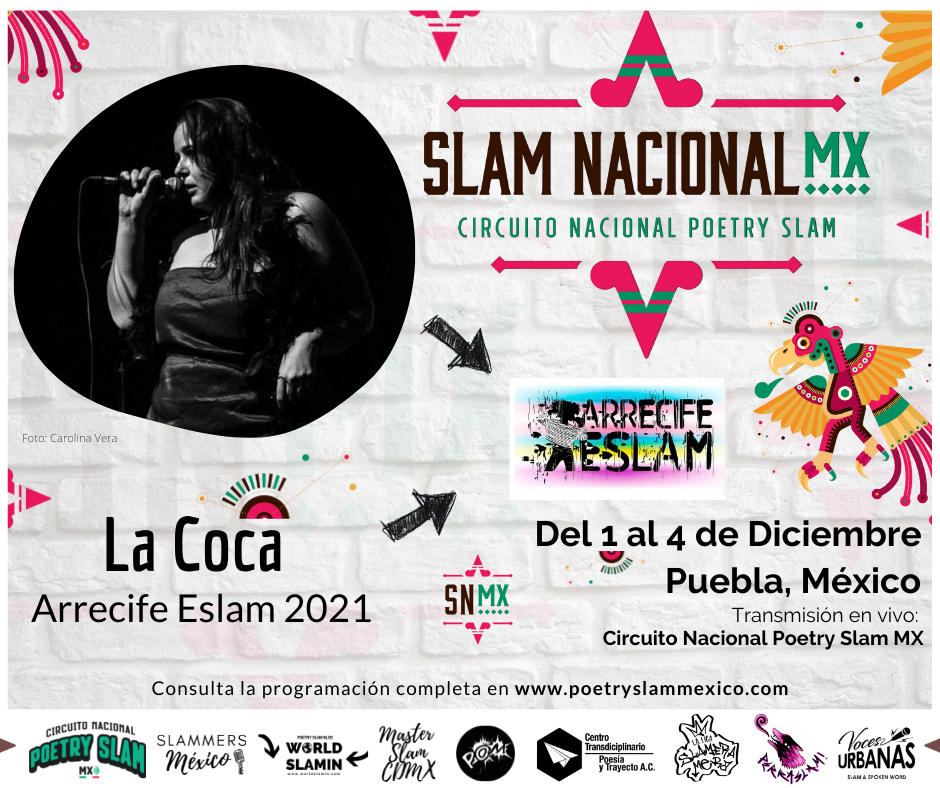
That's why another facet of the project is Arrecife Slam, which held two editions via Zoom during the pandemic lockdown. " It fills us with joy and hope to know that Arrecife Slam has a national representation heading into the third national slam, which will be held at the end of this year in Puebla," Canuto said. "We have the right to be recognized, heard, and embraced in the full power of our voices and our affection, both virtually and in person."
Towards the National Slam
The poet who will represent Arrecife Slam at the National Slam in Mexico is none other than La Coca, an Argentinian poet based in Mexico. Originally from Salta, La Coca reached the finals of the Biennial of Young Art in Buenos Aires in 2016 and, upon arriving in Mexico, won the slam at the International Book Fair in 2018 with her queer and feminist poetry. “I’m deeply moved to represent Arrecife,” La Coca told Presentes. “ The queer poetry scene is quite moving, it’s heartbreaking, it’s brutal. Not only here in Mexico but also in Argentina. I’ve been doing a lot of work supporting dissent, being a queer mother, advocating for neurodivergence, and now also advocating for being a migrant. There are many narratives of otherness and the periphery that I have to address, and so encountering these other narratives makes my heart explode.”
Regarding the effects the pandemic had on the art world, Coral emphasized that it also “has shown us that humanity has an immense capacity for adaptation and that even in spaces where we sometimes think certain circumstances are impossible, flowers can bloom.” For Canuto Roldán, the effect of queer poetry is like an enchantment that transcends any screen: “For me, dissident poetry is an act of transcentral magic. It generates atmospheres that allow us to step into the other's shoes, to find ourselves at the root that unites us even with our differences, encounters, or disagreements. This poetry has the power to demand and achieve all rights for all people.”
We are present
We are committed to journalism that delves into the territories and conducts thorough investigations, combined with new technologies and narrative formats. We want the protagonists, their stories, and their struggles to be present.
SUPPORT US

FOLLOW US
Related notes
We are present
This and other stories are not usually on the media agenda. Together we can bring them to light.