

Radio Azacualpa, a community dream with the voice of women
"We have already lost the fear of speaking out," says one of the women who is part of the radio station that has been operating for five years in the Honduran community.


Share

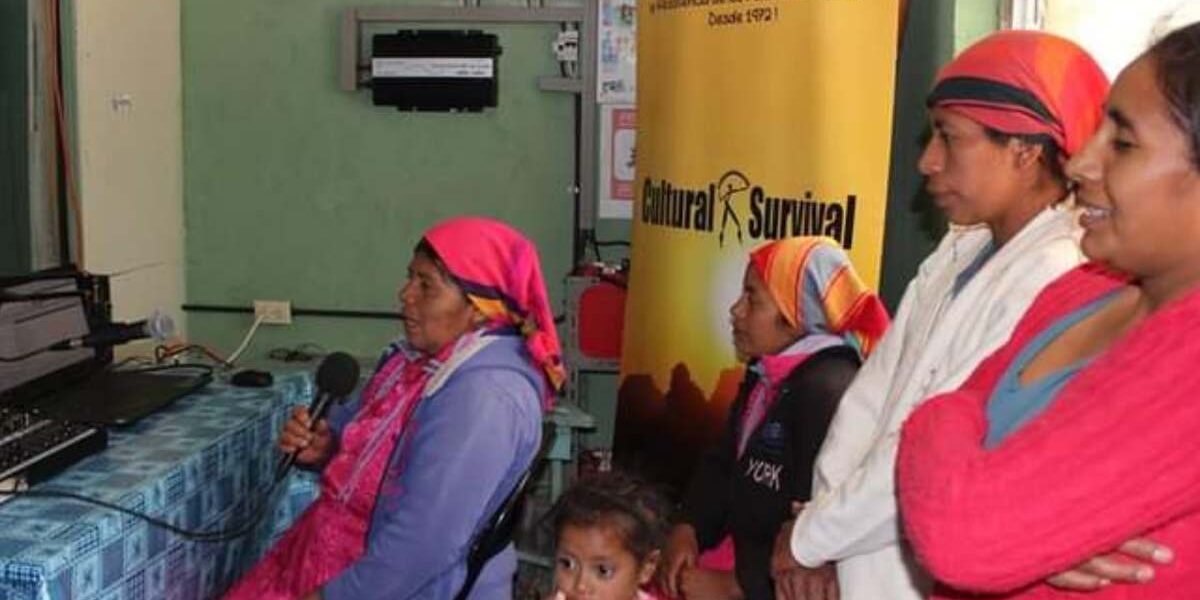
A group of fifteen Lenca women from Honduras have been running Radio Azacualpa “The Voice of Women” (102.2 FM) for the past five years. The station is located in the community of Azacualpa, in the municipality of Yamaranguila, in the department of Intibucá. It was founded on January 15, 2016, by Lenca women after receiving training from the Indigenous Coordinator of Popular Power of Honduras (CINPH).
" This radio station helps women to express themselves and have a dialogue with other people. It also helps prepare the young people who listen to us," says María Guadalupe Gutiérrez, 56, general coordinator of the projects and women's groups at Radio Azacualpa.
Guadalupe tells Presentes that she feels "good" because on the radio "you relax, discuss things, and connect with people," and she highlights the support they received from the community. "It was well received because we could communicate some of the problems people had through the radio ," she says.
María Cándida Gutiérrez, also a member of the project, adds: “ Radio is very important because it helps us both to educate ourselves and to broadcast any announcements or emergencies, since there's no cell service here . This saves time and avoids the need for person-to-person communication.” Cándida is 40 years old, has been involved with the radio for four years, and has been part of the “Organized Women” program for the past six months while also working in administration.
To inform and educate
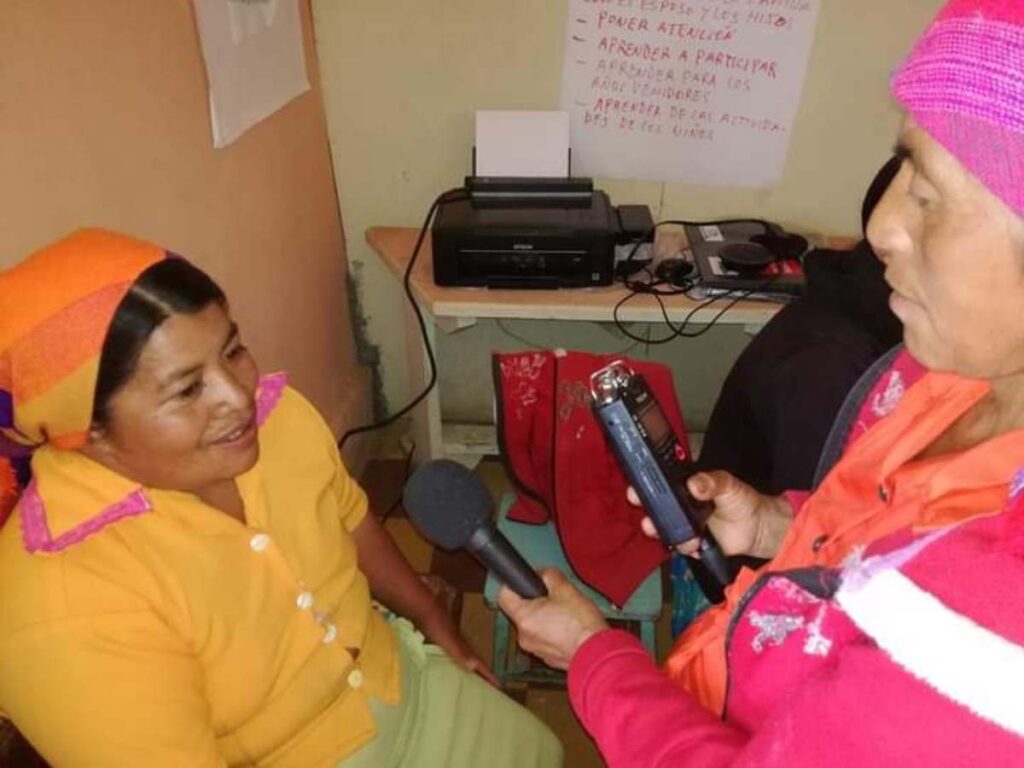
Among its distinctive features, radio has an educational purpose. Through the Sustainable Development Network (RDS), training workshops were launched in radio broadcasting, production, and distribution, in addition to training sessions on Food and Nutritional Security (FNS) from an agroecological perspective.
“My journey has been through training and workshops offered by various institutions. I didn't study much, only up to the third grade. But the training and workshops have helped me get here . I feel grateful; it's a joy to be part of this technology project,” says Guadalupe.
Radio Azacualpa's programming airs six hours a day and features four shows. Men, invited by the project's organizers, also participate in these programs. "Amanecer Ranchero" (Ranch Dawn) begins at 4:00 a.m. and offers music and announcements until 6:00 a.m. On Mondays and Fridays from 9:00 to 10:00 a.m., Guadalupe Gutiérrez, María Cándida Gutiérrez, Modesta Gutiérrez, and Aurelia Lemos host "Mujeres Organizadas" (Organized Women), a training program for women on "how to defend our rights." This is followed by a Catholic program hosted by Ceferino Lemos from 12:00 to 3:00 p.m., and "Atardecer en el Campo" (Sunset in the Countryside) hosted by Reimundo González and Santos Rodríguez from 4:00 to 7:00 p.m.
A community tool
The radio station was established through community savings and operates entirely on a voluntary basis, as it is a non-profit organization . To secure the initial investment, a group of twenty women began by contributing two lempiras per woman every eight days.
“I don’t get paid, I do this voluntarily. My family works to support me and to be able to coordinate this group. We’ve done this voluntarily so that this community can move forward ,” says Guadalupe.
The community of Azacualpa, located in the municipality of Yamaranguila within the department of Intibucá, in Honduras, is low-income and has "quite a few problems" that worsened with the arrival of the pandemic.
“People struggle, they sell things at the market that are worthless, it doesn’t cover what we need,” she says, emphasizing that it is “a community very far from the towns.”
The community has neither a hospital nor a health center nearby . “Those who die do so because they can’t get to the health center. We have nothing for emergencies. If someone gets sick at night, we have to find a private car and pay to take them,” Guadalupe explains.
He continues: “We don’t have paved roads for vehicles. This community is in a very rainy area, and the roads deteriorate.” He adds that, due to deforestation, “the water sources are drying up, and we even run out of water in the summer .”
Furthermore, women who experience violence "are afraid because there is no direct training on how to express themselves and seek help ."
In this context, a radio station that can provide accurate information, training, and entertainment to women and the community at large becomes necessary .
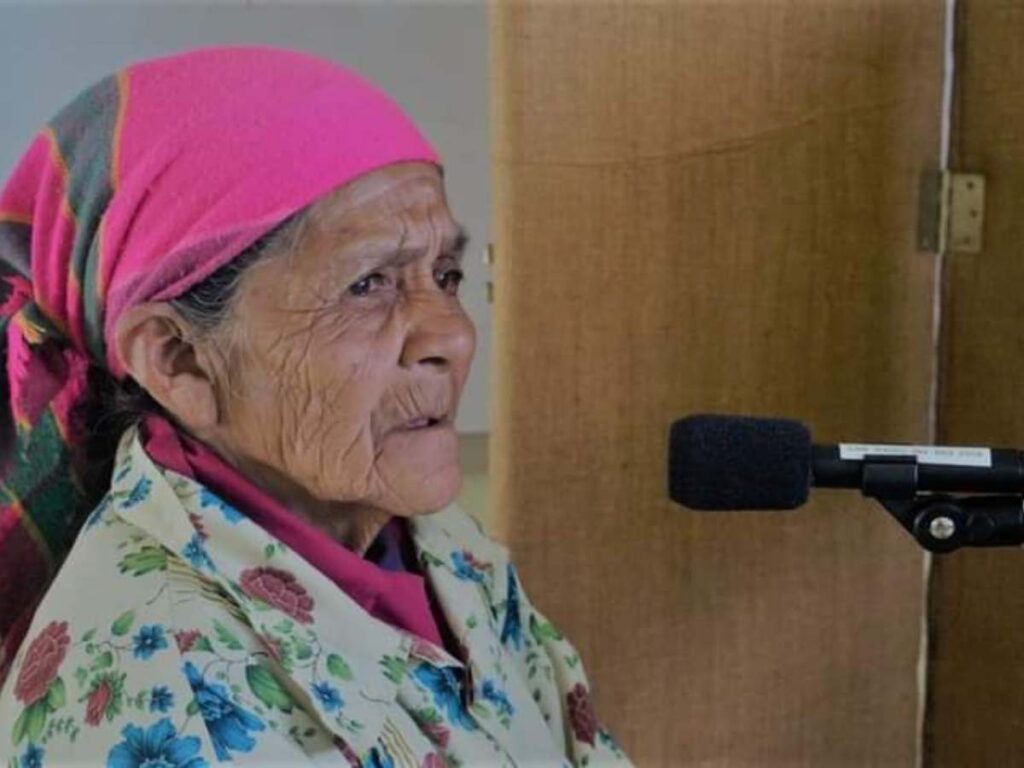
“ Radio provided a great service during hurricanes like Iota and the other one that passed through, giving information so people could leave their homes,” says Guadalupe, as an example of radio’s role. “ We as women have already lost our fear of speaking out ,” concludes María Cándida.
We are present
We are committed to journalism that delves into the territories and conducts thorough investigations, combined with new technologies and narrative formats. We want the protagonists, their stories, and their struggles to be present.
SUPPORT US

FOLLOW US
Related notes

We are present
This and other stories are not usually on the media agenda. Together we can bring them to light.