

During 2020 there were 370 hate crimes in Latin America and the Caribbean
A report prepared by the regional observatory Without LGBTI Violence shows that although there was a decrease in the number of homicides in 9 of the 11 countries in the region, the figure increased compared to 2019.


Share

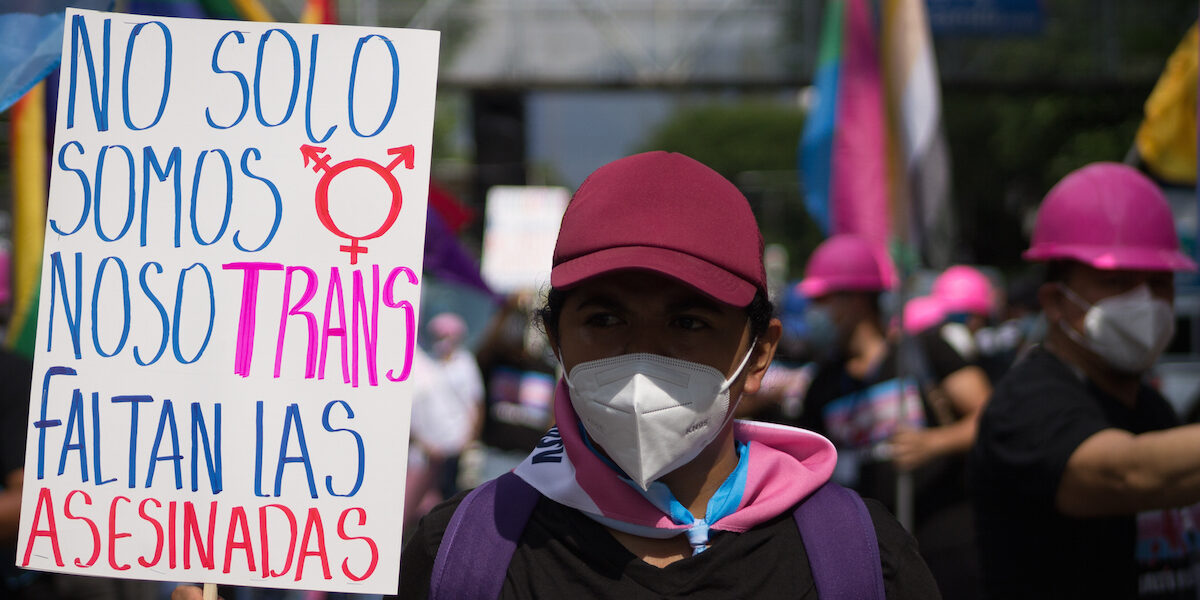
Three hundred and seventy people were murdered for reasons related to prejudice against sexual orientation or gender identity in eleven countries of Latin America and the Caribbean during 2020. The data was recorded in the report of Sin Violencia LGBTI, the first regional observatory of crimes against LGBT+ people.
The LGBTI Violence-Free Network was launched by the organizations Letra S from Mexico, Colombia Diversa and Cattrachas from Honduras, and currently includes 11 countries: Guatemala, El Salvador, Dominican Republic, Nicaragua, Peru, Bolivia, Brazil and Ecuador, in addition to the founding countries.
“We are a reliable base for the Inter-American Commission on Human Rights and also for the prosecutors and investigative bodies of each of our countries,” said Indyra Mendoza, the director of Cattrachas.
According to data from the observatory, between 2014 and 2020, at least 3,599 LGBTI people were murdered in the eleven countries that make up the network. More than a thousand (1,403, or 38.98%) were killed because of prejudice against their sexual orientation or gender identity. In 2019 alone, 319 cases were recorded, and 370 in 2020.
During 2020, the network observed a decrease in homicides of LGBTI people in 9 of the 11 countries. However, they stressed that this “does not present an encouraging picture” and listed three trends that took place throughout the past year.
“The first is that it highlights the lack of specific actions by states to prevent, address, and punish this violence,” the network stated. They suggested that the decrease may have been linked “to the changes in the ways people interact brought about by the COVID-19 pandemic.”
“In Colombia, for example, despite a reduction in the overall rate of lethal violence cases due to nationwide restrictions, there was an increase in the total number of homicides against LGBTI people. This figure accounted for 62.97% of cases at the regional level,” they highlighted.
The countries with the most fatalities were Colombia, Mexico, and Honduras, which accounted for 82.76% of the total cases registered during 2019 and 89.72% in 2020..
The second trend refers to the fact that "the main patterns of homicidal violence against LGBTI people in the region persisted in similar proportions to previous years."
Third, the latest trend “has to do with the new risks faced by LGBTI people in the region in the context of the COVID-19 pandemic.”
The impact of biosecurity measures on situations of violence
In this regard, Sin Violencia LGBTI highlighted the role played by the imposition of biosecurity measures. “Measures such as curfews, limitations on access to services (based on identification number or gender), as well as the deployment of police and military forces to ensure compliance, increased the risks of non-lethal violence by state agents.”
This happened - they point out - "with trans people in countries like Colombia, Panama, Paraguay and Peru" and was due to "prejudice against the sexual orientation or gender identity of the victims."
Regarding the victims' identities, the observatory indicates that for several years there has been a trend showing that gay men, trans women, and lesbians are the sexual orientations and gender identities most frequently victimized regionally. "However, the surge in reported cases in Colombia in 2020 indicates a worrying increase in homicides of bisexual men," they add.
Regarding the locations where the crimes were committed, most occurred in homes and involved multiple stab wounds. In public spaces, victims were killed with firearms and bladed weapons.
On this point, they emphasized that "the social invisibility imposed on lesbians makes it difficult to document the murders committed against them, since they could be recorded only as homicides of women, without reference to their sexual orientation."
The absence of the State
From Sin Violencia LGBTI (No LGBTI Violence) they believe that “the downward trend in homicides of LGBTI people in 9 of the 11 member countries of the network does not present an encouraging outlook, firstly because there were barriers to the identification and registration of other victims” and that “it was not the result of the action of the States.”
Furthermore, they warned about “worrying new trends” such as “the persistence of homicides of LGBTI human rights defenders, as well as a proportional increase in homicides in public spaces and with firearms.”
The work of Sin Violencia LGBTI (No LGBTI Violence) seeks to create publicly accessible information. It targets governments and international organizations to formulate policies that guarantee protection and generate prevention mechanisms against homicidal violence. It also produces materials for teachers, students, and researchers to conduct studies and raise awareness about violence against LGBTI people in Latin America and the Caribbean.
An essential network
Indyra Mendoza, director of Cattrachas, one of the founding organizations of the network, recounted how it came about. “There were several civil society organizations from Latin America and the Caribbean gathered in San José, Costa Rica, on December 7, 2012. That day I met the organization Letra S from Mexico, its coordinator, and Marcela Sánchez Buitrago, coordinator of Colombia Diversa. Cattrachas presented at the LGBTI violent deaths observatory, and Letra S and Colombia Diversa spoke about how they recorded this information.”
“We realized the differences, but also that it was necessary to have a common observatory, with the same variables to analyze patterns. That's how Colombia Diversa, Letra S from Mexico and Cattrachas from Honduras came together, we looked for other organizations in the region and created Sin Violencia LGBTI, in 2016. Until 2018 we had large meetings and in 2019 we had our first report,” she told Presentes .
Since then, the network has grown considerably as a regional observatory. “ We were able to not only produce reports, but also support other organizations, have had significant influence with European Union countries, and learn to unify the different recording methods.”
Carlos Romero Prieto, executive secretary of the National Network for Sexual Diversity and HIV (REDNADS) in Guatemala, and a member of Sin Violencia LGBTI (No Violence LGBTI), acknowledged that “the network is important because it is the first in the region to propose an information system. It does not perceive the phenomena of violence as isolated, but rather addresses them within a context of patterns of exclusion and vulnerability of LGBTIQ people.”
“This is very valuable for Guatemala because before this observatory, only trans women's groups documented violence motivated by prejudice, leaving out other identities . For example, violence against lesbians, trans men, and gay men,” Romero Prieto pointed out.
And she concluded: “The value of this network lies in its ability to document most acts of violence against us. It allows us to apply territorial approaches, particularly to identify the most hostile territories for LGBTIQ people. And from there, to recognize patterns and mobilize action with security and justice agencies.”
The full report can be viewed at this link .
We are present
We are committed to journalism that delves into the territories and conducts thorough investigations, combined with new technologies and narrative formats. We want the protagonists, their stories, and their struggles to be present.
SUPPORT US

FOLLOW US
Related notes



We are present
This and other stories are not usually on the media agenda. Together we can bring them to light.