

Child abuse: a condemnation of patriarchal justice
The group Yo Si Te Creo (I Do Believe You) organized a virtual trial to challenge the judicial processes that delay the development and resolution of cases involving child and adolescent abuse. They also drafted a list of collective demands.


Share

In the context of the International Day of Struggle against Child Abuse #19N, the Yo Si Te Creo Collective organized a virtual feminist trial where the figures of the judicial process were used to raise individual and collective complaints against the patriarchal judicial system that not only does not guarantee the rights of children and adolescents but systematically revictimizes, violates, and silences them.
“Every time a woman or gender non-conformist reports the violence she suffers, the entire patriarchal apparatus sets out to question her. She becomes the target, the one who must appear to justify her complaint. From her inner circle, the spaces she inhabits, the judicial system—everyone is functional to the misogynistic brotherhood that allows these crimes to be perpetuated. If this weren't the case, it wouldn't be the case that one in five children suffers sexual abuse during their childhood at the hands of a family member or family friend,” states the Yo Si Te Creo Collective, which has been working for eight years to raise awareness of violence not only against children and adolescents but also against protective mothers or people who report and support these cases.
Before a Tribunal made up of Claudia Korol (Feminists of Abya Yala) and Paula Acebedo (Yo Si Te Creo Collective, Campaign against the Statute of Limitations for Sexual Violence Crimes, and the Assembly of Women and Dissidents of Junín de los Andes), and with a prosecutor's office headed by Laura Tafettani (Lawyer of the Union and member of the Commission and the Registry of Lawyers and Attorneys for Children and Adolescents of the Bar Association of La Plata) testimonies were shared, a condemnation of the judicial system was drawn up and a list of collective demands was made.
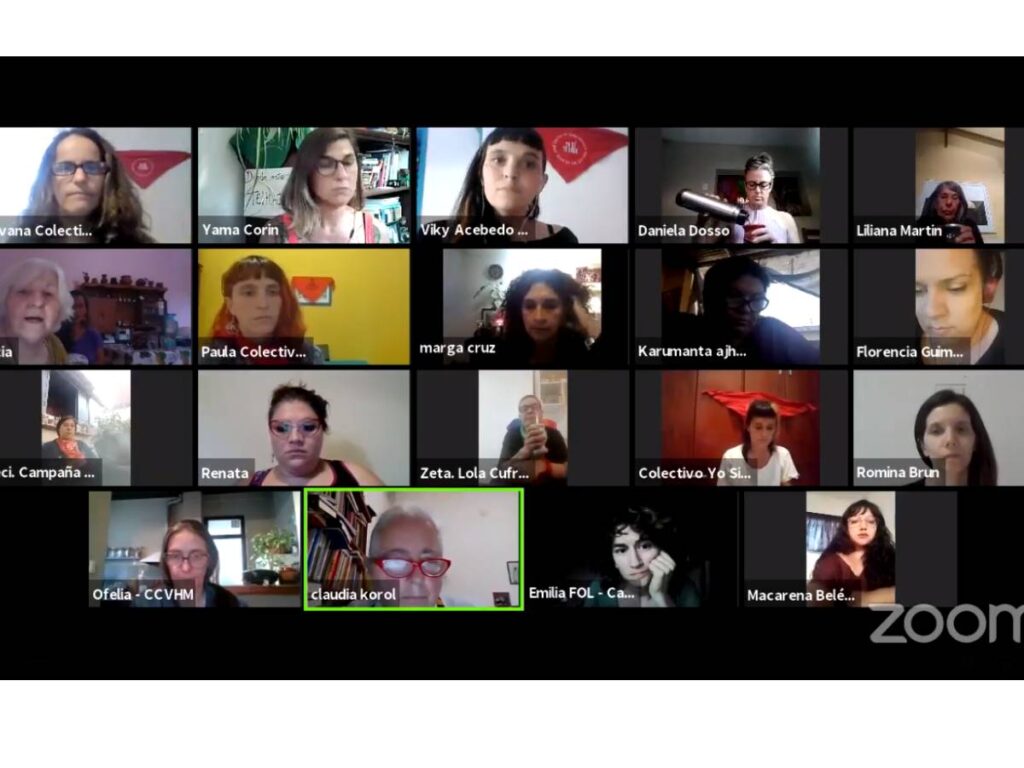
A forceful and loving trial
Feminist trials create a safe environment free of violence, where listening is done without questioning and where pain is shared because if there is anything behind individual stories, it is the collective experience.
“Our stories are obviously based on our own experience, but they are also collective stories, because what happened to me as a trans woman happened to most of my transvestite and trans companions, and we must also not forget to ask ourselves, 'Where is Tehuel?'” Florencia Guimaraes, a trans activist from the La Casa de Lohana y Diana Trans Day Center, said towards the end of her testimony, minutes earlier: “I think this is a very important day to make visible that sexual abuse among children is also perpetrated against dissident children, when we are lesbians, queer, transvestites in childhood and we deviate from heteronormativity, and behind that comes sexual abuse as a corrective measure, with disciplinary intentions. We have seen it countless times throughout history, but we must mention the case of Higui, cases where the justice system constantly disbelieves us, and we must talk about denialism. This justice system constantly denies the aberrations that we have been shouting and denouncing.”
In her case, she denounced a patriarchal, capitalist, transphobic justice system, a homo-bi-lesbian-hating justice system, which has historically pathologized and re-victimized them, and which even today, with a Gender Identity Law, still refuses to recognize transvestite and trans identities and bodies.
Chineo is not a cultural practice
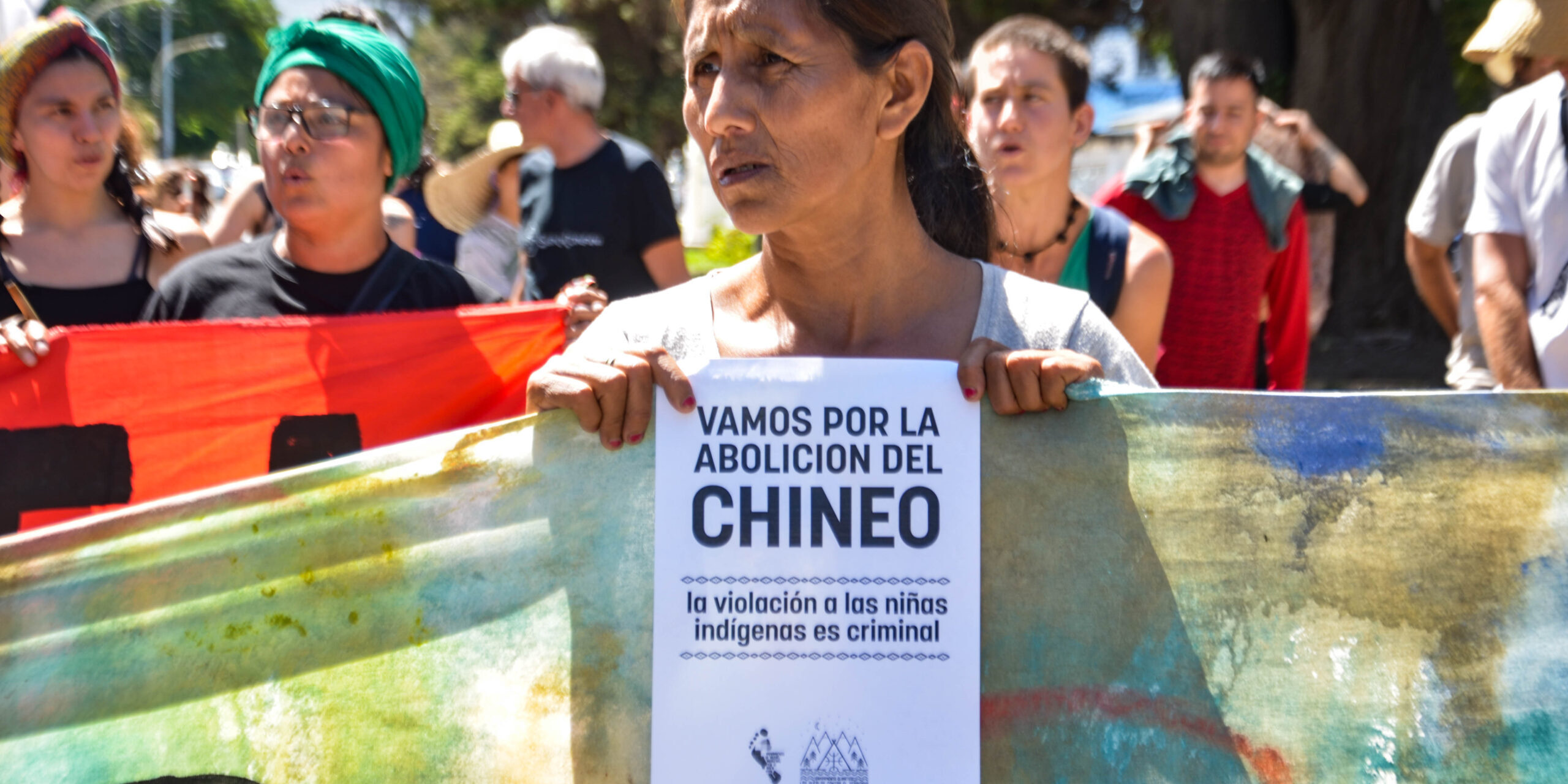
Among the testimonies, the historical understanding emerged that the oppression of the patriarchal and misogynistic system in our territories arrived with the colonizer. From indigenous worldviews, for example, not only were dissidents accepted, but they were considered sacred people, commented Karumanta Escalada of the Quechua and AbaGuarani nations, a member of the Indigenous Women's Movement for Good Living, while giving her testimony regarding the #EnoughOfChineo Campaign, which denounces the rape, in many cases followed by the murder of indigenous girls and children, as a hate crime, due to its racist and colonial bias.
“Chineo is a hate crime, because our girls are raped simply for being Indigenous. We are here to denounce, first and foremost, the racist, classist, and genocidal state. We also accuse the legal system because it always finds ways to silence our struggles and fails to enforce identity laws . In our communities, there are often no people who speak Spanish, and when an act of violence occurs, they use that as an excuse. When a mother goes with her daughter, they tell her they don't understand her, so they simply refuse to take her report. If she goes to the hospital, they are also ignored, even though there is a law that states we have the right to Indigenous identity. So, the very least they should do is provide interpreters in these places. The same goes for when a judge says that chineo is part of our culture, that it is part of our Indigenous customs, and this is not the case. Rape and any type of violence were never part of any Indigenous worldview; that was something brought by the colonizers.”
One of the participants was going to be Flavia Saganias, a protective mother and complainant sentenced to 23 years in prison, who, precisely because of patriarchal violence, could not be present, but who demonstrates the criminalization of protective mothers.
The abuses of the dictatorship
The web of institutional violence also led us to the testimony of two former detainees from the last civic-ecclesiastical-military dictatorship: Liliana Martin, former political prisoners of Córdoba and the Plurinational Dissident and Feminist Movement of Capilla del Monte, and Margarita Cruz of the Association of Former Detainees and Disappeared Persons. Liliana drew attention to the parallel between a woman's account of sexual crimes at the hands of her kidnappers in 1977 and an incident in La Matanza in January 2020 where more than twenty women also suffered sexual crimes, collective torture, and all kinds of abuse, under the same mechanisms.
“Between one account and the other, 43 years passed, and if anything has clearly not changed, it is the demand we have from a political standpoint, but which has also become ingrained in each of us: memory, truth, and justice, and never again silence. Sexual abuse, sexual violence against children, adolescents, and against women and other identities, is basically based on silence—the silence of the victim, the silence of the rapist, the silence of the institutions—and that is why it is such a terrible web to unravel,” Liliana said.
Justice that never comes
Margarita added to her denunciation of the patriarchal and classist justice system the crime of undue delay, given that many of her comrades have died in recent years without receiving justice. She also reminded everyone that in Argentina there are still more than 500 children who were taken from their mothers and whose identities remain unknown.
Laura Taffetani, a lawyer with the Gremial and a member of the Commission and the Registry of Lawyers for Children and Adolescents of the La Plata Bar Association, in her role as prosecutor, stated that child abuse as it is currently being handled by judicial practices is a state crime: “We are talking about a systematic practice. We have made great progress in the regulations, but judicial practices are still regressive.”
Both the prosecutor and the two protective mothers who also testified—Yama Corin, a member of the feminist group Mundanas and a protective mother, and Daniela Dosso, also a protective mother—mentioned the fact that the justice system uses a heteronormative family model as its standard. “Since the family as an institution also constitutes an area of control and discipline, a white, nuclear family model, where despite all the legislative changes, the father still holds the power, which he uses covertly to maintain the facade of a good father,” the prosecutor asserted. This patriarchal conception is what leads the perpetrator to be the protected individual.
The resolution of a feminist trial
The judicial system was condemned and collective demands were made:
- The effective implementation of the comprehensive system for the protection of the rights of children and adolescents.
- Effective recognition of the rights of transvestite/trans children and adolescents.
- The non-prescription of sexual offenses
- The formalization of trials for truth.
- The effective implementation of the Micaela Law with a specific approach to sexual abuse.
- Guaranteeing the rights and integrity of indigenous girls by respecting and recognizing the nationalities and peoples that coexist in our territory.
- Removal and jury for judges who use the false SAP as arguments and relink children with abusive parents.
- Acquittal for Flavia Saganias.
We are present
We are committed to journalism that delves into the territories and conducts thorough investigations, combined with new technologies and narrative formats. We want the protagonists, their stories, and their struggles to be present.
SUPPORT US

FOLLOW US
Related notes


We are present
This and other stories are not usually on the media agenda. Together we can bring them to light.