

Lesbophobia, or how to prove you wrong
Violence against lesbians, lesbophobia, takes many forms, but its impact is undeniable. From direct violence to invisibility, lesbians confront one of the most deeply ingrained social norms: heterosexuality.


Share


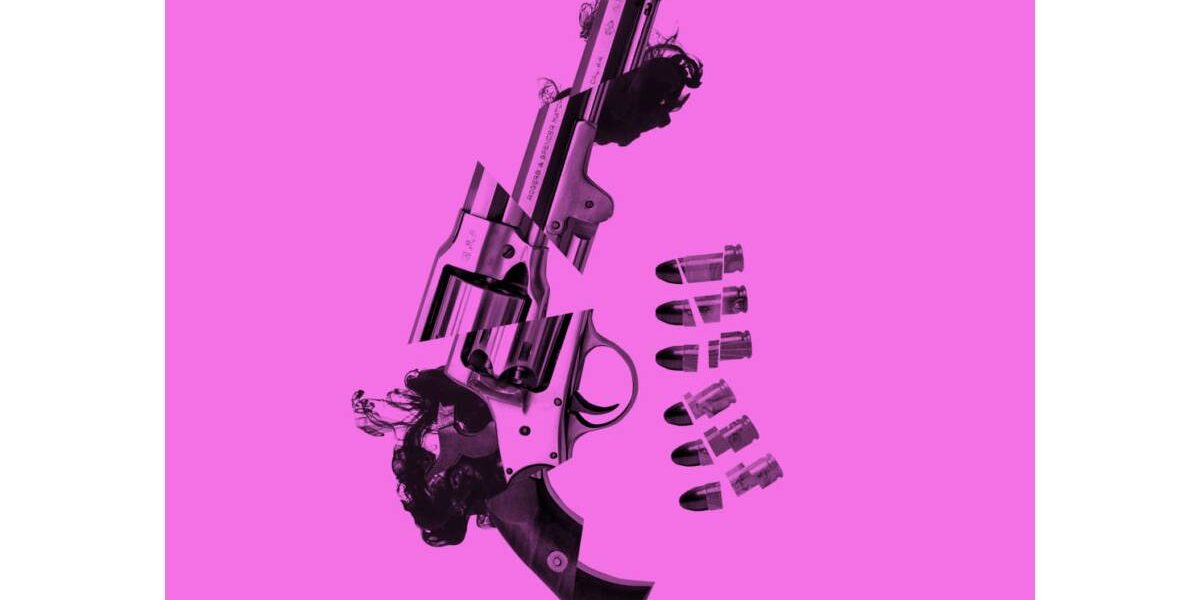
By Andrea Momoitio / Pikara Magazine. Illustration: Mrs. Milton
There's an absurd question that's asked of all children, and it highlights the extent to which heterosexuality is the dominant norm: "Have you got a boyfriend yet?" many girls are asked, even though we don't really know what it means to have something, much less a boyfriend. For women, falling in love with a man is destiny. Not just falling in love, of course: falling in love, establishing a monogamous and stable relationship with him; having children, growing old together. Many girls still dream of getting married today. It's clear that the feminist struggle is already bearing fruit, but the field that has been sown is so vast that there's still much to be harvested.
From formal education to the most informal social settings, in every aspect of our lives, it's assumed that people feel erotic desire for the opposite sex. Film, television, literature, music, painting… all artistic expressions reflect this pattern of behavior; it's what our families want, it's what our friends assume; it's what we ourselves believe without spending much time asking ourselves why. One day, however, doubts assail you in front of the mirror: “I think I like women,” you think, and then you shake your head. The stages of self-acceptance in lesbianism are complex, as is always the case when someone knows they are about to break with such a firmly established social norm.
In some places, the process can be reduced to a period of uncertainty (generally adolescence) that culminates in the famous coming out, that moment when you tell those around you that you are a lesbian. In many countries, this coming out is the step before imprisonment or death. The process is never easy. Each of our lesbian experiences highlights the strength of heterosexuality in our cultures as a system of social, political, and economic organization. The world is organized around the idea of family, and few things are as deeply rooted as the traditional idea of it: mother, father, and children. Lesbianism, in a way, challenges this system and confronts, head-on, a specific form of violence: lesbophobia.
Note: The word lesbophobia is not in the dictionary
From SAL Feminista, a collective that works against sexism and lesbophobia, heterosexuality is understood as “a political regime that constructs oppressor subjects and oppressed subjects. It is the mechanism that makes capitalism and patriarchy function through institutions and the State. Lesbophobia operates in this context to force women to conform to gender norms, and that is what differentiates it from the violence suffered by heterosexual women.”
Lesbophobia is a “form of patriarchal expression and practice that stems from the double oppression we experience as women and as lesbians. Lesbians are a clear target for male violence: we are women, and furthermore, we don't fulfill the role socially assigned to us.” We are not that other half that complements men; nor are we the ones who bear the reproductive burden, the ones who provide sons and daughters to perpetuate the same patriarchal order in the future. Along these lines, Monique Wittig, a leading French lesbian author for the lesbian feminist movement, explained it this way: “What is woman? Panic, a general frenzy of active self-defense. Frankly, it's a problem that lesbians don't have, due to a shift in perspective, and it would be inappropriate to say that lesbians live, associate, and make love with women because (the concept of woman) only makes sense within heterosexual systems of thought and heterosexual economic systems. Lesbians are not (we are not) women.” The idea of lesbianism as a disruptive element of the heteropatriarchal system is very present in lesbian feminist thought, a current of feminism that focuses on lesbian desire and existence as a political strategy against the established system.
Change of scenery
Ana has never heard of the heteropatriarchal system, nor does she really understand what it means that lesbians aren't women. She says she wouldn't know how to explain lesbophobia either, and she defends herself by saying, "I think I've been lucky. All things considered." She calls it good luck to have gone years without speaking to her mother, to have left her village to live with her partner, to have to endure derogatory comments from her coworkers in a very male-dominated industry. She can't define lesbophobia, but the violence she has suffered is palpable. "My mother said some awful things to me that I'd rather not even tell you," she continues, "so I decided to move to Madrid." There she discovered Chueca and made her first lesbian friends: "What a time!" she says with a mischievous grin.
" Sexile? I don't know what you mean."
"Some authors use that term to explain the migratory processes, generally from smaller towns or cities to larger ones, that many lesbians experience.
" "I left my town because I wanted to live in peace."
"That's what they mean, yes."
The Catalan feminist collective SAL insists on one thing: “We don't understand lesbophobia as something individual.” It has a systemic character that can be articulated because heterosexuality, beyond being a sexual orientation, is a political regime: “Lesbophobia appears when we show our autonomy in the eyes and existence of heterosexual men,” they assert. They also explain that lesbophobia is articulated through different elements: the hypersexualization of lesbians or the total desexualization of lesbian relationships; infantilization, denial, invisibility, and its intersection with other forms of hatred such as racism, fatphobia, and ableism, among others. Furthermore, “heterosexual men display a certain camaraderie with lesbians when they realize they cannot have sexual access to us and choose to integrate us into their misogynistic dynamics and forms of socialization and objectification of other women, assuming that we relate to them in the same way they do.”
Saioa Albizuri is a Gestalt therapist and a lesbian. She understands well what we mean when we talk about lesbophobia. She, like many authors, distinguishes between two types of lesbophobia: external and internal. In the first case, we are referring to the violence that lesbians experience from the outside, which takes countless forms: difficulties accessing employment, physical, sexual, and verbal violence. Internal lesbophobia is that which we generate ourselves: “It is much more catastrophic; the result of having internalized a moral judgment. It is anger, fear, guilt, shame. It is an internal conflict between who you are and who you should be, which directly affects our capacity to love ourselves, our self-esteem.” It is not easy to accept that you have chosen a path that no one had envisioned for you, that your decision and your freedom go against, for example, the values instilled in you by your family or that it will distance you from your friends.
“It’s important to analyze,” Albizuri asserts, “who is the source of the violence, because it’s not the same if a stranger calls you a ‘fucking dyke’ on the street as if a family member says it. A stranger doesn’t have the same capacity to hurt you as significant figures do at certain stages of your life. When we’re little, we don’t have as many resources. It’s an experience of non-acceptance, of not feeling worthy of love. We have to learn to vomit up that violence we once absorbed.” Activism plays an important role here: “There’s a tribe defending us.”

The pen
The most widespread narrative concludes that lesbians suffer double discrimination for being women and for having a sexual orientation other than heterosexual. Reality, however, is always more complex. Applying an intersectional perspective to the analysis sheds more light on the issue. Intersectionality is a framework that proposes analyzing how different axes of oppression intertwine, creating complex realities that go beyond a simple sum. Some lesbians, for example, are trans women. We cannot simply say that in that case, a third form of discrimination is added; rather, trans lesbian women embody multiple forms of violence that can be further exacerbated by their immigration status or social class.
One element of discrimination that is also very present in the lives of many lesbians is effeminacy: the social rejection of what we know as 'effeminacy'. By 'effeminacy' we mean those elements, which can be physical or forms of expression, that make someone's homosexuality visible. Lesbians who are effeminate face greater difficulties in being socially accepted today. It is an element that makes lesbianism visible. It is an element that generates violence, yes, but also a survival strategy. Effeminacy makes us more visible to aggressors, yes, but also to other lesbians.
The search for spaces among equals, what we informally call 'the scene,' has been one of the most important historical strategies of resistance, adapting to the new ways we relate to each other today. From the bars of Chueca to dating apps, many lesbians are looking for ways to connect with others who have similar experiences to ours in order to continue resisting. Better, of course, together.
Illusion of equality
In Spain, progress regarding sexual and gender diversity is undeniable, although institutions and organizations provide daily support to LGBTQI+ individuals who still require assistance. The approval of legislation against discrimination, as well as the equalization of civil rights with heterosexual individuals, are among the successes celebrated by activists. These advances, especially the right to marriage, have led society to gradually accept more readily that there are other ways of loving. However, this also presents one of the most complex challenges we face today. Love, marriage, and family formation are elements that, in some ways, mitigate certain forms of violence, although they also, of course, give rise to others.
Institutional messages insist that love can never be wrong, but lesbianism, at least the political stance of lesbian feminism, aims to transgress the notion of love. We lesbian feminists do intend to love, yes, but to do so differently, to live differently, to consolidate new social and political structures that embrace and value diversity, and that contribute to the destruction of a system—heteropatriarchy—in which we refuse to have a place.
This article was originally published in Pikara Magazine . To learn more about our partnership, click here .
We are present
We are committed to journalism that delves into the territories and conducts thorough investigations, combined with new technologies and narrative formats. We want the protagonists, their stories, and their struggles to be present.
SUPPORT US

FOLLOW US
Related notes


We are present
This and other stories are not usually on the media agenda. Together we can bring them to light.