

Boca Rosa, a textile cooperative that is transforming the reality of trans women in Gualeguaychú
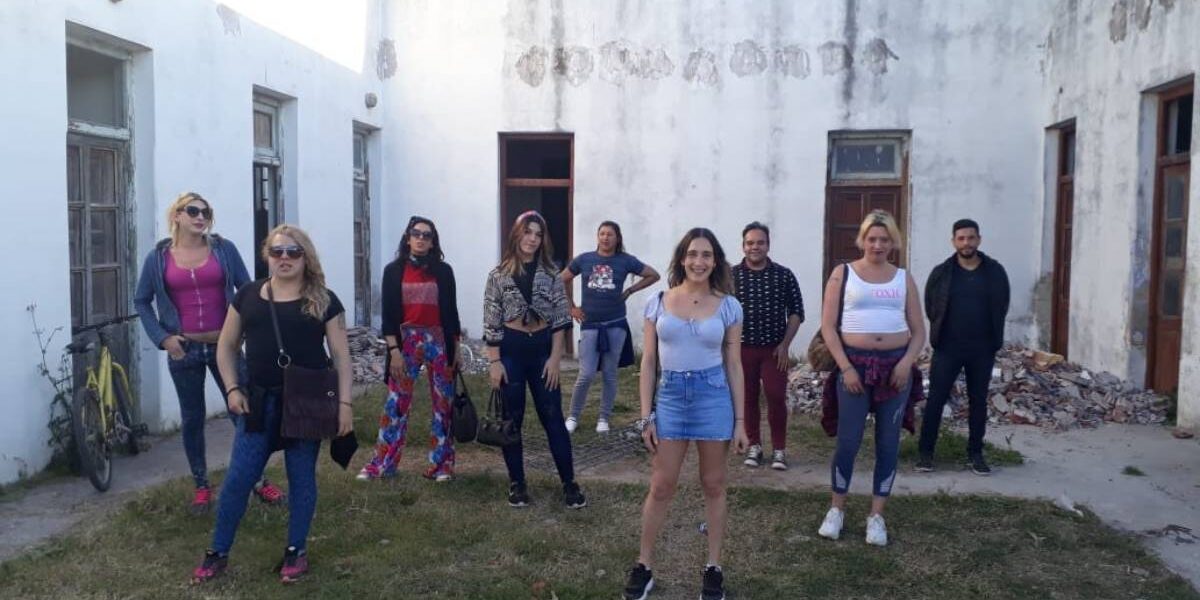
The cooperative sustains ten jobs in the emblematic lands of carnival where the sewing workshop is a fundamental tool for inclusion and training.


Share

Although she knew by age five that the image reflected in the mirror didn't represent her, Gabriela Gómez Girones' transition was slow and gradual. The daughter of a police officer and a rebellious student, she left her parents' home at 13 to move to the first place she felt was truly hers: her grandmother's house. Her uncle, an artist and designer, also lived there. Through him, she discovered the Gualeguaychú Carnival, and that influence is part of Boca Rosa , the textile cooperative made up mostly of trans women that was born in the midst of the pandemic and seeks to foster a passion for sewing as a tool for employment.
Gabriela is 40 years old, has lived in Gualeguaychú – in the province of Entre Ríos – for 20 years, and worked for 15 years in the carnival. That world of costumes with feathers and sequins was her training ground in the textile industry. And at the same time, it was – and is – a defining characteristic of a city that has become a destination of choice for a large number of trans and travesti people from neighboring towns and provinces.
“My roots are in carnival. My uncle was a great artist in my hometown of Victoria, Entre Ríos. I came to Gualeguaychú because of a decision made by my second parents: my grandmother and my uncle. They were the ones who guided me in all of this,” Gabriela explains. She says she was lucky: she had four years of formal employment and always found job opportunities. But she gets emotional “thinking about the women who were left behind,” and she wants to promote training and job placement as pathways to inclusion.
That's what she was talking about with her friend Manuela González in conversations that were the genesis of Boca Rosa. The only trans teacher and the first trans public official in Entre Ríos, she is responsible for the Gender and Diversity Area of the Municipality of Gualeguaychú. “When we took office, we immersed ourselves in thinking about how to give the girls jobs, economic independence. We started weaving the project of a textile cooperative from within the government. Because carnival was a breeding ground for women like Gabriela, who have been able to lead active economic lives through it. But we only knew two or three women who knew how to sew.” Convincing others to join and learn was the first challenge. The pandemic only complicated things a little, in a field accustomed to obstacles. “I don't take credit for anything, but how realities change when we're involved,” Manuela smiles.
Cutting and sewing
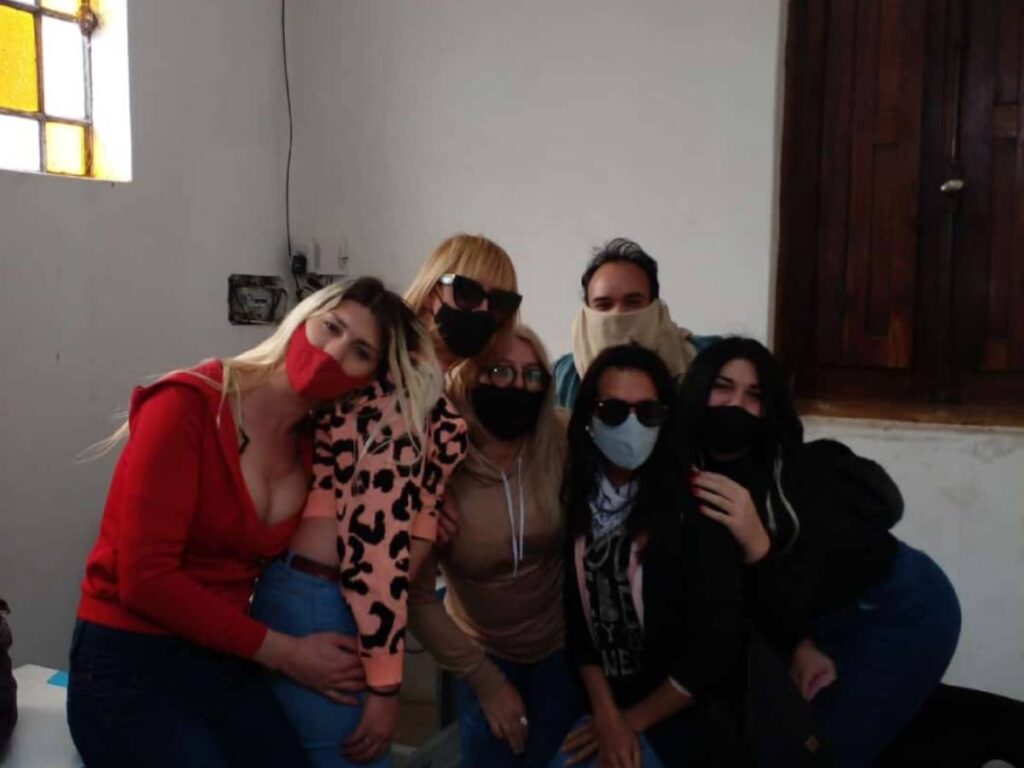
A friend told Valentina Barbosa, “They’re getting together to start a cooperative.” When she joined the first meeting, she didn’t even know what it was about. As soon as she learned it was a textile business, she liked it. She had been looking for work for a while, while “working the streets. I didn’t have anything else.” She’d been doing that for ten years.
Now she's one of the few who knows how to operate the four industrial sewing machines the cooperative was able to acquire thanks to a provincial program. While she waits for the necessary permits to be issued so she can move forward with production and sell to the public, she's training in pattern making, basting, and sewing. She's also learning about computers. And she has a sewing machine at home for her own small business. She takes on orders, but she's particularly focused on pet clothing.
“Boca Rosa is the best. It has the best machines. We’re thrilled,” she says happily. She explains that the first items they produced were sanitary napkins to sell in beauty salons. They also made multicolored pennants for the municipality. Like her, about ten people make up the cooperative, which is named after Pequeña Pe, a leading artist in the trans community of Entre Ríos, who died under unclear circumstances. One of her songs was called Boca Rosa.
Valentina is 31 years old and was born in Zárate, but chose Gualeguaychú. “My journey started very young. I felt this way and made the decision when I was 12. I told my parents. They respected my decision. The only thing they asked of me was to take care of myself. I would approach the older girls in Zárate and they would give me information on how to prepare myself. I gradually made it happen,” she recounts her transition.
She lived in Calafate for three years before settling in the land of carnival. “I was always looking for work elsewhere, not here, because nothing was opening up. This is the first time something like this has happened to me,” she says about her experience at the cooperative. “The change should have happened a long time ago. Before, they didn't include us in anything. If you wanted a job, they didn't see you that way. As if we belonged to a different world. Only for what they wanted. Now you can hand out a resume and they don't reject you or give you a dirty look.”
“Beyond the textile aspect, this really helped to unite them, to allow them to get to know each other, to share a space,” emphasizes Manuela, a public official in a city where she estimates there are about fifty trans women over the age of 18. “This is a diverse city by its very nature: Gualeguaychú grew alongside diversity. In the parade of floats, the creative ones were always the trans women. It has that LGBTQ+ culture, and that's a plus that makes it a place where our trans sisters migrate. Here they feel supported, which has allowed them to delve deeper into many things, to work with private businesses. It has that added value: it's a place that our trans sisters choose.”
But, she clarifies, “there’s still a conservative, small-town mentality. That’s why it’s good to think about local resources that support trans people and their families. Because when someone comes out, their family comes out too: they become the trans person’s brother, their mother,” she says, emphasizing the role that the House of Diversity will play in this regard, a pioneering project already underway, following the signing of an agreement to join the Care Infrastructure Program with the National Secretariat of Public Works, for $63 million. “And we’re also looking to target the private sector,” Manuela points out, “so that everything isn’t in the hands of the State. So that society opens itself up to this right that has been denied for so many years.”
Pandemic and mini pizzas
“When the first meeting for the cooperative came about, the problem was that almost none of us knew anything about the business. We had to get them excited, guide them, teach them. We reached a preliminary agreement with the municipality to get started and we signed up for several programs to get financing. We were able to buy the machinery. We were thrilled. But then the pandemic hit. Just when we were all really excited. We asked ourselves, ‘How do we move forward?’ And that’s when the idea of training came about,” says Gabriela Gómez Girones, head of Boca Rosa. Workshops, courses, and even completing high school virtually, all while planning and organizing what would come after the quarantine.
“My idea was to guide them, but we couldn't get together. We started an online sewing course, and it was very productive, so we're continuing it this year. When we had our first online meetings, the girls didn't understand much. Later, when we met again in the classroom, they were a bit apprehensive, but they started sewing, sat down at the machines, and now they're more engaged.” They began with linens—towels and tablecloths—to make everything faster and more precise. They plan to offer their services to hospitals and nursing homes and are starting to envision larger projects, such as making personal protective equipment for healthcare settings.
For now, they are doing practical training at the “María América Barbosa” High School to learn more about operating sewing machines. The municipality has also provided them with a wing of the “Youth Space,” called Casa Redes 2, which is still being renovated. The entire process is supported by the Entre Ríos branch of the Federation of Workers' Cooperatives of the Argentine Republic (FECOOTRA) and the Argentine Confederation of Associated Cooperative Workers Ltd. (CONARCOOP).
“We started slowly. That's how it'll turn out better. Last year we had to pay tuition and other things, and we came up with the idea of selling mini pizzas. Not only to raise money but also to make ourselves known and for people to get to know us. I think it was the best way to reach the homes in our community: people saw us, got to know us, and were really excited about buying. The women were happy. It was like coming back to life after being locked up and afraid for so long. That fear disappeared when they started having this contact.”
Gabriela is also happy. She apologizes repeatedly for rambling, while speaking rapidly about the plans for Boca Rosa. “The government has stepped up. For us, it was something we never thought would happen,” she celebrates. “People are starting to put themselves in others' shoes a little more, and they don't look at you the way they used to. The important thing is not to keep to yourself. Go out, show yourself, and share what you do. The only thing we lacked was opportunities. Today we're enjoying it, and we're going to leave something beautiful so that those who come after us can take better advantage of it and not go through what we've gone through, not to mention those who came before us.”
We are present
We are committed to journalism that delves into the territories and conducts thorough investigations, combined with new technologies and narrative formats. We want the protagonists, their stories, and their struggles to be present.
SUPPORT US

FOLLOW US
Related notes


We are present
This and other stories are not usually on the media agenda. Together we can bring them to light.