

Southern Chile: "Those who suffer the most from militarization are Mapuche women, girls, and elderly women."
Since October 12, the Biobío and La Auracania regions have been militarized by a decree from President Sebastián Piñera. What are the consequences of this for Mapuche women and girls?


Share

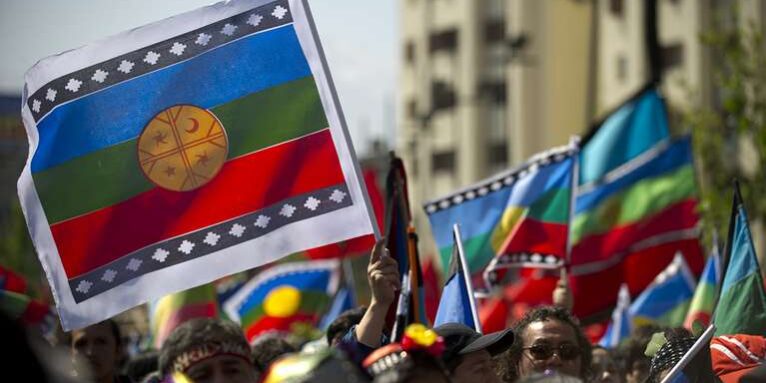
During the week of October 12, the Day of the Encounter Between Two Worlds in Chile, two events marked the social life of the Chilean population, which some consider an “escalation of violence” by the government. On Sunday the 9th, during the Mapuche march held annually on this date, human rights defender, feminist, and lesbian activist Denisse Cortés Saavedra . On Tuesday the 12th, President Sebastián Piñera decreed a State of Emergency in the Araucanía and Biobío regions for 15 days, with the possibility of a 15-day extension.
“October 12th commemorates the holocaust of the first nations throughout America, and it was precisely on that day that the Chilean government decided to establish a State of Constitutional Exception and remilitarize La Araucanía,” lawyer Silvana del Valle, who is representing the Cortés family, emphasized to Presentes.
That Tuesday, Piñera decreed a 15-day State of Constitutional Exception due to the Emergency, citing “serious and repeated acts of violence linked to drug trafficking, terrorism, and organized crime” in southern Chile. Decree 249 covers the provinces of Biobío and Arauco in the Biobío Region, and the provinces of Malleco and Cautín in the Araucanía Region, ancestral Mapuche territory. Despite the Comptroller General of the Republic declaring it unconstitutional, it remains in effect.
The regulations were issued in a context where, on the one hand, the curfew imposed by the State of Constitutional Emergency due to the Covid-19 pandemic was set to expire on September 30. And, on the other hand, the decree was finalized less than two months before the country's presidential elections.
“Everything suggests—and I’m not the only one saying this, but many political analysts—that the government is trying to further escalate the violence throughout the country because presidential elections are coming up and also to divert attention from the Pandora Papers,” del Valle added.
Support for businesses
Marcela Llao is a Mapuche woman and vendor of her own products who lives on the border between the Araucanía and Los Ríos regions, in the Cautín province. She explains that her location is a tourist area, so "the military presence is less noticeable." However, in other areas, "they have completely militarized the region."
“The presence of the military everywhere is very intimidating for people. I think this whole process is just beginning; the truth is, we don't know how it's going to end,” he told Presentes.
Furthermore, she believes that “militarization is nothing new; it happens frequently.” Regarding the events of recent weeks, she stated, “I think it has to do with two things: one is that Piñera is signaling to the business sector that he supports them, and the other is related to what’s happening in Santiago with the lawsuits he’s facing concerning the Dominga mining project. We think it’s a way of diverting attention .”
Piñera under investigation
Sebastián Piñera is currently under investigation for bribery, corruption, and tax evasion in the reopening of the Dominga Case: the sale of the Dominga mining company in the British Virgin Islands—a tax haven—in 2010, during his first presidential term, as revealed in the Pandora Papers investigation. He is also being investigated for alleged crimes against humanity related to government actions during the social unrest of October 2019.
For Diva Millapan, coordinator and founder of the Mapuche Women's Network, as well as a social worker and union leader, militarization “is not at all positive for us. It brings us much more repression.” She explained to Presentes that “those who suffer the most are the elderly, women, and children.”
Furthermore, regarding the government's justification for declaring a State of Emergency, he stated: “ The media has consistently insinuated that there is drug trafficking, that the Mapuche went to Colombia for training. Far-right groups have also promoted this. They try to distort the struggle with these kinds of insinuations. We have always faced these epithets directed at us: that Indigenous people are ugly, Black, lazy. Now, the latest addition is that we are narco-terrorists.”
“There have been so many setups that we no longer believe them. They told us that 29 trucks were burned, and then it turned out that they themselves burned them,” he concluded, referring to Operation Hurricane , for which eight Mapuche community members had been arrested in December 2017 for alleged links to the truck burnings. The charges against them were dismissed on February 9, 2019, by the Temuco Guarantee Court, after it was revealed that the Carabineros (Chilean police) had manipulated information, which led to the resignation of the institution's then-director general, Bruno Villalobos.
Denisse Cortés
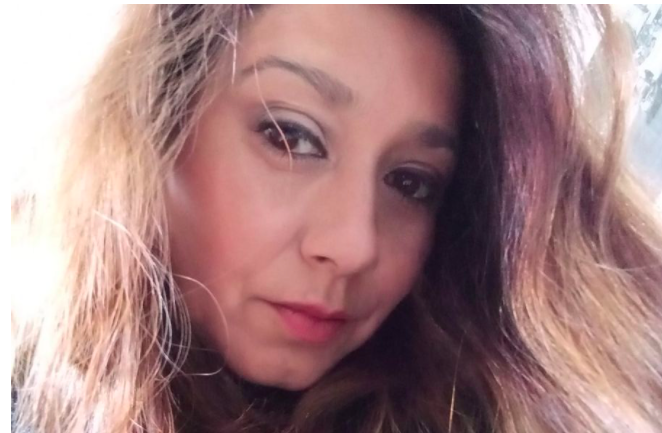
As a prelude to the context of escalating violence, another event that the Chilean people lamented was the death of Denisse Cortés, who, while at the Indigenous Resistance March on the Sunday before October 12, was struck by an unidentified object that caused her death.
The 43-year-old feminist and lesbian was a human rights observer, a collaborator in the NGO Defensoría Popular, a nursing technician, and was in her third year at the Law School of the Academia de Humanismo Cristiano University, where she is the director and where Silvana del Valle, the lawyer who represents both her son and her mother today, was her teacher.
The investigation is being led by the Central North High Complexity Prosecutor's Office of Santiago, headed by prosecutor Francisco Ledezma, who ordered forensic examinations by three units of the Investigative Police (PDI): the Human Rights and Persons Crimes Investigation Brigade; the Homicide Brigade; and the Tactical Reaction Brigade of the Investigative Police, responsible for investigating matters related to explosives and pyrotechnics. The autopsy results are not yet available.
"The Public Prosecutor's Office has granted us permission to conduct various expert analyses and actions so that we can determine with certainty the cause of Denisse's death. At this time, we are carrying out the necessary procedures to arrange for a second autopsy to be performed by a trusted expert appointed by the family and their legal representatives," Del Valle told Presentes.
According to La Tercera the Carabineros' version is that "the woman was hit by a firework launched by people who were a few meters away from the police officers and the victim."
“That hasn’t been clearly established yet,” del Valle added. “ The family doubts that version because the wounds they—without being experts or forensic specialists—were able to observe on Denisse’s body wouldn’t be consistent with a firework or a noise bomb. The family suspects it was a tear gas canister or some other object. That’s still under investigation,” he added.
Del Valle also emphasized the situation after Denisse was hit: "the lack of attention and the impediment to the arrival of the ambulance and the transfer of Denisse to the nearest medical center that was half a block away."
“She was hit at the corner known as De Portugal and Alameda, which is where the Catholic University of Chile is located. Around the corner from there is the Catholic University Clinical Hospital and, further on, is the former Central Post Office, where she was finally taken, a distance of less than half a kilometer that could have been covered even with a stretcher or with the police car that was next to where Denisse suffered the impact,” he argued.
He reported that they are currently awaiting the delivery of the first background information from the Public Prosecutor's Office "in order to give the family a first explanation of the situation to clarify what happened and establish the responsibilities that we fundamentally consider to lie with the police, Carabineros de Chile."
Share
We are present
We are committed to journalism that delves into the territories and conducts thorough investigations, combined with new technologies and narrative formats. We want the protagonists, their stories, and their struggles to be present.
SUPPORT US

FOLLOW US
Related notes


We are present
This and other stories are not usually on the media agenda. Together we can bring them to light.