

October 12: Indigenous women share what this day means for their communities
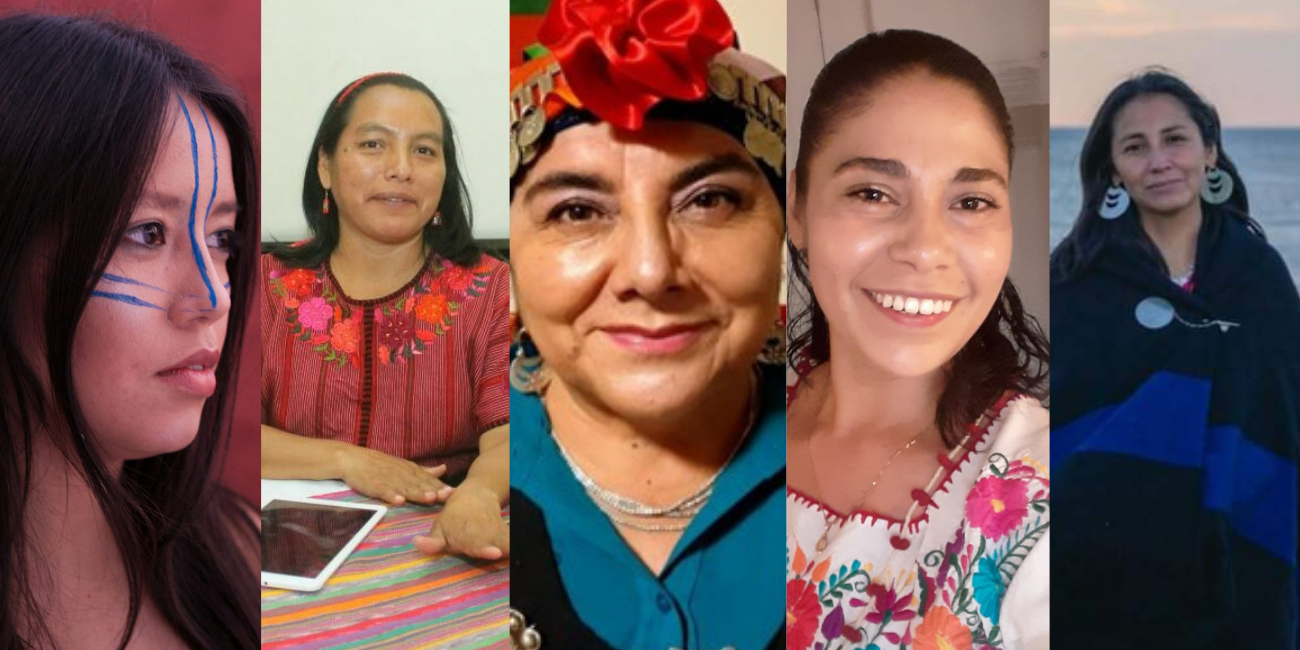
Women belonging to indigenous nations located in what are now Guatemala, Mexico, Argentina and Chile spoke with Presentes about what this date means for their communities.


Share

Columbus Day, Indigenous Resistance Day, Columbus Day, Decolonization Day, Day of Respect for Cultural Diversity. The commemoration of October 12th takes on different names depending on the region of Latin America where the arrival of Christopher Columbus to the continent in the 15th century is "celebrated," a day that Spain knows as "Hispanic Day."
Women belonging to indigenous nations located in what are now Guatemala, Mexico, Argentina and Chile spoke with Presentes about what this date means for their communities and how the State, the media and companies appropriate this day for their own benefit.
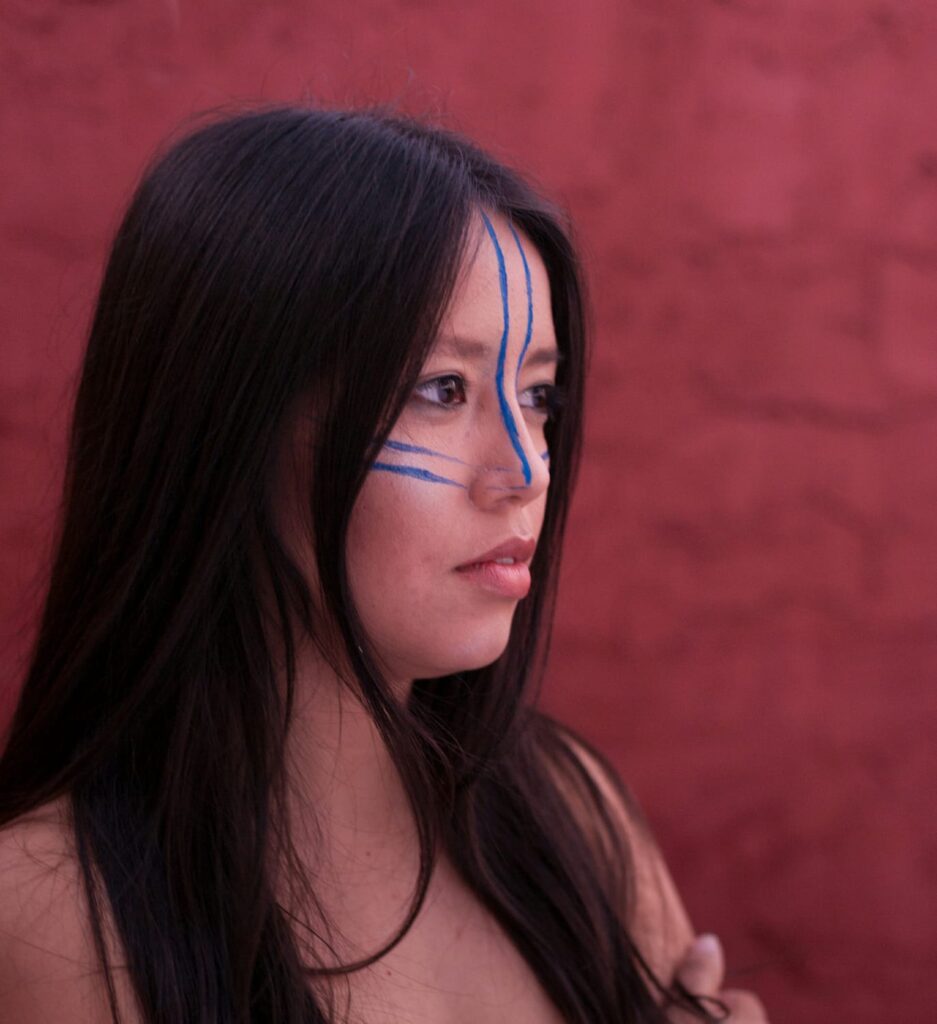
"October 12th is a significant date because it's a way of remembering everything that happened, the stories that have happened to my people and our ancestors, which in most cases are stories of violence, mistreatment, rape, and murder. It reminds us of the moment when we began to be persecuted, hunted, and enslaved," says Romina Arapeiz, 34, from the Onkaiujmar community, located in Paraná, Entre Ríos (Argentina), of the Charrúa people-nation.
"History is not kind," she adds, "and the way they proceeded and how they then divided the lands and appropriated the territories is not a story they want to remember, but we do because it also shapes how we want our lives to be and what we want for our people. These stories are of violence but also of resistance, of survival, and of women, because after the massacres, most of the people who remained were women."
A date to remember
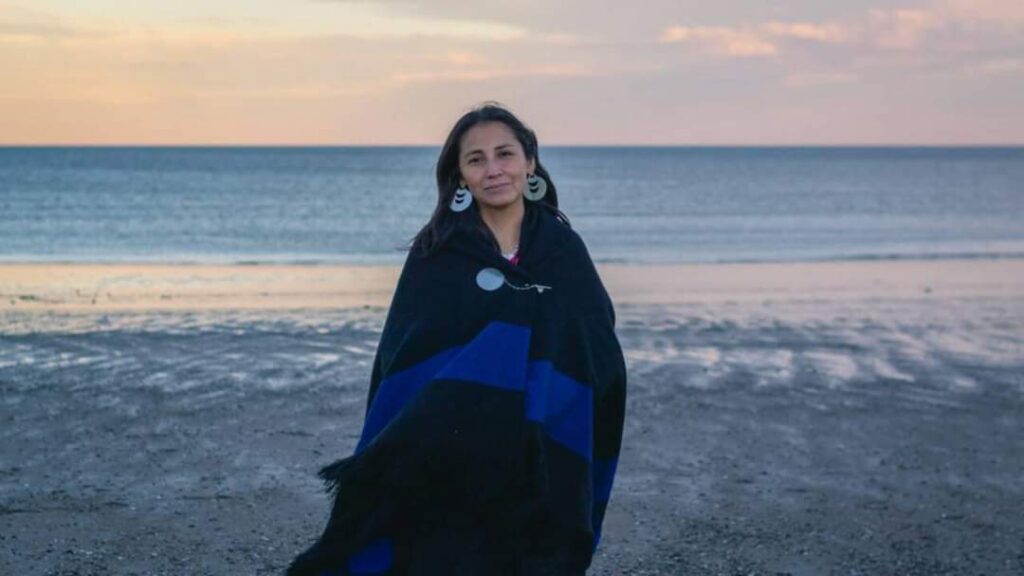
Evis Millan is 45 years old, Mapuche, and lives in Puelmapu territory, specifically in Esquel, Chubut Province, Argentina. She belongs to the Pillan Mahuiza community and, like Romina, is part of the Indigenous Women's Movement for Good Living, in addition to being a wizüfe (a person who works with clay, in Mapuche).
For her, "all societies and states that have imposed themselves must take this date to heart and reflect on what happened during the time of invasion and what is happening today. It is important to revisit history in order to truly move forward in unity."
“In my childhood, no one talked about what the subjugation and genocide meant. The Mapuche people were spoken of in the past tense. It was very difficult to demystify this date, to come out and raise our voices,” adds Diva Millapan, 60, coordinator and founder of the Mapuche Women’s Network, which has been active in Chile since 2012.
Therefore, for Millapan, this is not a "pleasant" date, but one "of great invisibility and in which the State boasted and highlighted the outrage of having been 'discovered'."
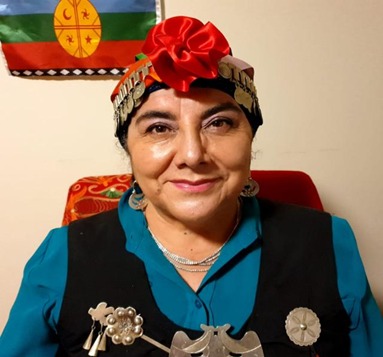
Since the last Chilean military dictatorship, October 12th has become a day of protest. “During that period, we began to make our presence felt with various actions to demonstrate that there was nothing to celebrate. This day gained significant momentum until it became the massive Mapuche march it is today. We march to remember that we are alive and present, and that this America is brown, mestizo, and of the Indigenous peoples,” says Diva from Santiago, Chile, where she emigrated after being born in the Panguilelfun community of Panguipuli, in the Valdivia commune, in southern Chile, and having lived in the city of Temuco. Diva is also a social worker, union leader, former political prisoner, and is pursuing a master's degree in Gender and Cultural Studies at the University of Chile.
A “repudiating” anniversary
For Ana López, a Maya Mam lawyer from Guatemala, former executive director of the Office of the Ombudsman for Indigenous Women and current president of the Association of Indigenous Lawyers CHOMIJA, this anniversary is "repudiating" due to the political situation in her country.
"Human rights are in danger and there is a lot of criminalization of women defenders of indigenous peoples. For us it is important to continue fighting against the current of state policies that are not favorable to indigenous peoples or to indigenous women," she says.

And she explains: “Since 2020, the current government has eliminated all peace agreements in order to avoid fulfilling its responsibility to Indigenous peoples. The State is not fulfilling its role of facilitating human development and respecting individual and collective human rights. That is why this day remains a day of resistance for our peoples.”
Ana is not the only one who believes that colonization continues to be present in the various communities to this day.
Without respect or diversity
Romina Arapeiz has reservations about the name given to this date in Argentina: "Day of Respect for Cultural Diversity." For her, such respect doesn't exist, and furthermore, "it masks a history that is officially disliked: the violence that continues to this day with the criminalization of protests by different Indigenous nations in this place that is now called Argentina and that clearly does not recognize itself as a plurinational territory and attacks everything that is not understood within its conception of nation," she says.
"Mining and soy companies in the north have caused tremendous damage," says Evis Millan, and continues: "We talk about ecocide, but also about the silent genocide that is happening to our children who are dying of hunger, the abandonment by the State, and the lack of nearby hospitals."
In Argentina, the first Plurinational Strike and Solidarity Rally with Indigenous Peoples is scheduled for this Tuesday, an initiative of the Women's Movement for Good Living. The initiative demands the State immediately enact the Law on Indigenous Community Property , end the criminalization of Indigenous communities, and implement a political, democratic, and humane mechanism to halt evictions and repressive operations against Indigenous peoples. A rally will be held at 4:00 PM at the Obelisk in Buenos Aires, and similar actions will take place in other parts of the country.
Meanwhile, in Chile, Diva maintains that "economic power is what governs." "We have territorial conflicts, and these conflicts are with transnational corporations, with big business and those who hold power; therefore, the treatment is humiliating and discriminatory. There are no urban Indigenous policies, and the existing Indigenous policies haven't resolved the problem either because the conflict between the Mapuche people, corporations, and the State hasn't been taken seriously."

Celia García Rodríguez is originally from the town of Xochitla, in the municipality of Mixtla de Altamirano, Veracruz, Mexico, and is the only woman in her family who works in coffee farming. She is a self-proclaimed defender of flora, fauna, and women, and is currently fighting to end the isolation of 42 Indigenous communities caused by landslides that blocked their main access road for buying and selling goods.
She believes that while this date has sought to "dogmatize," it also highlights Indigenous resistance. " Today we feel very proud because, despite the brutal colonization we endured, we still preserve our native roots; despite the massacre of many of our Indigenous ancestors, we are privileged to still be a living vestige, with traditional medicine, ancestral and astronomical knowledge for planting and harvesting our crops, and rituals to ask and thank our deities for all they allow us on this journey called life," says García, who also holds a degree in Public Accounting from the University of Veracruz.
An extractive use of the date
October 12 is a day that attracts governments, businesses, and media to indigenous communities "as a historical commemoration that begins and ends on that day and is not resumed until the following year," says Arapeiz.
"We see that this date has been taken over by the States as something quaint, folkloric," adds Evis Millan. "They use the date for tourism and don't grasp its true significance. We see that the structure of the State remains racist and colonial."
Millapan explains that in Chile, this folkloric use of Indigenous traditions on October 12th is also embraced by the communities. "It was a chance to be shown on television. The women wore traditional clothing, which gave us visibility because it increased the likelihood of being interviewed, allowing us to share our message. The press wants to see jewelry, things they don't usually allow us to wear, which is our clothing. It's a strategy on our part to come together, show ourselves, and be able to speak out, to make our voices heard," she explains.
Indigenous demands ignored
For the rest of the year, the media agenda tends to ignore Indigenous demands. "Unfortunately, Indigenous peoples, women, are not newsworthy for corporate media," says López, although she highlights the good practices of community and alternative media.
Meanwhile, when coverage of Indigenous conflicts does occur, it is often from a paternalistic or criminalizing perspective. The coverage "in many cases—as with the Mapuche people—has a connotation of criminalization, or of pity: 'poor Indigenous brothers and sisters suffering from malnutrition, abuse, and mistreatment.' It never takes an active or positive view of the struggles being waged precisely to avoid falling into these situations, to live according to our culture and teachings, and to reclaim who we are," Arapeiz concludes.
Share
We are present
We are committed to journalism that delves into the territories and conducts thorough investigations, combined with new technologies and narrative formats. We want the protagonists, their stories, and their struggles to be present.
SUPPORT US

FOLLOW US
Related notes


We are present
This and other stories are not usually on the media agenda. Together we can bring them to light.
1 Comment