

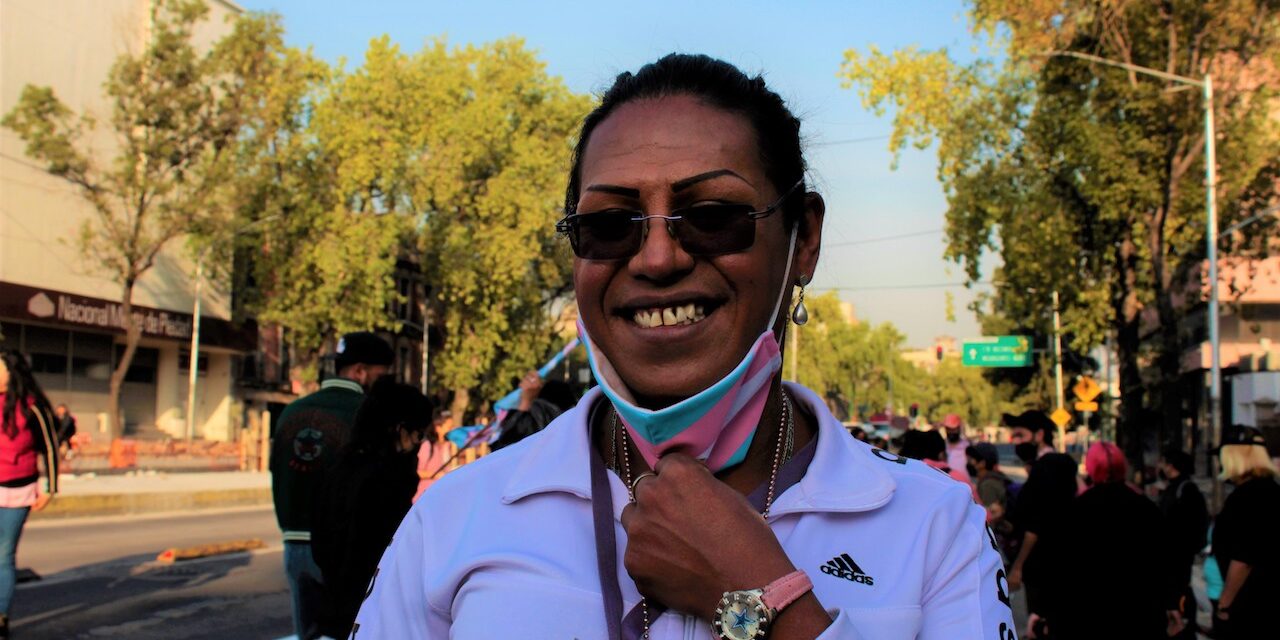
The Justice system of Mexico City apologized to trans activist Kenya Cuevas.
The Mexico City Attorney General's Office today issued a public apology to human rights defender Kenya Cuevas. It also pledged to improve access to justice for transgender people.


Share

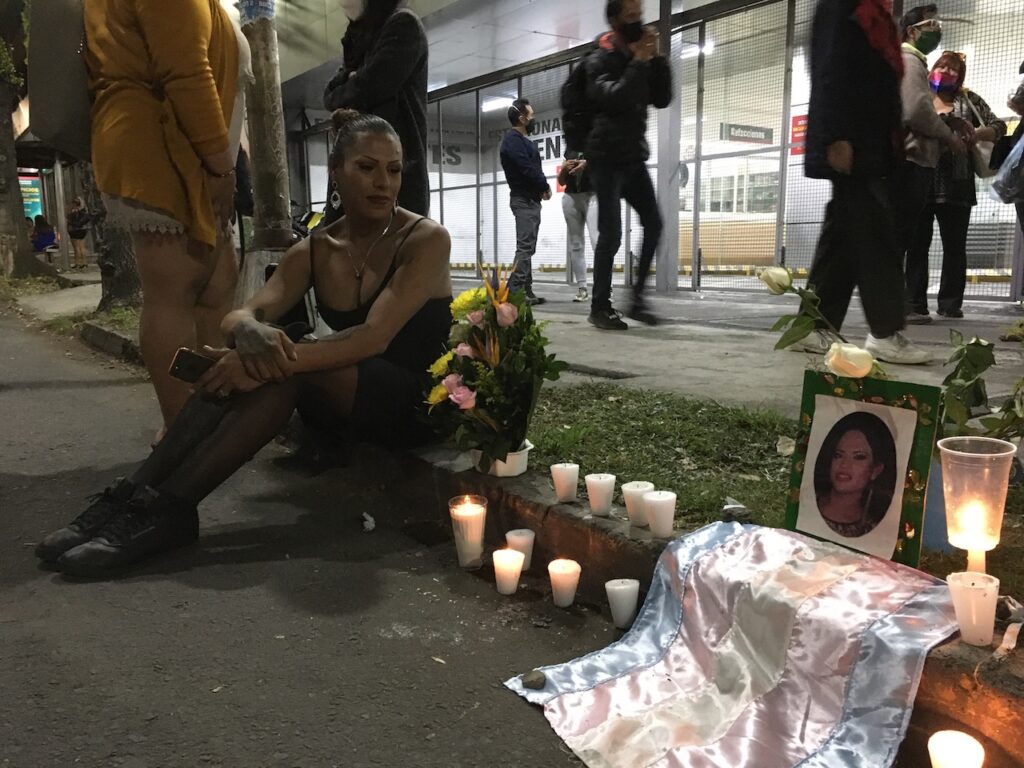
On September 30, 2016, on Puente de Alvarado Avenue in Mexico City, Kenya Cuevas, a trans woman and human rights defender, witnessed the murder of her friend Paola Buenrostro , a 25-year-old trans woman originally from Chiapas. That night, Kenya became an indirect victim of the crime, as confirmed by a recommendation issued by the Mexico City Human Rights Commission (CDHCM).
This recommendation is the first of its kind, as it acknowledges that the Mexico City Attorney General's Office (FGJCDMX) did not investigate Paola's trans femicide with due diligence. It also failed to apply a gender perspective or a differentiated approach.
After two and a half years since the issuance of this recommendation, Kenya Cuevas feels she can finally accept a public apology because “progress has been made on the points outlined in the recommendations .” She adds, “All this work is related to the impact of how this case unfolded and how the Prosecutor’s Office itself violated human rights. Honestly , it makes me feel like someone capable of transforming what is unjust, of leaving future generations with better conditions for how to investigate, treat, and support victims so that this never happens again. I feel happy because Paola will finally get some justice , and in doing so, we are moving forward in a way that no other victim in the country has experienced.”
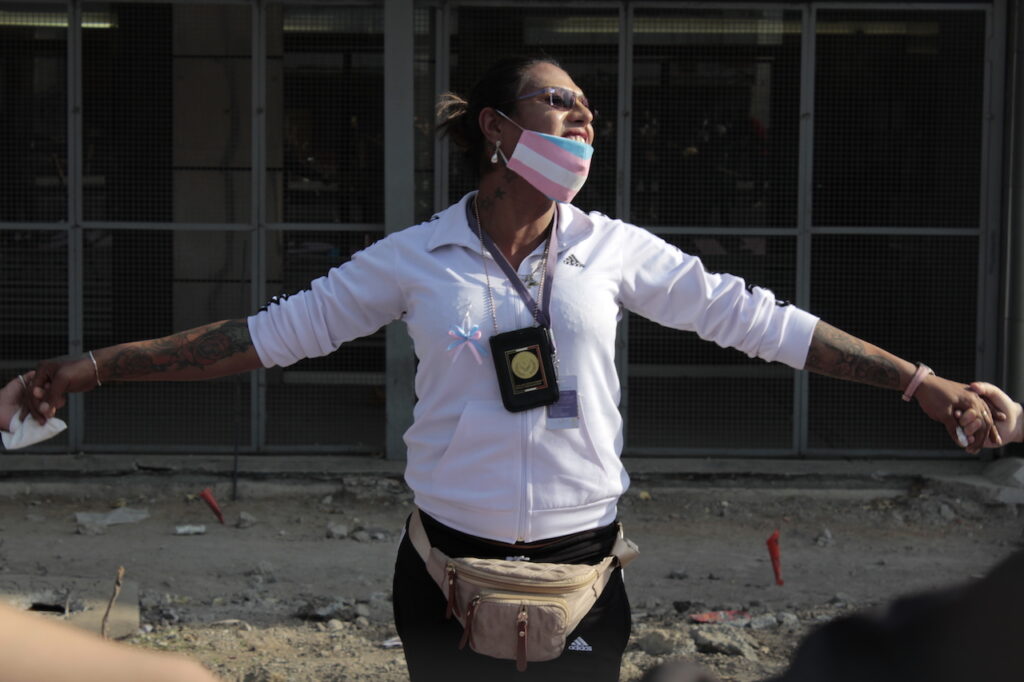
Recommendation 02/2019 consists of six points comprising the following commitments:
1- Generate and execute a comprehensive individual reparation plan for Kenya Cuevas, which includes the concepts of material damage, immaterial damage, life project and the corresponding rehabilitation measures.
2- The Attorney General's Office of Mexico City must issue a public apology and acknowledge responsibility.
3- The Prosecutor's Office will publish on its website the text of recommendation 02/2019 accompanied by the express commitment of that institution to guarantee the non-repetition of the events.
4- Design specific procedures to ensure the incorporation of context analysis, as well as risk analysis of victims, witnesses or complainants in investigations of crimes involving priority groups.
5- The Prosecutor's Office will prepare a proposal to modify the Legal Framework for Expert Intervention of the General Coordination of Expert Services to ensure that expert practice is timely, of high quality and based on scientific and technical practice, for the contribution of objective elements in the clarification of the facts and the preservation of evidence.
6- The Prosecutor's Office will redesign the protocol for action for people of sexual and gender diversity, at least considering specific criteria for the investigation of the crime of homicide committed against LGBTTTQI+ people.
Kenya explains in an interview that from April to today she has participated in talks and working groups together with organizations in charge of the defense of human rights and members of the Prosecutor's Office to guide actions that stem from the recommendation.
“Throughout this time, we have been working on a comprehensive care protocol for victims, witnesses, and indirect victims so that the Prosecutor's Office knows how to act in expert and judicial matters , and we have already made 95% progress. There is already recognition of the alternative (non-blood-related) families for the recovery and identification of the bodies because the suffering is not for the family that expels the trans women, it is for us, the chosen family ,” she explains.
Because of family exclusion, the first link in the chain of violence experienced by some trans people, families of origin often fail to recognize the gender identity of their murdered daughters. Or, after death, they deny their identity by dressing them in clothing that does not reflect their gender expression during wakes. Ultimately, in many cases, it is chosen families, composed of other trans women, who take on the task of fighting for other trans women who are victims of transfemicide to have dignified burials and access to justice.
Public apology of September 30
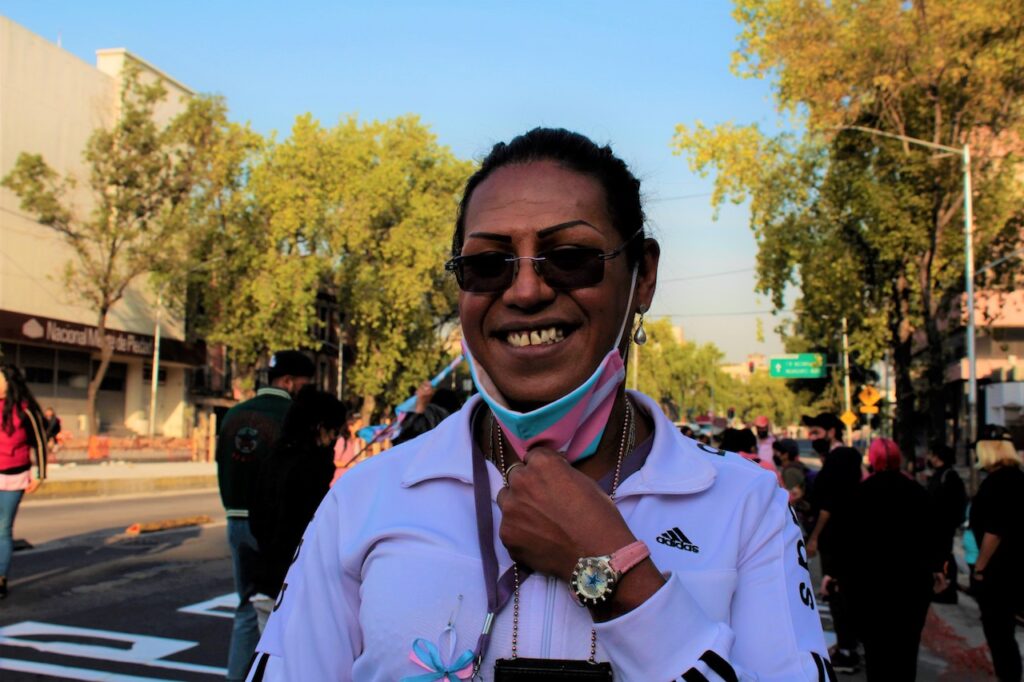
The publication of the Prosecutor's Office's express commitment to guarantee that the events will not be repeated is made today, September 30, as well as the public apology in Puente de Alvarado where Ernestina Godoy, the City's prosecutor, will place a plaque in honor of Paola.
“ This apology is very important because it relates to the restorative justice we are seeking. It's not just about them saying, 'We apologize to Paola and Kenya,' but about what the Prosecutor's Office is doing to improve access to justice and the truth, and to ensure that the LGBT community doesn't experience the human rights violations that many of us have suffered. If this apology isn't fulfilled, I'll be a thorn in their side again, but the truth is, we're making great progress,” says Kenya.
Five years of struggle, an attack, and threats
In five years of struggle, Kenya has survived an attack and three direct threats related to the transphobic murder of her friend Paola. She has also filed two injunctions to prevent the Attorney General's Office from removing the security detail that accompanies her everywhere.
“The main reason I’m keeping my bodyguards is because this man is a fugitive and because I’ve survived an attack and received threats, so they can’t take them away. They tell me they have to keep them until the sentencing. I think that’s going to take a while; we’re still waiting for the legal proceedings for the arrest warrant to be completed,” Kenya explains.
Paola was murdered by a former soldier, identified as “Arturo D,” who was arrested in the car with Paola still lying dead in the passenger seat. This scene was documented on video by Kenya. However, this evidence was not accepted by public prosecutors, and the former soldier was released that same day because, according to officials, “there was insufficient evidence to bring him to trial.”
Regarding the protection and reparation measures, it is planned that on November 3, the Executive Commission for Attention to Victims of Mexico City (CEAVI) will give Kenya the results of the analysis of the comprehensive reparation of the damage, which would have to be applied the day after its delivery.

How the Transfeminicide Investigation Unit came about
In 2019, the Specialized Prosecutor's Office for Femicides in Mexico City was created, but it wasn't until April 2020 that its head, Sayuri Herrera, was appointed. A feminist lawyer, she helped reclassify the murder of Lesvy Berlín Rivera Osorio . This exposed omissions and negligence on the part of the Prosecutor's Office.
One of Herrera's first actions was the creation, in July 2020, of the Transfeminicide Investigation Unit (the only one of its kind at the national level), which responds to recommendation 02/2019 and is based on six principles: recognition of the gender identity of the victims; keeping staff trained in the protocols for action in cases of LGBT+ people; receiving advice from specialists for case analysis; identification of the social and blood family of the victims; historical identification of cases of possible transfeminicides and the recognition of the context of transfeminicidal violence in Mexico City.
The data on cases registered by the Prosecutor's Office using the aforementioned parameters yields a total of 27 transfemicides. The earliest data is from 2010 with one case; then it jumps to 2016 with two; 2017 with three; 2018 with seven; 2019 with ten; 2020 with three; and one documented up to May 2021. Of that total, 45% of the victims were sex workers.
Veracruz, the most dangerous state for LGBT+ people
In 93% of the cases investigated, the victims did not have their gender identity legally recognized. According to Layla Vázquez, an advisor to the Mexico City Attorney General's Office (FGJCDMX), this percentage is due to the fact that 56% of them were originally from other states. Almost half of them were from Veracruz , the state with the highest rate of lethal violence against LGBT+ people in Mexico.
During the discussion "The recognition and proper investigation of transfeminicide," organized by UN-OHCHR, the FGJCDMX, and the Council to Prevent and Eliminate Discrimination in Mexico City (Copred), prosecutor Sayuri Herrera commented that they still face difficulties in ensuring that the investigation process of transfeminicides is carried out in a comprehensive manner and in accordance with respect for human rights .
“The difficulties we face are similar to those encountered in femicide investigations. One is that whenever a cis or trans woman dies violently, the Territorial Prosecutor's Offices (located in each borough of the city) must immediately notify us so that we, as the Femicide Prosecutor's Office, can intervene immediately. Another difficulty is that the public safety police are the first to arrive at a violent death. They must record the person's gender in the standardized police reports and then notify the specialized prosecutor's office. The risk in transfemicide investigations is that the person's gender identity may be assumed to be male, preventing us from being notified and taking over the investigation. This requires coordination and knowledge of the femicide and LGBTTTI+ protocols, not only among the staff of this unit but also across all departments within the Prosecutor's Office.”
“Our revenge: that we be happy”
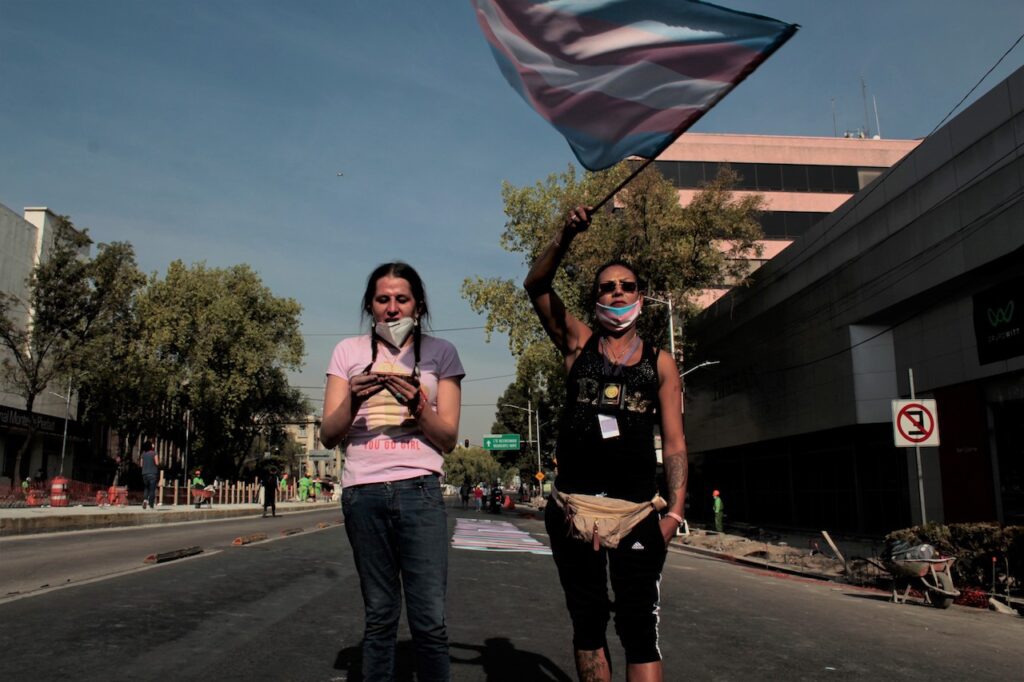
In December 2019, the first shelter for transgender women in Mexico , named Casa Hogar Paola Buenrostro. Located in the Gustavo A. Madero borough, it is a project of Casa de las Muñecas Tiresias, an association headed by Kenya Cuevas.
For Kenya, the apology and the processes stemming from Recommendation 02/2019 are not the end of the struggle but rather “another beginning.” She explains it this way: “The violence and discrimination that trans women experience won't end with this recommendation. Nor will it end with marriage equality, legal gender change, or the legal classification of trans femicide, okay? But what are we doing? We are building spaces for empowerment and support within Casa Hogar and Casa de las Muñecas, and it brings me absolute joy because when I see these women preparing themselves for something, studying, feeling happy, that's priceless. That is my treasure, and no one else will be able to steal our smiles because our revenge will be our happiness .”
We are present
We are committed to journalism that delves into the territories and conducts thorough investigations, combined with new technologies and narrative formats. We want the protagonists, their stories, and their struggles to be present.
SUPPORT US

FOLLOW US
Related notes


We are present
This and other stories are not usually on the media agenda. Together we can bring them to light.