

In El Salvador, transgender people must hide their gender identity at work
Sofia started her hormone therapy while working in a food factory but had to interrupt it due to the discrimination she suffered: she was fired anyway.


Share

When Sofia began to notice the changes that female hormone replacement therapy was causing in her body, she had problems at work. Her job involved testing product samples at a food factory, so she always wore her hair short; but to conceal her breasts, she started wearing larger shirt sizes.
Although she intended to tell her superiors that she had begun her transition as a trans woman, she didn't know how or when to do it. Everything came as a complete surprise when, in August 2019, her supervisor confronted her, asking if she was injecting herself with "something." He referred her to the head of Human Resources, who asked her uncomfortable questions about her sexual orientation, gender identity, and gender expression; and, furthermore, threatened to take her case to the company's Board of Directors.
While the board was making this decision, Sofía could continue working and also continue the hormone therapy she had started a year and a half earlier, at the cost of keeping her gender expression hidden, as she already did. Then came the workplace harassment: the area manager, even though she was the victim of discrimination by other coworkers, tried to blame her for what was happening to her and even threatened to discipline her.
In her desperation and fear of losing her job, Sofía stopped her hormone replacement therapy for two months. She couldn't quit her job because she's an independent woman. Her family kicked her out of the house in 2018, and she worked hard to take out a loan to pay for the house where she now lives. Her plan was to save money to start a business. And, aside from the transphobia she suffered at work, she began to be harassed by gang members in the canton where she lives, in central El Salvador.
Sofia, who chose to keep her real name private for her safety, recounts that she had begun to discover her body and was happy with the changes she saw. She felt very confident. Then came the reversal of the effects the hormones had caused: her body and facial measurements returned, the ones she wasn't comfortable with, and she suffered from spontaneous mood swings. She cried all the time. She was depressed.
“Society here is quite closed-minded. In the workplace, even more so. I had heard a lot of cases of women who, after completing their transition, couldn’t find work or were fired. So, since I pay my own way of living, I couldn’t afford to say, ‘I’m going to tell them now and let whatever happens, happen,’” Sofía tells Agencia Presentes.
On January 15th of last year, two months before the World Health Organization declared COVID-19 a pandemic, the company fired Sofía, claiming that the ISO 9000 standards it adheres to do not accept transgender people . She sought advice from social organizations that support transgender people to file a complaint against the company, but without legislation protecting this community in El Salvador, there is little that can be done to someone facing dismissal due to discrimination based on sexual orientation, gender identity, or gender expression.
Legal loopholes in accessing rights
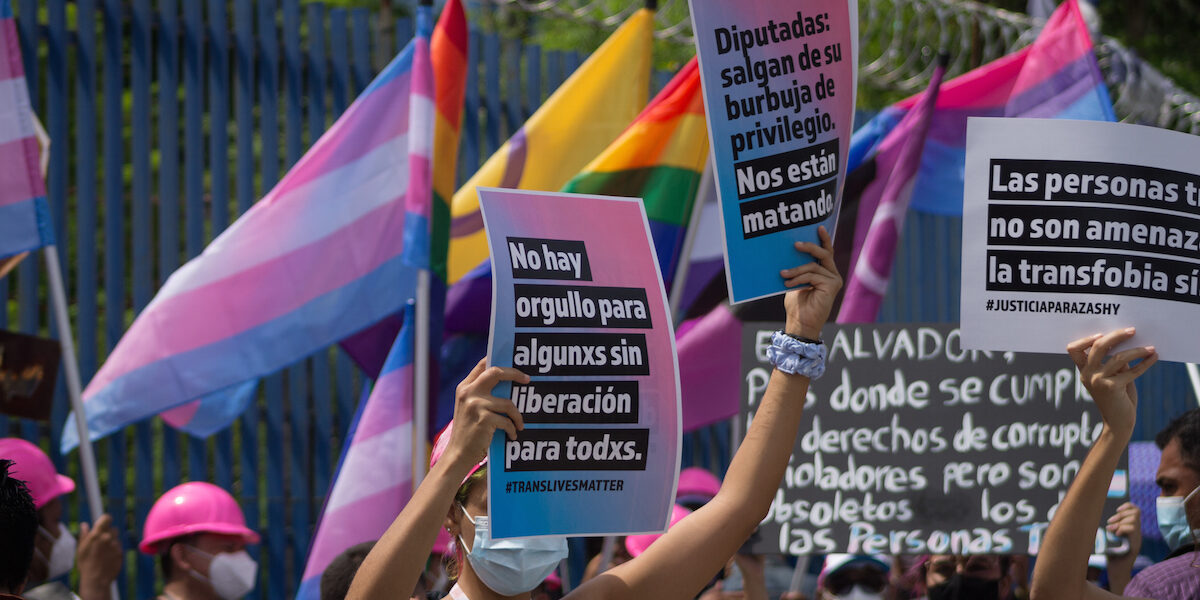
The country lacks a Gender Identity Law. This year, Congress, controlled by the ruling New Ideas party, shelved this and other draft bills, deeming them “obsolete and out of touch with reality.”
The draft Gender Identity Law had been under discussion in the Women and Gender Equality Committee since 2018, but it never garnered enough votes to be debated in the full legislature. Last August, transgender organizations submitted a new bill to Congress.
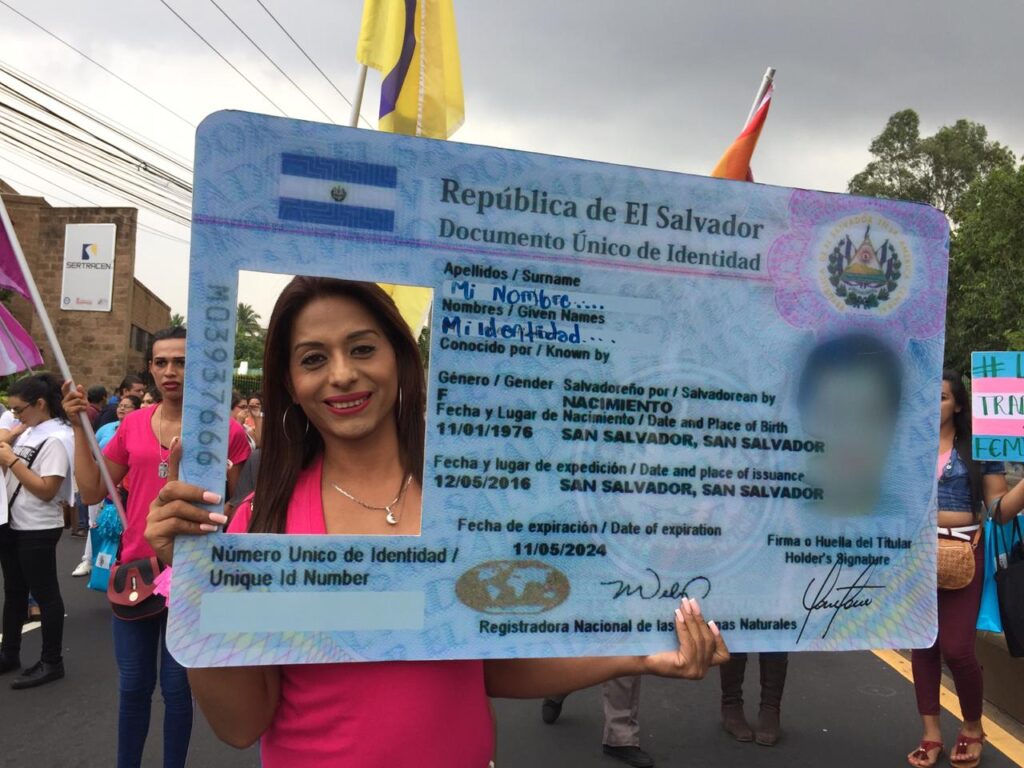
Without a law that makes the existence of transgender people visible, it is difficult for them to access formal employment or basic rights, such as healthcare. Therefore, the system is not prepared to provide hormone replacement therapy; it only has, since 2016, a document called Technical Guidelines for Comprehensive Healthcare for the LGBTI Population, whose lack of implementation is criticized by civil society organizations.
Hormone therapies
Diké LGBTI+ is an organization specializing in comprehensive care for the LGBTIQ+ population, which also provides medical support to transgender people during their hormone therapy process. Modesto Mendizábal, the organization's representative and physician, describes this medical care as a demonstration service for the State, which is the entity that should be assuming this responsibility.
Mendizábal explains that the organization she works for has developed a care protocol for transgender people, which they hope to share with the Ministry of Health. The presentation was planned before the pandemic, and she says that at the time, the Health Ministry staff had told her they wanted to be trained before discussing the topic.
Diké's clinic is registered with the Higher Council of Public Health and also has a pharmacy registered with the General Directorate of Medicines. This allows them to obtain medications at a low cost, and each month, a trans man or woman pays $8 for their treatment. Currently, 45 men and 63 women are undergoing hormone therapy at the organization.
However, in a country where the trans community is marginalized in all social sectors, cannot access formal employment, or, in the case of trans women, are forced into sex work, access to therapy represents a cost.
“Sometimes people cancel because they don’t have any money to come here, because they lose their jobs,” says Mendizábal. This was the case for Sofía, who, unemployed and in the midst of a pandemic, was forced to suspend her therapy for another eight months last year. Otherwise, she wouldn’t have been able to make ends meet.
Due to the lack of access to public health and the lack of other spaces that provide systematic control of hormone therapy, trans women, years ago, opted for the use of mineral oil or now do so by self-medicating, even though this leads to damage to their bodies, says Mónica Linares, director of the organization Aspidh Arcoíris Trans.
Self-medication and risks
“All of us who have self-medicated have done so empirically. What so-and-so used, I used too; I tried what so-and-so used,” says Linares, adding that, from her organization, when they attend to cases of women who want to start hormone therapy, the advice they give them is to avoid using oil.
In countries like El Salvador, where trans people do not have access to specialized medical consultations, there is a high proportion of self-medicated people, says Alberto Nagelberg, an endocrinologist with the Trans People Care Group at the Carlos G. Durand General Hospital in the Autonomous City of Buenos Aires, Argentina.
The group began its work in 2005, seven years before the Gender Identity Law came into effect in Argentina. During that period, the specialist recalls that 7 out of 10 trans people they treated had self-medicated. Some had uncontrolled diabetes, thyroid problems, or untreated heart conditions that needed to be addressed before starting hormone replacement therapy.
“People go and buy online, in pharmacies, and they get it, but only because their reference group told them 'buy this, do that.' Obviously without any kind of supervision,” he mentions.
Today, Sofía works in another factory as a quality control assistant, where she also has to suppress her gender expression, for fear of being fired again in a country with legal gaps for sexual minorities. “I present myself as a boy. That’s what they see. It’s either finish my transition or have money,” she concludes.
We are present
We are committed to journalism that delves into the territories and conducts thorough investigations, combined with new technologies and narrative formats. We want the protagonists, their stories, and their struggles to be present.
SUPPORT US

FOLLOW US
Related notes



We are present
This and other stories are not usually on the media agenda. Together we can bring them to light.