

Being bisexual in Latin America: myths and prejudices
Being bisexual means feeling desire, attraction, or affection toward one's own gender and toward another or others. Activists tell us about the daily challenges they face.


Share

Who do you like more? Do you want to have a threesome? Do you feel gay or straight now? But you're trans… How can you be bisexual? Relax, it's just a phase. These are some of the most frequent phrases bisexuals receive, and which they seek to dismantle this September 23rd, International Bisexual Pride Day, in addition to reclaiming their freedom and fluid identity that breaks with binary heteronormativity.
Presentes spoke with activists from the region, Andre from Paraguay, Iliana from Honduras, Tristan from Guatemala and Samuel from Argentina, about the powers, myths and experiences linked to bisexuality.
“For me, being bisexual means directly breaking with heteronormativity because my existence is filled with experiences of affection, desire, attraction, and sexuality in which I allow myself to be free. It’s about questioning stereotypical roles in romantic relationships, the diversity of loving without regard for or labeling gender,” says Ileana Aguilar, a 22-year-old teacher, bisexual, feminist, and member of the organization “I Don’t Want to Be Raped,” from Tegucigalpa, Honduras.
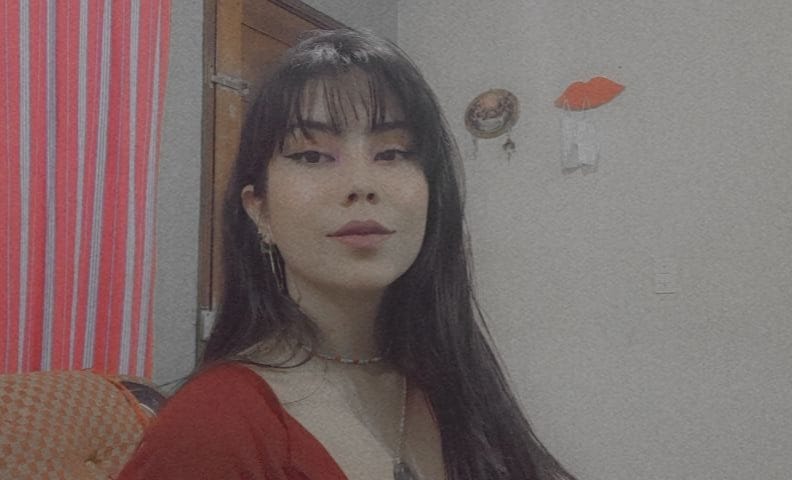
Being bisexual means feeling desire, attraction, or affection toward one's own gender and toward another or others. The term "bisexualities" is used rather than "bisexuality" because the gender identities to which one feels attraction can vary from person to person.
A political identity
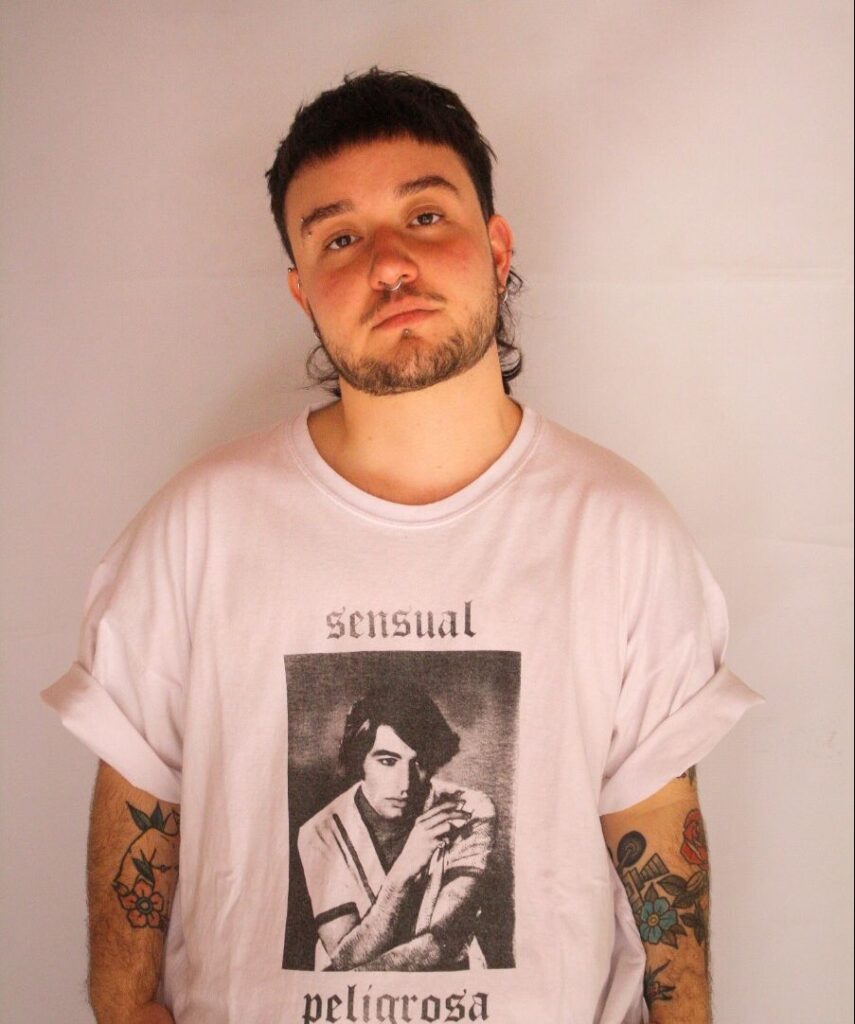
"Besides being a sexual orientation, for me it's a political identity. When I introduce myself to other people, I do so as a trans man and as bisexual," says Samuel, 22, an audiovisual editor from Buenos Aires, Argentina.
Regarding her activism, which she has been involved in for four years, she says: "I feel that being able to name myself and relate it to something of identity is in itself how I experience it. I transmit it and make myself as visible as possible through naming myself, taking it as my own identity, and putting my body on the line."
Andre Riveros (25), a psychologist who graduated from the Autonomous University of Paraguay and an LGBTI activist, always knew she was bisexual, but coming from a very religious family made coming out difficult. For her, this process meant stepping outside her comfort zone, and for a long time she avoided naming it.
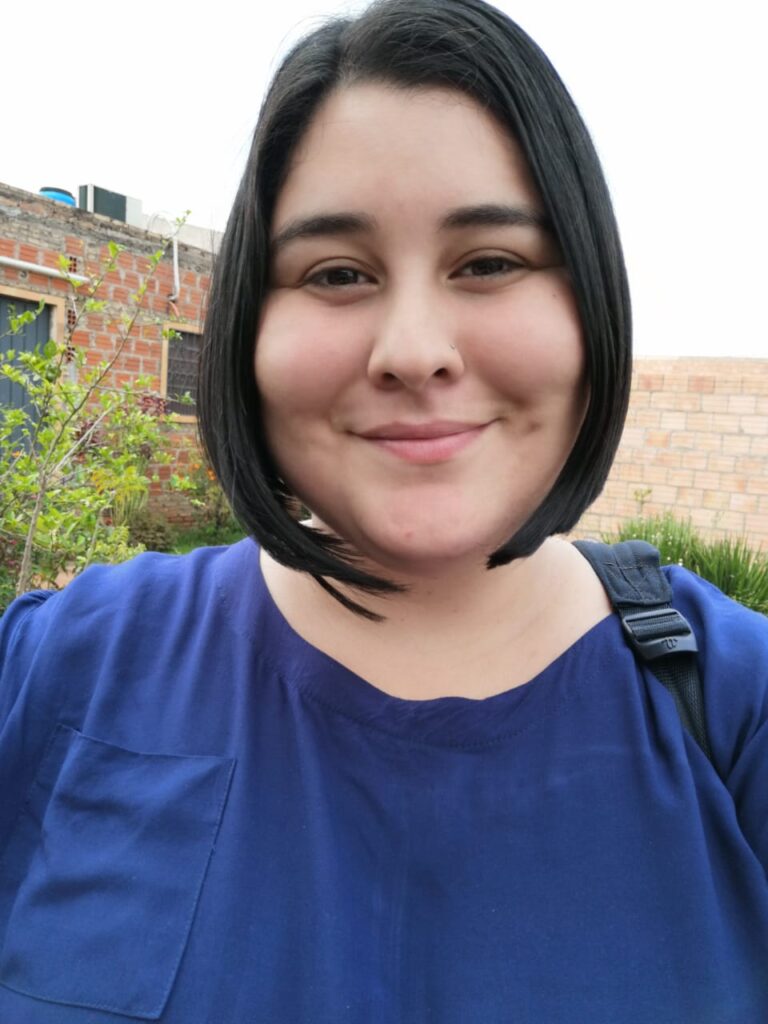
“I lived like that for quite a while until I started college and began to question these things a lot, and I said: enough is enough.” From that moment on, a process began with her mother, who had her “on a religious pedestal” since Andre had been a nun twice. “I would tell her things about trans people, gay people, I would show her movies and series with LGBTQ+ content, and I would develop strategies until she began to feel more curious about the community.”
“Finally, I went through a two-year process, and then, on June 28th, I told my mom I was bisexual. I said I would understand if she was upset or anything like that, but I asked her to just let me be happy. On the contrary, she told me she was incredibly proud of my courage and that she supported me,” Andre recounts. However, from that moment on, she experienced something she hadn't imagined: rejection from her extended family and her friends at church. For her, though, “this was the best decision” of her life. Today, she is part of the Vencer Foundation and It Gets Better, and she acknowledges that being bisexual “is quite a challenge, not only in society but also within the LGBTQ+ community.”
Being bisexual and trans
In this sense, for Tristán López, a 25-year-old trans man, activist and student of a master's degree in Contemporary History in Guatemala, trans people are assumed to have "compulsory heterosexuality".
“Trans people don’t transition out of a compulsion to be heterosexual or to restore a heterosexual model; we transition because this is who we are. But even within the LGBTQ+ community, I’ve been told to ‘stop messing around.’ It’s as if our trans identity is illegitimate if we’re not heterosexual, but legitimate if what we want is to restore a cisgender-heterosexual binary,” she explains.
Her activism began in 2017—she belongs to the organizations Visibles and Trans-formación—and she identified as bisexual, like Samuel, after her gender transition. “Expanding the possibilities of my gender also meant expanding the possibilities of my affections, my body, and my attraction,” she says.
The activists agree that the biggest problems associated with being bisexual are invisibility and lack of understanding. "It's happened to me that in clinics for cisgender gay and bisexual men, they don't know how to treat me," Tristán explains.
"The most curious thing is that, statistically speaking, there are more bisexual people than gay people. It's striking that we are still the most invisible," says Andre.
Regarding her statements, the study "Invisible Majority: The Disparities Faced by Bisexual People and How to Remedy Them," published in 2016 by the Movement Advancement Project and several bisexual organizations in the United States, indicated that "bisexual people represent approximately half (52%) of LGB people in the United States."
"There is a lot of biphobic, cis-sexist, transphobic discourse, a lot of genital-based reasoning," says Samuel. "Even I have reproduced that type of discourse for a long time."
Myths and violence
Iliana links it to the system in which we live. "Being bisexual and positioning this existence as decolonial, anti-racist, and anti-neoliberal entails direct discrimination from the capitalist and patriarchal system, a system that replicates hatred towards the LGBTQ+ community, that singles out and hypersexualizes our bodies, that minimizes and also exploits us with its marketing to generate money," she argues.
She then lists some of the prejudices and myths surrounding this sexual orientation. "The myth of promiscuity, that we don't take care of ourselves, that we have a sexual appetite for everyone," the activist explains, emphasizing that "our desire is based on our own decisions and through agreements with the people with whom we establish emotional bonds."

"Also," she adds, "this issue, overvalued mostly by the male gender, of hypersexualizing bisexual girls with a sexual fantasy of wanting to have a threesome: two women and one man. Being bisexual doesn't mean we're a fetish."
"That we can't decide, that we're in a phase, that it's just a stage," Andre Riveros picks up the gauntlet, and Samuel continues: "the 50/50 myth: do you like men more or women more? This question of comparing as if desire weren't something that mutates, that changes, and that's also what being bisexual is about."
And Tristan concludes: "The biggest myth is thinking of people as rigid, monolithic identities. That's why trans identities, non-binary identities, intersexuality, bisexuality, pansexuality, and other forms of fluid sexual orientations don't fit into this conception."
We are present
We are committed to journalism that delves into the territories and conducts thorough investigations, combined with new technologies and narrative formats. We want the protagonists, their stories, and their struggles to be present.
SUPPORT US

FOLLOW US
Related notes


We are present
This and other stories are not usually on the media agenda. Together we can bring them to light.
1 comment