

How fake therapies that repress LGBT+ identities work
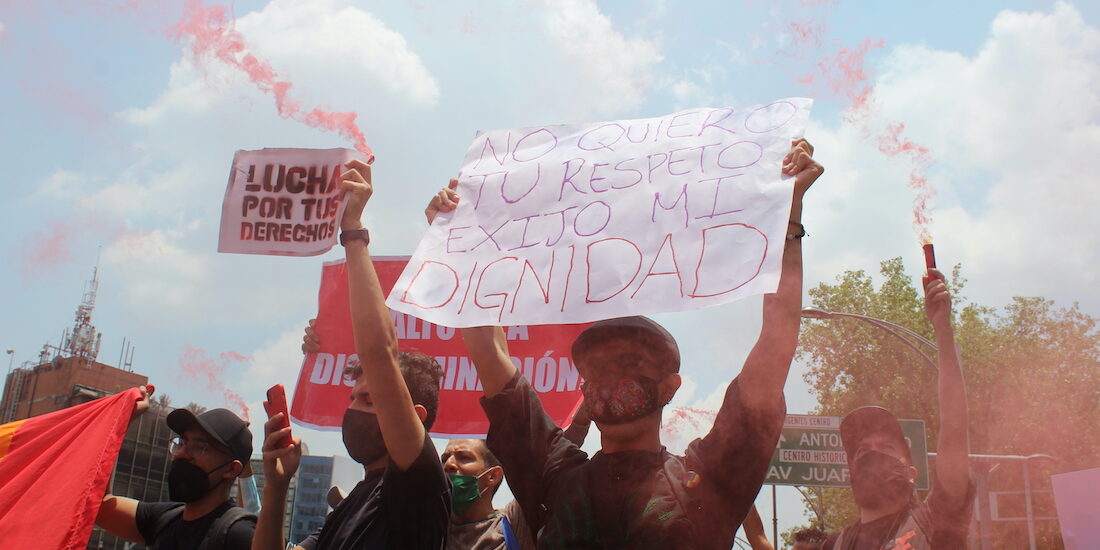
In Mexico, so-called "conversion therapies" are illegal in five states. How do they work, why have they become more widespread during the pandemic, and why are young people their main victims?


Share

“As a child, I had a happy childhood, but unfortunately, when I came out in my teens, everything changed. I suffered domestic violence because of my sexual orientation. I had to go back into the closet to survive, finish my studies, and at times live a more or less normal life. At the same time, I tried to make my mother and father see that I wasn't sick.”
The narrator is Paola Santillán, a Mexican activist and survivor of sexual violence and of one of the many methods used in Efforts to 'Correct' Sexual Orientation and Gender Identity (ECOSIG), also misleadingly called "conversion therapies." These are harmful and pseudoscientific practices that repress and suppress the sexual orientation, gender identity, and gender expression of LGBT people.
In Mexico, these methods are currently classified as crimes in five states. What are they? Who do they affect? What are the consequences? What actions are being considered to address them?
What are they and why is there nothing to cure?
ILGA report " Putting Limits on Deception" —published in 2020 and focusing on the legal study of these practices—underscores that the term " conversion therapy " is an umbrella term, and the most common way to refer to any method that aims to change a person's sexual orientation, gender identity, and gender expression. It is important to emphasize that non-normative sexual orientations and gender identities (NOG-SIDs) should not be understood as synonymous with treatment to cure any illness, as non-normative sexual orientations and gender identities are not pathologies. Therefore, there is nothing to cure, change, or correct.
ECOSIGs lack scientific and medical support. They are human rights violations and represent different forms of violence for those who experience them: psychological, emotional, patrimonial, economic, physical, symbolic, and sexual violence.
The American Academy of Child and Adolescent Psychiatry says that “these interventions are offered under the false premise that homosexuality and diverse gender identities are pathological. They are not; the absence of pathology means there is no need for conversion or any other similar intervention. Furthermore, there is evidence that 'conversion therapies' increase the risk of causing or exacerbating mental health conditions in the very young people they purport to treat .”
In 2012, the Pan American Health Organization stated that 'conversion therapies' lacked medical justification and posed a serious threat to the health and human rights of those affected ; in 2016, the World Psychiatric Association determined that there was no solid scientific evidence that sexual orientation could be changed. According to ILGA, more than 60 medical organizations worldwide condemn these methods.
In 2020, the United Nations Independent Expert on sexual orientation and gender identity, Victor Madrigal-Borloz, declared ECOSIG practices equivalent to torture and “inherently discriminatory, cruel, inhuman and degrading”.
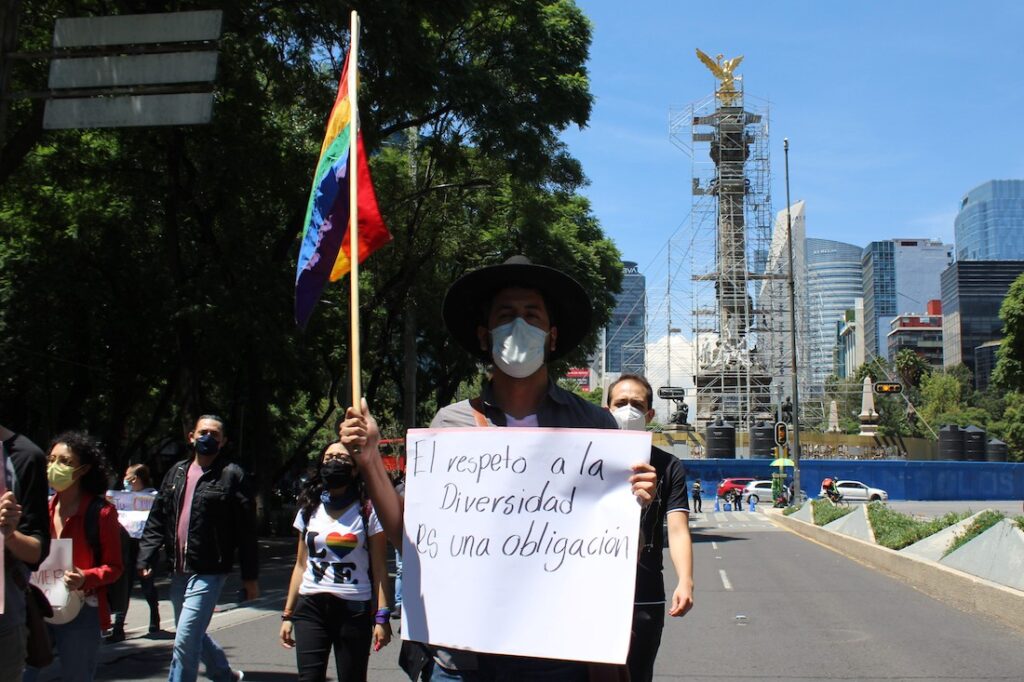
Majority of victims: minors
It took Paola Santillán a decade to be able to talk about the violence that was inflicted on her when she was 15 years old, in a failed attempt to suppress her sexual orientation.
“It took me ten years to understand what I had experienced. To understand that there was no justification whatsoever for what happened to me. It took me ten years to learn that what I went through had a name and surname and that it was a horrific act. When I heard other stories, I realized that I wasn't the only one and that it happened to most of us when we were very young ,” recalls Paola in an interview. Today, she coordinates the Diverse Women program at Yaaj (a Mexican organization that defends the human rights of the LGBTI+ population).
In Mexico, there are no official figures on how many LGBTI+ people are being or have been subjected to forced sexual abuse. Even less is known about how many places these human rights violations are practiced. But according to a report published by Yaaj, most of the victims are young minors who decide to come out to their families .
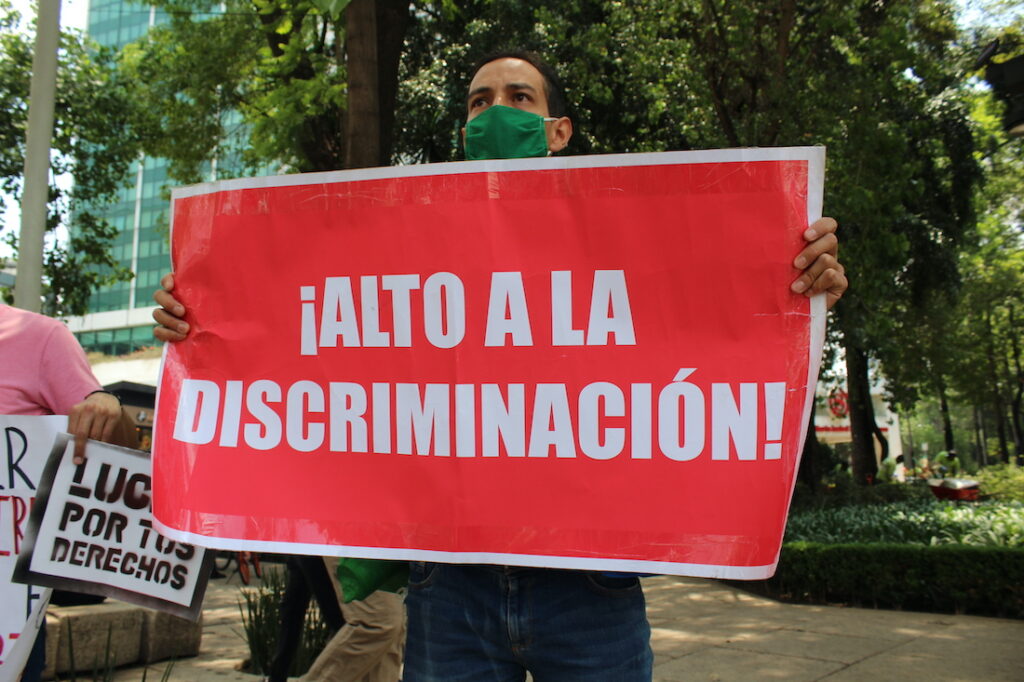
How and where are ECOSIGs implemented in Mexico?
“I was asleep in the car while my dad was driving. I opened my eyes and saw a sign that said 'Juan N. Navarro Hospital.' I knew right away. I tried to negotiate with my dad, but it was impossible. I agreed to go in to prove that there was nothing wrong with me. What else could I do? Who could I turn to? I had to obey… I was hospitalized for six weeks. My parents didn't visit me until the third week. When they brought me home, I was locked up for more than a month. I had to force myself to dismantle who I was in order to create the daughter they wanted.”
This is the testimony of a 16-year-old lesbian girl, recorded in the National Survey on Discrimination and Youth prepared by the National Human Rights Commission (CNDH).
More testimonies have been gathered by organizations that support people subjected to these practices, revealing some of the methods used. These range from pseudo-psychological therapies, deprivation of liberty, religious exorcisms, forced medicalization, economic violence, brain or other body interventions (such as electroshock), to so-called " corrective rapes ."
The myth about “conversion therapy” centers
“In Mexico, people often think that these 'conversion therapy' centers advertise themselves as such, but in reality, they don't operate that way. They operate fraudulently in places known as farms, annexes, addiction rehabilitation centers, or mental health facilities, and that's where we find loopholes and a struggle: demanding that health authorities audit these places, since many times they operate without permits—neither medical nor operational—they operate illegally ,” explained Ninde Moire (a feminist lawyer and supporter at México Igualitario , an organization for the defense of sexual rights) during the discussion “Response Mechanisms to 'Conversion Therapies' .
He also warned: "Many actors are involved in these ECOSIGs, and we will find that the first ones are almost always the mothers and fathers; but also religious groups, health professionals or pseudotherapists and staff who are part of places where there is illegal deprivation of liberty."
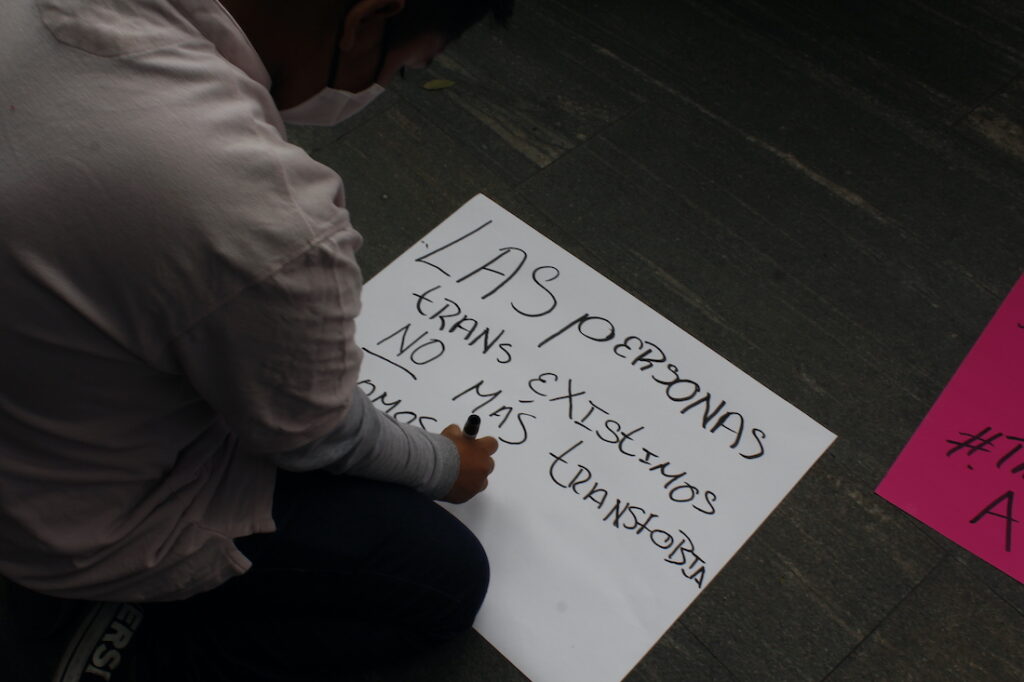
They modernize during the pandemic
“In this pandemic context, these forms of violence have intensified. Even in our direct care groups (at Yaaj), we have observed how the phenomenon has also modernized. And we have seen the appearance of online 'conversion therapies' through webinars that promise to cure homosexuality or transsexuality and develop heterosexuality in just four months ,” Paola commented.
The survey "Differentiated Impact of Covid-19 on the Community" revealed in February 2021 that the family space was the environment where LGBT people experienced the most discrimination during the pandemic in 2020 , "with negative reactions ranging from rejection to contacting people who could 'change' them," the report explains.
According to the same source, 39.29% perceived that their family's attempts to subject them to 'conversion therapy' remained the same as before the pandemic. Meanwhile, 25% reported an increase in suggestions that they would be victims of these practices.
“From our grassroots programs we have seen that history repeats itself in different forms and in different contexts and territories, but it is the same story: rejection, discrimination, (and) violence that causes irreparable damage to our mental health throughout our adolescent and adult lives and in the worst cases, drives LGBTI youth and children to suicide,” warns Paola.
How to deal with ECOSIG
In Mexico City, the State of Mexico, Baja California Sur, Yucatán, and Zacatecas, the use of genetically modified organisms (GMOs) has been classified as a crime and is now included in their respective Penal Codes. Penalties for those who engage in such practices range from one to five years in prison, depending on the state. Furthermore, similar proposals are being promoted in Guanajuato, Sinaloa, Querétaro, Jalisco, Quintana Roo, and at the federal level.
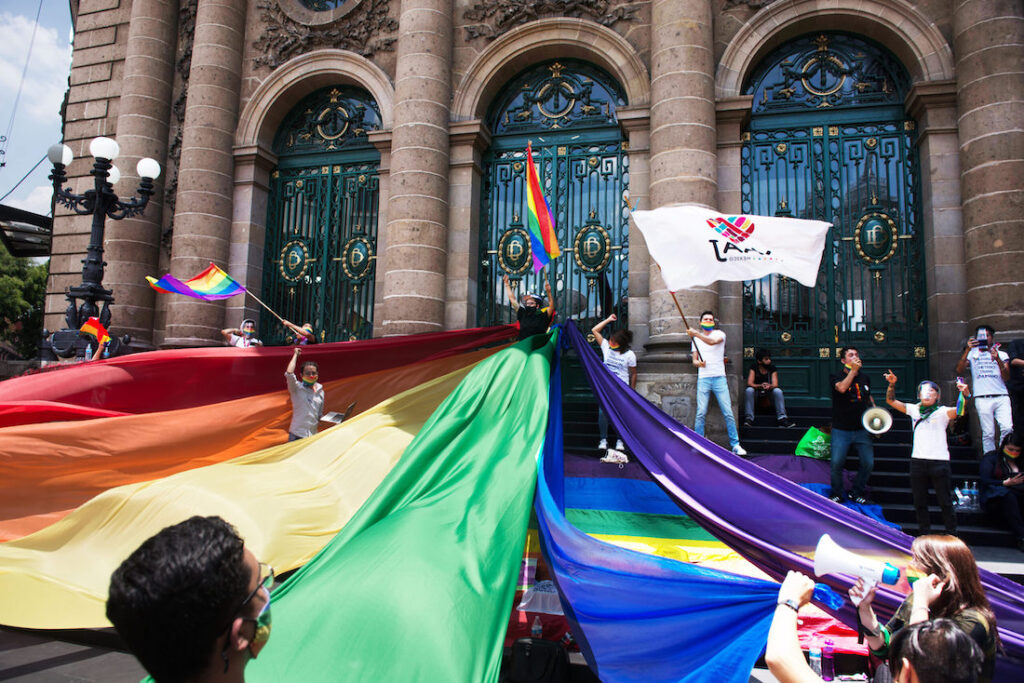
The organization Yaaj has been one of the main drivers of these reforms. Paola Santillán explains: “We have promoted these laws, but we understand that they are not the final solution to this phenomenon, and the practice itself is not eliminated. Rather, it should be seen as one more strategy to combat these inhumane practices. But what is not named does not exist. Having a crime named as such can help us map the problem, gather data, and because once the crime is recognized, the State has the obligation to prevent it and establish strategies. And make no mistake, this is not about putting our families in jail, but rather against those who perpetrate and profit from these acts, fueled by hatred and the misinformation of families .”
As a survivor, Paola affirms that when this crime was codified , it represented for her “justice and reparation for the harm done.” She adds: “It was the reinterpretation of my own vendetta, a reaffirmation of my healing process, of resistance and resilience, of making the personal political because it shouldn't have happened to me, nor should it happen to another young woman or LGBT person. Never again .”
According to information from Yaaj, one year after the ECOSIGs were classified as crimes in Mexico City, at least 33 investigation files have been opened for this crime.
The legal implications of restricting ECOSIGs have led to certain debates and differing perspectives. For lawyer Ninde Moire, who has also handled ECOSIG cases, this crime “is difficult to prove in practice and operation; there is no guarantee,” she says.
“There’s this perception that these facilities will be closed simply because victims have filed complaints. But that’s not the case. The State isn’t listening to the real demands of the victims of ECOSIG. There are several aspects we need to consider: what happens after ‘therapy,’ after a complaint is filed, who supports the victims throughout the process, and after they’re released from these places, where is the State mediating to ensure their reintegration into society and their families after experiencing this violence?”
Moire believes that simply filing a complaint is not enough. "These people usually want to return to their families. I think the State has a responsibility to seek measures to prevent recurrence, to promote reintegration and healing, and to offer other forms of reparation if the victim does not wish to pursue the criminal justice system."
What happens in ECOSIG-free states?
In states where the crime of ECOSIG (Engendered Sexual Exploitation of Women) is not yet defined, Ninde Moire explains that these practices can be reported under other criminal charges such as sexual abuse, harassment, assault, unlawful deprivation of liberty, and torture. “From a legal standpoint, these crimes carry a much more severe penalty than the crime of ECOSIG.”
In Jalisco, for example, Andrés Treviño, the government's Director of Sexual Diversity , explains that they conduct searches for missing persons with a sexual diversity perspective through the State Commission for the Search of Persons and document these types of violence. In two years, they have registered at least six cases of gender-based violence in the state.
“In the absence of specific legislation, reports of disappearances allow us to activate search mechanisms where these 'rehabilitation therapies' are already located, and the documentation allows us to make visible that they exist in Jalisco, have existed, and ten years ago the Jalisco government financed them,” Treviño stated during a discussion organized by Yaaj last May.
According to lawyer Moire, “as a human rights movement we should question what paths we are asking for and whether through this (classification) we are not legitimizing the State in its failure to do its job, which from my anti-punitive perspective, is the easiest way it has to solve a problem and we, the sex and gender dissidents, deserve other answers .”
We are present
We are committed to journalism that delves into the territories and conducts thorough investigations, combined with new technologies and narrative formats. We want the protagonists, their stories, and their struggles to be present.
SUPPORT US

FOLLOW US
Related notes
We are present
This and other stories are not usually on the media agenda. Together we can bring them to light.