

Transvestite Memory: The Thousand Cris Mirós
Victoria Stéfano, a trans communicator, writes: "We shipped her with Diego, we sat her at Mirtha's table, we saw her naked, angelic, unattainable. We desired her secretly and openly, and we burned her at the stake of transphobia and HIV/AIDS in the 90s. The trans girlfriend of Argentinians. The incomparable. The Mare. Cris Miró."


Share

I was in preschool trying to figure out what the hell was wrong with me (yes, of course I'm a child of the Menem era and the federal education law). I didn't really understand why they told me I was a boy if I didn't feel like one, but what I was starting to understand was that if I did what the adults said, then they hit me less. But that became impossible when I saw her. Then there was no going back.
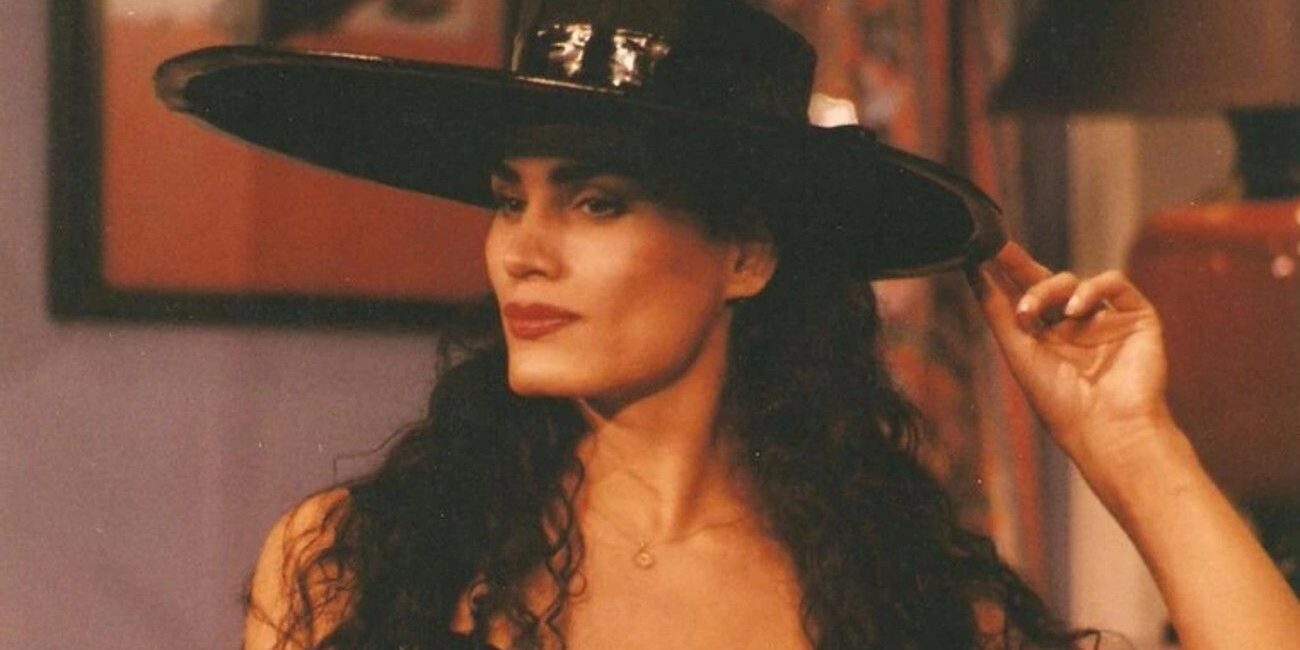
Fairy? Sphinx? Mermaid? What fantastical beast was that woman, tall as the sky, with curls that reached the floor? The news reports said that Cris Miró, the star of revue theater, had died at the age of Christ. The journey of the popular hero can't end any other way than that, of course: a tragic young death. So, for me, Cris Miró represented possibility. I could be her. I could be her. And even make it to television. But above all, I could be her for a short time, because transvestites like Cris die young, far from the screen, and with health problems that can't be discussed openly.
Her career was fleeting but filled with successes and conquests. She captivated audiences in Argentine theaters and on television, who, like the ruthless, exploited her in the most brutal ways.
Some describe her as mysterious and reserved. Others recount anecdotes of a Cris who was openly tender, sometimes devoted, other times as hard as marble. Among other idyllic stories related to the actress, more than one tongue has tangled up in Diego Armando's forbidden love for the iconic Miró.
We shipped her with Diegote, we sat her at Mirtha's table , we saw her naked, angelic, unattainable. We desired her secretly and openly, and we burned her at the stake of transphobia and HIV/AIDS in the 90s. The transvestite girlfriend of Argentinians. The incomparable. The Mare. The real 'what a woman'. Cris Miró
Through the voices of transvestites and trans people, we reconstruct the legacy of Argentina's sweetheart, the Jennifer Aniston of transvestites, our ever-present Cris.
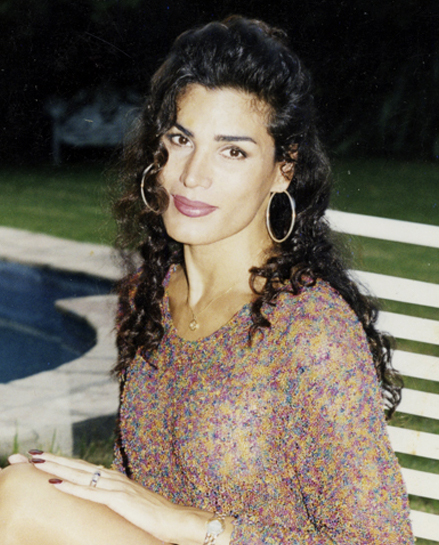
Life, art and death of the transvestite bride
“What I do remember first is when he died,” says Querelle Delage, an artist and communicator from Santa Fe. “I was on a program where I had a segment. I read a text and burst into tears on air.”
“She was very impactful because we didn't have a figure in Argentina who could move us like that with her appearance . Her charisma, her beauty, her way of being. If there were any media personalities before her, they did so in a more marginal way, so to speak. It was always in a mocking tone, sadly, because it seems you have to be established by the mainstream so that people don't make fun of you,” the actress begins, while weaving memories about the Great Argentine Woman.
The artist also ventures a theory about why Cris was established in that way, which had to do with Argentinian identity. “When Bibi Andersen—a Spanish trans actress, singer, model, and presenter—appeared in Almodóvar's films, it was a shock. Like a ' yes, you can be like them, beautiful,' a way to transform . They were beacons, trans beacons, transvestite beacons. They are the ones who empower you in the desire for realization. You have to find the technology at the service of the body . What to do, how to do it, what to wear, what to take off, how to reinvent yourself. How to style yourself, how to put yourself on and take yourself off, how to build yourself up and rebuild yourself, all of that. That was Cris. Having someone Argentinian. Not a nationalist with a trans badge on their nipple, but someone who said, ' Here in Argentina, you can too .'”
Lu Pandora, a trans woman, is 34 years old and was born in the province of San Luis, where the brilliance of Cristina Miró also took root. “I think I was 10 years old when Cris died. 12. I remember the time when she was all the rage on TV, the mid-90s. I remember her hair. That curly black hair and those hypnotic eyes.”
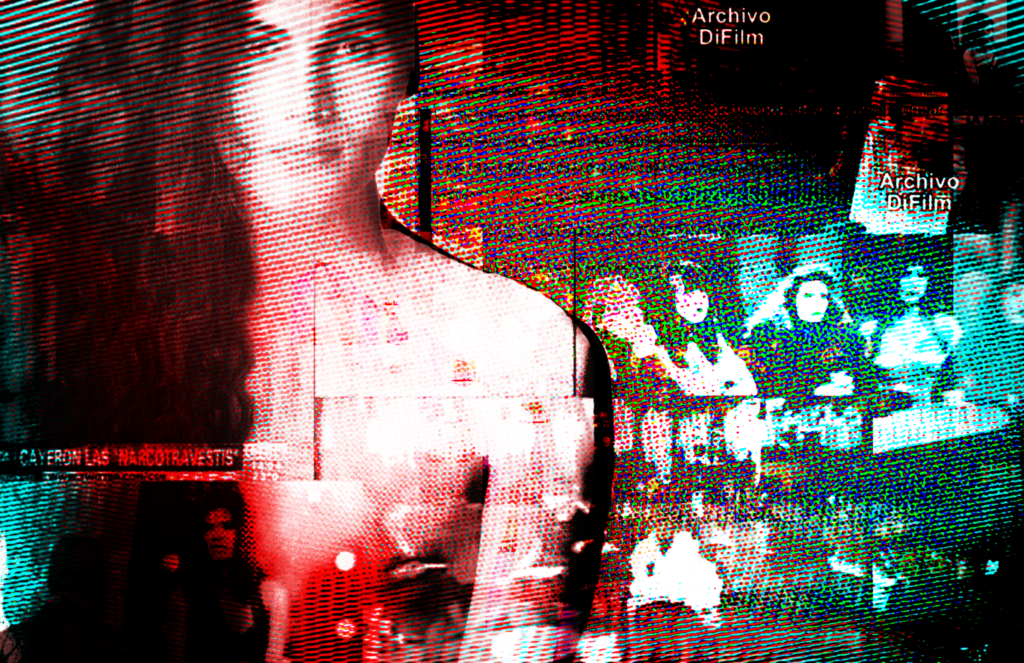
First approach to transvestism
For the children of that time, as Querelle and Belén affirm, Cris was the first approach to transvestism, which is confirmed in Lu's story. “At home we watched TV, a traditional, Catholic family. We watched a lot of Gasalla. I remember sometimes my dad, I don't know if it was with Cris or Flor, would make really hurtful “jokes,” but when I was alone with my mom and she appeared two or three times on TV or in the news, there was no judgment. Cris, during my childhood, also provided a platform for several trans women who became media figures. I remember Mariela Muñoz, this trans woman who adopted a ton of children . And there I do remember the judgment, like, 'this is good, at least she's a mother and did something from the heart,' that was the comment at home. And it happened to me, like some of my friends, that I started gathering information about Cris more in my teens and adulthood. Wondering how she died, when she died, and that opened up more possibilities about how she lived. You watch videos of her now and you remember a lot of things, you know there was something magnetic about her . I have vivid memories of contact with the feminine.” in childhood, and I think that unconsciously seeing Cris all so fantastic has influenced those times.”
Lu points out in her own story a fundamental aspect of Cris's character: the denied desire of the Argentine male. "I remember that my father was very aroused by Cris. I remember the comment 'she's a chick' as if validating her with the title of woman."
The other mirror
María Belén Correa is the director and founder of the Trans Memory Archive. Regarding Cris Miró's impact on Argentine trans culture, Belén shares several points of agreement with Querelle. Belén recounts that older trans women at the time didn't feel represented because she didn't have breasts and therefore wasn't even considered a trans woman, or what was then called a transvestite. "You had to have silicone implants and be in jail to be considered one."
Cris influenced her peers in different ways depending on their generation. For the young girls of that time, she symbolized the icon to aspire to, the potential to be, the ability to find oneself and be the complete opposite of how we activists were seen, because we were the crazy ones, the ones who chained ourselves to things, the ones who confronted the police. That was the other perspective, the ability to say, 'I don't want to be that.' It was having that other mirror and being able to say, 'I want to be like Cris or like Flor de la V.' But not all of us want to be showgirls, not all of us want to be hairdressers, not all of us want to be singers they were , of course, .
In artistic terms, Cris represents both a vindication and a continuation of a legacy cut short by the dictatorship. “In the industry, she was considered an actor, a kind of drag performer, which is why she could have had that entry. The last phenomenon like her was Evelyn, who was meant to play the role that censorship prevented her from performing in the film 'Mi Novia El' (My Girlfriend El). Censorship didn't allow the word 'transvestite' to appear, nor did it allow Evelyn to play the role that Susana Giménez ended up playing with Olmedo. Evelyn ended up leaving with the dictatorship, escaping with Libertad Le Blanc. From then on, there was an artistic void. The dictatorship swept away all the well-known artists. At that time, Evelyn was performing on Corrientes Street with Chico Novarro, Estela Raval, and Ethel Rojo.”
Without breasts there is no paradise
The activist also focuses on a crucial point: Cris was a sex symbol who fundamentally challenged the prevailing gender binary . “In the artistic sphere, she filled what was then called the 'man-woman' role in theater. It was her androgyny that allowed her to be considered an artist, but she was always seen as an actor. Later, when she was presented as an attraction, they gave her a new name, and that's when she became Cris Miró. The gender binary meant she was forced to get breast implants in the later years of her career because, in the collective unconscious of Argentine men, the sexiest person couldn't be someone without breasts,” says Belén.
One of the costs of building that meteoric career was political involvement. “When she left the hands of her first producer, she wasn't allowed to do a lot of things, like express a political or activist stance. In the first article we did as ATTTA (Association of Transvestites, Transsexuals, and Transgender People of Argentina) in '94 or '95, Crónica wanted to do a story called 'The Applauded and the Disparaged,' in which Cris, Pía (Baudracco), and I were going to be portrayed as the disparaged ones for being activists at that time. But her producer wouldn't allow it.”
Currently, a project is underway to bring the life of the fleeting Cris to the screen. Meanwhile, she lives on in every transvestite memory. Amidst fantasy, dreams, and the nostalgia of being that woman. One of them. The thousand Cris Mirós.
We are present
We are committed to journalism that delves into the territories and conducts thorough investigations, combined with new technologies and narrative formats. We want the protagonists, their stories, and their struggles to be present.
SUPPORT US

FOLLOW US
Related notes

We are present
This and other stories are not usually on the media agenda. Together we can bring them to light.