

She had an episode and died after police intervention: how the case of Vicky Nuñez, a young trans woman from Paraná, is progressing
He died on July 21st under unclear circumstances. How is the investigation being conducted? His mother is suing the state.


Share

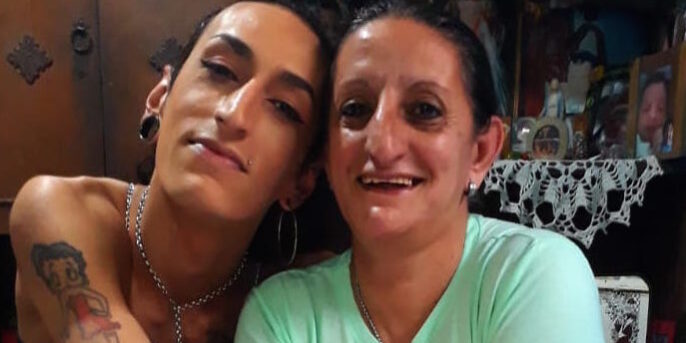
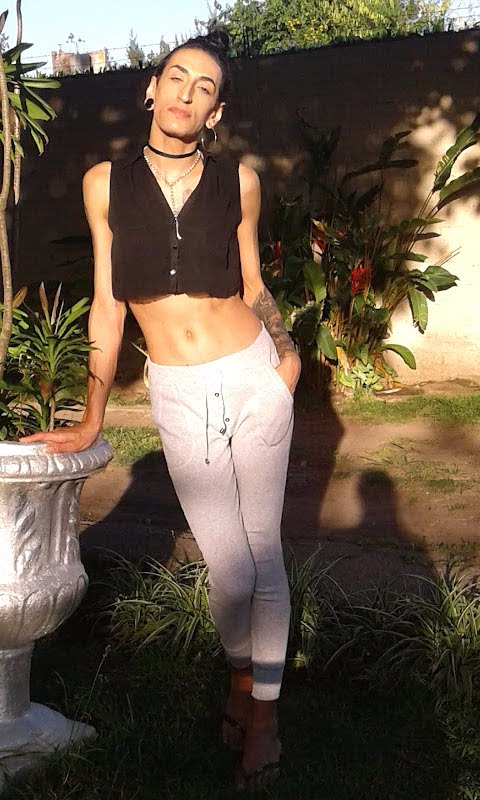
Victoria Núñez, known as “Vicky,” a 27-year-old trans woman from Paraná, died on July 21st in circumstances involving the Entre Ríos Police. Her family, friends, activists, and supporters denounce the police's actions and hold them responsible after a 911 call was made requesting assistance for a panic attack or psychotic episode. This incident has sparked debate about the State's role in situations where the intervention should be carried out by interdisciplinary healthcare teams.
“That day, Victoria called me at 8:30 a.m. asking me to get together for lunch, and minutes before 9:00 a.m. she called again, asking me to come urgently because she was scared, saying there was someone at her house. When I arrived, there was no one there; she was having a crisis. Then we called the police,” Marcela, Victoria’s mother, told Agencias Presentes.
Victoria was violently subdued by police, handcuffed, and died while being taken to San Martín Hospital in the capital of Entre Ríos province. The circumstances surrounding her death are under investigation. Her mother says: “ Three patrol cars arrived, invaded the house where she lived with her partner, entered forcefully, and acted very aggressively, handcuffing her, injuring her hands, cutting her face, pressing on her neck, and throwing her to the ground. There were so many police officers; Vicky couldn't defend herself. Seeing so many of them, she was terrified.”
The police at that moment asked Marcela for Victoria's National Identity Document (DNI), and while she was going to get it, she saw that her daughter wasn't well: “ It was just a moment. When I came back, they wouldn't let me near her. Vicky wasn't breathing. They told me she was asleep. Why wouldn't they let me go see her? Maybe I could have saved her. With all this, instead of trusting the police, the opposite is true; we're afraid of them.”
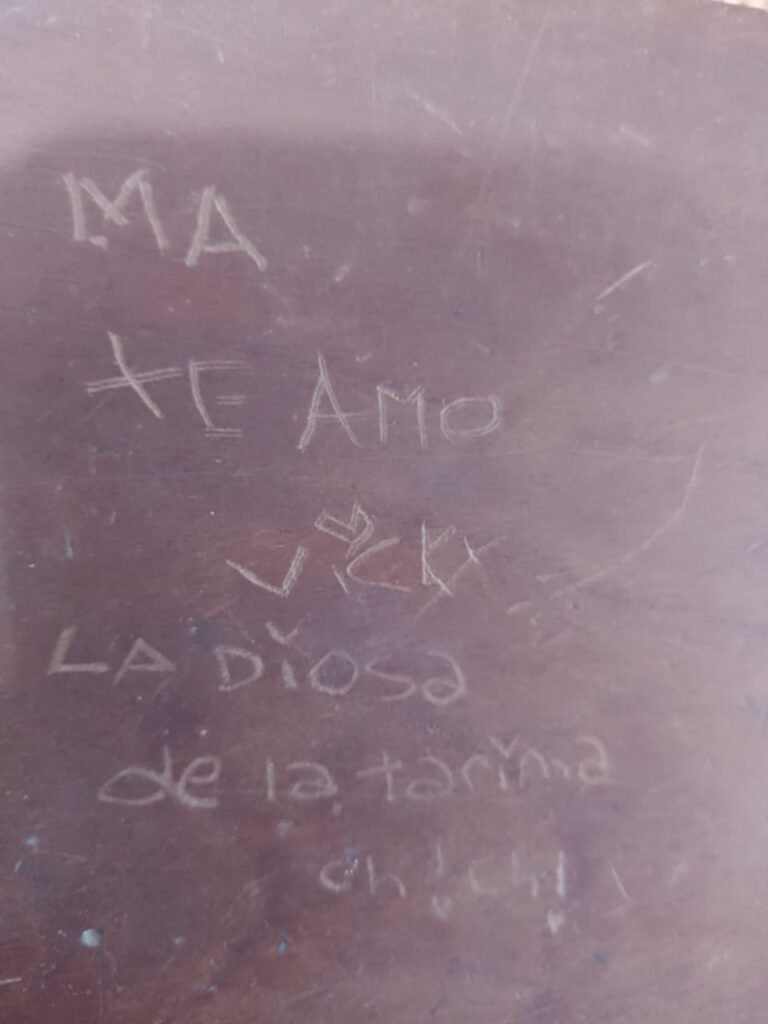
“Every day it’s hard to wake up without hearing her ‘good morning’ and to fall asleep at night without hearing her voice. I miss when she would tell me, ‘I love you, you’re my life.’ Every now and then I open a drawer in the closet and there’s a heart drawn on it that says ‘I love you,’ a notebook, and a napkin with a handwritten note thanking me for everything, even my sewing kit with a printed note. She’s always by my side; I feel her. I want truth and justice for my daughter,” she said through tears.
The legal proceedings
According to prosecutor Juan Manuel Pereyra, who is leading the investigation, there is no indication so far that there has been any illegal activity on the part of the Entre Ríos Police.
Emma Clementi, one of the lawyers recently appointed as a plaintiff representing Marcela Giménez, Vicky's mother, told Presentes that the investigation has progressed, not with the theory of the case they maintain, but they can say that they are working on the preliminary criminal investigation stage. There, they will provide the data and evidence so that the prosecutor can consider and work on other possible hypotheses about the incident.
In this regard, she pointed out that the first irregularity in the case was that only one female police officer attended the scene, when they should be accompanied by female personnel from the force. The second irregularity concerns the way this situation was handled, which should have been managed within the framework of mental health and patient rights, and not as if it were a crime in progress.
A context of vulnerability
“The approach taken fell far short of what the protocols stipulate for these situations, which mandate respect for patients' human rights at all times, and the use of force only in extreme cases under strict supervision. Therefore, our proposal focuses on investigating Vicky's death and the police intervention, understanding the overall context in which they occurred, and not ruling out any hypothesis regarding the cause of her death.”
The first proposal of the plaintiffs' lawyers was the request for the removal of the police from the investigation and the intervention of another force, such as the Gendarmerie, in line with what is indicated in the protocol for the investigation and litigation of cases of violent deaths of women and the Resolution of the Attorney General of the Nation 10/11.
“We framed ourselves there because the investigation has two purposes: to prevent a future repetition of the events and to provide justice in individual cases. On the other hand, it is necessary to place the event in a complex context of vulnerability, such as Vicky's gender identity and expression, the lack of access to comprehensive health care, economic insecurity, all of which forces us to look at this with a different lens, with a gender and class perspective,” the lawyer explained.
The protocol mentioned by the plaintiffs, developed by the Specialized Prosecutor's Unit for Violence against Women (UFEM), specifically establishes how to proceed in the event of the death of a transvestite or trans person. According to this document, a transvesticide should be presumed, which, during the course of the investigation or with further evidence, can be ruled out, but should never be presumed from the outset.
What question does Vicky's story raise?
The Mental Health Law, enacted on November 25, 2010, establishes that the State must also guarantee care at all levels without ignoring crisis, emergency or urgent situations, and provide an approach that considers all the rights of the person, in a comprehensive manner.
Carlos Berbara, the Director General of Mental Health for the Entre Ríos Ministry of Health, confirmed that he was aware of the Victoria Núñez case, stating that it was “primarily due to media coverage.” Without elaborating, he described it as “a regrettable incident” given “the circumstances in which it occurred.”
In this regard, he said: “The management team at the General Directorate of Mental Health is always attentive to the difficulties faced by people living in the most vulnerable sectors of our society in accessing healthcare. Users of mental health services have historically and unfortunately suffered from these constraints.”
Consequently, he explained that in situations of psycho-emotional crisis that involve a health emergency such as accidents, organic health situations, cardiological, gynecological-obstetric, among others, people contact 107, which is the Health Emergency System of the Province of Entre Ríos, which belongs to the Ministry of Health, and expressed that in an urgent situation or emergency, people contact the security forces, due to "the speed and proximity".
So, what resources and tools does the State have to address mental health problems with a human rights approach?
When asked about his perspective on the institution, he acknowledged the different capacities in terms of human and infrastructural resources, such as vehicles and agents in the field, between the Health System and the "Security" System, stating: "In countless situations, the security forces arrive first, in others, the ambulances from our Ministry, and on other occasions, a joint approach is achieved, which is ideal in cases where people's safety and health are at risk."
Recently, Berbara met with the Entre Ríos Police Headquarters to resume training on how to intervene in mental health crisis cases. She said, "The objective is to provide and build tools within the framework of the rights and guarantees of users, ensuring the necessary accessibility, support, and continuity of healthcare." She immediately added, "We aim for actions in these situations to be controlled and provide an open door to respectful access to the safety and health guarantees of our community."
Finally, when asked if Victoria Núñez's death was the reason for resuming these actions, the official stated: "It is necessary to recognize that regrettable situations like those of Victoria or Chano (the singer Chano Moreno Carpentier) have spurred reflection and action in these areas."
We are present
We are committed to journalism that delves into the territories and conducts thorough investigations, combined with new technologies and narrative formats. We want the protagonists, their stories, and their struggles to be present.
SUPPORT US

FOLLOW US
Related notes
We are present
This and other stories are not usually on the media agenda. Together we can bring them to light.