

March in Buenos Aires to demand urgent action on a wetlands law
A day of demonstrations to demand urgent action on the wetlands bill before the end of the legislative year and it loses its parliamentary status for the third time.


Share

On Wednesday, August 18, a demonstration was held to demand the urgent consideration of the wetlands bill before the end of the legislative year, which would cause it to lose its parliamentary status for the third time. This intersectional mobilization brought together 381 organizations, including urban activists, Indigenous communities, anti-racist and anti-speciesist movements, LGBTQ+ rights groups, artistic collectives, land rights organizations, journalists, political figures, and more.
After a historic 7-day journey, more than 50 activists from the Multisectoral Wetlands group departed from Rosario paddling kayaks to Buenos Aires, where they were received at the Plaza de Mayo rally, which continued in a massive march towards the National Congress where an extensive event was held that gave rise to a great diversity of voices.
In the last year, coinciding with the first cases of coronavirus in Rosario, more than 400,000 hectares of wetlands (approximately 20 times the size of the City of Buenos Aires) were intentionally set on fire, primarily to expand the agricultural frontier. It is no coincidence, then, that the law is stalled in the Agriculture and Livestock Committee, where these same lobbies are precisely the ones blocking the law and fueling the fires in these areas.
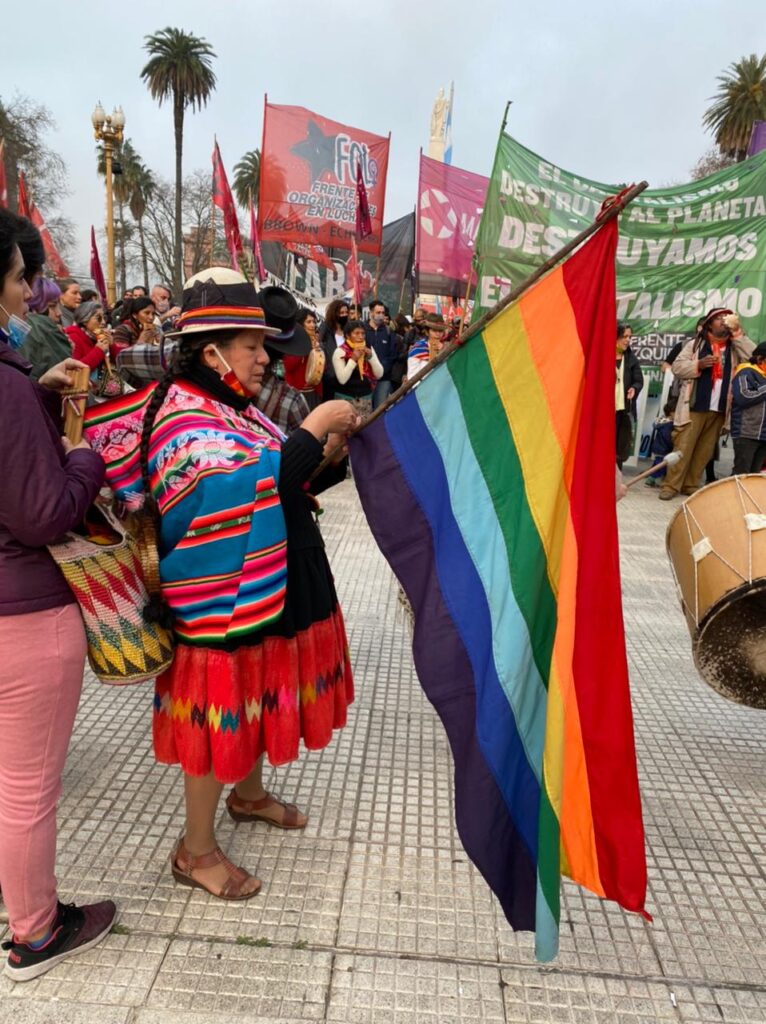
Today we are experiencing one of the worst water crises on record, with a historic low water level in the Paraná River in 77 years.
The Paraná Delta wetlands are a Ramsar site , designated as an internationally important area because they encompass numerous reserves, national parks, and provincial parks. It is one of the world's largest freshwater basins and a unique reservoir of biodiversity, home to thousands of animal and plant species and communities.
It is also important to remember that it is not only the wetlands that have suffered this incendiary ecocide; several provinces have burned in recent times (we are still seeing it today in Córdoba), accumulating almost 1.5 million hectares throughout the national territory.
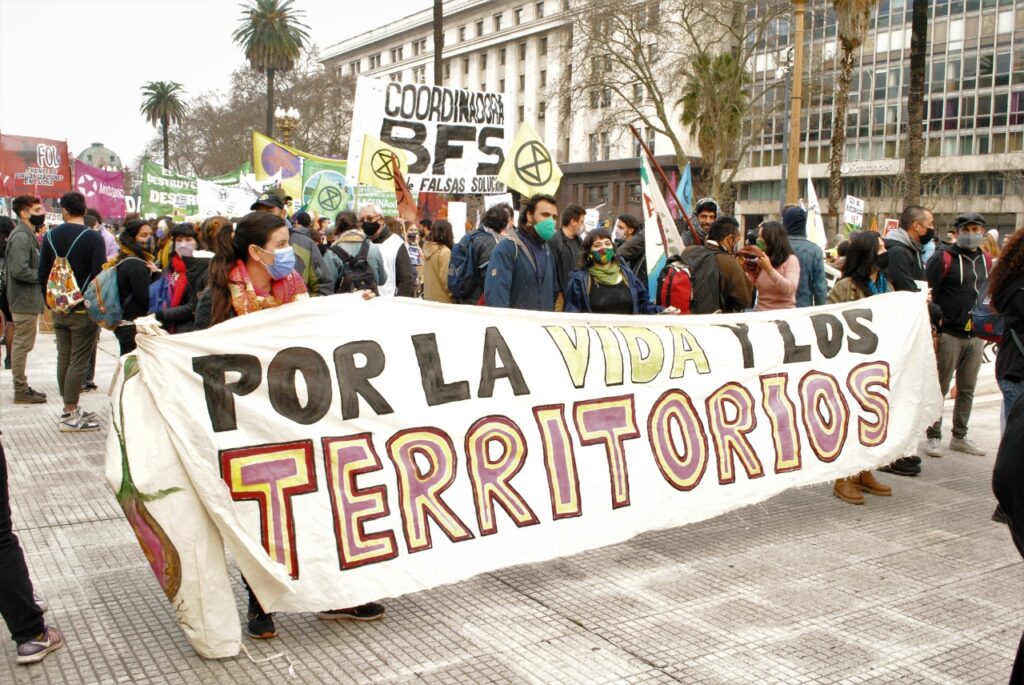
"There is no other option but to fight"
law does not prohibit any productive activity on wetlands, but rather regulates and limits such activities under a strict framework of conservation and, at this point, restoration. The law lost its parliamentary status in 2013 and 2016.
Towards the end of the mobilization, the organizing activists held a brief meeting inside the National Congress where they formally submitted the petition, which had been developed in conjunction with organizations from across the country. However, the commitments from the ruling class were lukewarm.
The role of activists is to ensure that laws are enforced. Argentina has an exemplary Forest Law in regulatory terms, but it was not implemented at all on the ground: in the years following its enactment, the highest rates of deforestation were recorded.
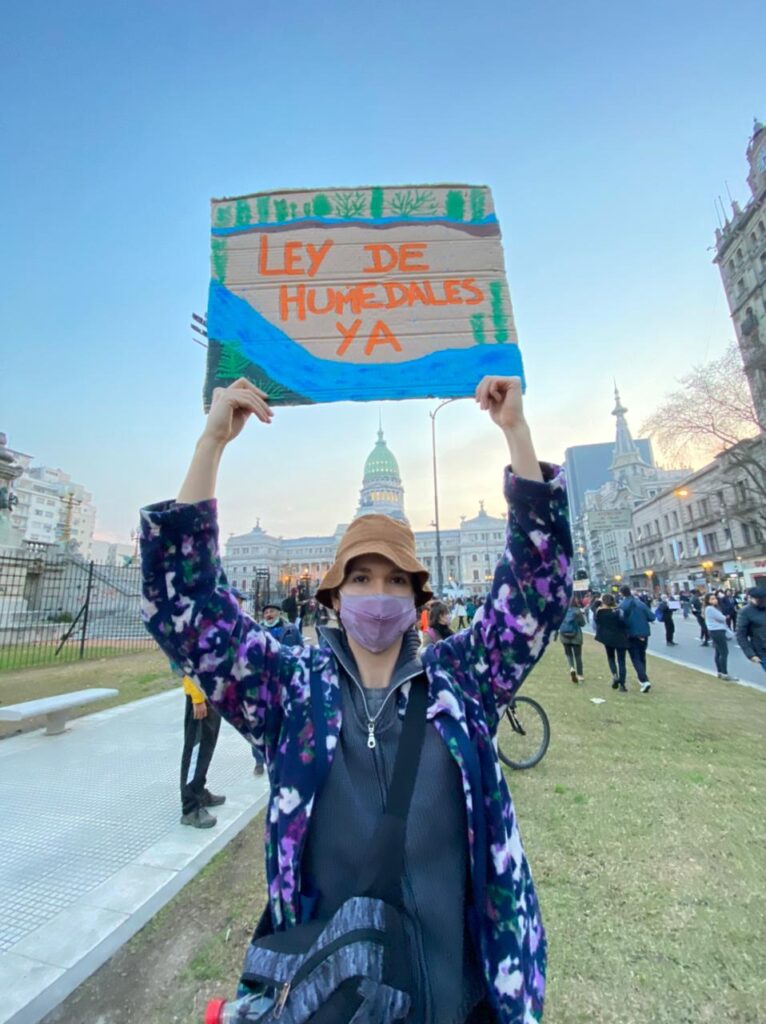
Towards the end of the event at the Congress, Juana Estela Antieco Ñeguimain, from the Mapuche community of the Lepá coast (Chubut), said: “There is no other option but to fight. Down south, we Mapuche people directly reclaim our territories. If they are taking away your wetlands, go and reclaim them. It is the only way to destroy this capitalist system, to destroy the mining lobbyists, the powerful who think they can come and subdue us, take our lives. Let's think not only of ourselves, let's think of those who come after us, what kind of world do we want to leave them?”
We are present
We are committed to journalism that delves into the territories and conducts thorough investigations, combined with new technologies and narrative formats. We want the protagonists, their stories, and their struggles to be present.
SUPPORT US

FOLLOW US
Related notes


We are present
This and other stories are not usually on the media agenda. Together we can bring them to light.