

Chile close to approving same-sex marriage: this is how LGBT+ couples are experiencing it
Chile is closer than ever to legalizing same-sex marriage. LGBT+ people share their plans and hopes for the day this right becomes a reality. And the outstanding issues that still need to be addressed.


Share

Chile is close to legalizing same-sex marriage. After the bill was stalled in Congress for more than four years, it begins its second legislative stage in the Chamber of Deputies this Thursday, August 19, following its approval by the Senate on July 21 with 28 votes in favor out of a total of 43.
The initiative was launched during the second term of former socialist president Michelle Bachelet and in recent years has become one of the most emblematic struggles of local activism. This time, optimism is even greater because it is a project that President Sebastián Piñera surprisingly described as “urgent” less than 10 months before leaving office.
“Today I think we must delve deeper into the value of freedom, including the freedom to love and form a family with the one you love. (…) I think the time for marriage equality has arrived in our country,” the president said from La Moneda on June 2nd, regarding an idea that divides his sector and that could be enacted during this same right-wing administration, which ends in March 2022.
This week, the national Cadem poll also revealed that 75% of the country supports same-sex marriage, the highest level since February 2014. Within that group, 63% agree with same-sex adoption.
In a statement, the Movement for Homosexual Integration and Liberation (Movilh) said that the big challenge is to get it approved in August, so that the Chamber can vote on it in September.
The project seeks to amend Article 102 of the Chilean Civil Code to remove the requirement that marriage be between a man and a woman . It will now be between two people and could complement the repeal of fault-based divorce for homosexuality, which came into effect in Chile on Monday, August 16, after the amendment to Law 19.947, concerning civil marriage, was approved. Article 4 of that law established "homosexual conduct" as grounds for divorce.
If all goes well, Chile will become the eighth Latin American country to legalize same-sex marriage . This could have a significant impact on the local scene, where the Civil Union Agreement (AUC) is currently the only legal framework that recognizes same-sex couples , although heterosexual couples can also enter into it.
“We want to be the first gay couple to get married in Chile.”
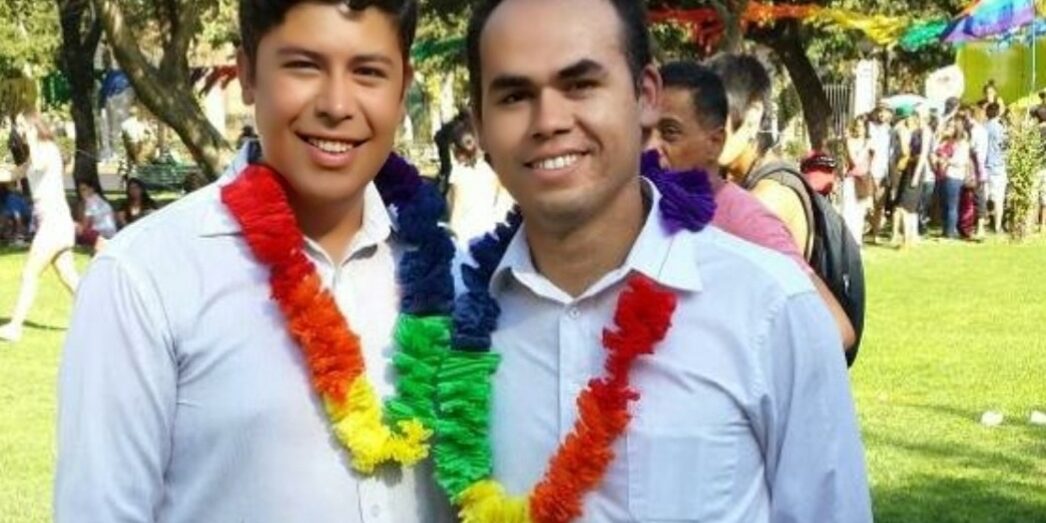
Cristián Muñoz and Luis Ceballos (the couple pictured at the beginning of this article) met in 2008 and have lived together since 2011 in the town of Tiltil, in the northern part of the Metropolitan Region. The Civil Union Agreement (AUC) was enacted in 2015, and they both decided to sign it shortly afterward, as it seemed like a way to protect each other. Cristián told Presentes that since the possibility of marriage equality being approved arose, he hasn't stopped making future plans with his partner. They are hopeful that they will finally be able to access the same rights, benefits, and social services as heterosexual couples.
“Besides reaffirming our love, we want to buy a house together and, if possible, adopt a child. We want to start a family for life, be the first gay couple to marry in Chile, and celebrate in style with our families,” he said.
“We will do everything necessary to ensure our daughter is legally recognized.”
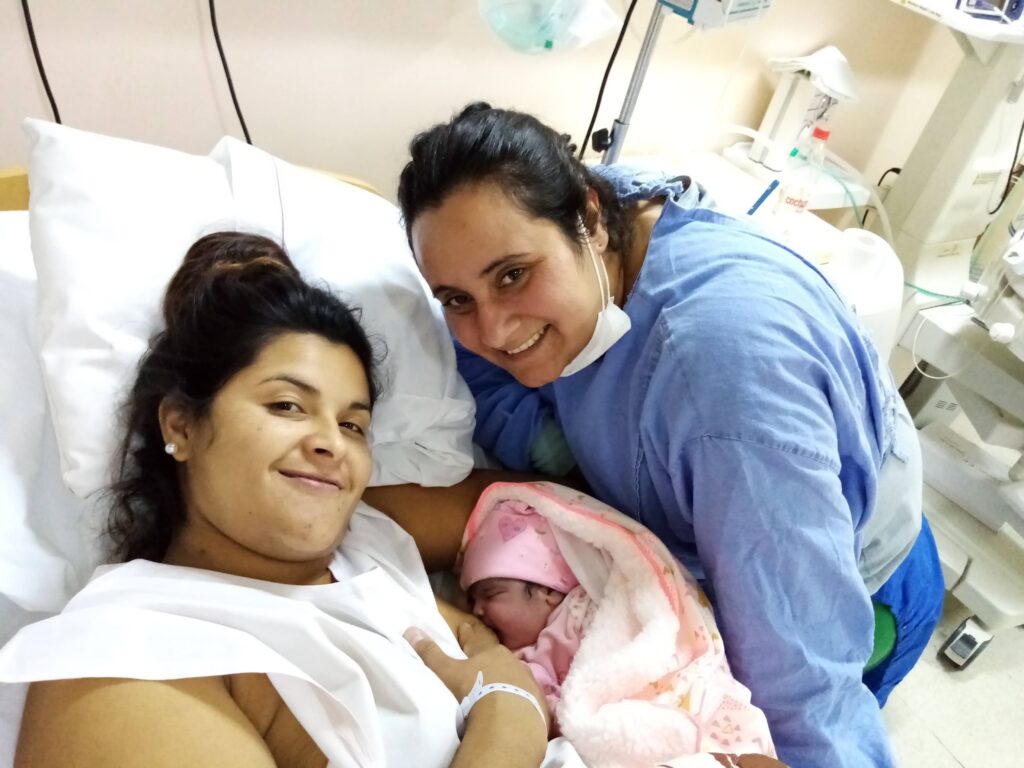
María Cecilia Jara and Marcela Osorio met when they started working together. Some time later they began dating, and today they live in Paine, about 40 kilometers from Santiago.
They have three daughters: two from previous relationships and one together. Marcela's daughter is 12 years old and María's is 4. Since they got together, they decided to try artificial insemination and had another daughter, who just turned one.
María acknowledges that being a mother is a daily challenge. This is especially true for a family like theirs, and particularly because Chile currently does not recognize the legal parent-child relationships within same-sex parent, lesbian-mother, or transparent families . For example, if two women enter into a civil union agreement and have children, only one of them can be legally recognized as the mother.
Despite that, she says that the experience of motherhood they have shared has been "very good," because they complement each other and have the same ideals of raising children: "We are a great team."
They want to get married as soon as same-sex marriage is legalized. But most importantly, they will do whatever it takes to ensure their youngest daughter is legally recognized as their own. They will celebrate, but in a small way: “We’ll just have a small gathering with family and friends who have supported us from the beginning, because when we started out, our families turned their backs on us.”
“We will celebrate the step this represents for our country.”
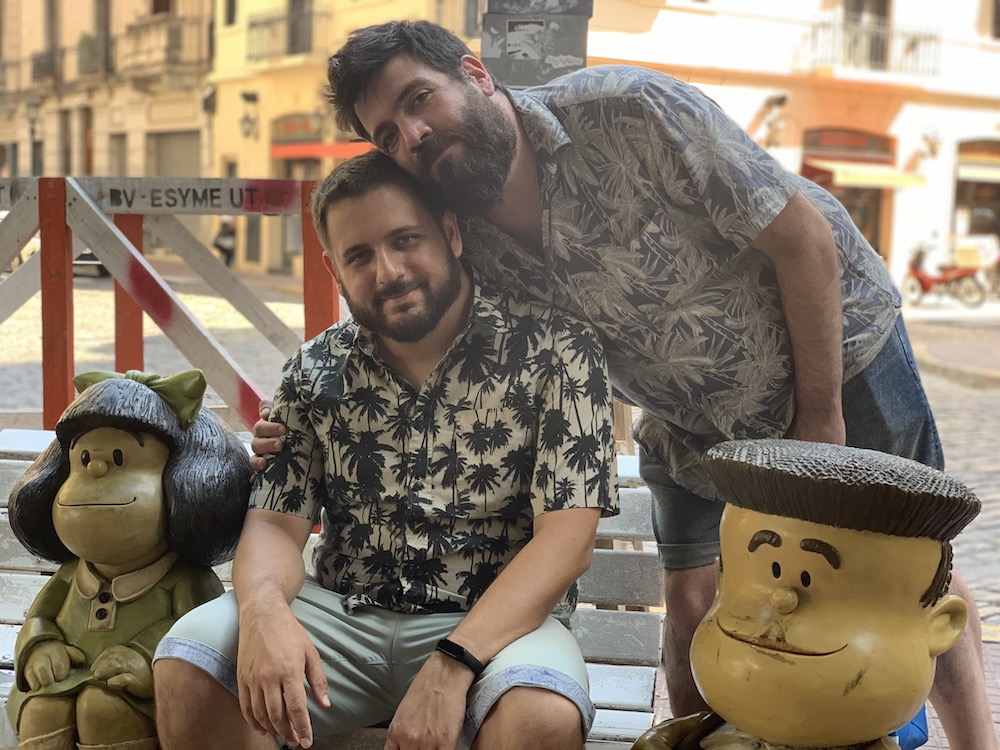
Rafael Olavarrieta and Carlos Fernández met in 2007 on a Chilean dating site. They have lived together in Santiago since 2018, but in 2020 they signed a civil union agreement. They have already begun making preparations to take the next step and celebrate their marriage when it becomes legal. “We envision a party with all our loved ones, ideally outdoors and with traditional wedding elements, but we also want it to be something more modern and fun,” he says.
Carlos says they will celebrate not only their love, but also what it means in terms of rights for everyone: “We will celebrate the step this represents for our country. The approval of the law is just that: one step among many more that must be taken so that all of us who are part of the LGBTIQA+ community are better off and feel included in society .”
“We want to take this step for all the colleagues who couldn't."

Nicole Rojas and Daniela Ossandón met through Instagram in 2019. After almost three years of relationship and a connection that Nicole defines as "magical", they will sign their Civil Union Agreement in October.
Before it was enacted, Nicole worked on the drafting team for this bill that now allows same-sex couples to marry. She recounts that when the pandemic hit, she and Daniela decided to take advantage of this legal framework and formalize their relationship. “It was something we longed for, but also a necessity, because if, for example, something happens to one of us, we won't have any decision-making power over the other. We thought about so many people hospitalized and so many losses, and it seemed like a responsible decision,” she says.
They didn't want it to be just a formality at the signing. And after so long without seeing family and friends, celebrating their union could be the perfect occasion for a reunion. So they hired wedding planners to help them organize everything.
“It will be a very atypical and symbolic ceremony. And while we know that this won't defeat the patriarchy, we do believe it's incredibly beautiful and valid to be able to experience and celebrate it. We know that we are a very privileged lesbian couple to be able to do this. From that privilege, we also want to take this step for all the sisters who couldn't ,” she says.
If same-sex marriage is legalized, people living under AUC will most likely have to sign a marriage ratification document, Nicole explains. They don't know how they'll handle it, because they believe this right should come with full parental rights . Although they aren't considering motherhood yet, they would like to adopt at some point and have the law recognize them as two mothers.
They haven't discussed whether they'll hold the party again once the bill is passed, though they haven't ruled it out. But they don't see it as a priority either: "Of course it's progress, but for the women's, bisexual, lesbian, and trans movement, this is like the 'last sip' of mate because our lives are in danger."
Debts
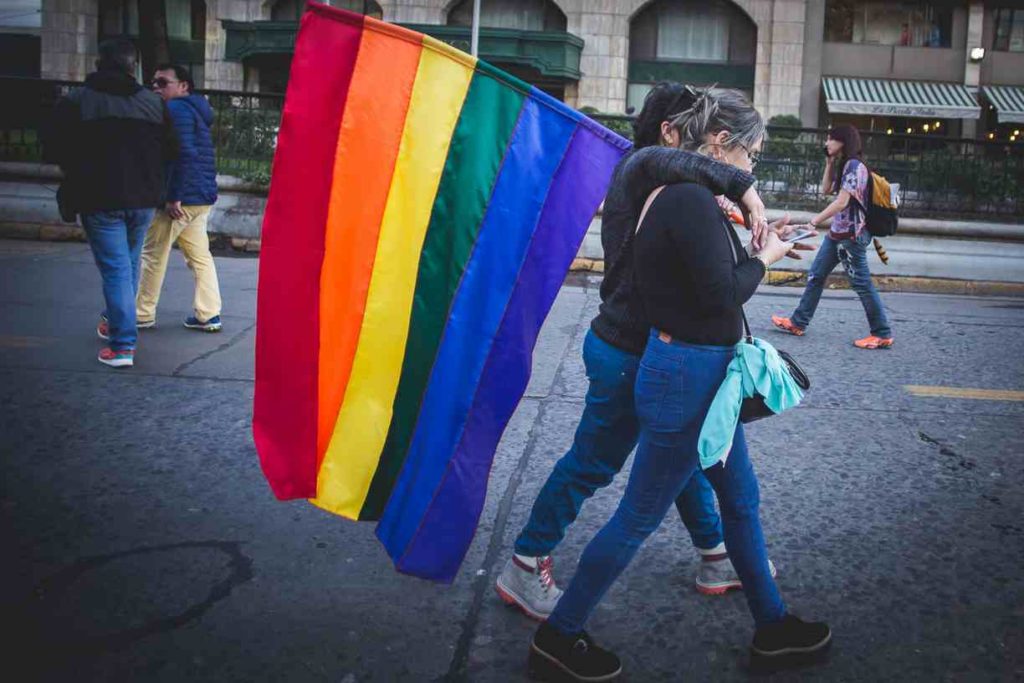
The advancement of marriage equality also presents a significant opportunity for the trans community. Since the approval of the Gender Identity Law (LIG) in the country in 2018, those who change their name and registered sex and are married must choose between their identity and family life, as the law requires the State to terminate the marriage, even if the couple does not wish to do so.
“For trans people, marriage equality would benefit those couples who are currently prevented from marrying, in the case of same-sex couples. But above all, it would benefit those who were already married and who, after legally changing their name and gender, had to divorce. Eliminating forced divorce so that trans people can access the Gender Identity Law would not only correct a discriminatory situation but also allow people to effectively access their rights and continue their marital relationship if they so wish, ” explains Constanza Valdés, a lawyer and trans-feminist activist, although she emphasizes that the bill currently under discussion does not address these issues . “Hopefully, they can be incorporated in the Chamber of Deputies, because it is very important,” she says.
Valdés considers it equally important not to leave out parental rights. And although the approved text includes same-sex adoption and parentage , Érika Montecinos, journalist and director of the Lesbian Group Breaking the Silence (RS), says there are still some gaps.
“While some grounds are included, others remain outside. For example, this bill doesn't consider all realities, especially those of lesbian-mother families . We believe that while this progress is necessary and the bonds of couples need to be recognized, it's also necessary to recognize all the realities of relationships that develop in the different family structures existing in this country, such as blended families, which are those where there are children from another relationship, and when they join with a person of the same sex, they often also want recognition, as long as there isn't another type of recognition or established paternity,” Montecinos explains.
In parallel, and to address these shortcomings, RS is promoting a bill to recognize the parental rights of same-sex couples , in conjunction with the organizations Familia es Familia and Corporación Humanas. Unlike marriage equality, this initiative is in its initial stages of discussion. Montecinos says both are very important, but acknowledges the symbolism of the eventual approval of marriage equality: “I believe that moving forward in this direction is a major blow to all the conservatism associated with marriage, such a patriarchal institution. Changing it so that all people have access, regardless of their type of relationship and their sexual orientation, is very symbolic and powerful .”
We are present
We are committed to journalism that delves into the territories and conducts thorough investigations, combined with new technologies and narrative formats. We want the protagonists, their stories, and their struggles to be present.
SUPPORT US

FOLLOW US
Related notes


We are present
This and other stories are not usually on the media agenda. Together we can bring them to light.