

The path of non-binary people for legal document change in Argentina
Presentes spoke with various non-binary people who have been advocating for this change for years to learn about their experiences.


Share

Cover photo: Carla Policella
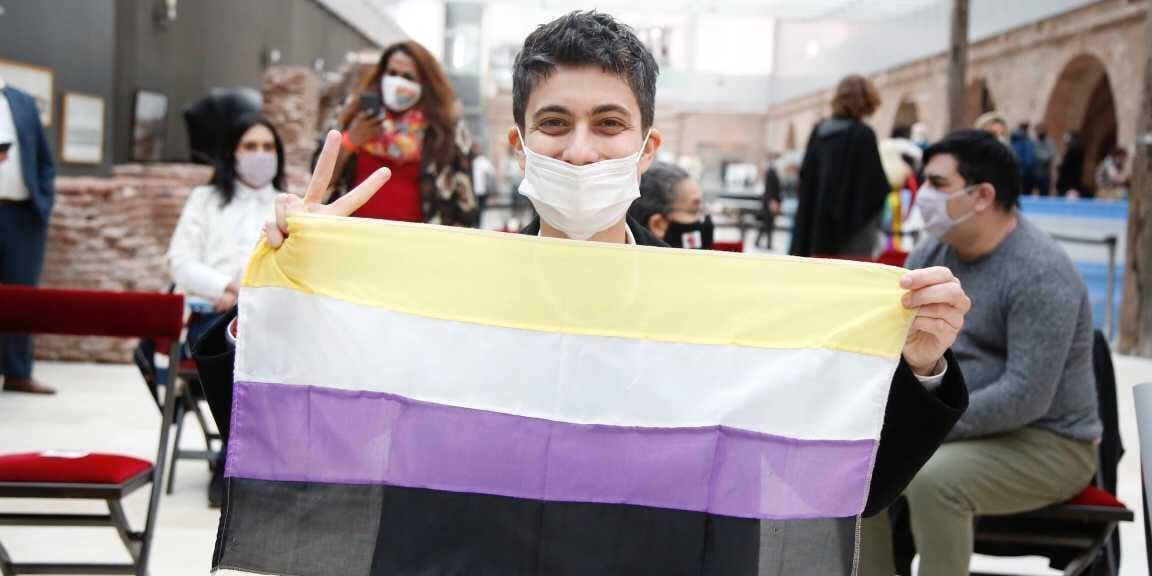
Almost a month after the publication by the President of the Nation, Alberto Fernández, of Decree No. 476/21 which establishes the incorporation of the "X" in the National Identity Document (DNI) and the passport to move away from the binary female/male scheme in Argentina, Presentes spoke with different non-binary people who have been campaigning for this change for years to learn about their experiences when carrying out the DNI change procedure: from joy and surprise, to frustration and waiting.
Shanick Lucián Sosa Battisti, 27, from Ushuaia, Tierra del Fuego, achieved recognition of his non-binary identity on his birth certificate and that of his child following a favorable ruling by Judge Alejandro Ferretto, in charge of the Family and Minors Court No. 1 of the Southern Judicial District of Ushuaia, in December 2019. However, when processing his ID card, at that time he was offered the option to change the registered name, but in the "sex" field the options continued to be F (female) and M (male).
The fight before the DNU
“When I read Gero Caro’s first case in Mendoza, I said, ‘If she could do it, so can I.’ I started talking to people in Argentina and around her who felt like me, and that’s how I learned the term ‘non-binary.’” Through a “great friend,” Shanick Lucián approached Red Diversa Positiva – Tierra del Fuego, a non-governmental organization that works for the rights of the trans community at the national level, and from there, along with lawyer Sol Verón and Erika Moreno, the NGO’s coordinator, they supported her legal process.
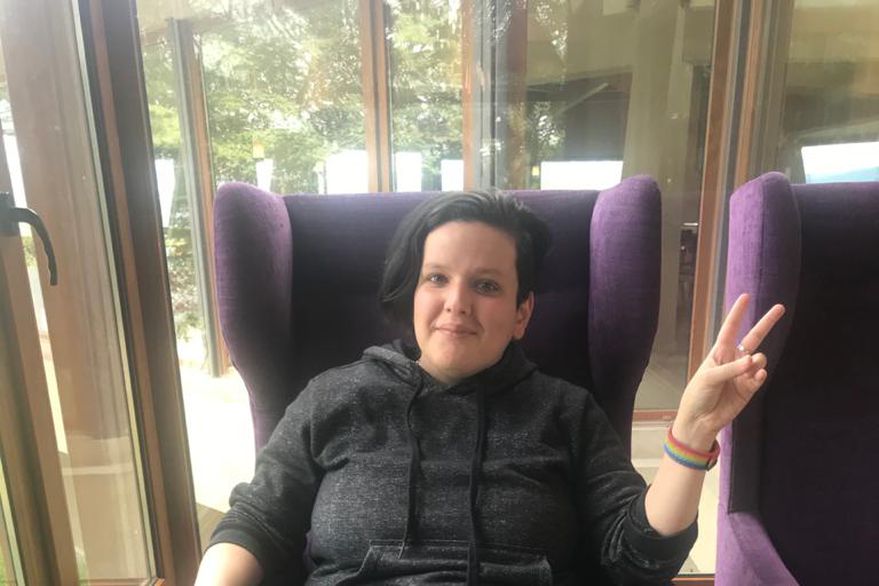
"On Thursday, July 15th, I received a call from Erika in which she told me, 'You might get the document,' but she didn't know when. She called me again that night and said, 'We might travel to Buenos Aires on Tuesday or Wednesday because the President of the Nation is going to give you the document.' I was in shock, I'm still in shock. I'm afraid they'll say to me, 'Hey, this was a joke, it wasn't real, give me the document,'" she said, laughing.
"Our country is at the forefront"
SaSa Testa (35) holds a master's degree in Gender Studies and Policies. Born in Buenos Aires, she is an activist and author of the book " I Am Sabrina, I Am Santiago ." In an interview with Presentes, she stated her intention to begin the process of changing her national identity document (DNI) and highlighted the gender policies implemented by the current government, which she believes "is demonstrating that it is expanding rights for its citizens."
“I believe the decree guarantees the human right to identity. A right that was already guaranteed in 2012 with the enactment of the Gender Identity Law, whose Article 2 defines identity as an internal and personal experience of gender. Furthermore, it puts our country at the forefront because we are the first country in Latin America to guarantee this right, adhering to current international law because it recognizes that these documents are travel documents,” Testa stated.
"The processes of changing property registrations are violent."
Tegan is 26 years old and describes herself as brown-skinned, a Poeti(se), a human rights activist in Todes with a DNI (Spanish National Identity Document), and lives in the city of Casilda, Santa Fe province. She requested a change to her birth certificate and DNI on August 5, 2019, but is still waiting for a DNI that registers her self-perceived gender and name.
For her, her experience on this path can be summed up in a single word: "Wait." She adds, "The legal name and gender change processes are incredibly violent; institutional violence, misinformation, and so on, become part of our daily lives. Many institutions have called me to apologize; I don't want their forgiveness, I want them to get trained. I want to be treated with dignity, for my rights to be respected, I want to live free from violence."
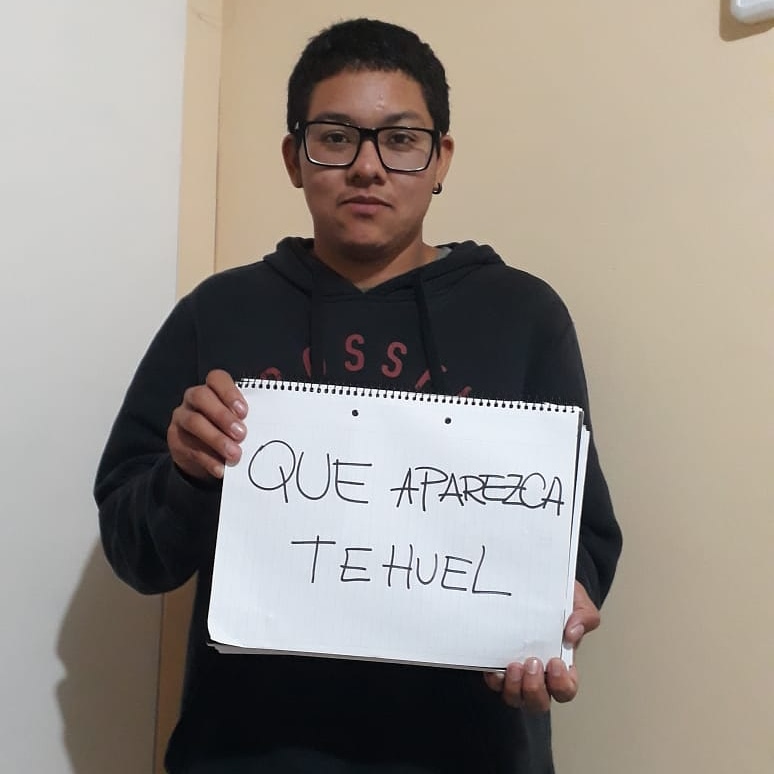
Regarding the "X" field on the National Identity Document (DNI) implemented by Decree No. 476/21, Tegan argues that "a third category, decided by the State, erases our diversity and the multiple experiences of those of us who identify outside the male or female binary by placing everyone under the single designation X." Furthermore, in this regard, she believes that "not only was it not developed in collaboration with the social organizations that have been fighting for our rights, but we were not listened to. We, from the 'Everyone with a DNI' movement, proposed an open and optional field to the State to ensure the effective implementation of the Gender Identity Law, and the State did not listen to us." Despite this, she sends "a hug to those who are currently choosing to access the only option the State allows."
"The change of ID card was bittersweet news."
“I welcome this measure, even though it seems to contribute very little to the change that we, as LGBTQ+ people, need to be able to live,” says Juana Giusepponi, 31, from Villa Mercedes, San Luis. Juana works as a graphic designer, among other things, and is part of the Villa Mercedes LGBTQ+ Dissident Collective, although they haven't been organized for a year.
He tells Presentes that "since I was a teenager, I always said I was neither man nor woman, that I was a faggot, a queer, or a queer person" because in his city and "under these circumstances, being a faggot was always more than just a sexual orientation, given that a local identity of what it means to be a faggot is generated." "When people started talking about non-binary people, I also felt identified with that because being a faggot is being non-binary, it's being outside the binary, it's the otherness," he adds.
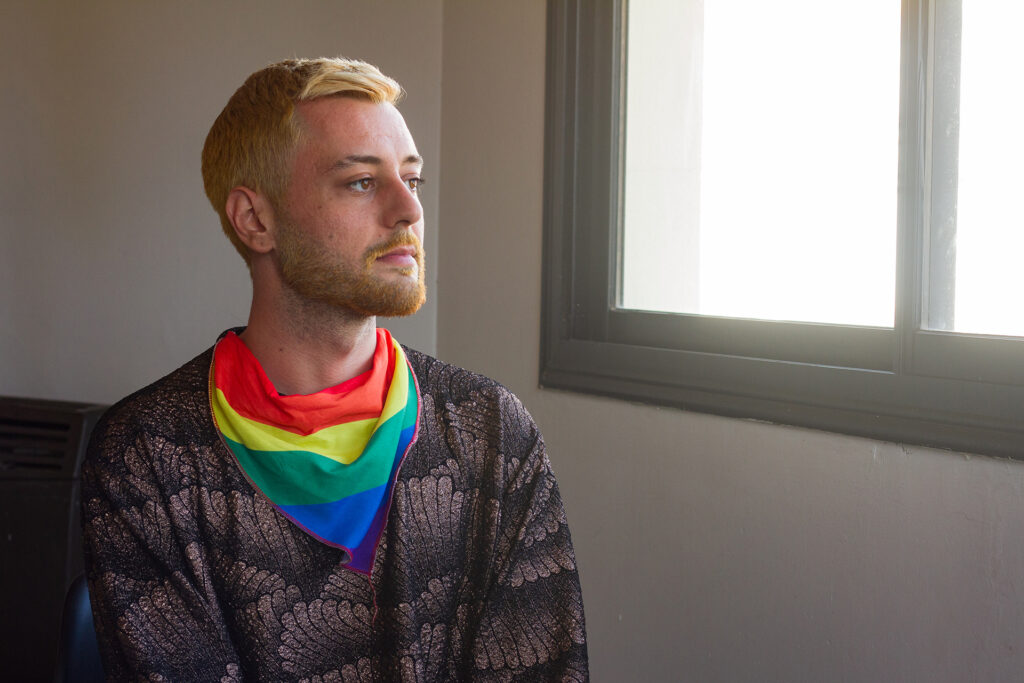
Upon receiving the news of the possibility of changing her ID card, she felt a bittersweet sensation. "It's great that the State is recognizing one of our demands as dissidents, but there's the question of whether an 'X' is enough. While it represents me, it doesn't represent many others, and we need to listen to them too," she says.
Juana began the process of changing her national identity card (DNI), although with some complications, mainly due to a lack of information at the office she visited. There, she was informed that she was the first person in her city to start the process. Regarding the "Duty to Inform" document, which must be signed when starting the process and informs about potential complications abroad, she believes that "taking that risk knowing that one will likely be denied from the outset is a political act" because "it highlights global inequalities."
"Society teaches"
Agustín López Núñez almost ignored news that was about to change his life. "I had read something about an announcement regarding ID cards, but I hadn't really paid attention and I didn't know that something was going to happen that would change my life," says the announcer, comedian, singer, and master of ceremonies for the Buenos Aires City Legislature.
For him, "society teaches, or at least taught us at that time, that everything is in binary terms." "If I didn't identify with the ideal of a man, it was because I wanted to be a woman; there wasn't much more to it than that. Years later, I understood that not everything in life is binary, and gender even less so," he pointed out.

He recently began the process of changing his national identity document (DNI) at the Villa Udaondo branch of the Provincial Registry of Persons in Ituzaingó, Buenos Aires Province, where he was received "spectacularly well by the women at the civil registry, led by their supervisor, Dr. Patricia Sarti, who was very supportive." Regarding this experience, he says, "It's very emotional. I decided to have it reflected on my document because it's a statement of intent and a political act to show that the State takes us into account."
If you want to change your ID card
For inquiries regarding the process of changing your National Identity Document (DNI), you can call 0800-999-9364 (Ministry of the Interior and Transport) or write to the Renaper WhatsApp lines: (+5411) 6436 9853, (+5411) 2700 2749, and (+5411) 2654 1551. You can also write to consultas@renaper.gob.ar .
In addition, children and adolescents who wish to obtain information about legal support provided by the Public Guardian's Office of the City of Buenos Aires (MPT) in the process of changing their registered identity can contact the Whatsapp number 15 7037 7037 or 0800 12 27376 every day from 8 a.m. to 8 p.m.
We are present
We are committed to journalism that delves into the territories and conducts thorough investigations, combined with new technologies and narrative formats. We want the protagonists, their stories, and their struggles to be present.
SUPPORT US

FOLLOW US
Related notes
We are present
This and other stories are not usually on the media agenda. Together we can bring them to light.