

Although Veracruz does not recognize gender identity, more and more trans people are achieving it through legal means.
While Veracruz continues to ignore proposals for a gender identity law, the long struggle of trans people has resulted in more and more of them achieving recognition of their identity, sometimes without needing legal protection.


Share

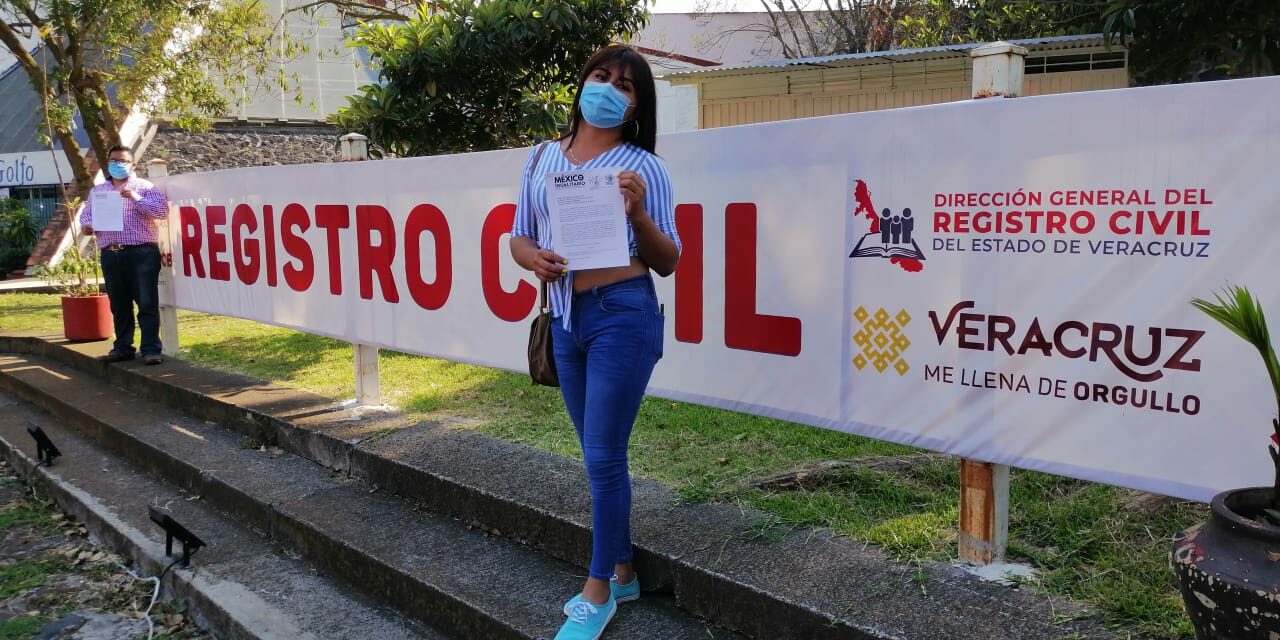
Every time Grecia waited for a doctor's appointment for her asthma, the nurse on duty would shout out the name she was given at birth, the one that didn't identify her. Everyone present would turn to look at her. Her wish to overcome this problem, and many others she encountered along the way, was to change her gender identity on her birth certificate. The state of Veracruz, where she is from, does not allow it.
Grecia, like many others, had to resort to legal action. She did so through an amparo, the legal mechanism for defending oneself against violations by authorities or the judicial system. With the help of some friends, she found lawyers who had already handled these types of cases, including those that were highly controversial when reaching the Supreme Court of Justice of the Nation (Mexico's highest court).
On April 26, 2021, Grecia obtained her new birth certificate. “There are many trans people. If those who live in the port and have more friends couldn't get their certificates, imagine me, coming from one of the most remote municipalities… I thought I would always have the name I was given as a child,” said Grecia Hernández Valenzuela, a week after completing the process.
Carla Regina: towards a historic ruling
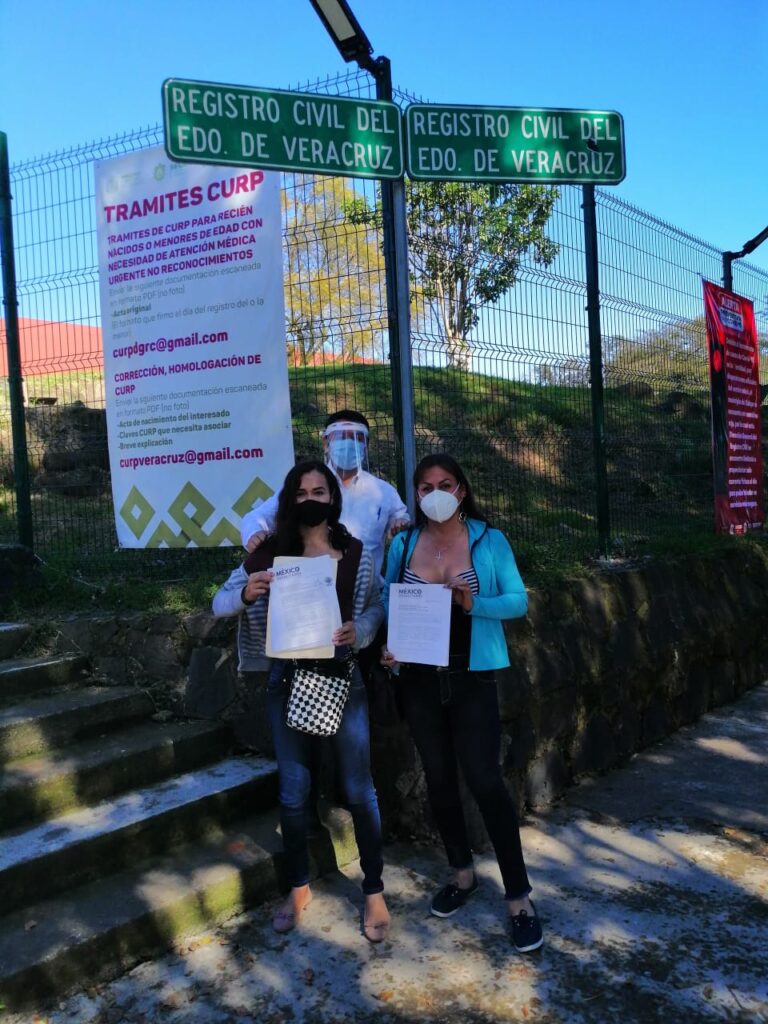
Carla Regina Lara Molina was the first transgender person to file an injunction to compel the Veracruz government to recognize her right to change her birth certificate. Her case was part of a university project by a group of lawyers who pursued the legal process.
In early 2015, after years of searching for a way to have her identity recognized, lawyers contacted her and warned her: the process would be long.
“I was a guinea pig; we didn’t know where we were going or what was going to happen. There were so many twists and turns; it was something unprecedented. They ordered so many things that shouldn’t have been done: they sent me to have blood drawn, they sent me to a psychologist, they ordered a test to check my hormone levels—an endless stream of nonsense,” Carla recounts.
One of the problems I faced with the Civil Registry official, the Federal Judge, the Magistrates, and other offices through which my paperwork passed, is that the Civil Code of the State of Veracruz allows for changes to a birth certificate through a civil lawsuit . However, this does not replace the original document, does not protect it, and is also a lengthy procedure.

“It was very important for me to be recognized”
“What I had in mind was to be recognized in my country. Because there are so many things there, things like wanting to buy a car, wanting to acquire property, even wanting to get married. For me, it was very important to be recognized,” says Carla.
On October 17, 2018, the Supreme Court of Justice of the Nation recognized Carla's right to change her birth certificate. It also ruled that these changes should be made through an administrative procedure, as a civil trial would violate human rights in this context.
“Gender identity is a constitutive and constituent element of a person’s identity, so its recognition by the State is of vital importance to guarantee the full enjoyment of the human rights of trans people , including protection against violence, torture, ill-treatment, and the rights to health, education, employment, housing, social security, and freedom of expression and association,” states the summary of the SCJN resolution .
The ruling was historic: for the first time, Mexico's highest court ruled on the matter. For Carla, the process took more than three years, but it set a precedent that allows people like Grecia to obtain their new document in about six months.
“It’s wonderful that so many other girls can do it this way. It’s very important for your projects, for your businesses, it’s very important for self-perception. It’s very important to have the document and be able to say, ‘I am this person,’” says Carla.
Years go by, but the laws don't.
Starting in 2018, a wave of legal challenges began. It started with people who went to the offices to complete the process and, upon being rejected, had to resort to legal action. Although we don't know exactly how many people have changed their gender marker on their birth certificate, since the head of the Civil Registry, Arturo Dominguez, refused to be interviewed.
Carla and Grecia said they know many women who have gone through this process. They know that many already have their new birth certificates and celebrated their right to identity. But the laws in Veracruz haven't changed, despite two proposed reforms (2018 and 2019 ) to make the gender identity change process an administrative matter. Both proposals were shelved; in other words, there was no progress on them.
Gender identity in Mexico
The first place to have a law guaranteeing the right to gender identity was Mexico City in 2008 through a judicial procedure, and in 2015 via an administrative process. More states have gradually followed suit ; currently, 16 out of 32 states guarantee this right, although only two— and Oaxaca— the process for minors under 18

Three possible paths in the meantime
Given the lack of laws guaranteeing due process, attorney Irving Bonilla points out that there are three possible procedures: a civil trial (very lengthy), a human rights protection lawsuit before the Constitutional Chamber of the State Judiciary (which is “tortuous”), and an amparo (a constitutional remedy). “This is the one most frequently used. Some officials expedite these cases because they consider them mere formalities, but others treat them with the standard procedures,” he stated.
To file for legal protection, those seeking this process turn to organizations or lawyers who have handled other cases. Irving Bonilla followed Carla's case and has now assisted many others.
That's why, said Mercurios Espinoza del Ángel—who represents the Equal Mexico Association in Tamaulipas and Veracruz— the procedures in the northern part of the state have already begun without the need for legal injunctions . “The point was reached where the General Directorate of the Civil Registry in Veracruz opted to accept the procedures without requiring an injunction. This happened a few months ago because they realized that it was a waste of time for both them and the people of Veracruz to get bogged down in lawsuits that were ultimately going to be lost,” he stated.
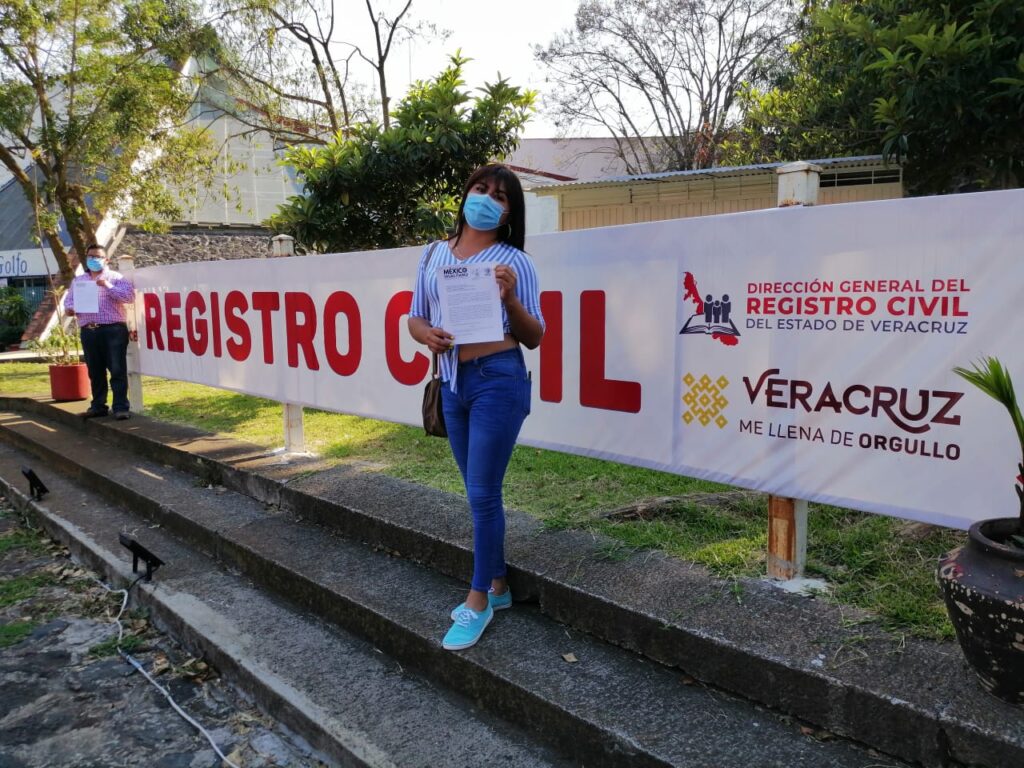
However, in other areas of the state, Civil Registry Officials said they do not have that instruction, so other means are required.
“ Identity is a basic human right ; they can’t keep suppressing that right. I don’t see any problem or harm to others if you meet the person you are,” says Carla Regina Lara Martinez.
Irving, Mercurios, Carla, and Grecia agree: there is a legal instrument that allows us to demonstrate that the authorities in Veracruz are denying the rights of trans people, so it is necessary to modify the laws so that this stops happening .
We are present
We are committed to journalism that delves into the territories and conducts thorough investigations, combined with new technologies and narrative formats. We want the protagonists, their stories, and their struggles to be present.
SUPPORT US

FOLLOW US
Related notes



We are present
This and other stories are not usually on the media agenda. Together we can bring them to light.