

How to change your ID card if you are a non-binary person
It is necessary to first rectify the birth certificate at any Civil Registry office in the country.


Share

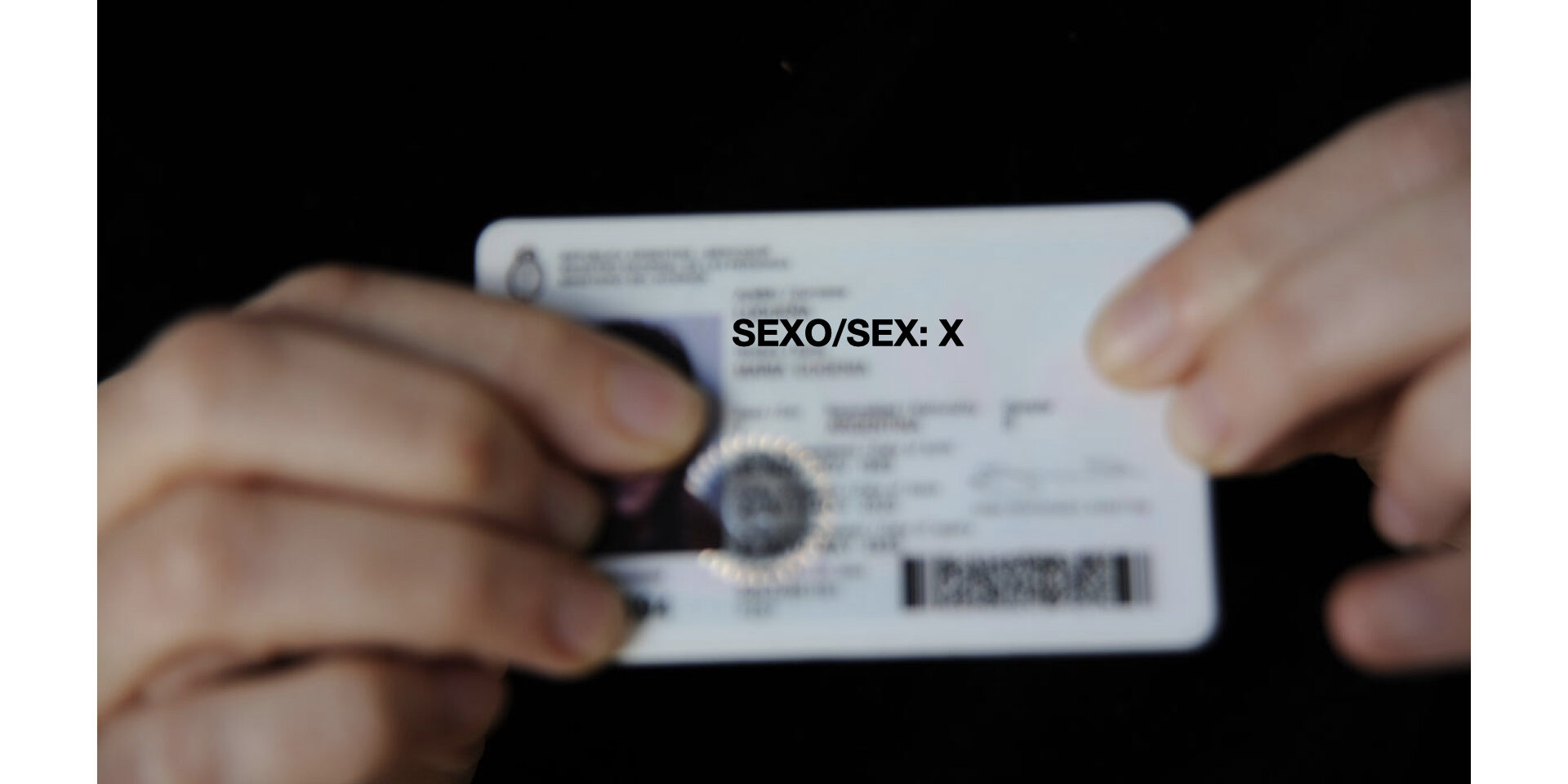
The National Registry of Persons (Renaper) has published instructions on how non-binary individuals can change their National Identity Document (DNI) to select "X" in the "sex" field instead of "F" (female) or "M" (male) . "This measure will guarantee the right to gender identity for people who do not identify as female or male," Renaper stated.
Firstly, those who can access this option are, according to the agency, "all those people who self-identify as a gender other than male or female, and who carry out (or have previously carried out) their registration rectification and process the new DNI."
To do this, you must first correct your birth certificate at any Civil Registry office in the country . Then you can apply for a new copy of your National Identity Document (DNI) at any Renaper office, a Federal Network of Civil Registries office, or any Argentine consulate abroad. For this, you must bring your corrected birth certificate and your current DNI.
If the procedure is carried out at a Renaper Documentation Center, an appointment must be made beforehand; while if it is to be carried out at a Civil Registry or at an Argentine consulate abroad, it is necessary to contact the office of the place beforehand to find out what the procedure is.
As for foreign nationals residing in Argentina, they will be able to process it through the National Directorate of Migration.
Furthermore, those wishing to make the registration change must also sign the "Duty to Inform" document, which aims to establish that they are aware "of the possibility of having their entry, stay and/or transit status restricted in those countries that do not recognize other sex categories than binary ones," Renaper reports, in accordance with Article No. 9 of Decree 476/2021.
Therefore, it is recommended that before traveling to another country, travelers seek information about any restrictions that may be imposed by the authorities of other countries regarding entry, stay, and/or transit through their territory. This can be done by consulting the foreign consular offices listed by the Ministry of Foreign Affairs, International Trade and Worship ( https://www.cancilleria.gob.ar/representaciones-extranjeras ).
This policy was established by Decree 476/2021 , within the framework of the Gender Identity Law (No. 26,743) signed by the President of the Nation, Alberto Fernández; the Chief of Staff, Santiago Andrés Cafiero; the Minister of Women, Gender and Diversity, Elizabeth Gómez Alcorta; and the Minister of the Interior, Eduardo Enrique de Pedro.
As a result of this public policy, Argentina became the first country in Latin America to recognize non-binary identities, based on the possibility of indicating an option other than "F" and "M" in the "sex" field of the document: the "X".
The Decree details that the nomenclature “X” in the field “sex” includes the meanings “non-binary, indeterminate, unspecified, undefined, uninformed, self-perceived, not recorded; or other meaning with which the person who does not feel included in the male/female binomial could identify.”
Renaper explained that this nomenclature was chosen because "it is accepted in international standards for travel documents, and in international conventions to which the Argentine Republic is a signatory."
For inquiries, you can call 0800-999-9364 (Ministry of the Interior and Transport) or write to the Renaper WhatsApp lines: (+5411) 6436 9853, (+5411) 2700 2749, and (+5411) 2654 1551. You can also write to consultas@renaper.gob.ar.
We are present
We are committed to journalism that delves into the territories and conducts thorough investigations, combined with new technologies and narrative formats. We want the protagonists, their stories, and their struggles to be present.
SUPPORT US

FOLLOW US
Related notes

We are present
This and other stories are not usually on the media agenda. Together we can bring them to light.