

The Chilean Senate gave preliminary approval to the equal marriage law.
The Chilean Senate gave preliminary approval to the bill legalizing same-sex marriage in the country, with 29 votes in favor, 14 against and no abstentions, so it advances to the Chamber of Deputies.
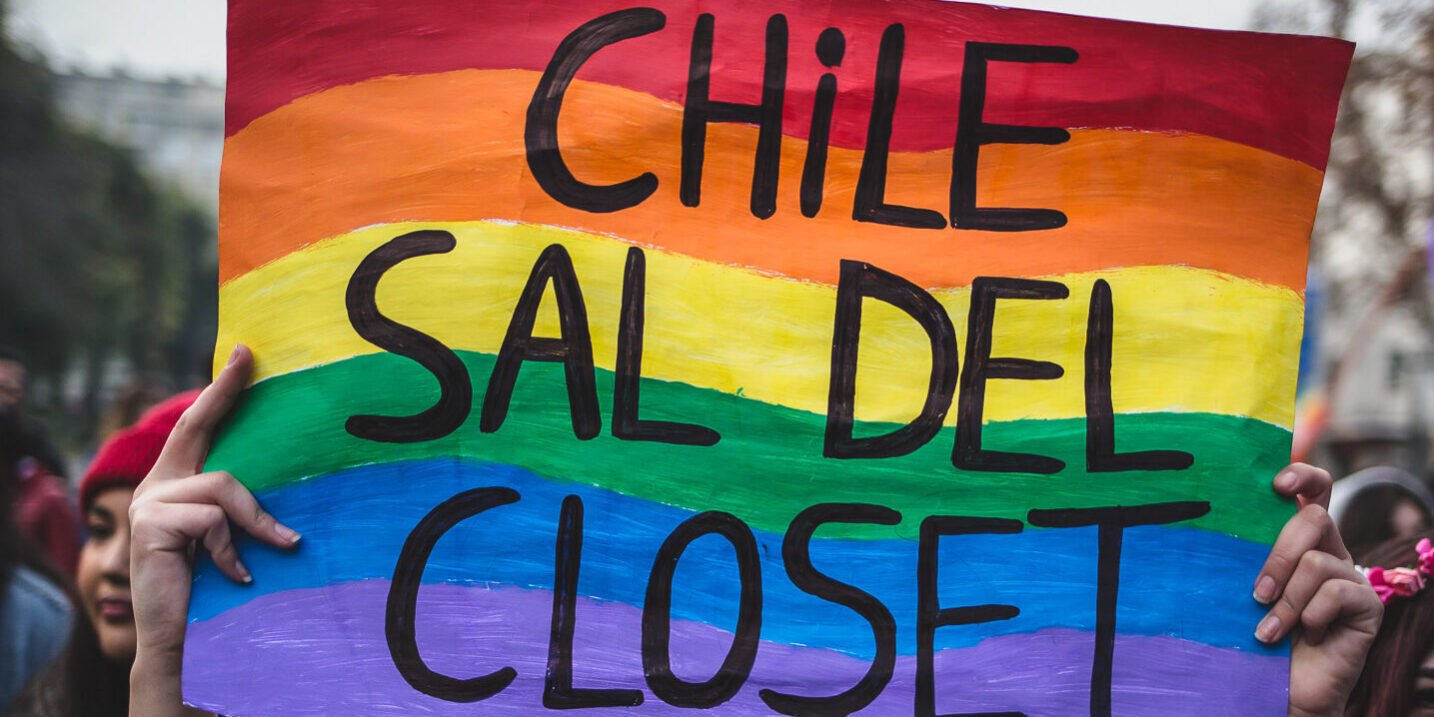


Share

The Chilean Senate gave preliminary approval to the bill legalizing same-sex marriage in the country, with 29 votes in favor, 14 against and no abstentions, so it advances to the Chamber of Deputies and is expected to be debated next week given that the bill has been marked as "urgent" by the government.
“This is a civilizational advance, it is a fundamental change in the consciousness of Chileans,” said Rolando Jiménez, president of the Movement for Homosexual Integration and Liberation (Movilh), from the Senate headquarters along with other activists.
The law was drafted jointly by the administration of former President Michelle Bachelet, the Inter-American Commission on Human Rights, and Movilh, but it was slow to reach the chambers, and with Sebastián Piñera's arrival to the presidency, the project stalled.
However, surprisingly, on June 2nd, Piñera said in his last State of the Nation Address to Congress that "the time for marriage equality has arrived in the country," thus initiating the debate on the bill.
Until now, in Chile same-sex couples could sign the Civil Union Agreement, which gave them property protection and civil rights.
The current bill, approved today by the Senate, "establishes that marriage is a solemn contract by which two people unite actually and indissolubly, and for life, in order to live together, to procreate, and to help each other," according to the text of the bill, published by the Senate on its website.
“Furthermore, it states that a person’s parents are those with respect to whom the parentage relationship has been determined, that is, their mother and father, their two mothers, or their two fathers,” it continues.
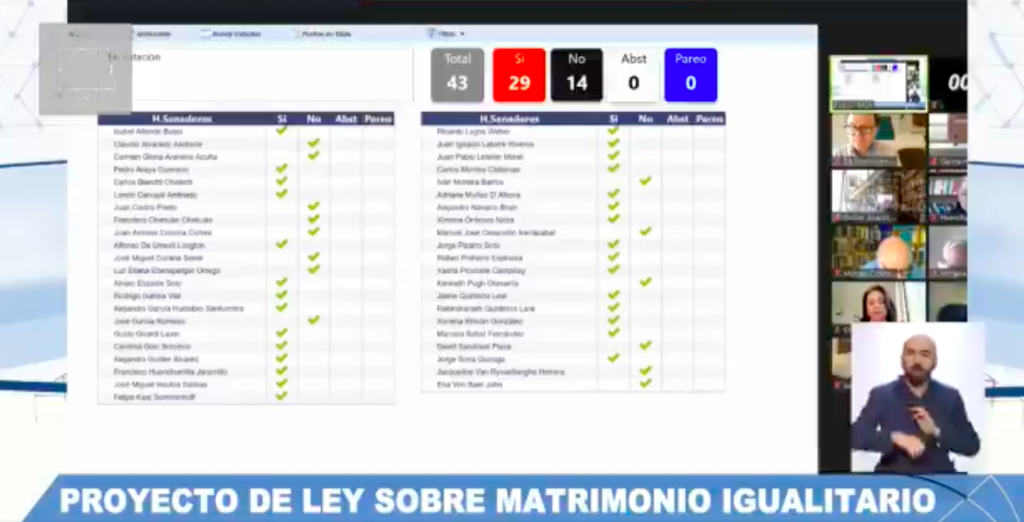
During the debate, Senator Jorge Pizarro Soto stated that "this bill seeks to end prejudice and discrimination. We want everyone to be able to have fulfilling relationships, regardless of their sexual orientation." He also thanked "those who have borne witness for years, individuals, and organizations dedicated to advancing the eradication of hateful discrimination and demanding respect and equality."
For her part, Senator Loreto Carvajal, representing Ñuble and Biobio, stated: “We must understand not only that love has no gender, but also that the country's structures must guarantee equality.”
“With this project we are taking a decisive step that makes us more tolerant, more humane, more equal and freer,” said Senator Carlos Montes of Santiago Sur.
Meanwhile, Ximena Rincón, senator for Maule, argued: “I approve this initiative for myself, for my children, for the new Chile that we owe to future generations, and so that finally in our country, discrimination ceases to be an issue and we recognize that love is love.”
Finally, Isabela Amor, executive director of Fundación Iguales, an organization that works for the “full inclusion of sexual and gender diversity in Chile,” concluded: “This is a project that not only makes the sexual and gender diversity community proud, it makes us all proud.”
We are present
We are committed to journalism that delves into the territories and conducts thorough investigations, combined with new technologies and narrative formats. We want the protagonists, their stories, and their struggles to be present.
SUPPORT US

FOLLOW US
Related notes



We are present
This and other stories are not usually on the media agenda. Together we can bring them to light.