

Argentina recognizes non-binary identities: you can choose X on your ID card
By decree, the National Registry of Persons of Argentina must adapt the National Identity Documents and Passports by incorporating the X to move away from the binary scheme of "Female" and "Male".


Share

[UPDATED NEWS]
President Alberto Fernández issued a decree mandating that Argentina's National Registry of Persons adapt the characteristics and nomenclature of National Identity Documents and Passports by incorporating an "X" option to move beyond the binary "female" and "male" system, in order to respect the gender identities experienced by individuals. With this measure, the country becomes the first in Latin America to recognize identities outside the binary and offer another option for those who do not identify as male or female.
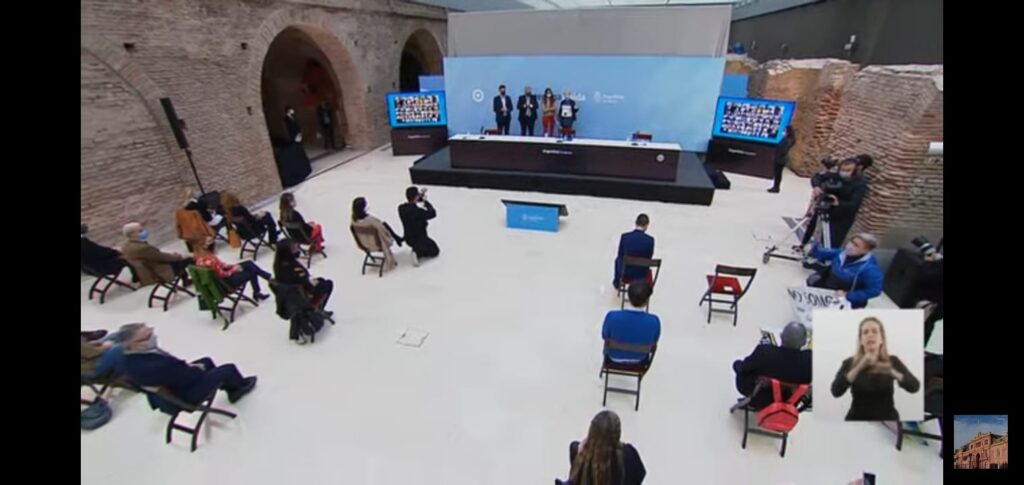
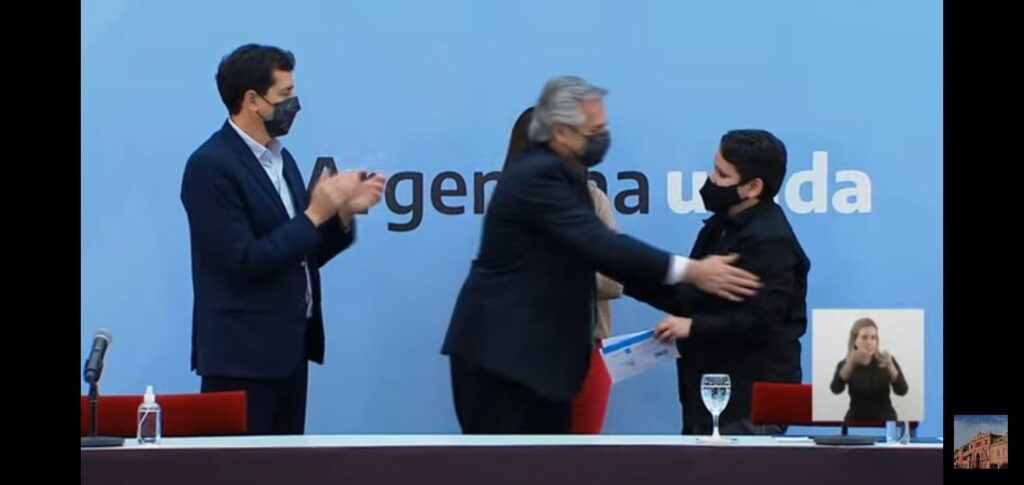
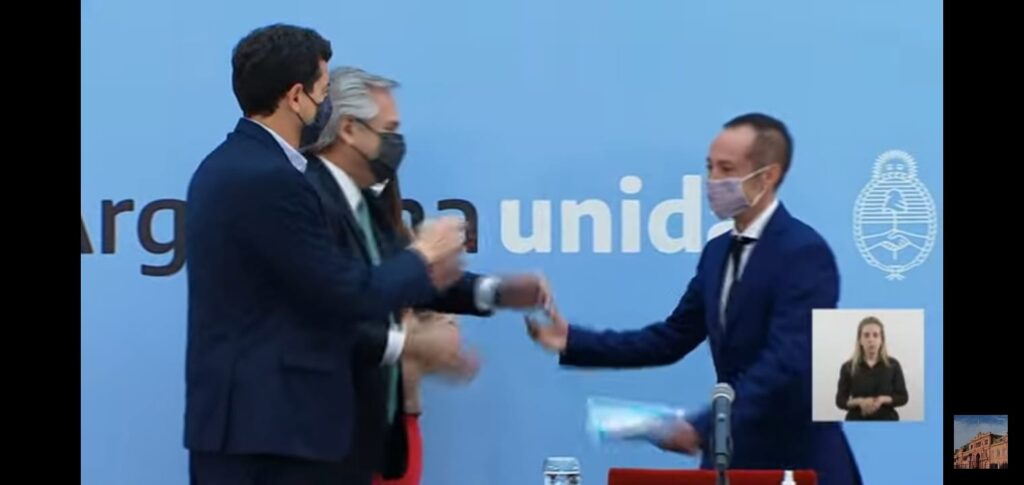
The measure was announced this afternoon at an event in the Casa Rosada, where the President presented the first three documents to non-binary people: Gerónimo Carolina González , Shanik Lucian Sosa Battisti and Valentine Machado.
Presidential Decree No. 476/21 establishes that in the field referring to “sex,” the options to choose from may be “F” –Female–, “M” –Male–, or “X.” The “X” “will include the following meanings: non-binary, indeterminate, unspecified, undefined, uninformed, self-perceived, not recorded; or any other meaning with which a person who does not feel included in the male/female binary may identify,” the text of the decree states.
What the decree says
Article 2 of the decree states: “It is determined that the nomenclatures to be used in the National Identity Documents and in the Ordinary Passports for Argentinians that may be recorded in the National Identity Document, as well as in the Argentine Electronic Passport, in the area reserved for “sex”, and in accordance with ICAO Document No. 9303, the nomenclatures “F”, “M” or “X”, thus leaving the scheme of binary possibilities that existed prior to the issuance of this measure.”.
Among the main arguments put forward in the text of the decree is "compliance with Law No. 26,743 on Gender Identity," enacted in Argentina in 2012, and international agreements signed by the country. "This measure is issued in order to comply with the provisions of Law No. 26,743 and facilitate the registration of the non-binary 'sex' designation in the National Identity Document, and to respect the right to identity and identification in accordance with the terms of the aforementioned law and the International Treaties to which the ARGENTINE REPUBLIC has adhered," the text of the decree states.
Including gender identities outside the binary system is a demand that activists have been advocating for several years. “Non-binary people like myself have long demanded that the Argentine State issue documents that reflect our gender identity. Today, some of us are undocumented or have ID cards with a name and gender that we don't identify with,” said Fer Bugarin, from 100% Diversity and Rights in the province of Chubut, in a statement released by the organization. 100% Diversity and Rights advocated for the recognition of non-binary gender identities on ID cards before the National Registry of Persons (RENAPER). In 2021, they participated in a consultation process with this agency of the Ministry of the Interior and celebrated the measure.
“Argentina is the first country in the region to recognize identities beyond the binary categories of gender in its registration and identification systems. The most recent national precedent is the Joint Resolution of ANSES and AFIP, which established the generic and non-binary nature of the prefixes (20 and 27) in CUIL and CUIT numbers and their random assignment,” the association stated. It further explained that internationally, gender identities outside the male/female binary are already recognized by Germany, Canada, India, and the United States, among other countries.
The criticism and the president's response
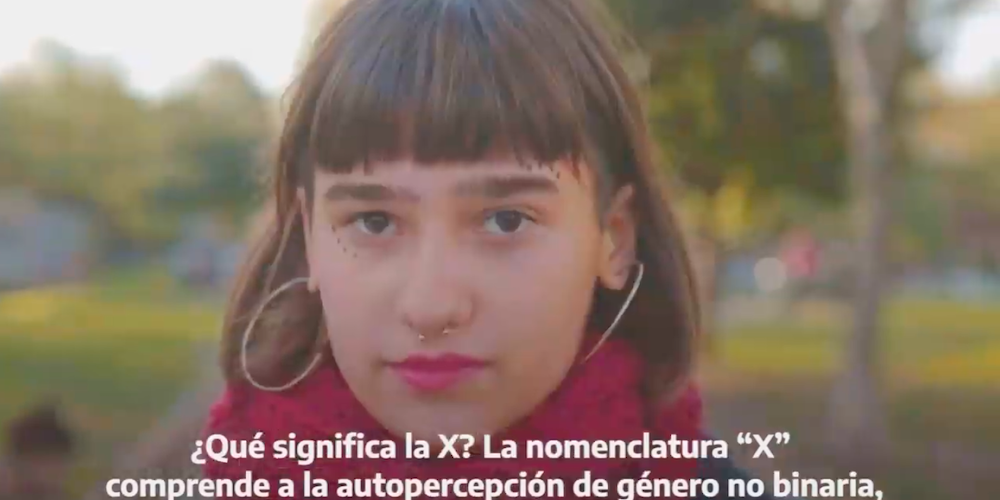
Why the X? The X category for the "sex" field is accepted in international standards for travel documents and in international conventions to which the Argentine Republic is a signatory. This was also explained in the video that opened the presidential ceremony where the documents were distributed.
However, the measure hasn't pleased everyone: some activists, upon learning of it, expressed that they don't feel represented by the letter X. They are demanding other categories that make their identities visible. It remains to be seen how their demands will be addressed.
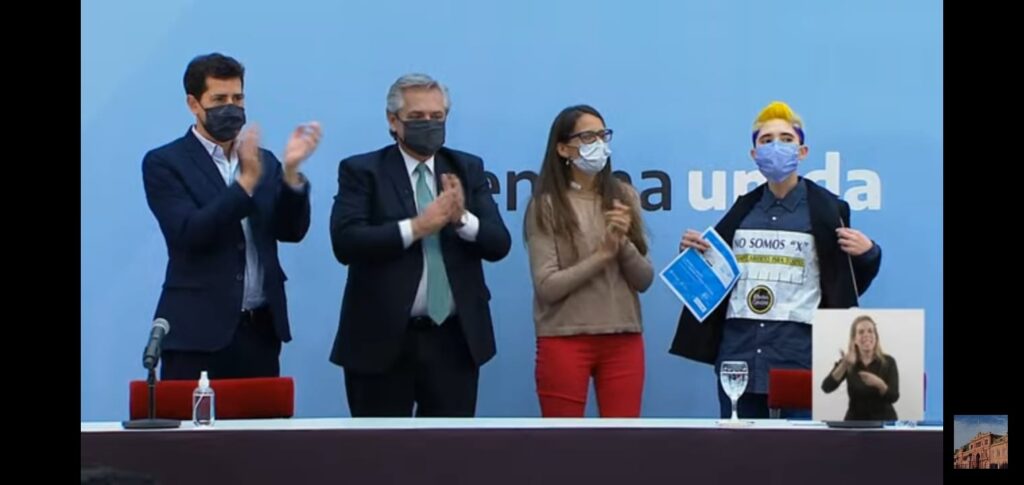
The criticism was also voiced at the event at the Bicentennial Museum where Alberto Fernández handed out the documents. When Valentine Machado, an activist with the "Everyone with a National Identity Document" movement, received her document with the X, she displayed a t-shirt that read "We Are Not X." At that moment, an activist participating in the event in the front row shouted her protest.
Minutes later, when the President took the floor, he alluded to this. “I heard someone complaining, ‘But there are other ways.’ Of course there are other ways. They are included within that ‘X,’ which is an international convention that allows us to expand rights in accordance with that international convention. And that is progress. We shouldn’t reject it.”.
Fernández explained that when Minister Wado de Pedro raised the issue with him, he asked: "Why an X?" And the answer was "because it's the way international conventions have progressed in recognizing a non-binary category.".
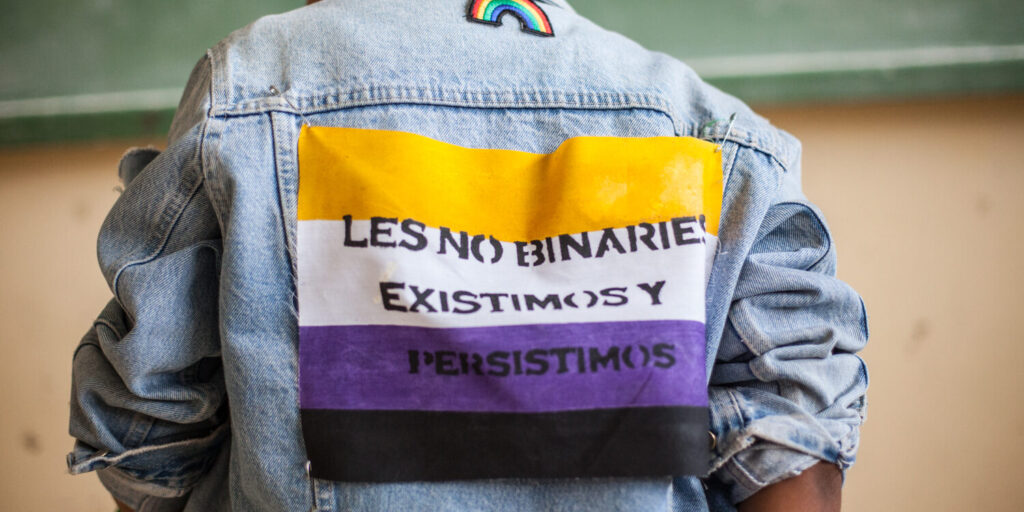
Non-binary people exist, we resist, and we fight
For some years now, the demands of people who do not identify with binary categories have been voiced to the National Registry of Persons (RENAPER) and/or the courts. Lisandro Lombardi, a human rights activist and literature student at the National University of Misiones, became the first non-binary person to achieve legal gender recognition in that province , but had to continue fighting to obtain his official document.
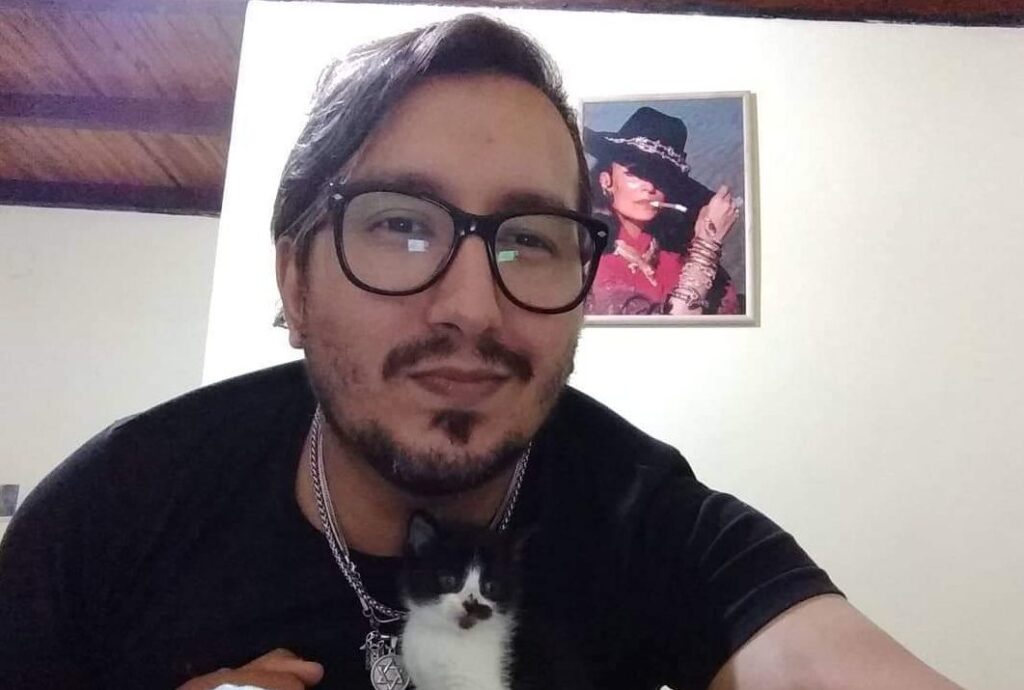
Another small victory occurred in Tierra del Fuego in 2019. Following a legal appeal filed in the provincial courts, a ruling authorized Shanick Sosa Battisti—one of the people who received their national identity document with an X today—to register as “non-binary .” It was the first court ruling of its kind in Tierra del Fuego and one of the first nationwide. The ruling mandated that the field on the birth corresponding to sex be marked “non-binary/egalitarian.” It also ordered the Civil Registry to amend the child's birth certificate to reflect the new name and self-identification of their parent.
A year earlier, the Civil Registry of Mendoza modified, without any legal action, the birth certificates of two non-binary people who requested that their new documentation not indicate a sex. In that field, they wrote " none, as permitted by Article 2 of Law 26.743 ."
One of those people is Gerónimo Carolina González Devesa, a doctor, who also received his National Identity Document (DNI) today from the President. González Devesa approached Eleonora Lamm when his private health insurance provider required him to change his DNI in order to undergo pectoral masculinization surgery. Lamm, then Deputy Director of Human Rights for the Mendoza Provincial Court, supported his request. She personally accompanied him to the Mendoza Civil Registry where the petition was filed and where she issued a ruling to accompany his gender identity change form in November 2018.
“During the previous administration, RENAPER, even with final judgments and a favorable opinion from the Attorney General, refused to issue the new ID cards. This left dozens of people without documentation,” recalls 100% Diversity and Rights.
“Non-binary people exist, we resist, and we fight. Today, as a result of that struggle, we have obtained legal recognition of our identity, which goes beyond the male-female binary. Breaking free from this pattern imposed by society, not only with our words and feelings, but with the backing of our identity documents, and with a clear public policy recognizing all identities, is the necessary first step toward our social deconstruction,” said Sole Caballero of Alto Valle Diverse, within the National Network 100% Diversity and Rights.
“This decree allows us to become visible and have a few more rights. Non-binary people have been fighting for a long time now, as we suffer violence within society and institutions regarding our identity. We hope that the implementation of this decision will support and protect us so that we are no longer harassed,” said Eve Manino from Tucumán and from 100% Diversity and Rights.
The document with the X will be valid in MERCOSUR countries, the decree states. For other countries, it warns that “it is prudent and appropriate to inform those who voluntarily choose to mark the field for ‘sex’ in their Travel Document, whether it be the Argentine National Identity Document and/or Electronic Passport, with an ‘X’, about the possibility of encountering entry restrictions, even as transit passengers, in those States that have not yet adopted this nomenclature.”.

The struggle of non-binary people continues to unfold with increasing chapters and victories worldwide. Arthur Britney Joestar, from El Salvador, became the first non-binary person to be granted refugee status in the United Kingdom . In a landmark ruling , Appeals Court Judge Gaenor Bruce determined that returning to El Salvador, from where they fled, would put Joestar, 29, at risk of persecution and violence, as they had already experienced.
In Argentina, the new regulations establish identical rights for “foreign persons who obtain and/or have the National Identity Document for Foreigners, Exceptional Passport for Foreigners or Travel Document for Stateless Persons or Refugees, under the conditions provided for in the relevant regulations.”.
“A society with full rights for women, lesbians, transvestites, trans people, gays, intersex people, and non-binary people is a better society for everyone,” said Elizabeth Gómez Alcorta, Minister of Women, Gender, and Diversity, at the national identity card distribution ceremony. “But above all, it is a more democratic society.”
We are present
We are committed to journalism that delves into the territories and conducts thorough investigations, combined with new technologies and narrative formats. We want the protagonists, their stories, and their struggles to be present.
SUPPORT US

FOLLOW US
Related notes


We are present
This and other stories are not usually on the media agenda. Together we can bring them to light.