

Samuel, tomorrow
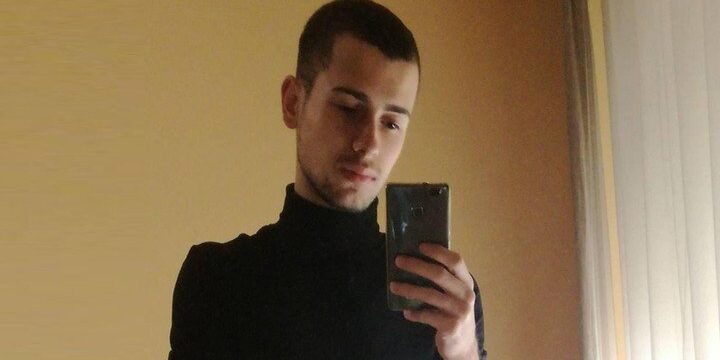
The Catalan essayist Brigitte Vasallo writes about the crime of Samuel Luiz Muñiz, the young man beaten to death in La Coruña while being called a "faggot" that shocked Spain and the world.


Share

Samuel 's murder, is not the same city. It cannot be the same city.
Claudia Delso spoke these words a few days ago in a plenary session of the city council, just before the mayor told her to be quiet. "This is not a place to come and express emotions," she told her.
In a pretty messed up tone, I might add.
But before being silenced, Claudia Delso had time to say important things. One of them: that what is said, and what is left unsaid, by institutions and other platforms matters. Another: that today, A Coruña, after Samuel's murder, is not the same city. It cannot be the same city.
Life and death are not the same thing, even though they are part of the same whole. A week ago in that city, on the seafront, in front of many people, Samuel Luiz Muñiz death while people shouted "faggot" at him. Samuel was murdered.
Life and death are not the same thing. There is an abysmal line there, the unfathomable distance between being and non-being, as Fanon described it. Because of this unfathomable distance between the two, between the possibility of existence and the possibility of non-existence, Samuel's murder is not part of a series of acts of violence, it is not just another act of violence, but rather a different kind of violence, the paradigmatic violence, the abyss, the absolute irreparability. Samuel's murder is something else entirely. And it worries me that we narrate it as just another act of violence, because just as it encompasses, just as it contextualizes, it also minimizes, it also belittles. His murder is part of a violence that is not isolated, but today A Coruña is not the same city, and today, we should not be the same.
Homophobia isn't the motive for murder. If we look for that, we'll rarely find it. Homophobia is the framework that allows anything to serve as an excuse to end a gay man's life. As an openly lesbian woman long before I was even a lesbian, as a tomboy, I know the mechanism perfectly well. Why did the security guard yell at you? Why did this guy get aggressive with you when you were just walking down the street doing nothing? Why did he punch you as you were leaving the subway? Did you even know him? I've spent my whole life answering these questions, asked in good faith but without understanding anything. Perhaps looking for the trigger within myself, for something I did beyond simply existing. But there's no other reason. My existence is what allows someone to unleash their anger on me, and it's what makes them choose me to take it out on, and not anyone else.
It's your energy, Brigitte, they often conclude… ignoring that “my energy” is called a feather.
Perhaps Samuel's killers didn't know him beforehand, but it was homophobia that allowed them to treat his body as an object undeserving of life, as if his very existence defied and offended the established order. Homophobia is the dehumanizing factor that makes everything else possible. It's what makes Samuel the chosen victim, and not just any other person who happened to be passing by.
And yes, murderers can have gay friends. Even femicide perpetrators claim to love their female partners.
“This isn’t a place to come and express emotions,” the mayor of A Coruña tells Claudia Delso, in a rather messed-up, paradoxically quite emotional tone—a violent, sinister emotionality. Death isn’t just anything. Murder isn’t just anything. Any illustrious dead person has their moment of eulogy in any city hall that wants to appropriate their name. Why does the mayor of A Coruña think that talking about Samuel, even 30 seconds beyond the allotted time, is unacceptable? Why does she silence Delso’s lesbian body? I’ve been reading Sara Ahmed these days, and all I can think about is happiness and willpower. The spoilsport who comes to shatter the promise of happiness, who comes to point out that the city can’t remain the same, because it isn’t anymore, because it’s something else now, and that this something needs attention, the wheels need to be stopped, we need to listen to how the city feels after Samuel’s murder. And Delso is the determined lesbian who doesn't give up. She stays silent, yes, but she doesn't give up: that image of her leaving the microphone with all the pain and all the anger is an image that is now ours. An image that will continue to speak.
If Samuel Luiz Muñiz had been murdered for being white or for being non-Roma, would there have been room to talk about him, even skipping a few seconds of speaking time? What if he had been murdered for being Spanish? Or for being Galician? What if he had been murdered for being a man, or for being a healthcare worker? What if ETA had killed him? Or Al-Qaeda? All these scenarios would have warranted extra time and the mayor's photogenic emotionality. Samuel would have been hers, just like her. But that's not the case. What comes after the murder is still part of the whole. Homophobia is also that.
The city is no longer the same. And are our cities the same? I know that these days we're saying we're all Samuel, and I understand the phrase. And yet, I worry that if we're all Samuel, no one will end up being Samuel, not even him. They're killing us all, yes. But they're killing us every time they kill him, because he's the one who was murdered. There are countless groups, including political ones, but not only them, "taking advantage" of the moment to bring up important issues from their previous agendas. The issues are important, but the moment is a murder, and "taking advantage" makes the phrase messed up. Today isn't like the day before he was killed. Today we are something else. And before we continue with our agendas, riding the wave of visibility, perhaps we should consider whether this is the moment for our agenda or the moment for Samuel's agenda. I don't know if we're asking enough of those around him what he needs. What do they need in A Coruña, what do their colleagues need, what do their colleagues there need, what do they need in that context, and what is their agenda? Samuel's agenda. The timing of the debates is also important. And what is said, and what is not said, by institutions and other platforms matters. A lot.
This article was originally published in Pikara

We are present
We are committed to journalism that delves into the territories and conducts thorough investigations, combined with new technologies and narrative formats. We want the protagonists, their stories, and their struggles to be present.
SUPPORT US

FOLLOW US
Related notes
We are present
This and other stories are not usually on the media agenda. Together we can bring them to light.