

Laurel Hubbard: the first trans weightlifter in the Olympic Games
Laurel Hubbard is changing an Olympic history that has several chapters of LGBTphobia and many roads to travel.


Share

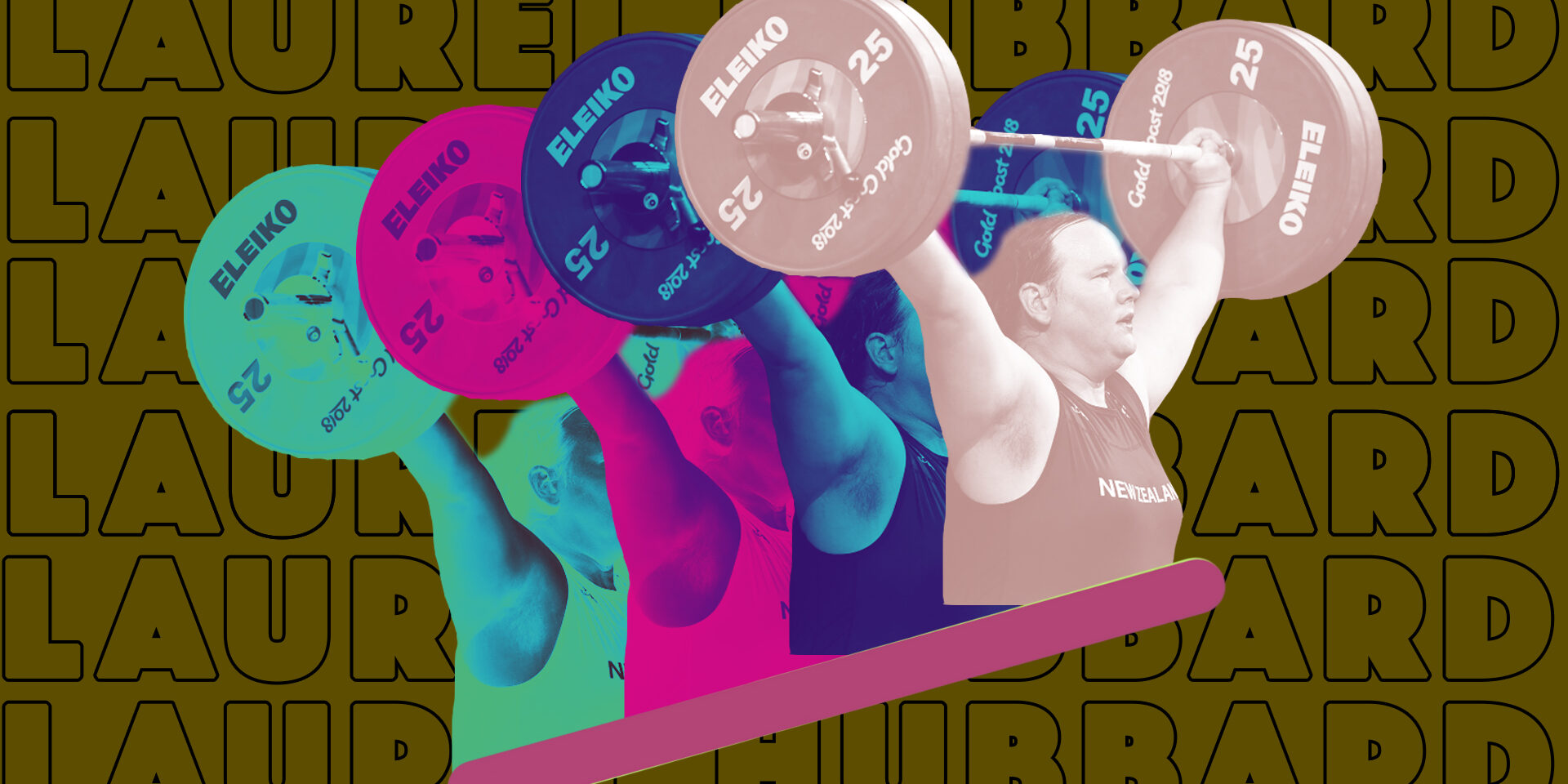
The LGBTQIA+ community has historically been invisible, and the sports sector has been no exception, despite its long-standing presence, particularly in Olympic sports. But this narrative is about to change, as the New Zealand Olympic Committee announced on June 21st that weightlifter Laurel Hubbard will be part of its delegation, becoming the first openly transgender person to compete in the Olympic Games.
The daughter of the former mayor of Auckland was born in 1978 and had a childhood and adolescence based on the gender assigned to her at birth, with which she did not identify. She competed as part of the national junior weightlifting team, achieving great success and setting records. However, in 2012, Laurel's story changed. She underwent her transition and left competition until she met the requirements set by international organizations to continue her athletic career.
In 2017 she received authorization from the International Weightlifting Federation and that's when this story continued its course, achieving a silver medal at the 2017 World Championships, two golds at the Commonwealth Games (2017 and 2019), as well as two golds at the Oceania Continental Championships in the same years.
Today she has qualified for the Tokyo Olympic Games, turning the page on a story that will have many more to come and that has been told for almost a century.
The first pages
In 1928, the ninth edition of the Olympic Games was held in Amsterdam, and art was part of the competition program. Sculpture was on display at the Stedelijk Museum in Amsterdam, and the German artist Renée Sintenis presented her work "The Footballer," which brought her Olympic glory and etched her name in history, as she was the first openly gay Olympic medalist.
But in the sporting arena, the spotlight was on the German record holder Otto Pletzer, who held the world records in middle-distance events. Unfortunately, he was unable to achieve his goal at this edition and tried again four years later, meeting the same fate, this time due to ill-fitting shoes. But everything exploded for him two years later, when the SS arrested him for “homosexuality” (in 1936, 1937 and finally in 1941), and despite being a supporter of Nazism he was taken to an Austrian concentration camp, where he remained for four years until his liberation in 1945.
Because homosexuality was illegal in his country, he could no longer continue his athletic career.
What's happening now?
In 2019, the International Olympic Committee stated that being part of the LGBTTTIQA+ community in sports carries a high risk of suffering abuse of any kind, and therefore, for years prior, it had developed strategies to support athletes of all levels.
During London 2012, a Pride House was created, sponsored by local businesses, providing a safe space for athletes, volunteers, organizers, and attendees. Although the decision to hold the Winter Games in Sochi was widely criticized for its lack of security for the LGBTQ+ community, the international committee opened a space where they could showcase their athletes, primarily because it was the first time openly gay men had participated, such as Canadian skater Eric Radford, the first openly gay Winter Olympic champion. These steps were followed by American and French skaters, Addam Rippon and Guillaume Cizeron.
For the Rio Games, the outlook for summer sports had taken a 180-degree turn with Tom Daley as the star in the spotlight, hosting the event with the largest number of participants from the community, where more than 60 athletes were out of the closet and achieved more than 15 medals, either individually or as part of a team.
The path towards trans inclusion in sport
Currently, the various social movements have shown the importance of visibility, with an inclusive flag as the emblem of the movement; it is necessary to show all the groups that make up the community.
Trans inclusion is a fundamental part of this journey; it is necessary to give them the opportunity to excel in their sports regardless of their gender identity. For this very reason, the IOC, along with its team of researchers, developed a series of regulations published in 2003, with three main principles. The first is gonadectomy (genital reassignment surgery), the second is legal recognition of gender reassignment, and the third is hormone levels. However, this was heavily criticized, since in many countries legal recognition of gender reassignment is impossible, gonadectomy is illegal, and it was even considered a violation of human rights, requiring surgery on a healthy individual whose decision would be considered coerced rather than freely made.
Therefore, in 2015 a new analysis was conducted, eliminating the first two criteria but maintaining the third only for trans women, requiring testosterone levels of 10 nanomoles per liter of blood; this condition is not required for trans men. The final criterion was simply a written gender declaration.
Today we have a trans woman qualified for the Olympic Games, but at the global level there are great figures to follow, such as the American swimmer Schuyler Bailar, the first trans man to compete in the first division of the NCAA, the Mexican boxer Valentina Santiago and the Argentine soccer player Mara Gómez, the first trans woman to play at a professional level.
And although this story is much broader, there is still much to be done. It is necessary to create a safe, inclusive, and accessible space, because the difference is made in gyms, clubs, training centers, schools, and even at home.
And remembering the words of Mexican activist Kenya Cuevas: “Our revenge will be that we are happy.”
Versus production in partnership with Presentes.
We are present
We are committed to journalism that delves into the territories and conducts thorough investigations, combined with new technologies and narrative formats. We want the protagonists, their stories, and their struggles to be present.
SUPPORT US

FOLLOW US
Related notes


We are present
This and other stories are not usually on the media agenda. Together we can bring them to light.