

Argentina promotes research to create condoms for vulvas
The Ministry of Science and Technology, through the ImpaCT.AR program, published its Challenge No. 53, which encourages study groups to submit projects for the creation of a condom for vulvas.


Share

The Ministry of Science and Technology, through its ImpaCT.AR program, has launched Challenge No. 53 , which encourages research groups to submit projects for the creation of a vulva condom that “considers pleasure, promotes autonomy in body care, and guarantees the right to comprehensive health for cisgender women, lesbians, bisexuals, trans men, non-binary people, intersex people, and other identities.” The deadline for submitting work plans is July 16th, and research groups from science and technology organizations or universities are eligible to participate.
"I think it was necessary and time for the State to listen to the voices of those who have been campaigning for a condom for vulvas. There are many of us who are affected by the lack of a barrier method when having sex," said Selene, 26, an activist with Bisagra Bisexual Activism.
Furthermore, she added, “I think it can help raise awareness and provide accurate information about our practices. Many healthcare professionals are misinformed and tell us it’s not necessary, that there’s no risk of STI transmission. That’s problematic because it limits our access to information and misinforms us. In this sense, it limits our ability to act, our possibilities, our power to choose. This often happens even within the LGBT+ community. I’ve encountered people joking about condoms for vulvas. The important thing is that they exist, that they reach us, and that we can choose which risks to take or not.”
The ImpaCT.AR program “aims to promote research and development projects designed to support public bodies —at all levels— in the search for solutions to challenges of public interest, which require scientific knowledge or technological development for their resolution, and thus generate a positive impact on local, regional and national development,” as detailed on the website.
“It’s a huge joy. We believe it will be a very important and symbolic change for sexuality in general: understanding sexuality as much broader than penetration and procreation,” Eugenia Sarrías, a lesbian and president of the organization Lxs Safinas from Rosario, Santa Fe province, which inaugurated the cultural center “La Vulvería” in this city in December of this year, told Presentes.
It has two components: challenges, on the one hand, and research and development projects, on the other. The former are submitted to the program by government agencies and refer to challenges of public interest that require scientific knowledge or technological development for their resolution. The latter can be submitted in response to challenges of public interest by research and development groups belonging to public or private national universities or decentralized Science and Technology Organizations (STOs).
In this Challenge No. 53, the recipient organization and also the one that presented the problem to be investigated is the Ministry of Women, Genders and Diversities, and its objective is the “Research for the creation of a specific and safe prophylactic method for the prevention of Sexually Transmitted Infections (STIs) in sexual practices of genital contact between vulvas, which considers enjoyment, promotes autonomy in the care of the body and guarantees the right to comprehensive health of cis women, lesbians, bisexuals, trans men, non-binary, intersex, and other identities.”
invisible STIs
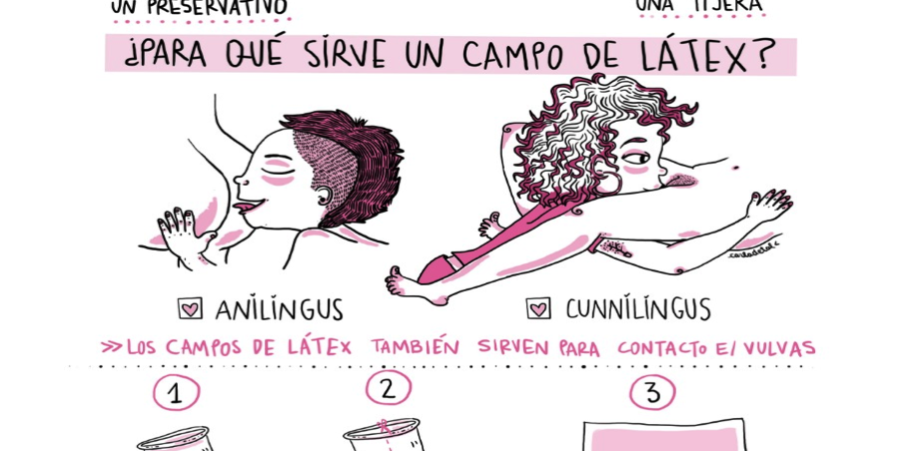
Given the lack of a method for STI prevention and body care for people with vulvas who engage in genital rubbing and oral sex, the Ministry of Women, Gender and Diversity stated: “We believe that the absence of a condom specifically designed for vulva-based sexual practices is caused by and reflects a heteronormative and cisgender health paradigm that focuses on STI prevention in penile-vaginal penetration and contraception.”
Along these lines, Sarrías recounted that in 2013, her organization made its first attempts to create materials promoting rights related to this issue. “What we did was highlight the lack of such materials and the absence of a perspective on sexual diversity. We always started from a model that was, in a sense, androcentric, where the phallocentric view predominated, and the focus wasn't on enjoyment, but rather on prevention and the denial of access to motherhood,” she said. For this reason, in June 2020, they submitted a request to the Rosario City Council for the municipality to produce latex barriers, but they have not yet received any positive results.
Sexual diversity organizations working to establish a debate on the need for the creation and distribution of a condom for vulvas have promoted two bills. The first, the Vulva Condom Bill, presented in March 2020 by National Deputy Gabriela Estévez, aims to strengthen and control sexual health through the use of vulva condoms and other methods of contraception. The second, the Access to and Promotion of Inclusive Prophylaxis Bill, presented by Lucía Cámpora in the Buenos Aires City Legislature in 2020, promotes the free distribution of industrially produced condoms, given the need to guarantee access to prophylactic methods that adapt to different sexual practices.
We are present
We are committed to journalism that delves into the territories and conducts thorough investigations, combined with new technologies and narrative formats. We want the protagonists, their stories, and their struggles to be present.
SUPPORT US

FOLLOW US
Related notes



We are present
This and other stories are not usually on the media agenda. Together we can bring them to light.