

Celebration, pain, struggle and dance at the 6th Plurinational Anti-Racist March against transvesticide, transfemicide and transhomicide in Buenos Aires
LGBTQ+ groups gathered in the plaza in front of Congress on International Pride Day. They celebrated the passage of the law on job inclusion and transgender quotas, demanded answers regarding the disappearance of Tehuel, and called for reparations for people over 40, among other issues. Photos, report, and full document available.



Share

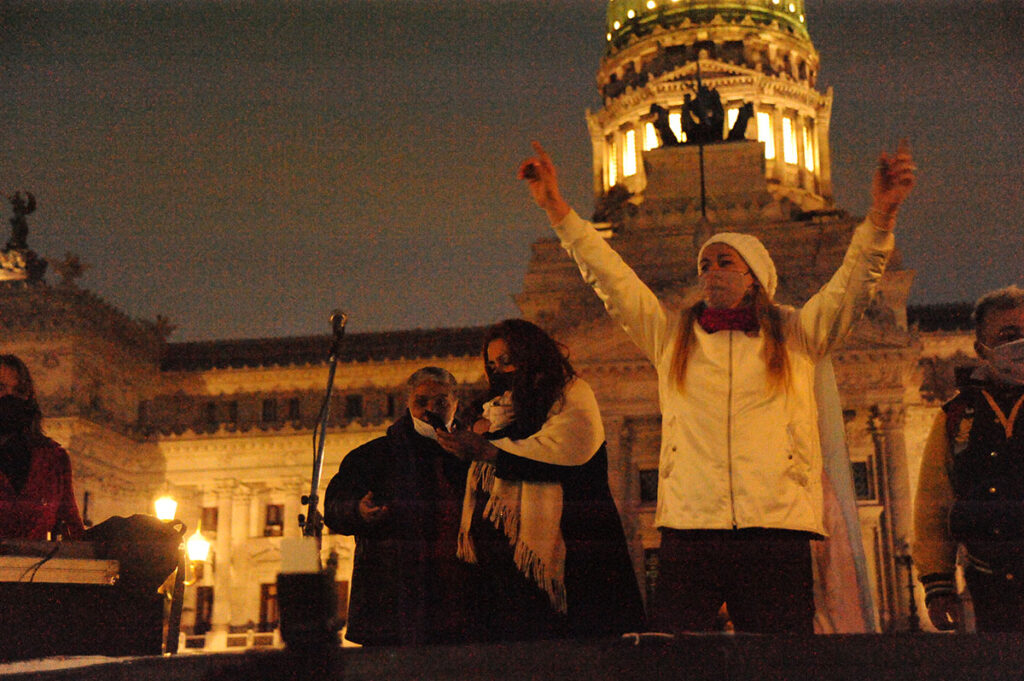
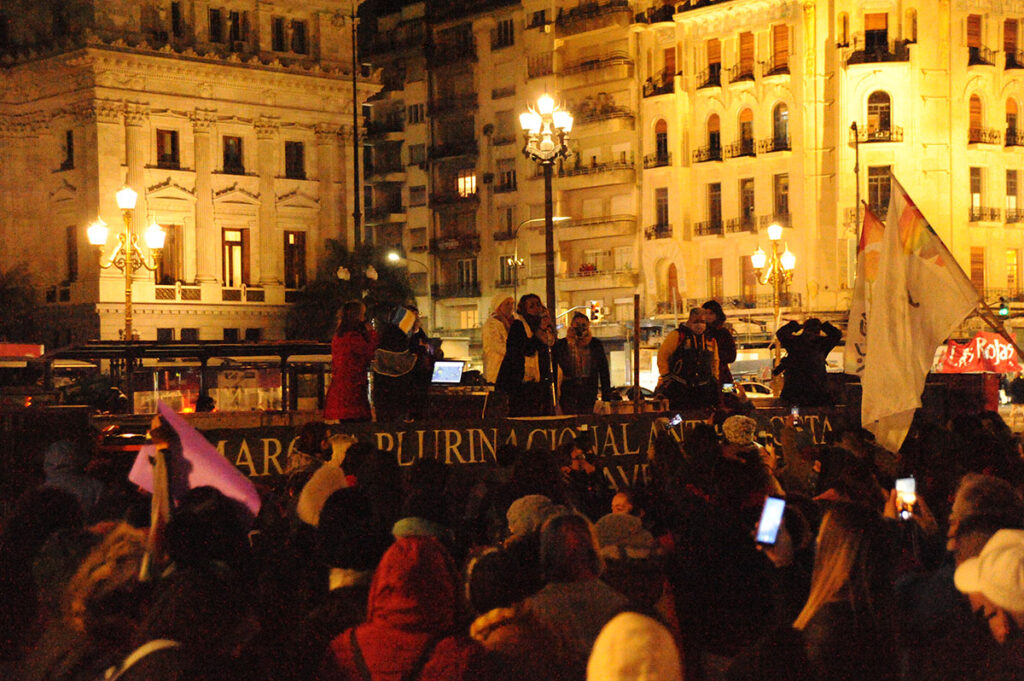
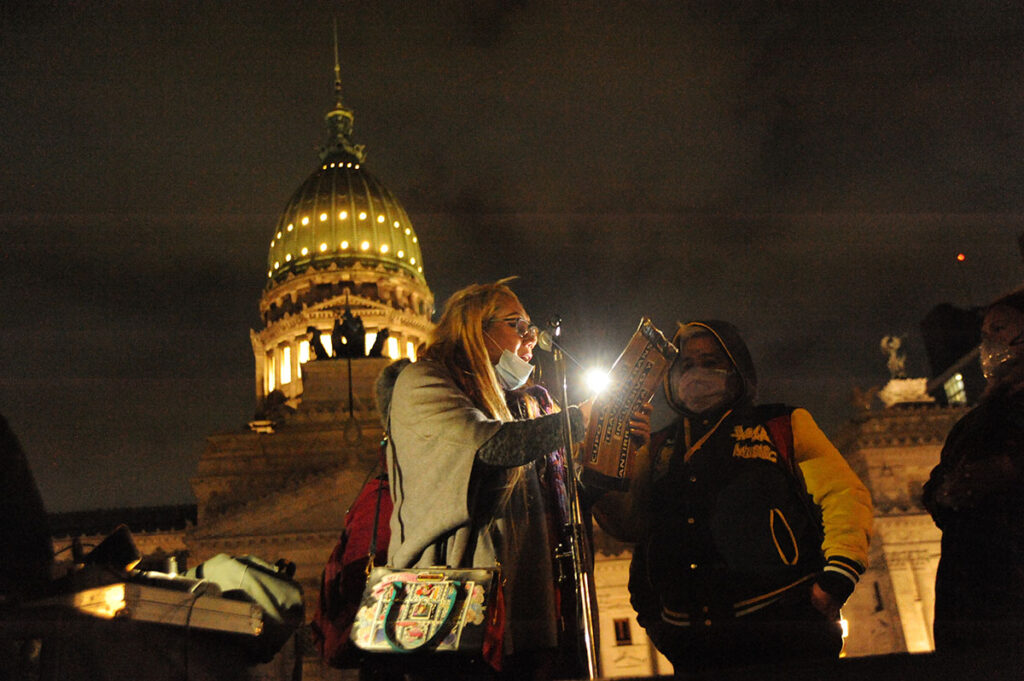
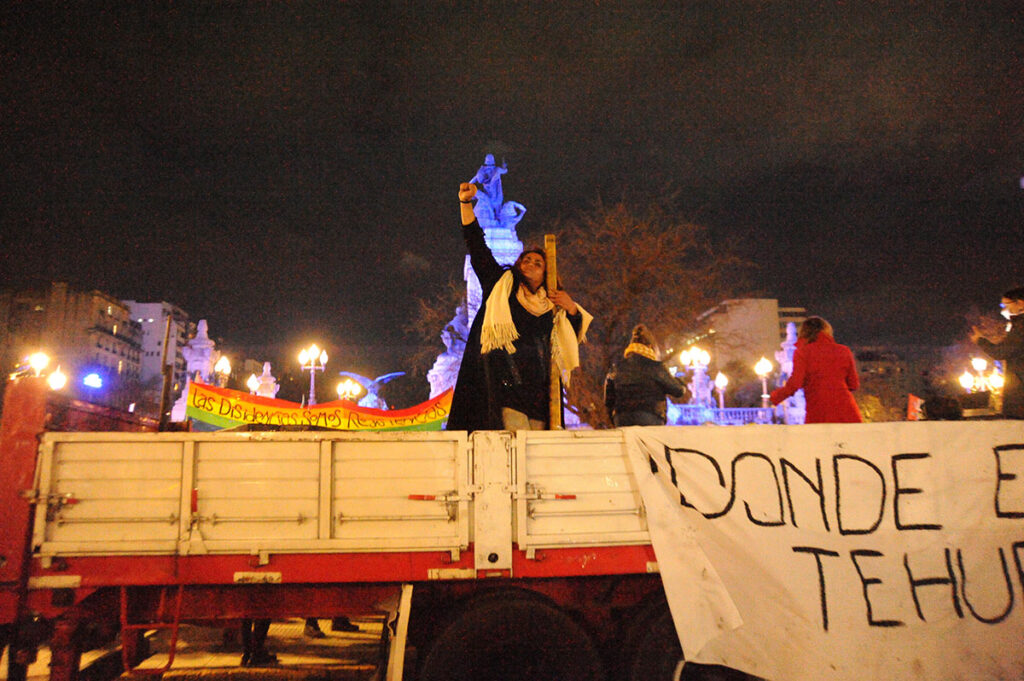
This Monday, June 28, International Pride Day, the 6th Plurinational Anti-Racist March against Transvesticide, Transfemicide, and Transhomicide took on new forms. For the first time, the term " transhomicide" to encompass hate crimes and social injustices against trans masculinities. Due to the pandemic, the march did not take place in the streets of Buenos Aires but instead featured a series of events and performances around Plaza de los Dos Congresos (Plaza of the Two Congresses). "This day is for revenge, in memory, and in political response to the transvesticide of Diana Sacayán, the social transvesticide of Lohana Berkins, and the disappearance of Tehuel," declared the organizers in the document for the event, drafted by more than 30 organizations.
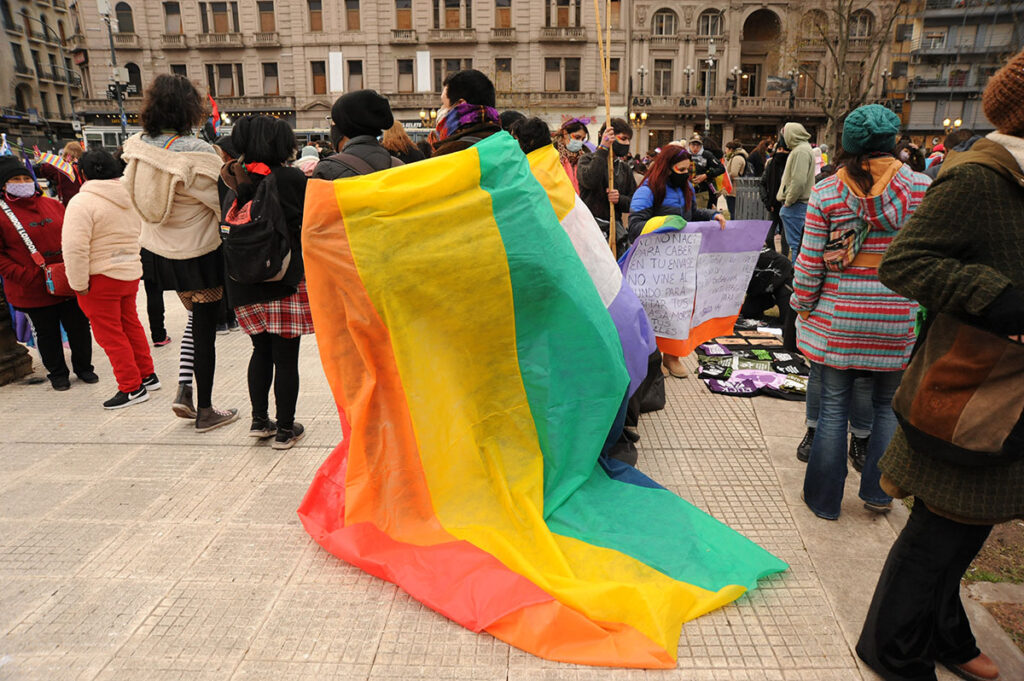
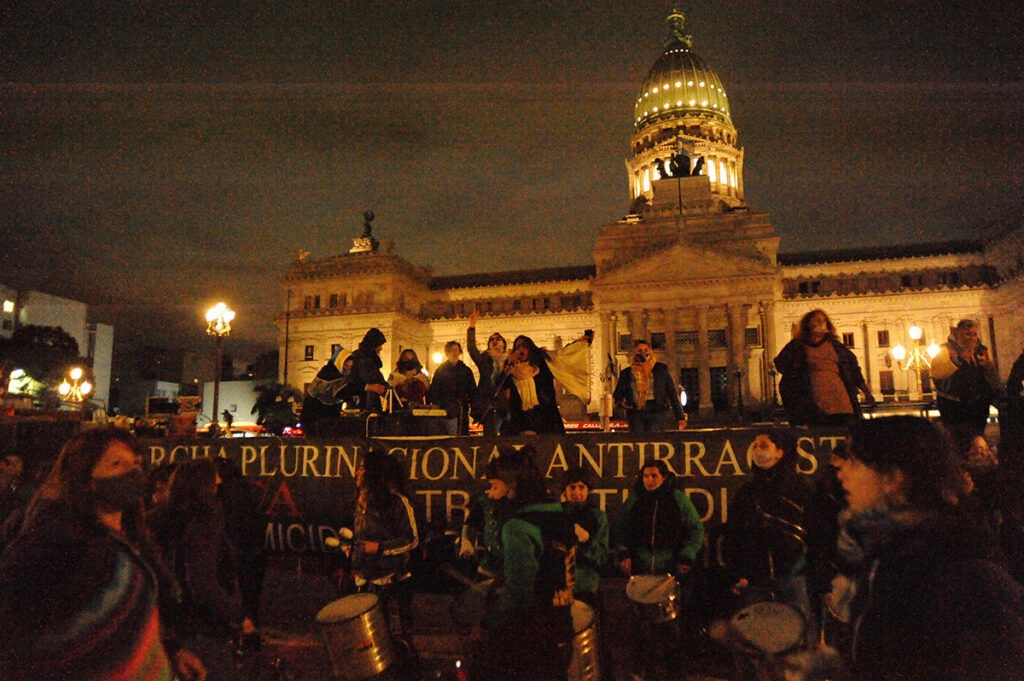
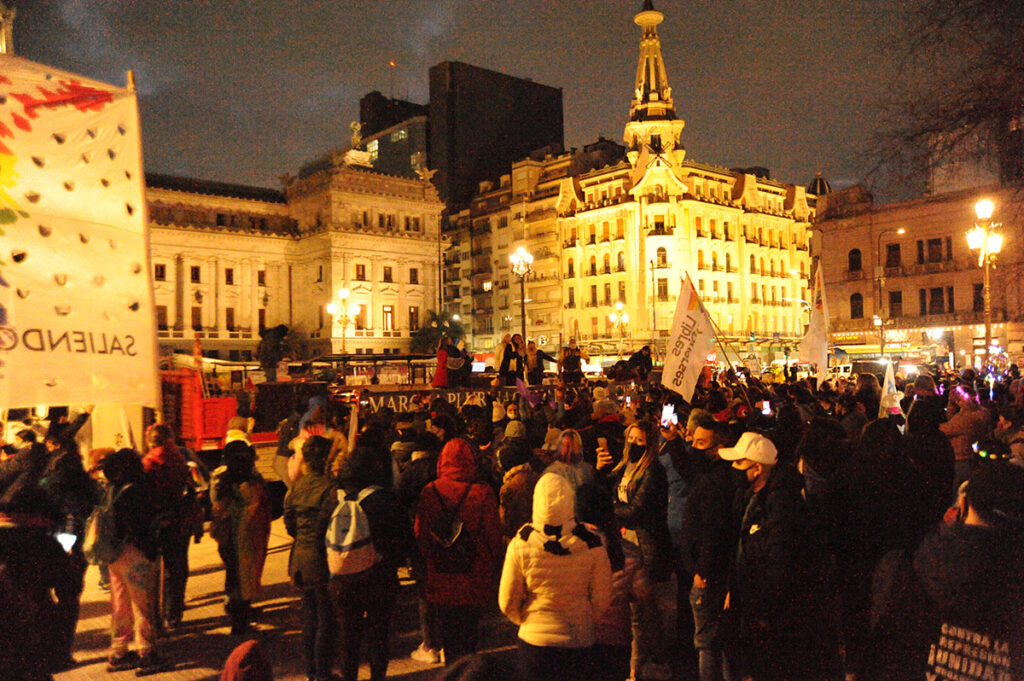
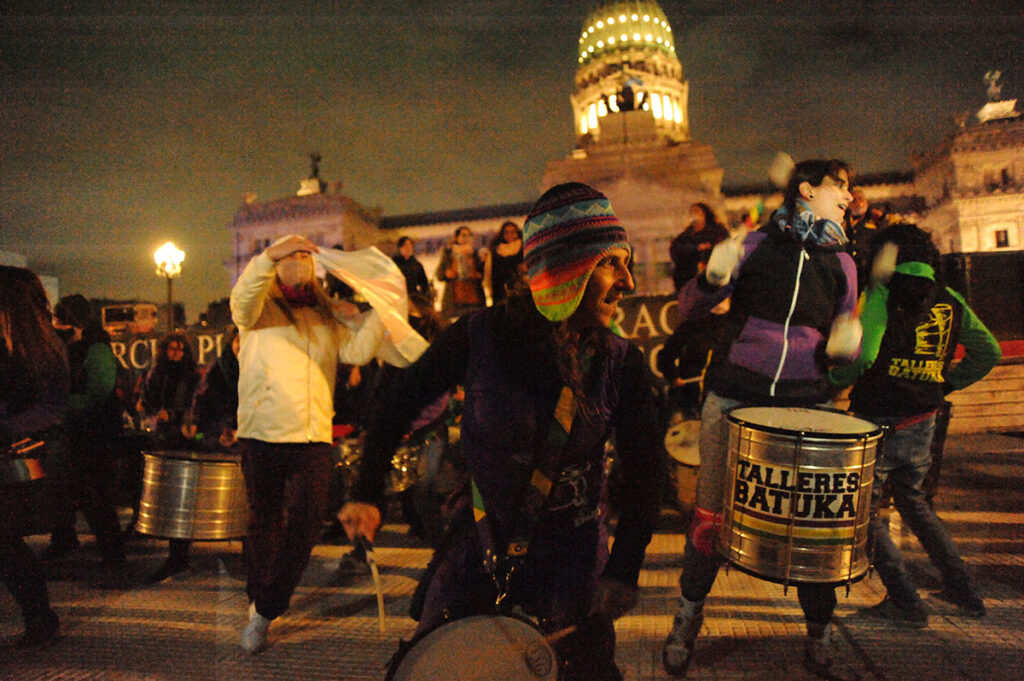
The open-air celebration in front of the National Congress in Buenos Aires began around 5 p.m., but those invited started arriving before 4 p.m., setting up a row of stands that lined the plaza's fences. The air was filled with the joy and victory of the previous Thursday, when the Senate voted by a wide majority to enact labor inclusion and a trans quota law, which also bears the names of Lohana Berkins and Diana Sacayán, trans activists. “ We are very happy because in the six years this march has been going on, this is the first time we also have something to celebrate: a trans job quota. We love knowing that we are transforming society every June 28th ,” trans activist Alma Fernández told Presentes.
“ It’s a mixture of pain and struggle . Because today, historically, is a day of great struggle, the international celebration for the rights of LGBTIQ+ people, but in Argentina, we gather to protest the murders of trans women,” added Marcela Tobaldi, founder of the La Rosa Naranja Civil Association and member of the Pride and Struggle Front.
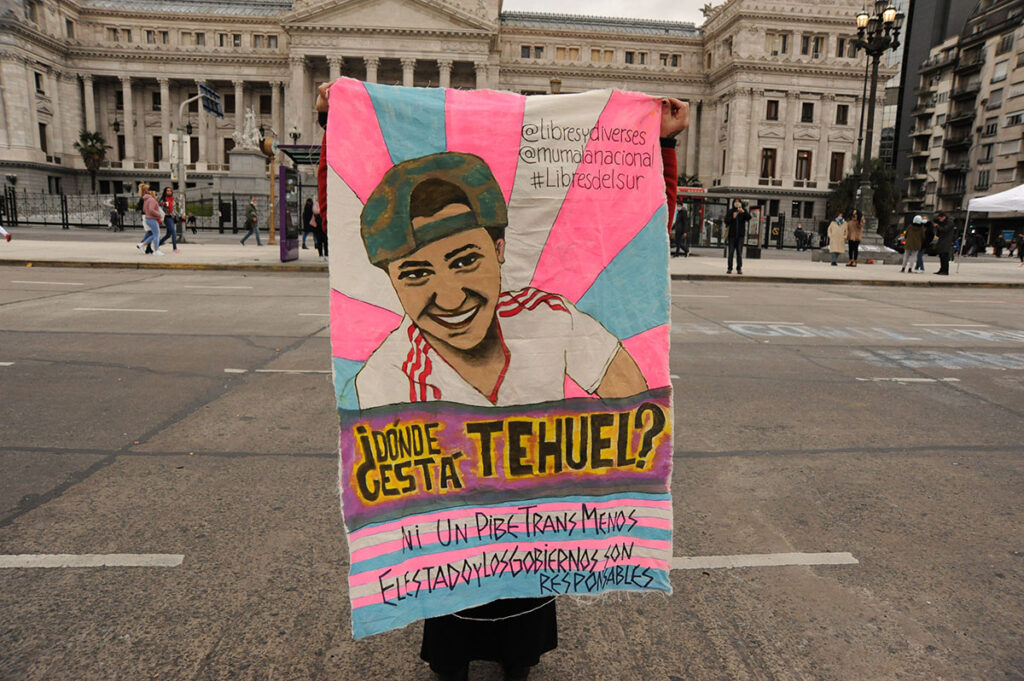
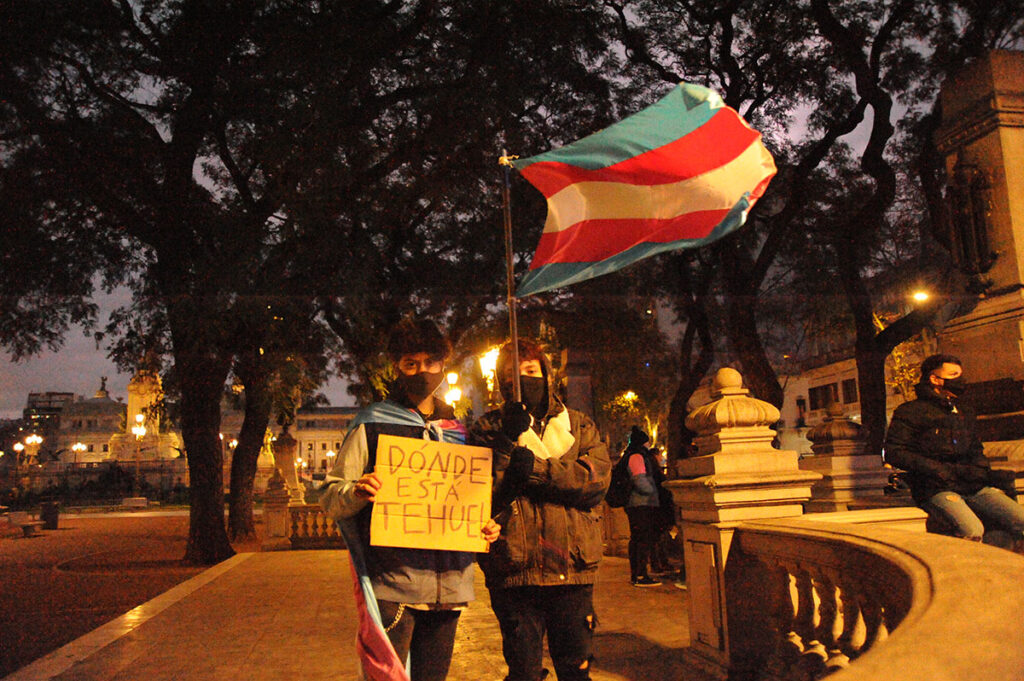
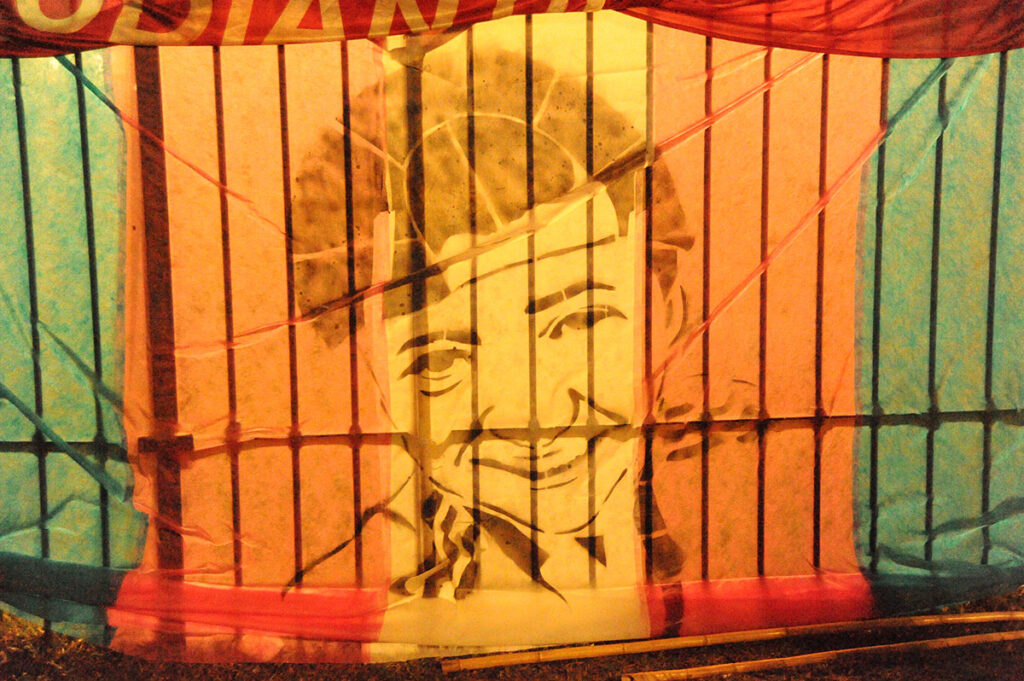
One name that was repeatedly mentioned throughout the day on signs and in artistic interventions was that of Tehuel de la Torre . “It’s been over one hundred days since he left to look for work and he still hasn’t been found. We demand his safe return,” said Afro-Indigenous and non-binary activist Estefanía Cámera Da Boa Morte. She emphasized the plurinational and anti-racist nature of the March: “On behalf of the Afro-Colombian community and Indigenous communities, we continue to demand an end to the exploitation of women and that our identities be represented in all struggles. Without them, this day would be a celebration of white pride .”
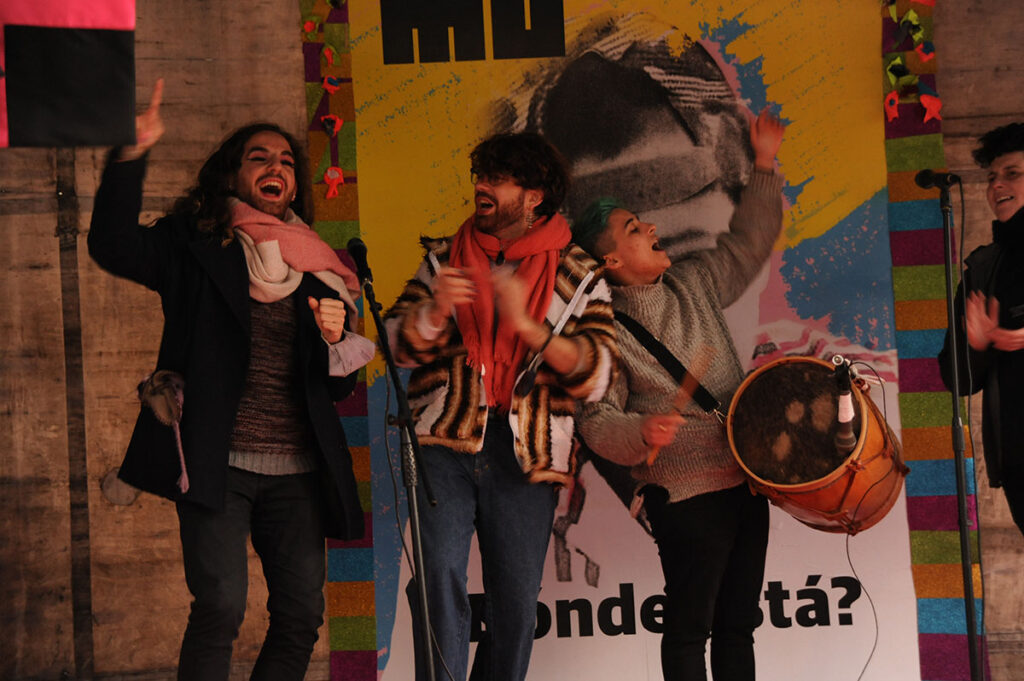
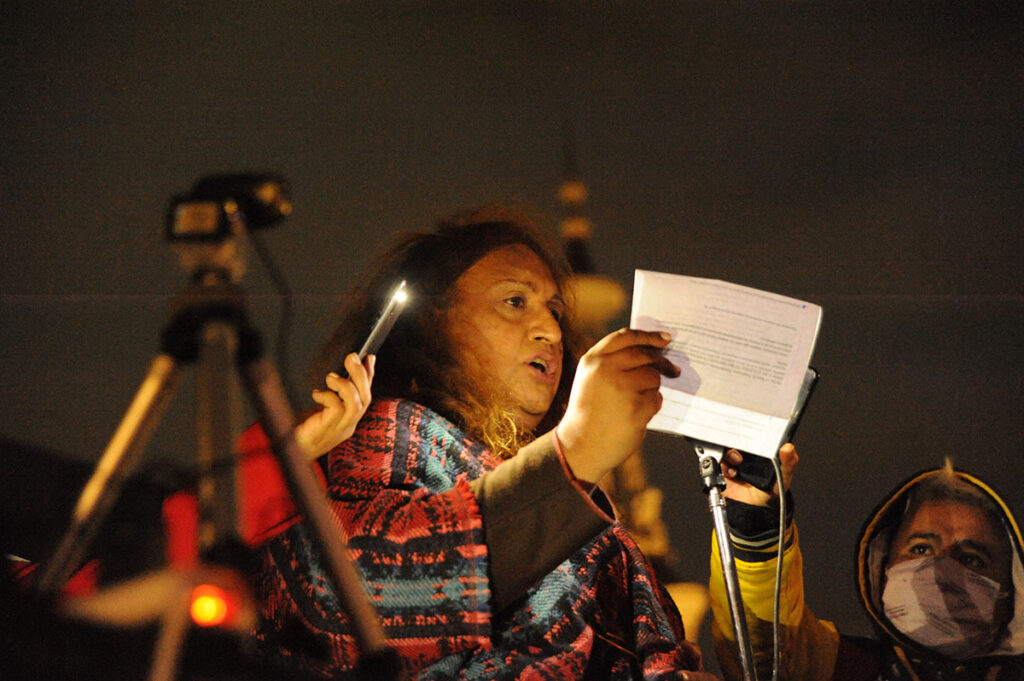
In the same Plaza de los Dos Congresos, on Avenida de Mayo near the intersection with Montevideo Street, another stage was set up, organized by Mu Lavaca . From this stage, a call was made for self-organized groups to pay tribute, remember those who are no longer with us, and celebrate Pride Day with music, dance, and art "to know that we are alive." With a huge photo of Tehuel and the question "Where is she?", Marlene Wayar, an activist; Susy Shock, a South American trans artist; and the actress Florencia De La V spoke on the stage. There was a musical repertoire where Ópera Queer performed traditional songs, some by the trans folk singer Lorena Carpanchay. Members of the artists' collective that created the first trans songbook, "Nuestras Canciones" (Our Songs), directed by Susy Shock and Javiera Fantin, also participated. Violeta Alegre, as DJ, provided the soundtrack to the chilly afternoon.


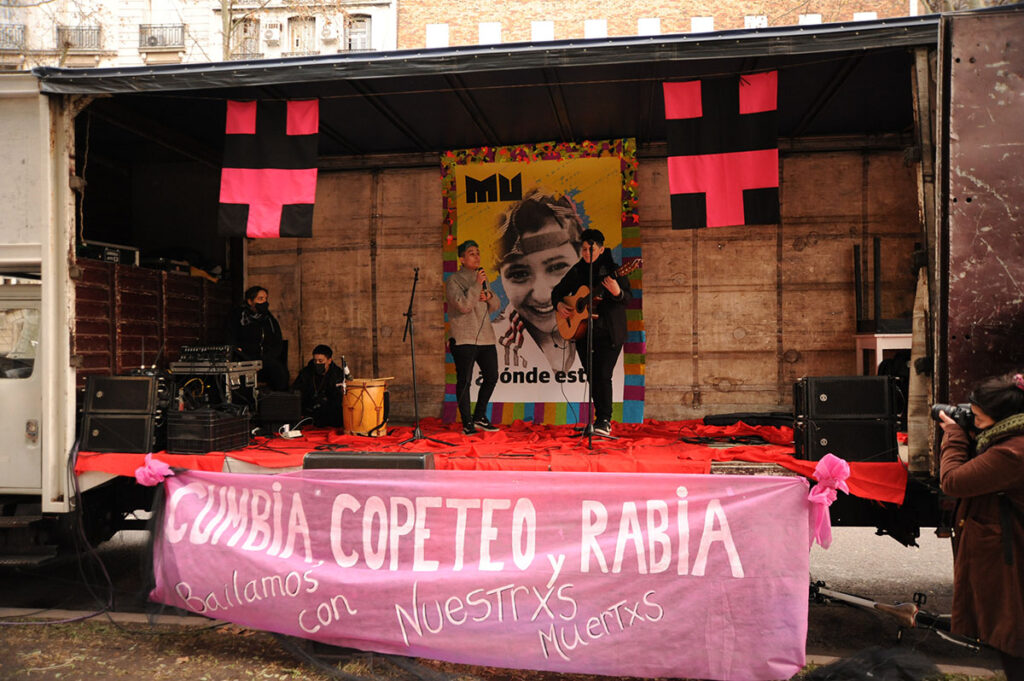
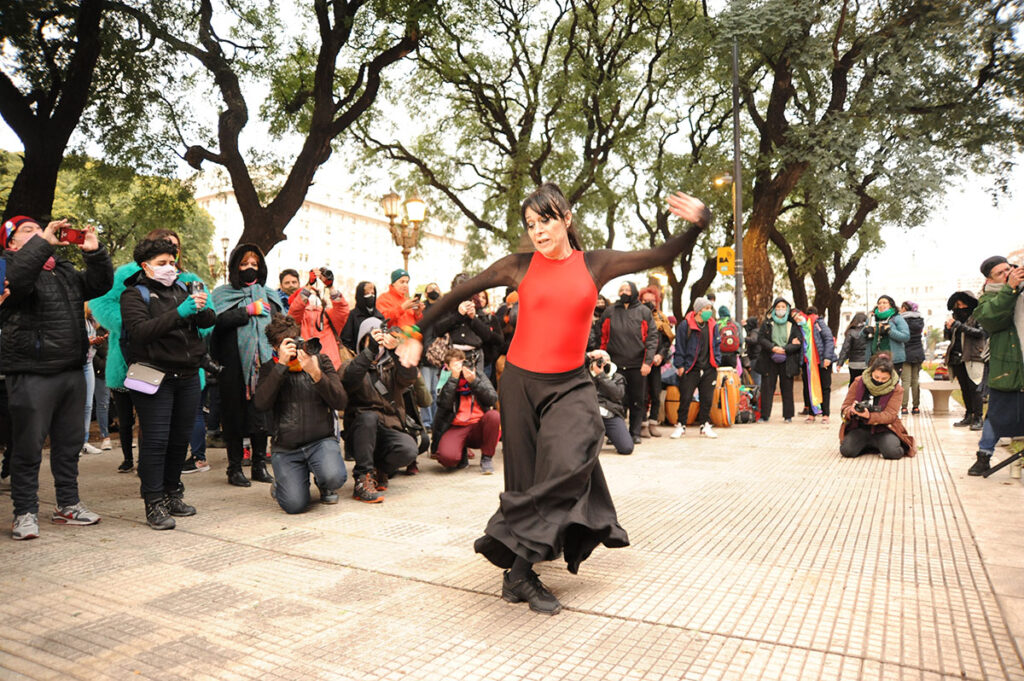
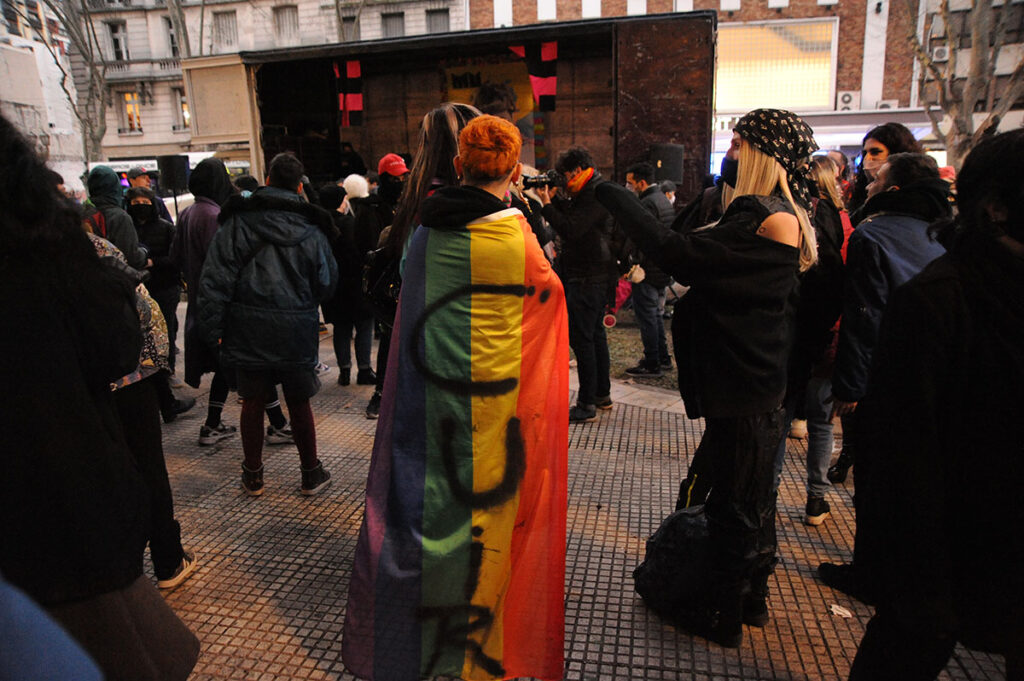
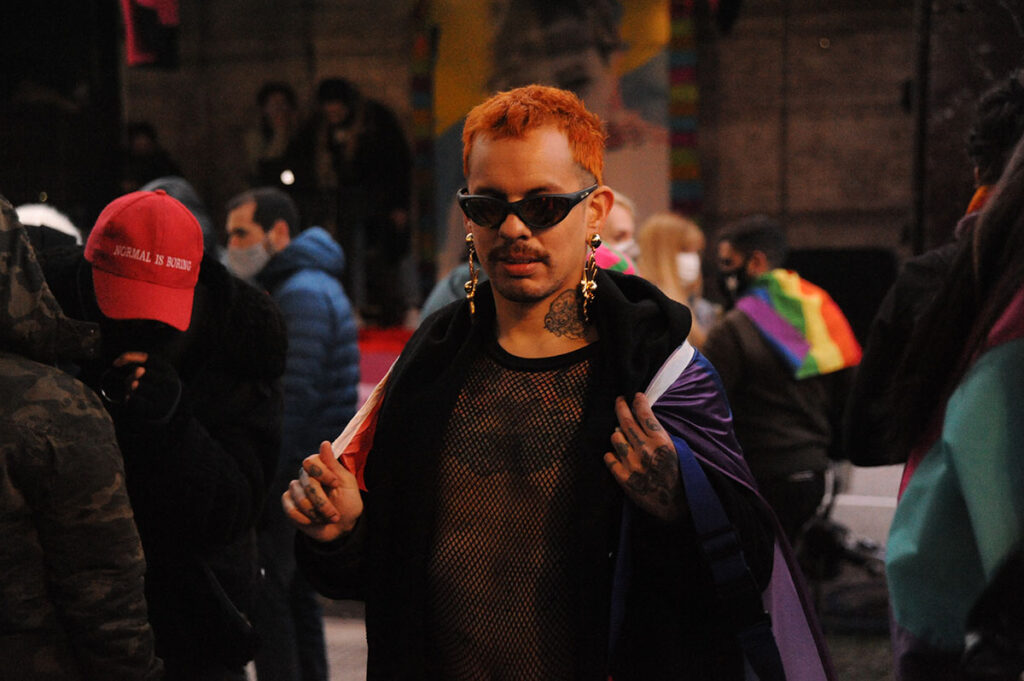


On this day, activists celebrated the progress made in acquiring rights, but also mentioned why it is necessary to continue fighting. “These advances in rights, like the one on Thursday, are extremely important, and we understand that it is up to us to continue fighting for the regulation, implementation, and effective enforcement of the laws that aim to address our problems,” said Florián, from the Trava, Trans, and Non-Binary Assembly for Comprehensive Health and Todes con DNI (Everyone with a National Identity Document).
For her part, Marcela Tobaldi emphasized the need for “historical reparations for transgender people over 40. ” And finally, Lara Bertolini, an employee of the National Public Prosecutor's Office, stated that “it is necessary to grant identity sovereignty to all multiplicities of identities and genders . The female/male sex should no longer prevail as the sole admissible criterion for public policies and the establishment and expansion of rights.”
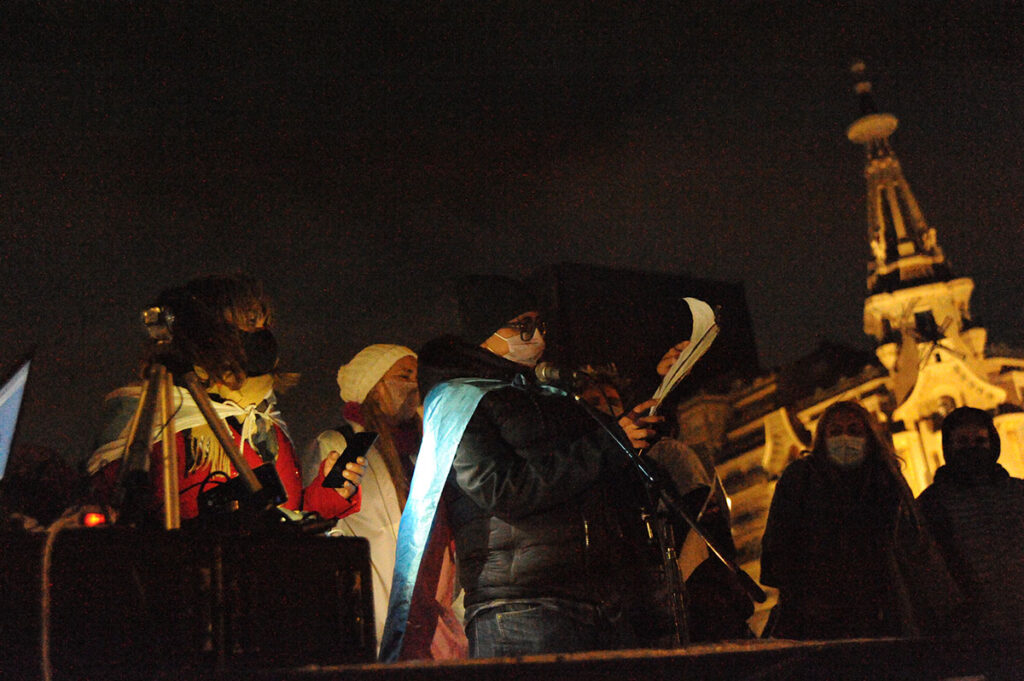
An emotional moment for the participants of the March came at the closing ceremony when Sandra Chagas, a lesbian and Afro-Uruguayan activist, read a letter written by the weychafe (warrior) Moira Millán to Diana Sacayán, at Say Sacayán's request. Among its lines, it expresses: “Without women, without dissidents, without diversity, there is no opportunity to sustain life on Earth. As I write to you, I think of Tehuel, who remains disappeared. Dear Diana, I want you to walk alongside us, through every challenge, every demand, every woven dream, until we achieve a good life, a right for all, and until the diversity that we are becomes our strength to overcome terricide .”

#6YearsWeAllComeOut : the document from LGBT+ organizations
On June 28, 2016, more than eight months after the transphobic murder of Diana Sacayán, the first March Against Transphobic and Transfemicide took place, from Plaza de Mayo to Congress. In 2018, the attack that took Diana's life was legally condemned as a transphobic murder, recognizing for the first time the intersecting forms of violence in a crime committed with violence against the body of a trans woman. This ruling was historic.
However, on October 2, 2020, Judges Rimondi, Llerena, and Bruzzone of the National Criminal and Correctional Court of Cassation (Chamber 1) removed the term "transphobic murder" from the sentence, a term that addresses preventable criminal deaths and the social transphobic murders of trans women and trans people.
What the Court of Cassation does in that ruling is remove the essential aspect of the transvesticide by eliminating the fourth clause and its reference to hatred of Diana's transvestite gender identity. It describes Diana's murder at the hands of the convicted man, David Marino, as the killing of a woman in a context of gender-based violence.
In this way, the Court of Cassation decides to uphold Marino's life sentence, while simultaneously trying to prove that he is not a transvestite murderer. It argues absurd things such as: that Marino kissed Diana. Or that he didn't kill her on Pride Day.
This reveals the normalized transphobia by belittling Diana's identity and her rights. Furthermore, it undermines the hard-won rights of an entire population.
It is also clear that, due to cissexism as a system of structural violence against transvestites, transsexuals, and transgender people , the pandemic and the economic crisis are hitting our TTNB community even harder than other populations. It has been a year of basic rights being under threat, with the loss and disappearance of comrades throughout the entire Plurinational State, and with the violation of our overall health, both physical and mental. We arrive at this June 28th in a state of emergency, with all our community networks overwhelmed in their attempts to support us.
The pandemic exposed the structural violence and exclusion experienced by trans, gender-diverse, and non-binary people in the face of an absent state. This state abandonment highlighted the commitment of organizations to providing access to basic necessities for the trans, gender-diverse, and non-binary population.

For the comrades who could not access a plate of food, medical attention, or access to a plan, the organizations were there to bring that help.
That's why this year, the streets remain ours, and in every city square, our demand remains relevant: we demand concrete policies for reparations, support, and prevention, tailored to our needs. This year, we are taking care of each other, and while maintaining social distancing and wearing masks, we are gathering in front of the National Congress and at other locations across the country to voice our demands in a political act that no restriction will take away from us.
#WhereIsTehuel
Stop transphobia towards trans men and trans masculinities.
We are part of the same statistics of mistreatment and abuse as cis girls; we are victims of transphobia that also leaves us homeless at a young age and of a series of institutional physical and symbolic violences. Double, triple risk, still belittled, dismissed, and ignored.
We are subjugated and oppressed
From corrective rapes to try to show that "we are not macho" to the difficulty in accessing basic human rights.
Discrimination, rejection, invisibility and contempt as if we were not people and did not deserve something as simple as dignified treatment.
The invisibility we suffer in trans and non-binary parenthood, the obstetric violence against pregnant parents, the symbolic violence in educational institutions that falls on our children, the specific violence against trans men and non-binary masculinities with lives subjected to legal proceedings due to a context of family violence with children in their care who are not considered by the judicial system; the difficulties in accessing health when our bodies are read within the biological binary of man-woman (cis) are some of the expressions of trans hate that we receive daily.
We do not forget Lucas Gargiulo, who was not even allowed to report the rape he suffered, and Joe Lemonge, who was prosecuted for defending himself.
Like these, many cases have recently come to light, reflecting the existing violence against our identities, trans masculinities.
It is in this context that the disappearance of Tehuel de la Torre, as well as the trans homicide of Santiago Cancinos, 14 years old, who disappeared in Salta in 2017, compel us to raise our voices, take to the streets, demand explanations, and insist that our identity be respected and that the violence against our bodies, trans men and non-binary transmasculinities, cease.
The search for Tehuel must continue urgently. The State is responsible. Tehuel must be found alive NOW!
#StopTheMurdersOfTransvestites
Last week we woke up to the terrible news of the murder of our trans migrant comrade Soraya, from Peru, who was killed in the city of La Plata when a man shot her point-blank for no reason. This is not an isolated incident, but rather part of the systematic violence suffered by our community. We are also deeply concerned about the lack of official data on our community. Thanks to the grassroots work of civil society organizations, we have documented 38 transphobic murders and transfemicides this year. Today, the average life expectancy for transvestites, transsexuals, and transgender people is around 35-40 years. In 2007, the average age of death was 32. Despite the progress made, the appalling figures remain unchanged. Much remains to be done in terms of state recognition for the cultural shift this country owes us.
We call social transvesticide (or social transvesticide , we might say today) the death caused by the profound structural exclusion experienced by most of our community, alluding to the personal vulnerability and social danger we face, which constantly leads to preventable and senseless deaths, both due to a lack of access to human rights protections and community indifference. A dehumanizing social imaginary enables these attacks by any citizen.
It is a demand for justice and for awareness. We must make visible the many deaths, many of whom we don't even know the names of.
We hold all three branches of government and the various provincial and municipal governments responsible for the structural neglect of our community. We demand solutions to reverse the situation of violence and widespread exclusion.
We demand
We demand an active role and real, participatory influence for our community through the Ministry of Women, Gender and Diversity to generate public policies that effectively address our needs. To this day, state institutions continue to be violent towards our entire community.
We demand the immediate implementation of the approved labor quota law.
Transvestite-Trans and we demand real, full inclusion now!
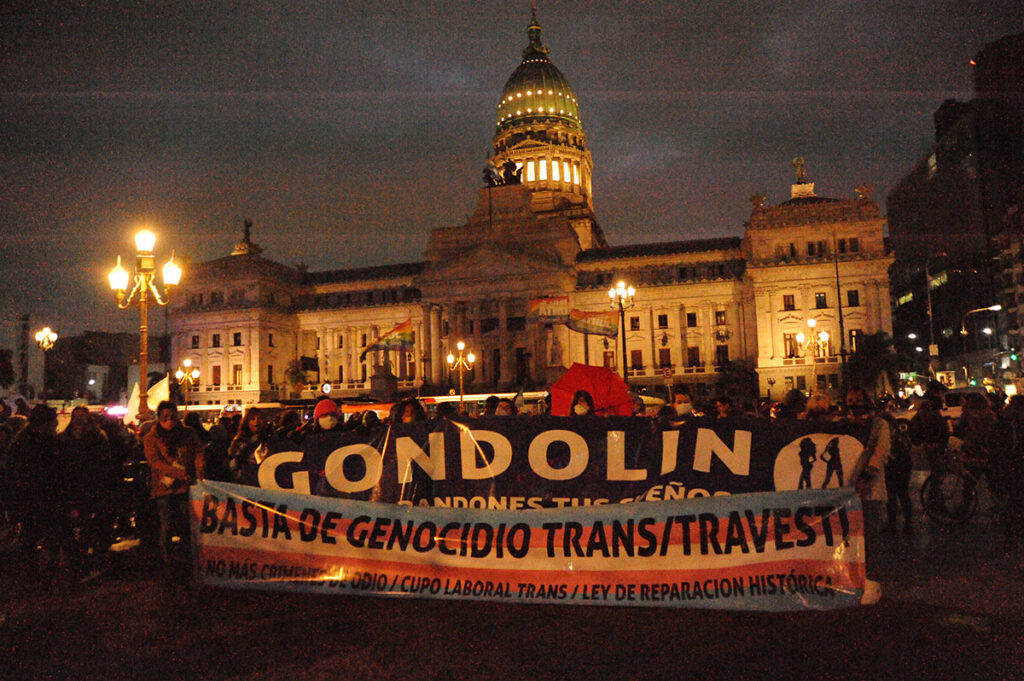
#B astaDeGenocidioTravesti/TransGenocidio
We demand that the genocide against us be recognized, understanding the Transvestite Genocide or TransGenocide as the systematic killing of transvestite and trans people, motivated by their self-perceived gender identity, because it meets at least three of the five conditions that the UN Convention on the Prevention and Punishment of the Crime of Genocide considers to speak of the crime of genocide.
In this sense, we believe that the first three characteristics of the convention apply because not only were transvestites and trans people reduced in number, persecuted, and tortured by the State through arbitrary mechanisms, such as codes of conduct and police edicts, but the policies implemented against us are also paradigmatic and reveal this reality with greater starkness. Some of these characteristics include, for example, the erasure of transvestite and trans identity through mechanisms of homogenization and reproduction of the sex/gender system: male and female; and the concentration and confinement of us to prostitution, ultimately leading to our physical elimination.
#TTNBComprehensiveHealth
The biggest difference between the last time we gathered to shout "Stop the murders of trans people" and today is that we once again have a National Ministry of Health. However, there is still much room for improvement.
We are in a global pandemic that harms the entire population in general, and therefore, as has historically happened, it affects the TTNB community in particular even more.
Hormonal treatments, surgeries, consultations for liquid silicone migration or siliconomas and sexually transmitted infections, and all types of practices arbitrarily classified by Health personnel as "non-urgent" continue to be delayed.
Mental health spaces that are postponed or not communicated or disseminated by the institutions that should do so, and the constant lack of identity perspective and safe spaces for us in Health Centers, continue to be commonplace; making our lives more difficult to live.
It is unacceptable that our comrades continue to die due to lack of access to healthcare, with social transvesticide looming and youth suicides commonplace because we are left adrift in matters of physical, mental, or emotional health.
There is no possibility of an “Enough of Transvesticide, Transfemicide and Transhomicide” if the same system continues to expose us to the pathologization or medicalization of our experiences; if the same system has, at best, a couple of “Inclusive Clinics” when we know that most are “Hostile Clinics” staffed by hostile doctors.
As a community, we demand that both physical spaces and healthcare professionals are up to date with history, with ongoing and mandatory training, and with gender and identity awareness.
To prevent more unnecessary deaths, we demand Comprehensive Healthcare NOW!
#SymbolicAndHistoricalPecuniaryReparation transvestite and trans community.
States, particularly the Argentine State, have systematically persecuted the trans community, with special emphasis on trans women. Our community has been stigmatized and tortured through laws, misdemeanor codes, and the judicial system.
Police edicts and municipal codes have historically been used to legitimize state torture against the trans community, with a particular focus on migrants, racialized individuals, and those from working-class backgrounds. Therefore, financial and symbolic reparations are necessary for trans people who have suffered human rights violations at the hands of the state, both under democratic and dictatorial regimes. Comprehensive and urgent reparations are essential because survivors of state violence continue to endure the state's ongoing neglect.
At a collective level we need reparations that include symbolic restorations at a historical level where the State apologizes, commits to never repeating these human rights violations and speaks out about human rights violations against the TTNB population in other countries.
That is why we demand immediate compensation; compensation must be given to TTT people over 40 years of age who were victims of institutional violence, regardless of age.
#TransgenderChildrenandAdolescents
It is urgent to make visible the problems experienced by our trans-travesti – non-binary children and adolescents.
The lack of training in educational institutions on the Gender Identity Law,
and the resulting violation of Article 12 on Dignified Treatment. It is necessary to expedite the administrative procedures of schools so that the gender identity expressed by children and adolescents is respected in records, lists, bulletins, and notifications.
It is urgent to organize gender-neutral restrooms and ensure participation in single-sex curricular spaces, such as physical education and swimming. Furthermore, it is crucial to implement educational programs addressing violence, abuse, and discrimination in schools, involving both peers and adult teachers, staff, and administrators. It is essential that all parties understand the subjective effects, suffering, and exclusion that bullying or harassment in schools can cause for transgender children and adolescents.
Due to persecution and harassment, suicide attempt statistics show a 40% rate among transgender adolescents. We see self-harm behaviors and symptomatic and worrying emotional and psychological health situations that are complex to address and support, especially when professionals lack knowledge of these issues and the gender identity law.
We demand the genuine implementation of Comprehensive Sexuality Education (CSE), a non-binary CSE that avoids biological or essentialist views on the gender identities of children and adolescents. We demand that education in schools take into account and legitimize transvestite, transgender, and non-binary identities.
That the education system no longer be the "second place of expulsion," when families do not recognize, respect, or care for transgender children and adolescents, and try to normalize the cisheterosexual model, with practices of physical, psychological, and symbolic violence, which produce exclusion from the home at an early age.
The emergence and growing visibility of social organizations that support families and caregivers of our children and adolescents, as well as the civil groups and associations founded by mothers, fathers, and other caregivers, certainly bodes well for a future in which culture and institutions will embrace and respect their experiences and choices. These organizations take a political stance alongside the struggles and history of the trans and gender-diverse movement, working to raise awareness of the violence against children and adolescents, not only our own, but all trans and gender-diverse children and adolescents who are abandoned without support networks to fulfill their responsibilities and obligations regarding maintenance, continued and completed education, and access to healthcare. We demand concrete policies from the State that do not confine them to living on the streets, in economic hardship, and that do not ignore their needs simply because they lack the presence of legally recognized adults to grant authorization. Strengthen the progressive autonomy that the laws protecting children establish as a right that must be guaranteed.
#Trans Resistance #furiatravesti
ENOUGH is the founding cry, it is the weariness: ENOUGH of killing us for being Transvestites – Trans.
We are South Americans, from the prisons, from the neighborhoods, from our anti-colonial South American political identity. Through the memory of the trans struggle, we reclaim the Stonewall uprising. And we raise our flag from the South; the trans revolution was part of our way of being. We rethink the founding moments and revalue our origin and history.
This isn't a party, it's a demand for rights, rights we learned from our trans leaders, like Lohana, Diana, and all our brothers and sisters who walk this land every day. We must stand up and keep fighting because they keep killing us, they keep imprisoning us. We must fight against so much abuse, repression, and pain, for all the injustices that are owed to us and that need to be redressed. Recognizing ourselves as transvestites, trans people, and non-binary individuals today is to proudly proclaim that we survived cruelty, it's the joy of finding pleasure in weaving knowledge with others, it's breaking down the binary from a Latin American perspective, and also to acknowledge, with anger and without surrendering, all the rights that are still lacking.

#WorkQuotaAndInclusionForTransPeople
We have secured a national quota. This is a victory for our colleagues, Diana Sacayán, who created this law, and Lohana Berkins, who showed us the way. We celebrate it as an achievement resulting from the long struggle of our collective.
It's worth remembering that Law 14.783, the "Diana Sacayán" trans and travesti employment quota law, was passed in the province of Buenos Aires in 2015, but only last year was it properly regulated, implemented, and applied. We also note its partial and uneven application across different municipalities.
However, the state's binary structure still doesn't include us. State hiring conditions need to be modified to ensure real access for our community.
Our community suffers from a multitude of violations stemming from the structural heterocissexist violence we endure. Within these employment conditions, for example, it is specified that those who work for the government are not permitted access to social and housing programs, exposing us once again to the lack of basic rights we have always faced. Undoubtedly, regulations and enforcement are needed that address these types of exceptions.
Therefore, it is essential to consider our living conditions so that the application of the employment quota represents a real and effective response to our needs. The difficulty migrants face in obtaining documentation translates into segregation that prevents them from accessing their right to the employment quota; this reality must also be considered in the urgent and immediate implementation of this law.
- We demand that real jobs be created, under forms of employment that are neither precarious nor informal, as is currently happening with vaccination scholarships or Potenciar Trabajo, which are counted as a 'quota'.
- We demand that job quota contracts be managed directly as permanent state employment.
- We demand access to information on the implementation methods, how registration in the national register of applicants is used, as well as what the terms of hiring by quota are in each agency and locality.
- We demand that the necessary resources and training be guaranteed to give real access to the most needy sectors of our community without promoting meritocratic segregation.
- We demand that a working group be created with representatives of the TTTNB community organizations for the management of the quota application.
- We demand that the application of the quota be directed towards adding community workers in specific areas of direct impact on public policies regarding our realities.
#EveryoneWithID
Nine years after the Gender Identity Law, it is still necessary to demand its full implementation and compliance. We demand state recognition of our existence, both through censuses and statistics that include us, and through identity documents that transcend the female/male binary.
Gender identity, understood as the internal experience as each person feels it,
It must be respected by all state and societal institutions, regardless of what the documents say. However, in practice, documentation is the gateway to many fundamental rights such as housing, health, education, work, etc.
Therefore, we demand that all provincial and CABA Civil Registries rectify birth certificates according to the gender identity of each person, leaving the "sex" field open for each person to complete according to their internal experience.
We demand that the National Registry of Persons (ReNaPer) issue national identity cards (DNI) that correspond to the corrected birth certificates.
We remind the State that it has a duty to cross-reference data and update its computer systems to reflect the corrections made to DNIs and to guarantee the correction of other associated documents (CUIL/CUIT, registrations, degrees, criminal records, etc.).
It is not only necessary to rectify our own documents, but also those of our children who today have their identity denied when their mothers/fathers/parents rectify our identities.
We demand that access to their ID cards be guaranteed to all children and adolescents without judicializing their identities, and that they be treated with dignity, especially in educational and health institutions.
In a country where the process for obtaining permanent residency takes several years, it is essential to guarantee the human right to identity for all migrants and refugees. We demand that they be guaranteed dignified treatment and access to documents that respect their gender identity from the moment they enter the country.
We demand immediate immigration regularization! We demand free immigration fees for transgender people and streamlined procedures and requirements for temporary and permanent residency. The creation of a gender and diversity unit and training for immigration staff are essential.
A population with a life expectancy of 32 years cannot afford to wait for the lengthy processes of the judicial and administrative system. It is urgent that the Supreme Court rule on the cases brought before the courts due to the lack of legal recognition of individuals who do not identify as either male or female. And that the National Registry of Persons (ReNaPer) urgently resolve the situation of non-binary individuals who have been undocumented since rectifying their birth certificates. Some have been waiting for their national identity document (DNI) for almost three years. We reiterate the State's duty to guarantee this human right without discrimination. We continue to demand: Identity NOW!
#RecognitionOfCareNetworks
We are where the State is not, we have territoriality, and we point out the immeasurable value of the care networks that we are extending in the support of daily life.
We demand that all this important work, which is currently undervalued, be recognized and prioritized. Because we exist and intervene beyond blood ties, supporting each other in medical, legal, judicial, emotional, and spiritual situations.
Because in the vast majority of cases it's not our blood relatives who do it, but our Transgender Non-Binary family, and that bond must be valued and prioritized NOW!
#EnoughOfXenophobiaAndRacism #TogetherWeAreStronger
We denounce and say enough is enough to the xenophobia and racism perpetrated by the justice system and security forces, who, through the use of Law 23.737 – the drug law – arbitrarily detain and fabricate cases against our trans and migrant comrades. Likewise, we denounce and condemn the systematic violation of the human rights of our community in the context of incarceration.
We are a cry from the global south, we are indigenous, brown, Afro-descendant, migrants in our lands, from the union of struggles we tell the social, union, student and feminist movements that our existences are not up for discussion, enough of pointing out our differences or getting stuck in disagreements; our urgent needs cry out now!
It is urgent to build a place where everyone is heard and where we fight together, reclaiming the history of our identities in these lands that have always been ours. For a plurinational and anti-racist movement
#StopMediaViolence
We denounce and repudiate the media persecution of our Travesti – Trans collective by the mass media, which, in their journalistic treatment, continues to reproduce stigmas, sensationalize our bodies, violate our self-perceived identities, and solidify common senses in a cisheteropatriarchal society.
Likewise, we condemn the double and constant revictimization we suffer because countless times these constructions end up contributing to the increase in transvesticide, transfemicide and transhomicide.
Furthermore, we demand a Media Equity Law that promotes respectful treatment and good journalistic practices based on the Gender Identity Law, with a transfeminist, intersectional, and human rights perspective.
We are present
We are committed to journalism that delves into the territories and conducts thorough investigations, combined with new technologies and narrative formats. We want the protagonists, their stories, and their struggles to be present.
SUPPORT US

FOLLOW US
Related notes


We are present
This and other stories are not usually on the media agenda. Together we can bring them to light.