

Beyond the Rainbow: Rainbow-washing, Businesses, and the Human Rights of the LGBT+ Community
Together with the organization Poder, we investigated cases of companies that claim to be inclusive but discriminate against and deny services to the LGBT+ community in Mexico.


Share

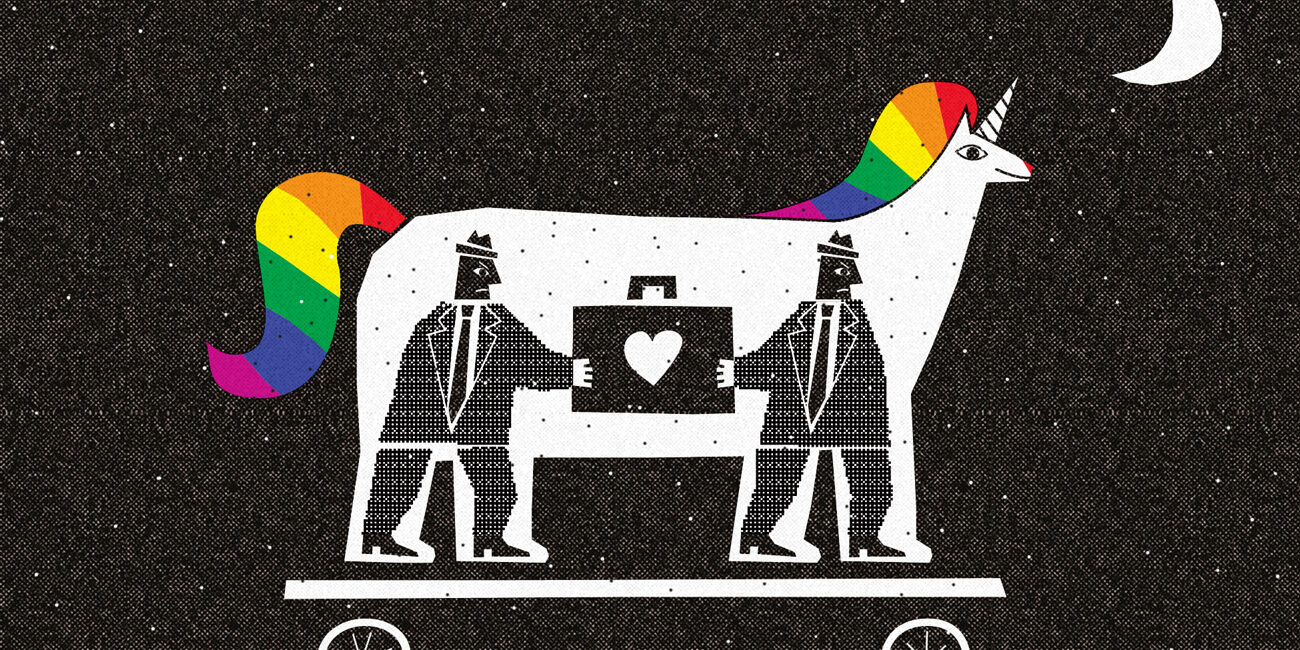
It's June again, and once more social media and advertisements are flooded with rainbow flags for Pride Month. As every year, we see a large number of companies incorporating this symbol into their logos and marketing, supposedly in support of the LGBT+ community. They fill their social media with messages of inclusion and promote slogans like "love is love" or "be yourself."
What is rainbow washing?
However, few of these companies have actually brought about substantive changes in their daily practices and business methods. This phenomenon has been called pink washing and, more recently, rainbow washing.
Like so many other corporate image-washing tactics, the purpose is to gain legitimacy with certain sectors of society, primarily for profit. While visibility, representation, and changes in the narrative are important, we ask ourselves: what lies beyond the rainbow?
Transphobia at the insurance company AXA
Carlos is a 24-year-old entrepreneur focused on products for his community, a battle royale , and a transmasculine man. The subtle, everyday aggression he has experienced has been the price he pays for being who he is. In May of this year, Carlos approached AXA Insurance to request a quote, and this is what happened:
–For the health insurance, they told me I represent a risk to the company. Which seems stupid to me because they were going to take my money, invest it in their own things, and use those funds to cover my insurance, right? I'm really angry.
–In addition, for the lifetime savings insurance they asked me for letters from my doctors, my endocrinologist, general practitioner, gynecologist and plastic surgeon assuring that I am healthy, what my treatment is and that I do not plan to have any other operation of any kind.
Carlos was denied service due to transphobia. And this same company puts on a social media spectacle every year, claiming to be a safe space for the LGBTQ+ community. They even have a job posting on their official website with the tagline: “ full self in the workplace.” The real problem isn't just the practice of rainbow washing Article 149 of the Mexican Federal Penal Code , the company committed a crime against human dignity.
Uber denies service to trans activists
On the night of June 11, activist Kenya Cuevas, along with Michel, Alice, and Paulina, three members of the Casa de las Muñecas Tiresias team, were discriminated against by an Uber driver who refused them service simply because they are trans women.
—We were leaving work on a podcast and the production requested an Uber for us. It arrived and as soon as the driver saw us, he said that he didn't take "people like that."
The podcast's production team issued a statement the following morning warning that "members of the (LGBT+) community are not an accessory or a marketing tool only visible during Pride Month."
—I received a call from Uber telling me that they had fired the driver, and the president of Copred (Council to Prevent and Eliminate Discrimination in Mexico City) contacted me to say that this could trigger gender training because she mentioned that Uber has never wanted to provide training.
Following the incident, the company announced that it had deactivated the driver's account on the app, but Kenya considers this strategy insufficient. Furthermore, this month Uber Mexico launched its " Let's Move with Pride" , stating its commitment to providing information and training to its employees; however, the digital resource "LGBT Respect Guide" is not yet available .
Kenya hopes that the complaint filed with Copred will lead to reconciliation, reparation of damages, and that, through her organization, they will train primarily Uber drivers, not just the corporate area.
Complaint filed against Volaris and Médica Sur for serophobia
Armando Uri lives with HIV, is a flight attendant, and is currently unemployed. On June 19, 2017, he applied for a position at Volaris and passed all five stages of the hiring process, one of which was a medical exam consisting of a blood chemistry panel. Two days later, he was notified that his application had been rejected.
In 2019, Uri filed a complaint with COPRED (the Colombian Council to Prevent and Eliminate Discrimination in Mexico). The agency's investigation determined that Volaris, through Médica Sur and Laboratorio Médico Polanco, was conducting HIV detection and confirmation tests without consent or confidentiality; it ultimately concluded that Volaris had indeed discriminated. The company disagreed, arguing that the non-hiring was solely due to technical issues related to the application process. Uri then sued the airline and the laboratory for moral damages.
"When I found out they administered those tests, I felt dirty, violated, humiliated because society has made it its mission to portray HIV as immoral. And now I still feel the same or worse because my lifelong dream is, was, and always will be to be a flight attendant; and they took it away from me. To this day, no airline will hire me because they've already seen my name or because they're afraid I'm involved in a legal process."
According to the Mexican standard for the prevention and control of HIV (NOM-010-SSA2-2010), HIV tests should not be required as a condition for obtaining employment.
—I hope the judge evaluates all the elements and delivers justice. Not just for me, because this isn't about me, it's about setting a precedent for all the people who are upset, hurt, and who have experienced discrimination based on serophobia.
These testimonies exemplify how companies continue to engage in discriminatory practices and violate the rights of LGBT+ people on a daily basis. According to the UN Guiding Principles on Business and Human Rights : “Businesses must respect human rights. This means they must refrain from infringing the human rights of others and address any adverse human rights consequences in which they have a stake” (Principle 11). In other words, corporations must conduct business while fully respecting human rights and not merely use marketing strategies to create the appearance of doing so.
We exist and resist all year round. We must demand that companies comply with these principles 365 days a year, beyond just jumping on the "rainbow train" every June.
This article was produced in collaboration with the organization Poder .
We are present
We are committed to journalism that delves into the territories and conducts thorough investigations, combined with new technologies and narrative formats. We want the protagonists, their stories, and their struggles to be present.
SUPPORT US

FOLLOW US
Related notes

We are present
This and other stories are not usually on the media agenda. Together we can bring them to light.