

"Here we are, the lesbians, and we are happy and awesome."
Lesbianism itself destabilizes gender conformity, which is why exploring the concept of "lencha" beyond "woman who loves another woman" is more than just a gamble; it is currently urgent to address because it exists, it is real, and here we are.


Share

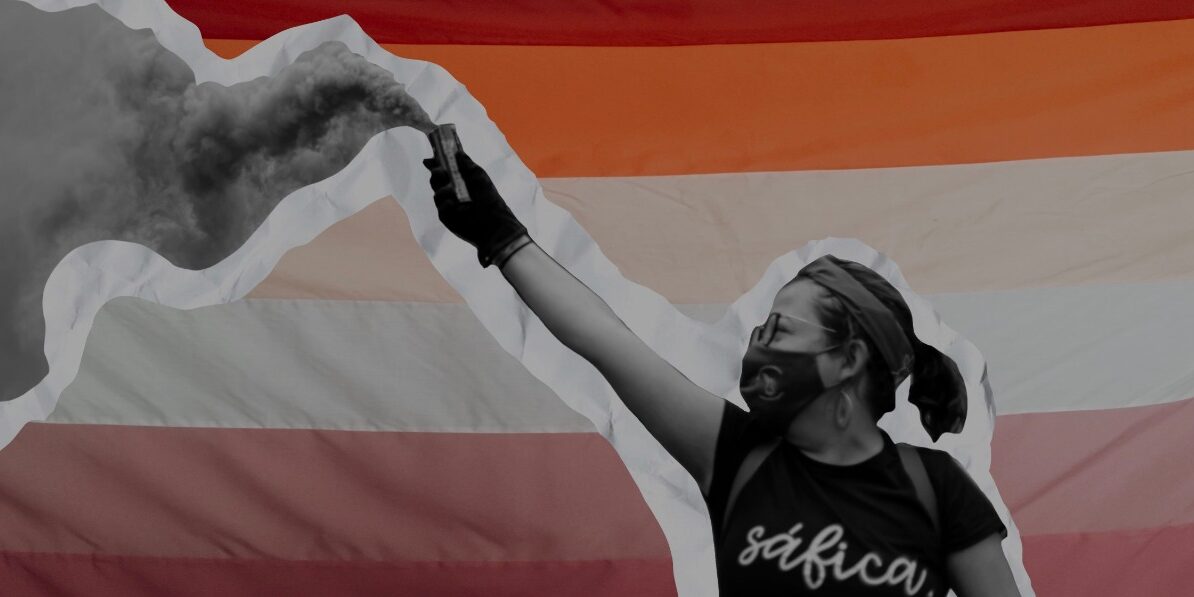
More than 70 years after the beginning of the lesbian movement , the Lencha March was held on June 19th. Given the current trans-exclusionary and "purist" context, the march's political stance invited reflection on the concept of "lenchitude" (lesbian identity). What does it mean to be a "lencha"? The members of the Lencha March sought to explore the experiences, people, and perspectives that the word carries in the eyes of society. "The concept of 'lenchitude' is diffuse and fluid because the stigma we experience is represented in different ways." Therefore, this march explicitly called upon cisgender women, trans people, and non-binary individuals who felt called to participate because they identify as "lench."
The meeting point for the LGBTQ+ community was at the Glorieta de Insurgentes roundabout. While awaiting the formal start of the march, women, trans people, and non-binary individuals chatted, kissed, laughed, hugged, and waved their flags. The wind created a vibrant mix of colors, ranging from pinks and light blues to magentas, interspersed with rainbow flags.
At 12:30 sharp, the organizers raised their voices to demand full social and legal recognition of lesbian motherhood and diverse families; access to comprehensive, mental, and sexual health free from discrimination and violence; dignified treatment for lesbian children and adolescents and access to comprehensive sex education that allows them to recognize and accept themselves; access to decent work; and the right to meeting spaces and to inhabit public spaces freely, visibly, and safely.
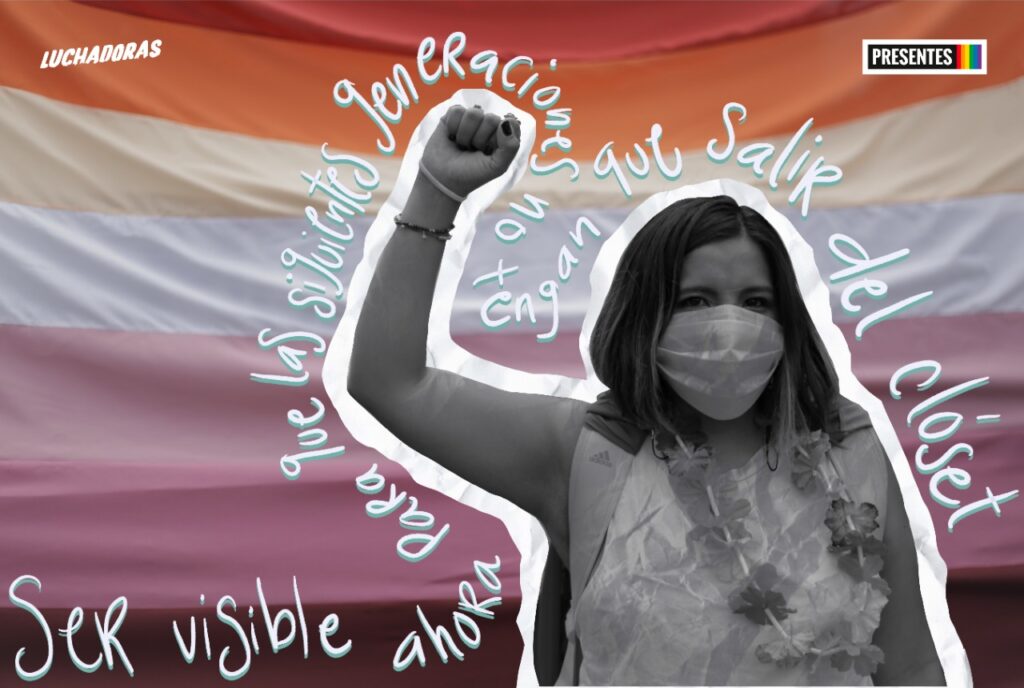
We are doing politics by being here.
Fátima Gamboa and Mariel Lara decided to join forces in Mérida, Yucatán, as a commitment to marriage amidst a pandemic, restrictions, and laws prohibiting same-sex marriage . Love is a political act, and so Mariel and Fátima asked those present to be their Ixmukanés, their women, their witnesses, and to support their union in public, “because the streets belong to lesbians too!”
“The universe conspired to bring us together at such an inopportune moment; in this world, you and I were made inseparable in love […] The moon shelters our lullaby and conspires with the sun to make our hearts blossom. I give you my surprise for your presence at every dawn […] Let us continue touching each other tenderly, rooting our feet in the air. Just like you, I love you.”
Living from our perspective of being lesbian, loving others and loving ourselves continues to involve fear, hatred, indignation, but also revolution, struggle, and resistance. How many times have we been terrified of blushing at the smile of the girl we like, or hearing our families introduce our partner as “our friend”? There is a powerful force in making ourselves visible, holding hands, and singing our love in a world that insists on denying it; it implies possibility(s). Naming ourselves and loving ourselves is our revolution.
“We are lesbians and it’s not a secret,” Lulú Barrera said after sharing the story of Cecilia and her aunt.
“Cecilia was a lesbian, but I didn’t know she was a lesbian. I was 7 years old and I didn’t know I could love other women. Cecilia was my aunt’s partner… A few years ago I decided to be a lesbian and I told my family that I had decided to be with women, that they weren’t going to be my friends, they were going to be my partners… because no more secrets!”
The march was a collective refuge and embrace as we found each other, listened to each other, and knew we were together. The stories resonated, and although there was sometimes pain in the words, we know we are not alone. We are free to love whomever we want. Mary lives in Naucalpan, State of Mexico. She found out about the march on social media and was nervous at first. More than halfway through, she's happy but smiles shyly. And like Lulu, she also told her father that she was with a woman, and that was her revolution.
“My revolution was telling my dad that I was with a woman. He rejected her, looked at her badly, treated her badly, and then I decided to go live with my wife and daughter, after he told me that he wanted me to leave her because God didn't make John and Peter.”
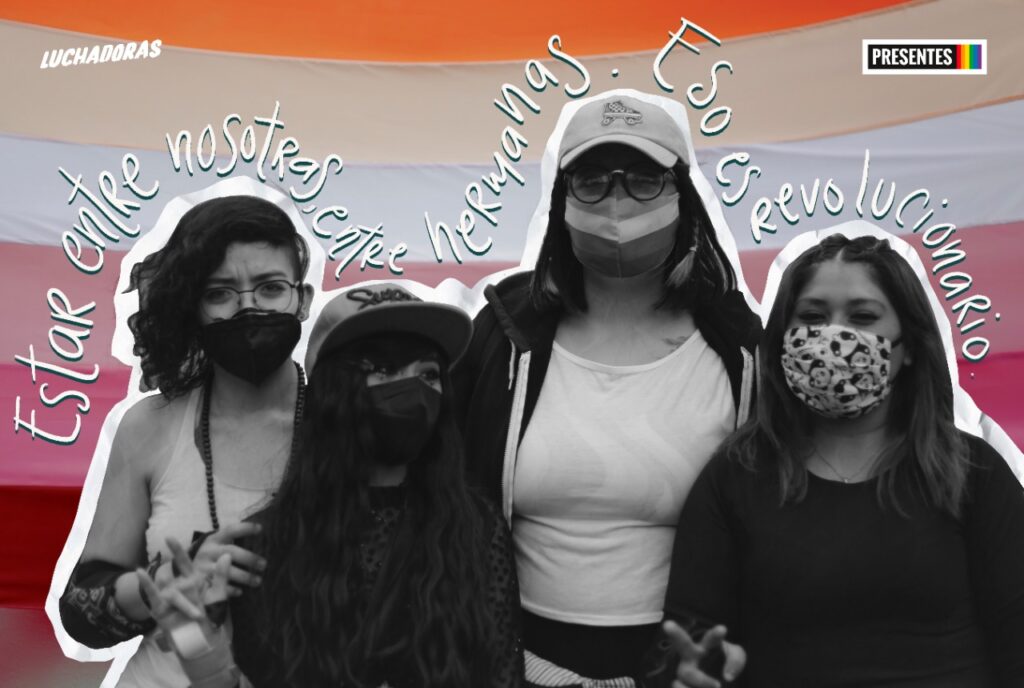
One of the demands of this march is that lesbians enjoy their lives free from violence, particularly violence that uses religious, pseudo-scientific, and pseudo-psychological narratives. This is a type of supposedly "corrective" violence often perpetrated by families and communities themselves.
“The revolutionary thing about being a lesbian was accepting myself and accepting that behind the people who don't accept you, you'll find a family that will welcome you with open arms and lots of love,” Citlalti, 17 years old.
Justice!
We also demanded justice, naming women who have been victims of lesbophobia and lesbofemicide, such as Marbella Ibarra, a pioneer and key figure in the development of women's soccer in Mexico, murdered at age 48 in Baja California. We also remembered Nancy Guadalupe, who at age 24 was beaten to death by a bouncer at a bar in Veracruz, and Jessica González, who was murdered in Coahuila at age 21 for her relationship with Fátima (her partner), whom the police tried to force to confess to Jessica's murder.
A minute of silence was observed for all of them, for the known victims of hate crimes and for those whose names are unknown. The attendees raised a fist and shouted, "Justice!"
The demonstration made a symbolic stop at the Civil Registry to demand recognition of the rights of lesbian women, their children, and their families. Alehlí Ordóñez, a lesbian lawyer, recalled that the current government once again attempted to obstruct the right to recognition of children born to lesbian mothers and that, despite promoting the recognition of Sofía, the first trans girl to obtain her birth certificate without revictimizing trials, this city has denied this right to 23 trans children and adolescents. Both rights remain absent from the law.
Trans, non-binary languages
In a world that historically insists on confining lesbianism to the gender binary, it can be difficult to be open about any experience that differs. But if we think about it carefully, being a lesbian is intrinsically gender non-conforming. A large part of lesbian identity is about subverting society's ideas about what it means to be a woman. As Monique Wittig aptly stated, "Lesbians are not women […] Lesbian is the only concept I know that is beyond the categories of sex (woman and man), because the designated subject (lesbian) is not a woman economically, politically, or ideologically." The concept of "woman" in the West invariably includes attraction to and "availability" towards cisgender men. Lesbians escape this heterosexist and heterosexual domination; we challenge the limits of sex and gender.
In other words, lesbianism can be an identity, a political practice, a political subject with a multiplicity of gender expressions, but it shares patriarchal oppression over an existence marked by social, economic, political, and cultural discriminations that put personal integrity at risk while threatening heterosexual normality.
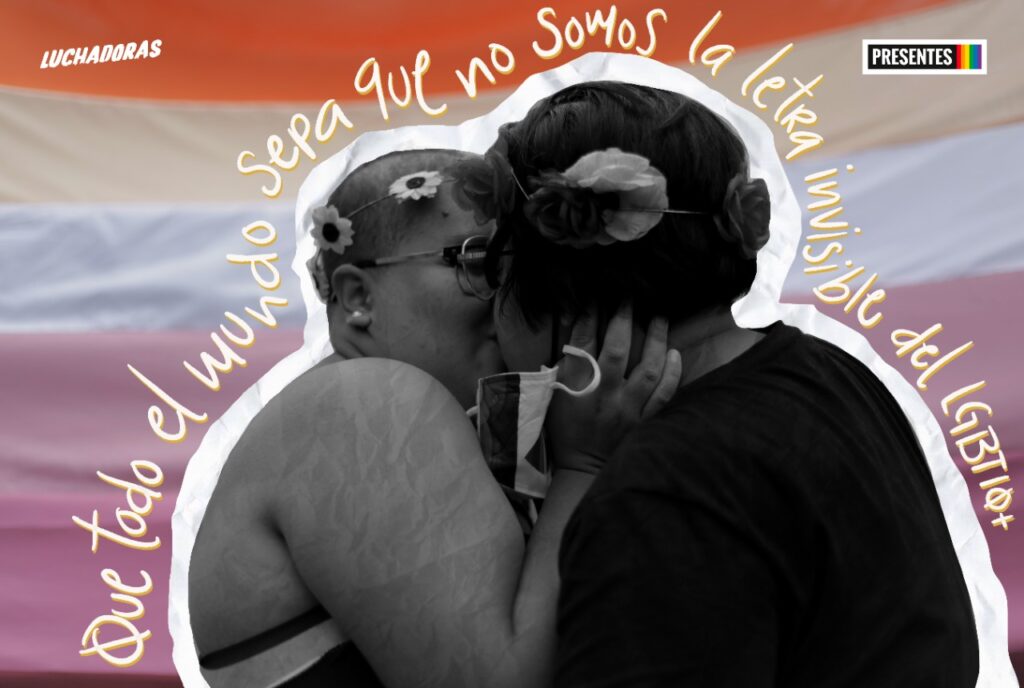
Lesbianism itself destabilizes gender conformity, which is why exploring the concept of "lencha" beyond "woman who loves another woman" is more than just a gamble; it is currently urgent to address because it exists, it is real, and here we are.
Yes, I'm a lesbian and my partner is a trans person. The same goes for Luisa, "Pauli and I live our lives as lesbians, we've talked about it, and even though it blew many people's minds, he and I are lesbians."
“What’s revolutionary for me is being able to say that I’m a lesbian and I’m trans. And to keep living, walking, fighting. I would like those who come after us to have an easier path than the one we’ve had,” Pauli, psychologist and artist.
Unlike Pauli, I found my identity first. But hearing her speak with such euphoria about her lesbianism invites me to reflect on my own lack of it, because I have no other way to describe it for now. Pauli's desire makes me feel accompanied on this unknown path of recognizing myself, embracing myself with love and no longer with pain.
“Something really beautiful I did recently was come out to my parents and bring my trans girlfriend into my family; that was my revolution and it was very beautiful,” Dani
At the end of the day, the words lesbian, non-binary lesbian, trans lesbian, Sapphic, queer, butch, dyke, and dyke are terms. They are linguistic tools to describe an experience that already exists. So, for someone to tell us that we can't be dykes for loving a trans or non-binary person means nothing, because we already are.
Gender and identity are complex issues, and not everyone shares the same perspective. But lived experience is always more valuable and meaningful than theory on paper, and these conversations must be based on empathy and respect; otherwise, they will fall apart.
We recognize ourselves as lesbians, lesbians, lesbians, lesbians, queer, pansexuals, bisexuals, cis women, trans people, and non-binary people; together we resist. This march filled us with love, celebration, and revolution. What follows is to continue collectively building spaces and political expressions from the desires, affections, tenderness, and identities that define us.
We are present
We are committed to journalism that delves into the territories and conducts thorough investigations, combined with new technologies and narrative formats. We want the protagonists, their stories, and their struggles to be present.
SUPPORT US

FOLLOW US
Related notes



We are present
This and other stories are not usually on the media agenda. Together we can bring them to light.