

Hate crime against young man living with HIV: Mexican activists raise their voices and demand justice
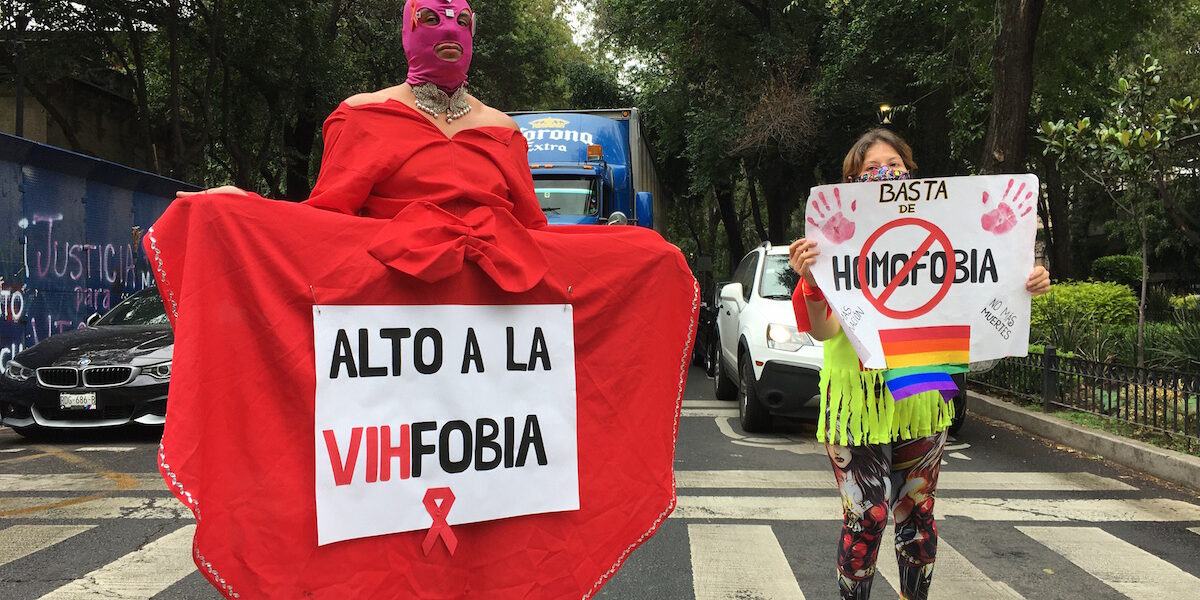
On June 5, a young man was murdered in Cancún after revealing at a party that he was living with HIV. On Saturday, there were demonstrations in the state of Quintana Roo and in Mexico City.


Share

On June 5, a young man was murdered after revealing at a party that he was living with HIV. The incident occurred in the outskirts of Cancún, Quintana Roo, a region bordering the Caribbean Sea and known worldwide for its beaches. Activists in the state are demanding a human rights-based investigation, the creation of public policies, and the legal classification of hate crimes based on sexual orientation and gender identity.
Resilientxs collective and the Quintana Roo LGBT Activist Network made the crime public on June 7 and demanded an investigation adhering to the national protocol for action by personnel of the justice system in cases involving sexual orientation, gender identity and expression.
“This cruel case should never have happened. It only shows that the State has failed to legislate and create the necessary public policies to prevent, address, and punish hate-motivated violence in the state. That is why we raise our voices, because Quintana Roo is not a paradise, it is not gay-friendly . Things are happening here, and it's not all luxury hotels, beautiful beaches, and parties. They are killing us,” warns Edwin Reyes, a lawyer and member of Resilientxs, in an interview.
The State Attorney General's Office (FGE) reported three days after the incident that it had opened an investigation file in which it determined that the young man —whose identity is being protected— “lost his life due to a blow to the head caused by a short, blunt object and post-mortem he suffered multiple burns on his body surface.”
On June 9, the Attorney General's Office announced the arrest in Tabasco—900 kilometers from Cancún—of the suspected perpetrator in the murder of the young man living with HIV. Following the arrest, it was revealed that the man was the young man's neighbor and tenant, and that he had been with the young man on the day he disclosed his HIV status.
The incident garnered so much media attention that the Ministry of the Interior (Segob) and the National Council to Prevent Discrimination (Conapred) condemned what happened, labeling it a “hate crime” and requesting an anti-discrimination investigation from the Quintana Roo State Attorney General's Office (FGE). On June 10, following a meeting between local and federal authorities and activists, Conapred offered to provide technical assistance for the creation of a Specialized Prosecutor's Office for crimes against the LGBTI population in Quintana Roo.
58 hate crimes
In Mexico, there is no official registry of murders of LGBT people, and because of this lack of data, organizations have taken on the task of creating observatories to track these crimes. A report by the organization Círculo Social Igualitario (Equal Social Circle) indicates that at least 58 LGBT people were murdered in Quintana Roo between 2011 and 2018.
“It’s terrible, we don’t have real statistics on the problem in our state. We don’t even know if these 58 hate crimes against LGBT people are under investigation as 'homicide',” Edwin added.
Currently, only 13 states in the country include hate crimes motivated by sexual orientation and gender identity in their Penal Codes. Quintana Roo does not mention sexual orientation or gender identity in its chapter on homicide, only in the section on discrimination.
“Quintana Roo is not paradise”
Edwin explains that activists face challenges in making visible the violence faced by LGBT people due to the national and international narrative that portrays Quintana Roo as "a paradise".
“We love our state, but it’s very difficult to publicize the tangible violence that occurs against our rights and freedoms. From criminalization and police abuse in Tulum and Playa del Carmen; the harassment of lesbian colleagues; discrimination for trying to donate blood, to the disappearance of people like the case of Mario (Antonio Cruz) , and now murder simply for saying 'I live with HIV.' It’s outrageous,” Edwin warns.
Furthermore, she mentions that it is “contradictory” that there are no public policies guaranteeing LGBT people a life free from violence. She adds, “This would not only benefit those of us who live here and those who migrate here, but also tourists, because they too have experienced this violence.”
The call for justice
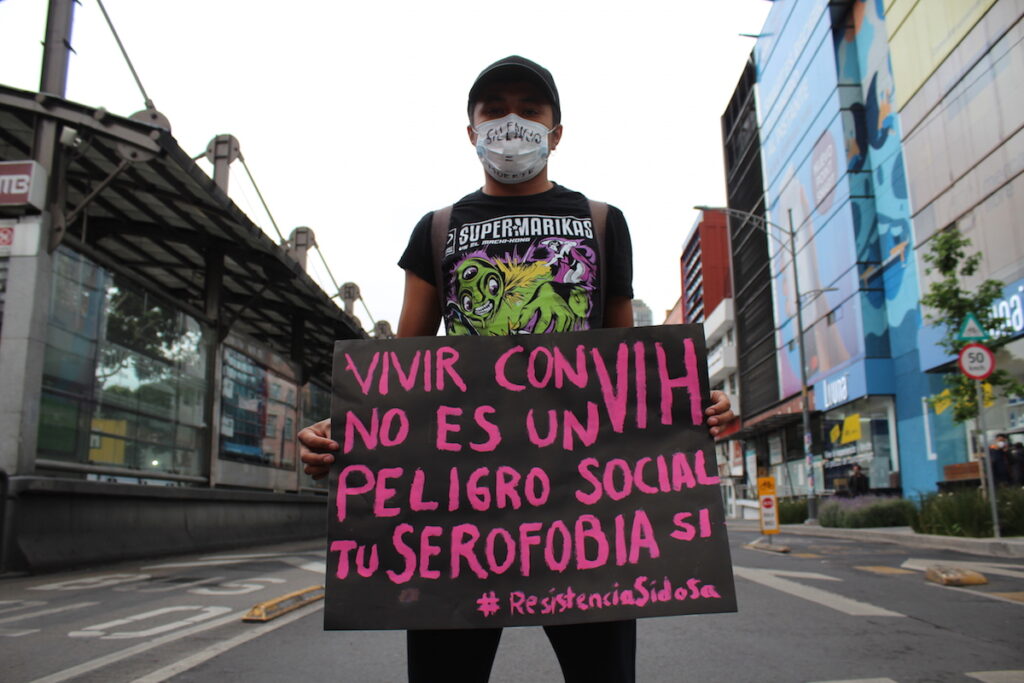
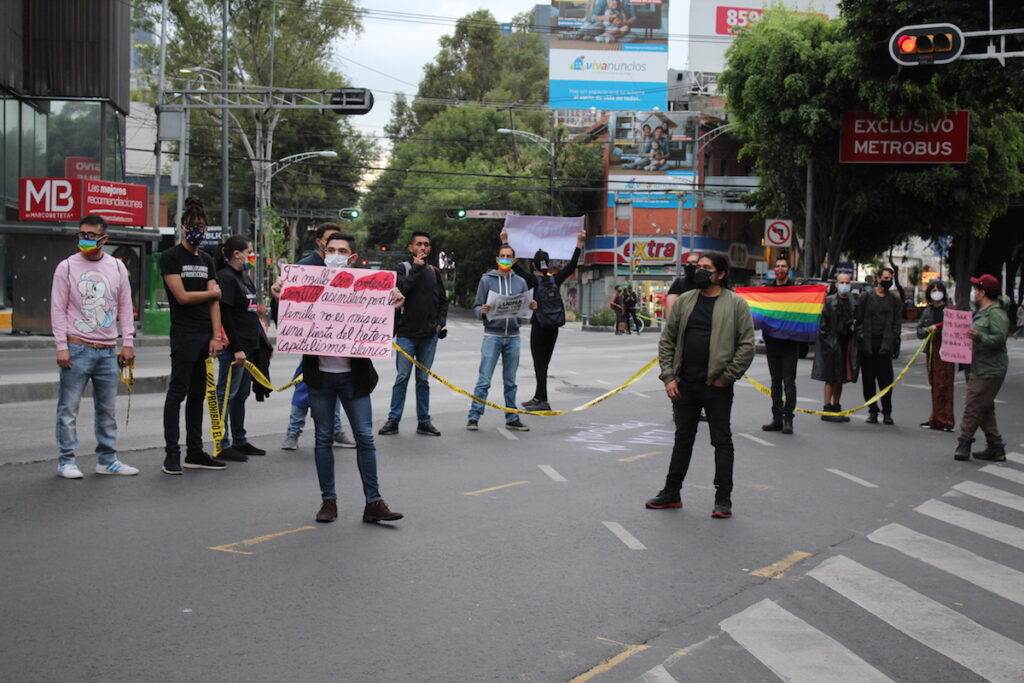
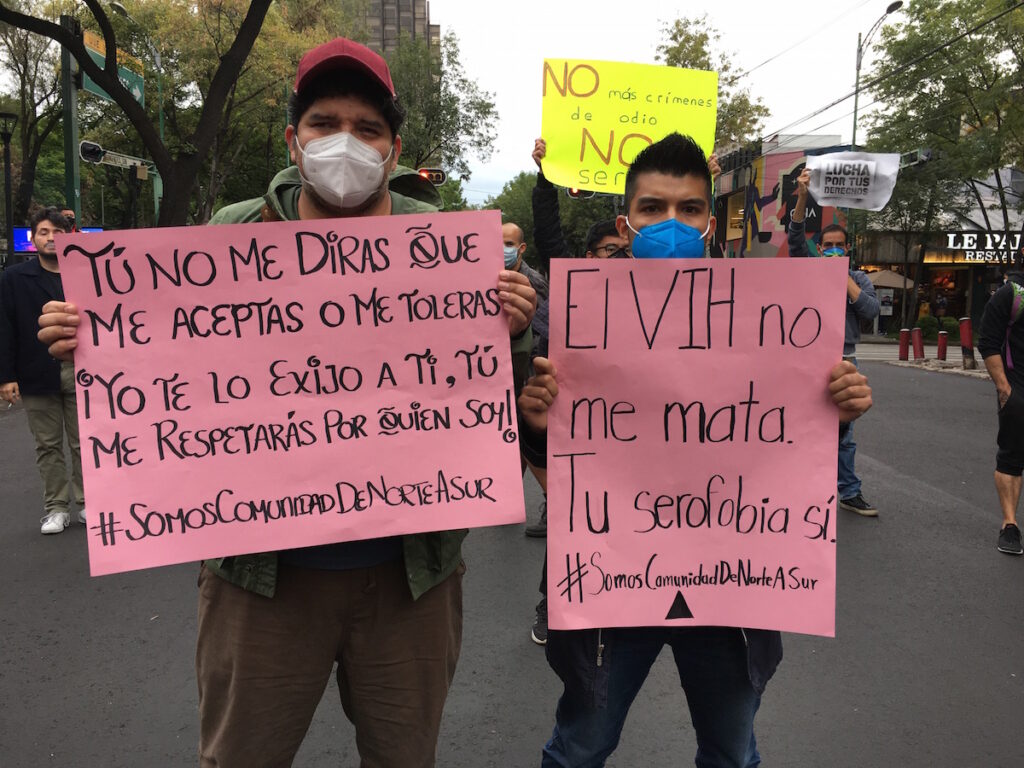
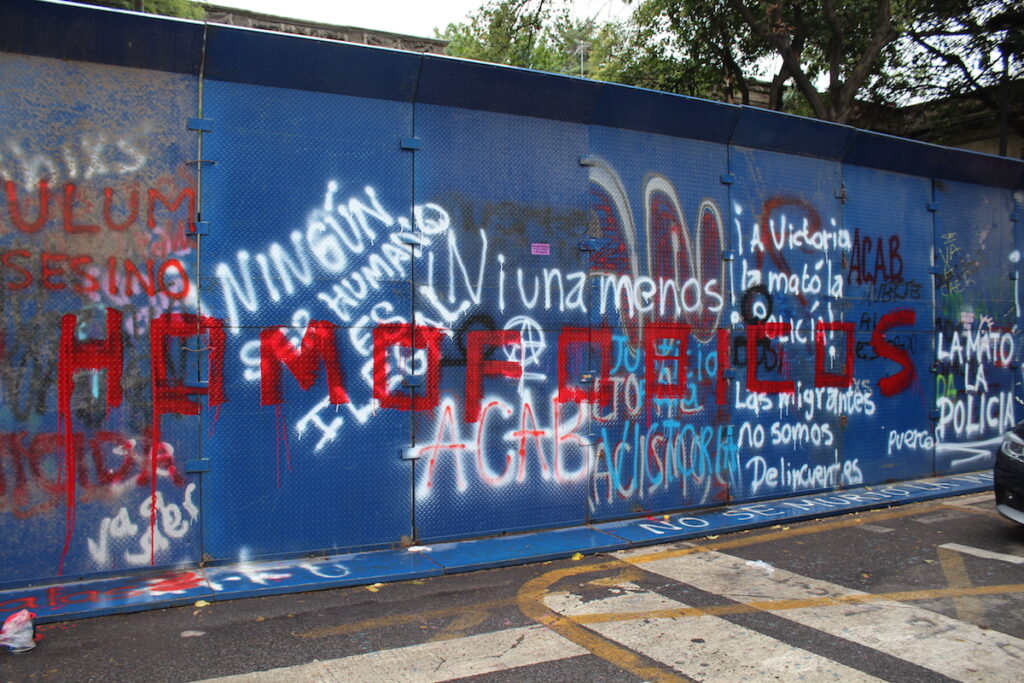
On June 12 in Cancun, Playa del Carmen and Chetumal (cities of Quintana Roo) and Mexico City, people living with HIV, LGBT+ people and activists demonstrated to demand justice for the murder of the young man living with HIV and the 58 hate crimes.
In Mexico City, they demonstrated in the streets surrounding the state's representative office; they ended at the Attorney General's Office and managed to arrange a meeting with local and federal authorities to learn the status of the 58 hate crimes against LGBT people in Quintana Roo.
The slogans also called for the decriminalization of people living with HIV and the repeal of the crime of "risk of contagion" from the Federal Penal Code and the penal codes of 30 states of the country, since they establish economic and jail penalties for people with HIV and conditions that are considered to affect the health of other people.
This comes after a man was arrested and taken to the Reclusorio Norte prison for allegedly "endangering public health" following a complaint filed in 2019 by his partner upon learning he was undergoing antiretroviral treatment. The case gained media attention after a national news outlet misinformed the public by revealing his identity and HIV status.
In this regard, the Oslo Declaration on the criminalization of HIV states that “the differentiation of HIV through specific laws and processes deepens the stigmatization of people living with or affected by HIV” and that “relevant authorities should ensure adequate HIV-related training for police, prosecutors, defenders, judges, juries and the media.”

“No one should go to jail or be killed for living with HIV”
For Axel Bautista, a sociologist and member of Inspira Cambio , an organization whose purpose is to improve the quality of life of people with HIV in Mexico, these narratives promote serophobia, misinformation, and discrimination.
“What the media should be focusing on is creating a cultural impact on social perceptions, communicating that HIV is not contagious but transmitted, putting information on the table that undetectable equals untransmittable, that people with HIV can live like anyone else. Serophobia isn't something that's resurfacing; it exists every day for those of us who experience this intersectionality, but you, journalist, your government, are only now realizing it because someone with HIV has just been killed and imprisoned,” she commented.
—What do you mean by serophobia?
“When you demand that someone reveal their HIV status simply because they live with HIV. When you require a person with HIV to use a condom simply because they live with HIV. It has to do with fear, discrimination, rejection, and hatred toward people living with HIV and AIDS simply because of it. In these simple examples, we also see how HIV has been imposed on us as a punishment because we are perceived as a danger to society, which we are not. No one should go to jail or be killed for living with HIV.”
—How to combat serophobia?
“I think that when we talk about an act of serophobia, there is clearly a personal aspect, but serophobia also comes from the State, and that's why the State is responsible, due to negligence. There is no comprehensive sexual health care, we have shortages of medications, there is no access to healthcare, nor to condoms, and women continue to be subjected to violence because they don't have the right to negotiate for condoms. Behind all of this is a complete abandonment by the State and a very precarious education system. And that's why I believe that the Penal Codes that potentially criminalize people with HIV should be repealed, but the educational system must also be restructured regarding sexual health, and there needs to be a very strong awareness and prevention campaign because there hasn't been one for more than ten years,” emphasizes Axel Bautista.
We are present
We are committed to journalism that delves into the territories and conducts thorough investigations, combined with new technologies and narrative formats. We want the protagonists, their stories, and their struggles to be present.
SUPPORT US

FOLLOW US
Related notes


We are present
This and other stories are not usually on the media agenda. Together we can bring them to light.