

Three months without Tehuel: chronicle of a search that cries out for justice
His partner is searching for him alive. His sister and mother are accompanying the search parties and demanding that the two detainees talk. Three months after he was last seen, Tehuel De la Torre has become a symbol of the cry for justice for trans youth.



Share

This article was researched in collaboration with Soledad Mizerniuk and Victoria Rodríguez.
Tehuel is being sought on social media and the search continues in the wetlands, in the areas where pigs graze, and in garbage dumps. On the morning that marked three months since his disappearance, another search was conducted, this time in a facility in José León Suárez where compacted waste from other plants in the Buenos Aires Metropolitan Area (AMBA) is processed.
Since March 11, when his partner and sister last saw him, nobody knows how to conjugate verbs.
She was 21 years old and on March 26th she would have turned 22. In her environment, everything that was once a celebration became a reminder of her absence, a deeper layer of the void and the darkness produced by not knowing what happened, an amplification of the pain.
“Today is our anniversary and my birthday, and you’re not with me, my love,” wrote his partner, Luciana, on March 24, her 18th birthday and her second with Tehuel. She posted it on Facebook, the platform where they met and communicated until they decided to meet in person at the Perito Moreno Premetro station.
March 12, 2021, was a Friday. Luciana waited for him at the small house in San Vicente where they lived together with their 4-year-old son, and shared with Tehuel's mother and brother. “Tehuel is a person who loves helping people. He always has a smile on his face. He lived his whole life with his father until we decided to move in together. We have a son, and he took on the role of father, raising him from the age of two. The boy accepted him too. We always went out together, even just to go shopping,” his partner recounts.

Tehuel never had a steady job; he always supported himself with odd jobs. His girlfriend made donuts and pastries, and he would go out to sell them. Sometimes he helped neighbors by mowing lawns or removing trees. The only job he'd ever had was handing out flyers for Mi Cabaña, but it didn't last long because of the pandemic. The three months since his disappearance coincide with the passage in the Chamber of Deputies of the bill for the labor inclusion of trans and travesti people , an initiative that seeks to alleviate this lack of basic rights for the community, both the cause and consequence of a chain of structural violence and systematic violations.
Luciana says she's a scaredy-cat, that she became worried after Tehuel told her that Luis Ramos—whom Luciana didn't know but had heard about—had offered him a job as a waiter at an event. “Tehuel isn't one to go out at night; we're always together, going everywhere together. I didn't like the idea of him going out alone, not because I'm toxic, but because I was afraid something might happen. Now nobody understands me, and everyone judges me because I took so long to file a report.”
She waited for him Friday morning. She left a note on the table and went to pick up her son, who was starting kindergarten. In the afternoon, already worried, she asked a neighbor for her phone; hers only worked with Wi-Fi. “I called about five times, and Tehuel’s cell phone was off. I called my mother-in-law to see if she could get through. If Tehuel said he’d be there at such and such a time, he’d come. It was time to cook for the boy, and I stayed on the couch until the early hours of the morning.”
On Saturday morning, Luciana went to the 1st Police Station in San Vicente. “They wouldn't take my report because I'm 17. When I was describing him to the police, one of the officers said, 'Oh, he's a trans kid .' I felt a bit discriminated against and unwelcome. Later, I went back with a neighbor. They told us we had to file the report in Alejandro Korn because that's where he disappeared. They took us there in a patrol car.”
"He left alive and he must return alive"

Luciana is hopeful of finding Tehuel alive. She says he loved playing soccer, was a Boca Juniors fan, and loved the music of Carlos Rivera and Romeo Santos—"anything romantic." Tehuel told her that he "always wanted to be a man. Before, he dressed as a woman, until he was 15 or 16, because he didn't know how to express himself. Around 16, he cut his hair and started treating himself the way he wanted. His family has always accepted him for who he is, although it's a little difficult for them to treat him as he wants, a trans man. They respect him, even though it's hard for them."
Luciana accompanied some of the searches, but now prefers not to go anymore. “I think the search was flawed from the beginning; they were looking for a body when we have no proof that Tehuel is dead. The only ones who know what happened to him are (Luis) Ramos and (Oscar) Montes. That's why we demand they talk.” The two men are in custody, accused of obstruction of justice and perjury. Luciana believes there are more people who know what happened to Tehuel.
“From what I understand, Ramos always treated Tehuel like a friend, a man. They weren't really friends; it was a distant relationship, they didn't talk often. Tehuel probably went to Ramos's place two or three times. I can't imagine what happened. Tehuel and Ramos met almost four years ago at marches. Some of them were organized by the left-wing front. I don't know if Ramos recruited Tehuel for that kind of work. But then Tehuel stopped going to the marches; he didn't work there anymore. From what I know, they went to two or three marches organized by the MST.”
Luciana is still waiting, now at her mother's house, because she moved from the place she was living with Tehuel a few weeks ago. “Since I can't find a steady job, we're washing comforters together. I dropped out of school in my second year because I was pregnant, and when I wanted to go back, it got complicated because of the baby. I can't get hired anywhere.”
“He left alive and he has to return alive,” he repeats, and asks that this be made clear in this note.

***
“Tehuel is a cheerful person, always making jokes. He was looking for work, taking any odd jobs he could. I understand that sometimes, because he was a trans man, he wasn't hired. He and his wife lived day to day. He told me that he would make milk for their son, take him to kindergarten, and pick him up. A very good father, a very good husband, and above all, a good brother,” says Verónica.
For the past three months, Verónica, Tehuel's sister, has been living in another dimension. A bubble where time is a coordinate emptied of meaning and filled with a state of constant alert. Verónica wakes up and goes to bed glued to her phone, glued to her device. On her 36th birthday a few days ago, there were no cakes, no singing, no party with her children or her partner, Feche, who accompanies her on every search and sometimes acts as her spokesperson to the press. With every police officer or patrol car she sees passing by her street, Verónica's first thought is that it might be someone bringing news of Tehuel . But to this day, no one has that news.
She was the last person in the family to see him on March 11, after he left the house where he lived with his mother and Luciana. Verónica and her brother ran into each other by chance on the street at 7:30 p.m. Tehuel had left his house in San Vicente at 7:00 p.m., taken the bus, and gotten off at the corner of Asamblea and Avenida Presidente Perón. Asamblea is the main street in La Esperanza, the neighborhood in Alejandro Korn where Verónica last saw her brother, near Ramos's house. Life has these absurd twists of fate.
"Where are you going, Tehu?" Veronica asked him.
"I'm going to become a waiter. An acquaintance called me."
–A friend?
–Yes, Luis. To work as a waiter tonight.
–And where is it located?
–I don't know. He'll tell me when he gets here.
Everything that follows is still conjecture, based on neighbors' testimonies, some traces of blood, seized objects awaiting further analysis, and negative searches. There's also a photo from the case file, obtained from Ramos's cell phone, showing Tehuel with Ramos and Montes at Montes's house on the night of Thursday, March 11, when he went to Ramos's place to work as a waiter. The court summoned them to testify; one said he hadn't seen him, and the other said he'd barely crossed paths with him. There is compelling evidence of their false statements and some traces, such as that photo.
“I know from my brother that in 2019 Ramos was in a cooperative; he had signed him up. He even went to two or three MST marches. I don't know what happened after that. Tehuel didn't talk much; he's kind of closed off when it comes to his own things. The only person he told was his wife.”
Verónica is Tehuel's half-sister, Norma, on his mother's side. They go on searches together. Norma is the mother of nine other children, five with Tehuel's father, from whom she separated when Tehuel was very young. Tehuel spent his childhood and part of his adolescence with his father and siblings in Tristán Suárez. He dropped out of high school in his junior year; he had moved in with a partner and had to work.
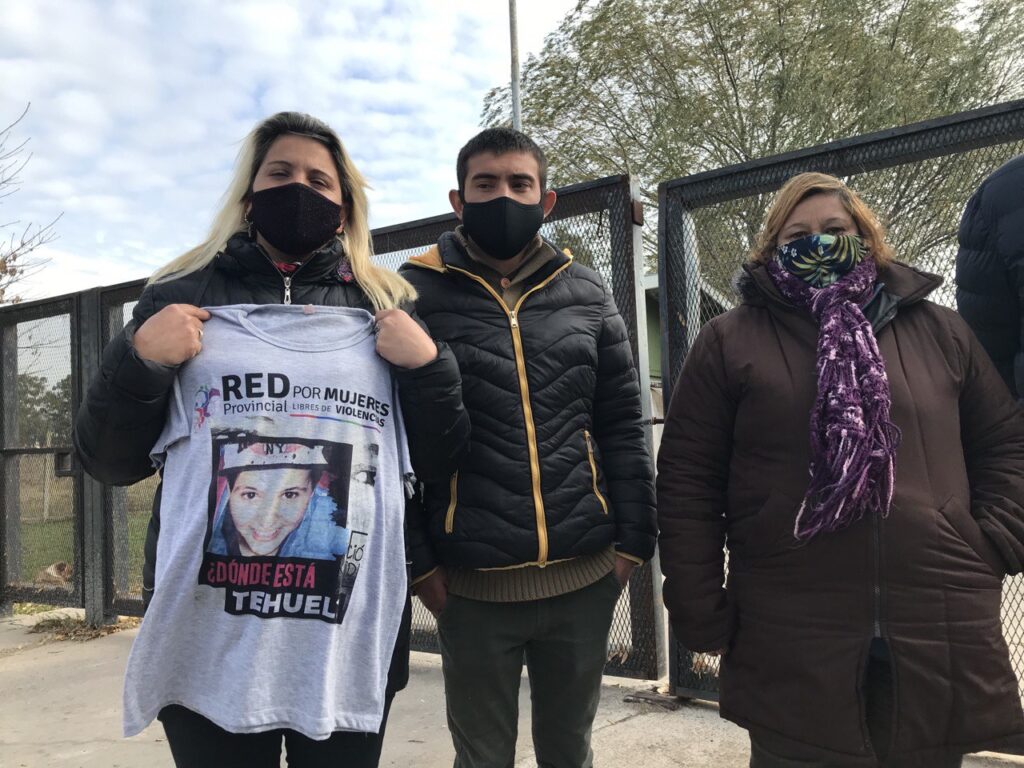
Mother and son grew closer again in their teens. Norma is a housewife; she worked for several years caring for elderly ladies. Until recently, she owned a small kiosk, but she closed it after Tehuel's disappearance.
“When she first came to live at my mom’s house, she had long hair. Later she changed it.” One day, when she was 16, Tehuel sat down to talk with Verónica.
–I want to be a man, to cut my hair. I want them to call me Tehuel, and to treat me like him.
She says that in the beginning, the name wasn't a problem: “Tehuel's name has been Tehuel since birth. He never changed it or anything. My mom sometimes slipped up and called him 'ella,' but she always accepted it. My father, on the other hand, still says ' ella es mi nena' (she is my girl ). His dream was to change his name when he had a job; he wanted to call himself Matías. He dreamed of having his own house and family.”
The search and justice
In that photo from Ramos's cell phone, Tehuel can be seen sitting at the table. The image surfaced the day an area of the lagoon near Montes and Ramos's house was searched, by order of the prosecutor's office leading the investigation, headed by Karina Guyot.
“We would have liked these raids to have been done sooner,” Verónica says, three months later. “The investigation continues, and that’s what we want: for Tehuel not to be forgotten and for him to be found. For the justice system to say what happened. For the accused to speak and to pay. I don’t believe the trafficking theory that they sometimes mention. Otherwise, they wouldn’t have found the broken cell phone or the blue camouflage jacket with white stripes.”
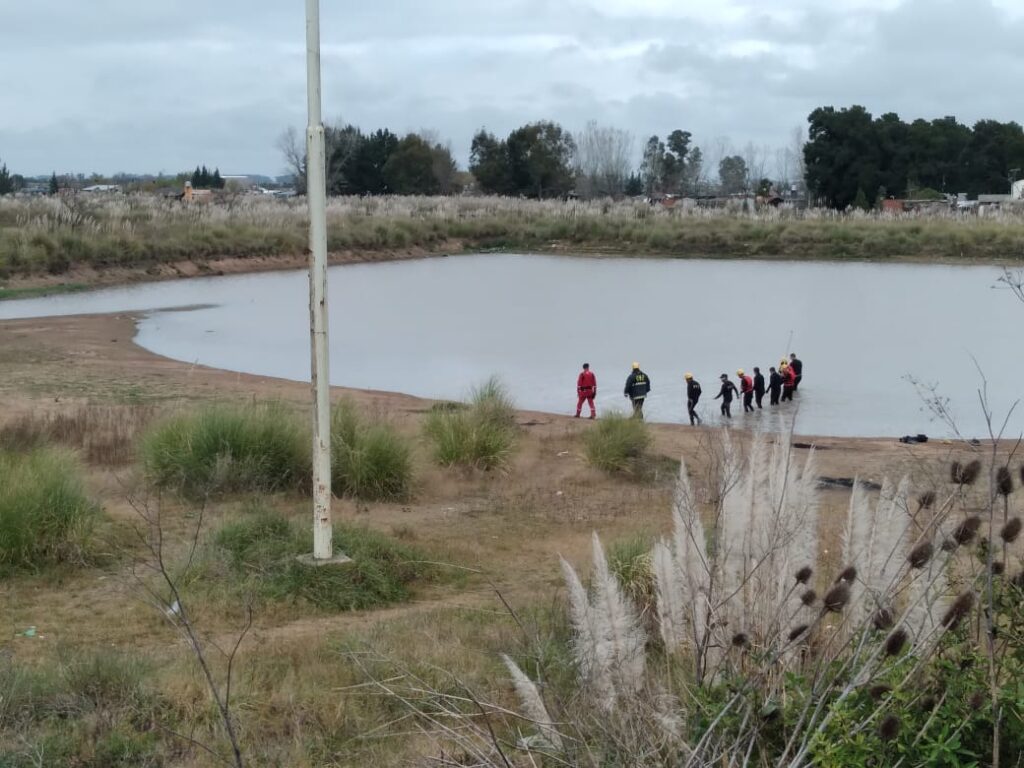
The first media outlets to broadcast Tehuel's images and the news of his disappearance and the search were local ones: Al Sur Web (the long-established news site in San Vicente) and FM Solidaria 94.9 . Their journalists are the first to arrive at the search sites and guide the rest of us journalists who come from other areas, including the swarm of reporters who in recent weeks have begun to follow the case more closely. Initially, television only covered Tehuel's search with very occasional broadcasts, some of which didn't even respect his gender identity. Soledad Chaua, a colleague at FM Solidaria, found out when the search began to gain visibility in neighborhood Facebook groups, at buy-and-sell shops, and on the social media walls of acquaintances, where the family asked anyone who had seen him to get in touch.
The first search was conducted on Tuesday, March 16. At that time, there was a dramatic and urgent search underway, and the face of a seven-year-old girl was on television screens across the country. A man had taken her on a bicycle from Villa Lugano, and she was found three days later in Luján . Tehuel's face, however, quickly disappeared from the mainstream media.
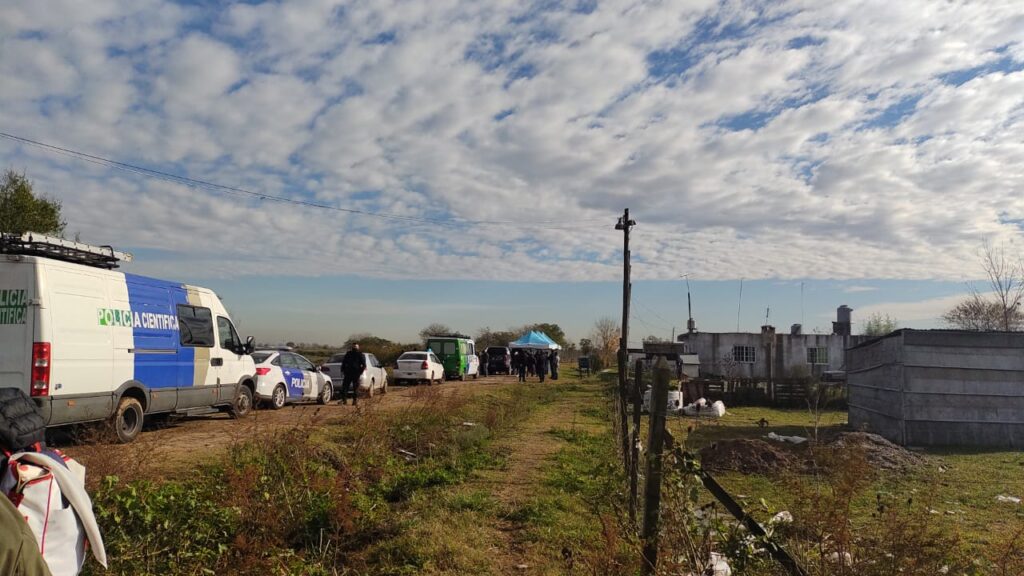
Soledad was one of the few people present during the initial search, which involved police from the DDI (Departmental Investigation Directorate) and another journalist. They were able to closely follow the work of experts, dogs, and tactical divers around and in the lagoon. Later, the prosecutor's office ordered two more searches in the surrounding countryside and the lagoon. On March 16, during a raid on Ramos's house, the burned jacket and broken cell phone were found. However, Ramos was arrested days later in Dock Sud. His house was raided again on another occasion. Days later, Oscar Montes was arrested.
Hope is a neighborhood
The neighborhood where Ramos and Montes lived before their arrest is a young one. It grew up a little over 10 years ago on what used to be a vast field and part of the Miriní lagoon. First, there were shacks built on reclaimed land, and over time they became brick houses. Because it's very close to the La Esperanza neighborhood, it's nicknamed La Nueva Esperanza (New Hope), although some still call it "la toma" (the squat). Tehuel's trail goes cold in La Nueva Esperanza.
It's a working-class neighborhood, with snack bars, small shops, and children playing barefoot in the dirt streets, even though summer is long gone. It's a somewhat isolated neighborhood where many reports of gender-based violence are received.
Ramos has a history of violence: a completed sentence for homicide. Montes, on the other hand, has no criminal record, but several people in the neighborhood described him as violent.
Ramos worked at the cooperatives/ He lived with his mother on the same property, each in their own little house/ He handed out government assistance programs/ He came home high, you could tell/ It was said that he hit his mother. She sometimes came home with bruises on her forehead. We saw some cuts on her too/ His uncle lived with them/ After the Tehuel incident, his mother and uncle packed bags and a mattress and left in a white car/ From the house, investigators took candles and satanic books/ He always carried a kitchen knife
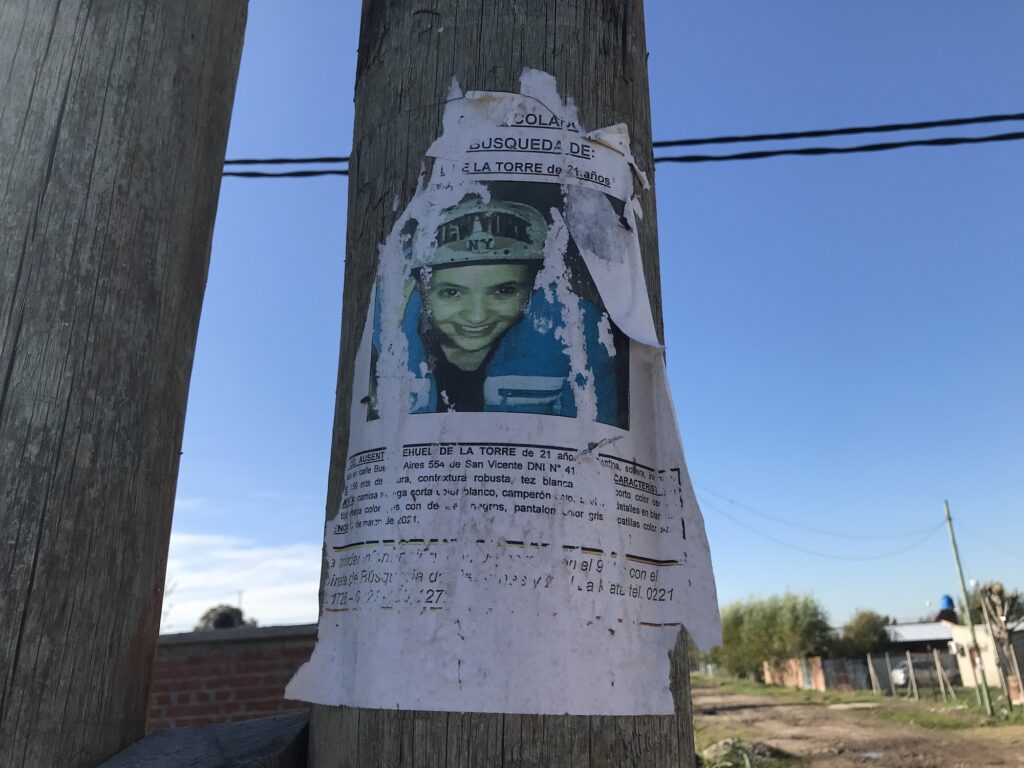
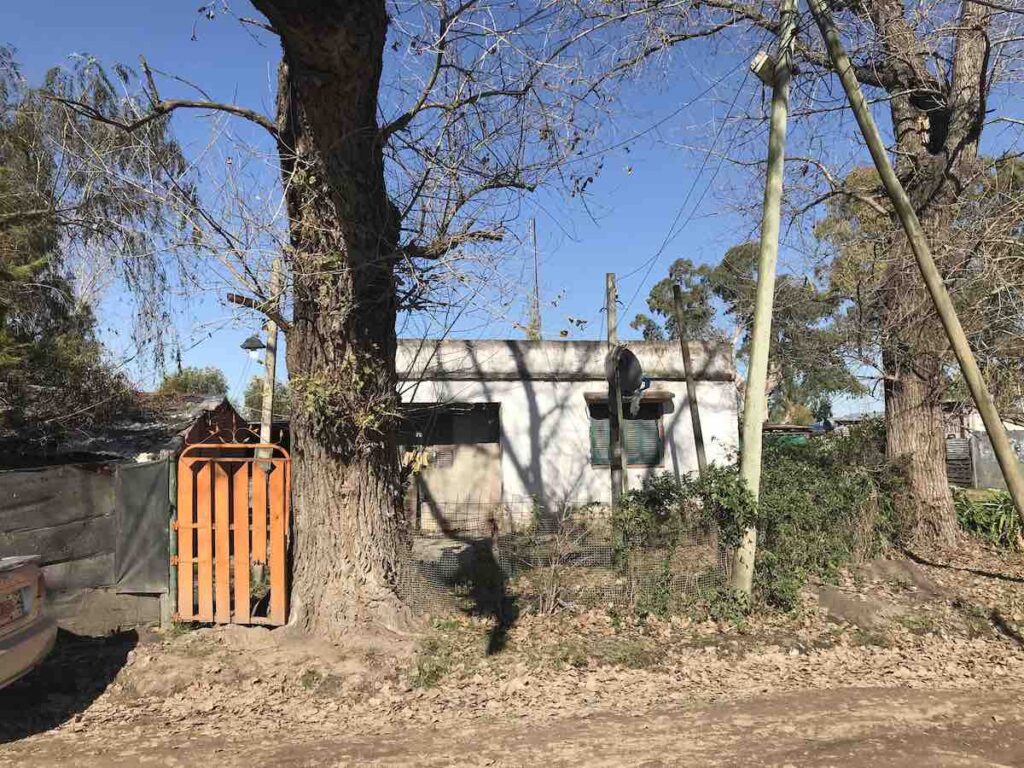
The photo with the reward request and Tehuel's cheerful face is plastered all over the La Nueva Esperanza neighborhood. The Ministry of Security, through the Provincial Directorate of the Registry of Missing Persons, is offering up to two million pesos to anyone who provides information, guaranteeing anonymity. Tehuel smiles from that poster, stuck to the post in front of Ramos's house. Today, the lot where there are two houses (his and his mother's) is uninhabited. The front has a fence covered with a shade cloth. Curtains flutter in the windows without glass. Spray-painted on the walls, the message "DO NOT ENTER. OWNER WITH PAPERS" is repeated twice in full-coverage letters. The lot contains a few plants, a battered armchair, and various discarded items scattered about. A tree, which must have served as a coat rack, has a shoe, a plastic pitcher, and a kettle hanging from its branch.

Five blocks away is the house of the other accused, more compact, with a wooden gate painted orange. They say Montes worked as a scrap metal dealer. And other things too:
He abused his wife/He had no criminal record/He beat his son/He was quiet/He was a macumba practitioner/He held many meetings/Doing the math, that night screams and drums were heard around 11 pm/The next morning there were strange movements at Montes's door/Tehuel was seen in the plaza that Thursday/In the neighborhood it is said that the worst happened to him and they dumped him/
If someone knows something, they probably won't talk.
The searches
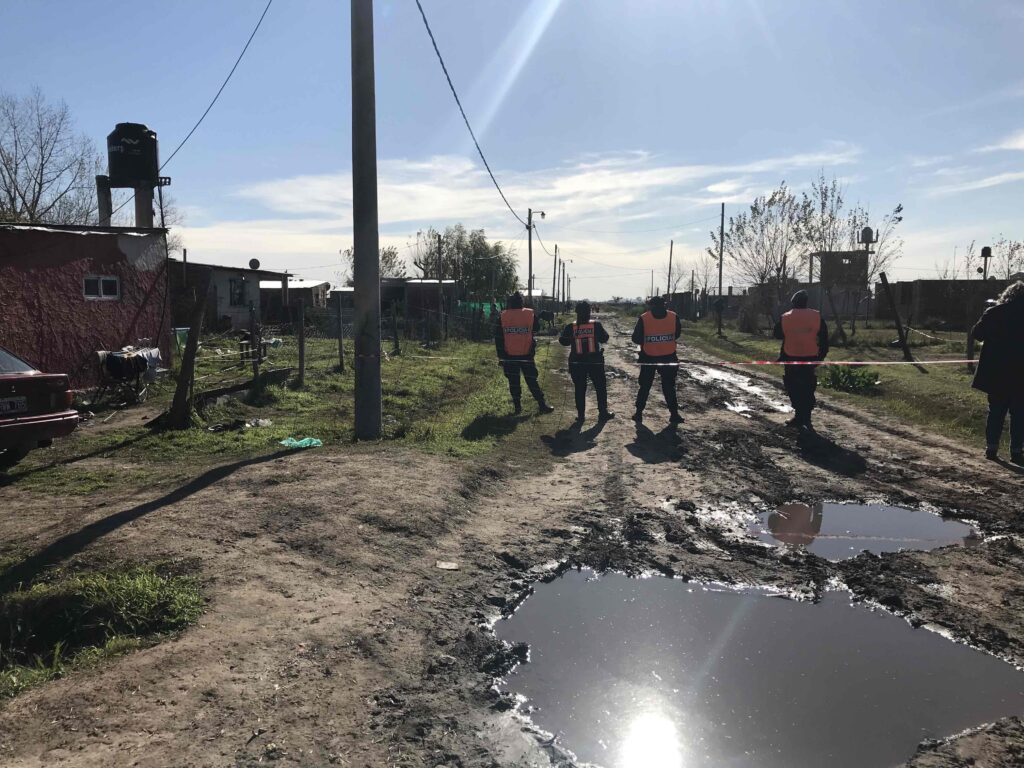
There are things that shouldn't be written down, and many of those things are being discussed in the neighborhood. The darkest hypotheses, the ones that led to the search of so many properties where waste is separated. One of those searches, the one on June 3rd at the San Vicente Eco Point , stemmed from a report. More than 100 police officers, personnel from the Federal System for the Search of Missing and Lost Persons (Ministry of Security), prosecutors, forensic experts, and dogs trained to track bloodstains were involved. Beside the search, Norma, Tehuel's mother, drank sweet mate, and Verónica, his sister, clutched her head and let it fall onto the table. Also present were her partner, Federico, and the family's lawyer, Alejandro Valle.
The lawyer explained that the search was initiated following a report from people who work at the Eco Point separating waste and recyclable materials. They stated that a vehicle parked at the entrance on March 15th at 4:00 AM and left some bags in a container there. The prosecutor's office says it has already examined the evidence but is keeping much of the investigation confidential. Inside the facility, the dogs trained to detect bloodstains did not bark. However, sources close to the investigation confirmed the discovery of these alleged traces during another search. They will compare them with DNA samples from the family in the coming weeks, including those of the mother and father, and with that of Ailén, Tehuel's twin sister.
"Tehuel's silence is a cry for justice."
Many questions remain unanswered. The search, which initially did not consider Tehuel's gender identity as a key to understanding the case, became increasingly complex as it adopted a transdisciplinary approach. Professionals from the province and the national government, as well as from the Ministries of Gender and Diversity and the Secretariat of Human Rights, have been supporting the family. The Gender Unit of San Vicente, in particular, has been working in conjunction with the Ministry of Women, Gender Policies, and Sexual Diversity of the Province of Buenos Aires. "I feel supported; they accompany us on every search," says Verónica.
“We’ve been searching for Tehuel for three months now. We want to know where he is; we want Tehuel alive,” said Estela Díaz, head of the ministry, today. “The ministry is supporting the search by requesting action from the prosecutor’s office, working alongside the family and the municipality. We are also collaborating with the Argentine Forensic Anthropology Team, whose expertise is guiding this search. His family is grieving, and so is society. Let’s keep looking for him. We want him to be found alive.”
This afternoon a third arrest was announced, in connection with an operation yesterday, "based on information provided by a confidential witness who contacted the Provincial Directorate of Missing Persons of the Buenos Aires Ministry of Security," the provincial ministry reported.
On Thursday, June 10, authorities raided the home of a Ramos resident in La Nueva Esperanza. It is said that he sought refuge there before being arrested, and that this individual also had another outstanding issue related to a restraining order. Meanwhile, in Caleta Olivia, a woman reported seeing someone resembling him on the street. The prosecutor's office issued a request for posters with his image to be displayed throughout the city.
Meanwhile, the route taken by the trucks that collected the waste in La Nueva Esperanza is being traced: the Eco Point has already been searched, then the CEAMSE facility in Burzaco, and today the one in José León Suárez, the last stop for the compacted waste before it is sent to the landfills. The family accompanied the search this morning. That is why they decided not to participate in the torchlight march that will take place at five in the afternoon in Alejandro Korn.
Where is Tehuel, and what happened to him? Sources close to the investigation believe there are more people who can answer that question. Meanwhile, the family remains trapped in this time of uncertainty. “I have no words. I try to move forward, but it’s very hard. All I want is for his body to be found,” his mother said in one of her few statements, after the search of San Vicente ended a week ago. Verónica sometimes has hope and always one plea: that no one forget Tehuel: “We want them to tell us what happened and where he is. We want to hug him or mourn him. Tehuel’s silence is a cry for justice.”
We are present
We are committed to journalism that delves into the territories and conducts thorough investigations, combined with new technologies and narrative formats. We want the protagonists, their stories, and their struggles to be present.
SUPPORT US

FOLLOW US
Related notes



We are present
This and other stories are not usually on the media agenda. Together we can bring them to light.