

Congress debates law on transvestite and transgender labor inclusion
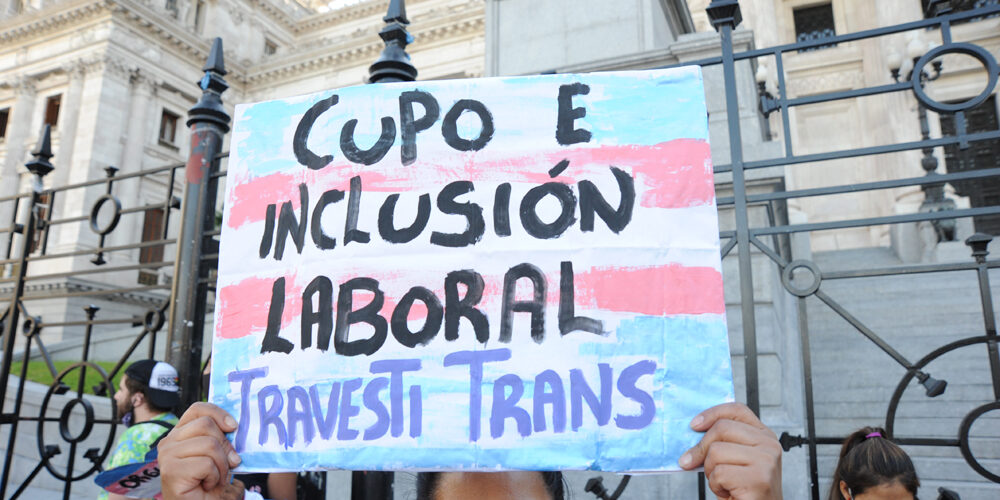
The Secretariat of the Chamber of Deputies has already included in its agenda for the special session on Thursday, June 10, the bill to promote access to formal employment for transvestite, transsexual and transgender people “Diana Sacayán-Lohana Berkins”.


Share

*News updated 9/6/2021 4pm*
The Secretariat of the Chamber of Deputies has already included the Diana Sacayán-Lohana Berkins Bill, which promotes access to formal employment for transvestite, transsexual, and transgender people, on the agenda for the special session this Thursday, June 10. Other bills are also on the agenda, including the Bill on Gender Equity in the Representation of Genders in the Communication Services of the Argentine Republic. This will be the first time that Congress has included this long-standing issue with the transvestite and transgender community in its ordinary sessions.
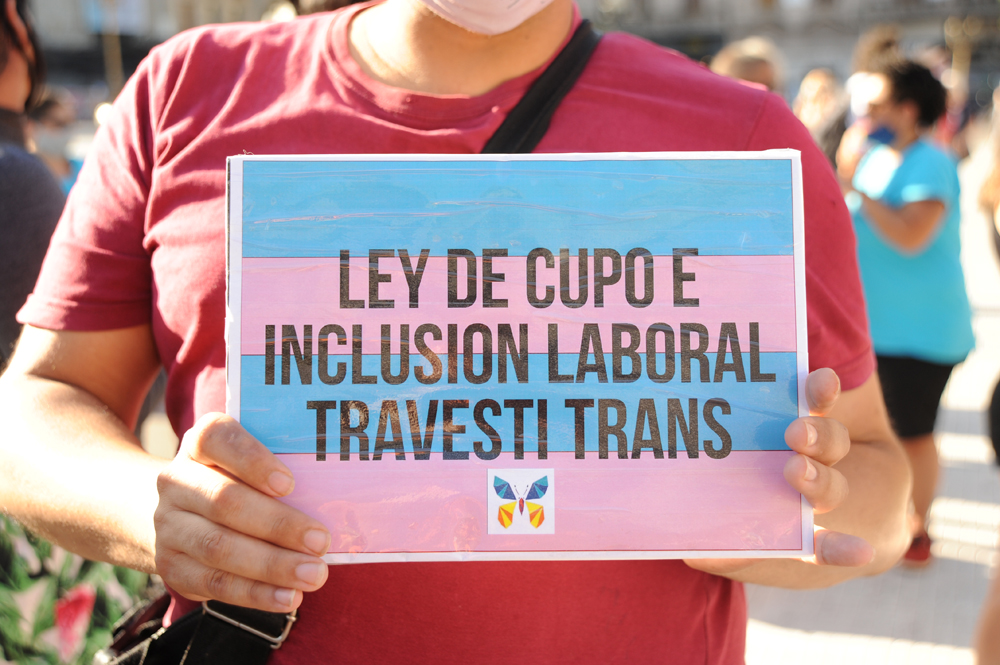
With the slogan "National Law on Quotas and Labor Inclusion for Trans and Travesti People Now!", LGBTQ+ organizations have long been demanding that members of Congress urgently address the national bill on labor inclusion and quotas for trans and travesti people. Since 2020, the bill has received favorable opinions from three committees of the Chamber of Deputies: Women and Diversity (where it originated), Labor Legislation, and Budget and Finance.
One of the many actions taken to demand urgent action was the flag-waving demonstration that took place in various parts of Argentina in February . This also included a protest by several organizations in front of the National Congress a few months ago, calling for the issue to be addressed, but it was not.
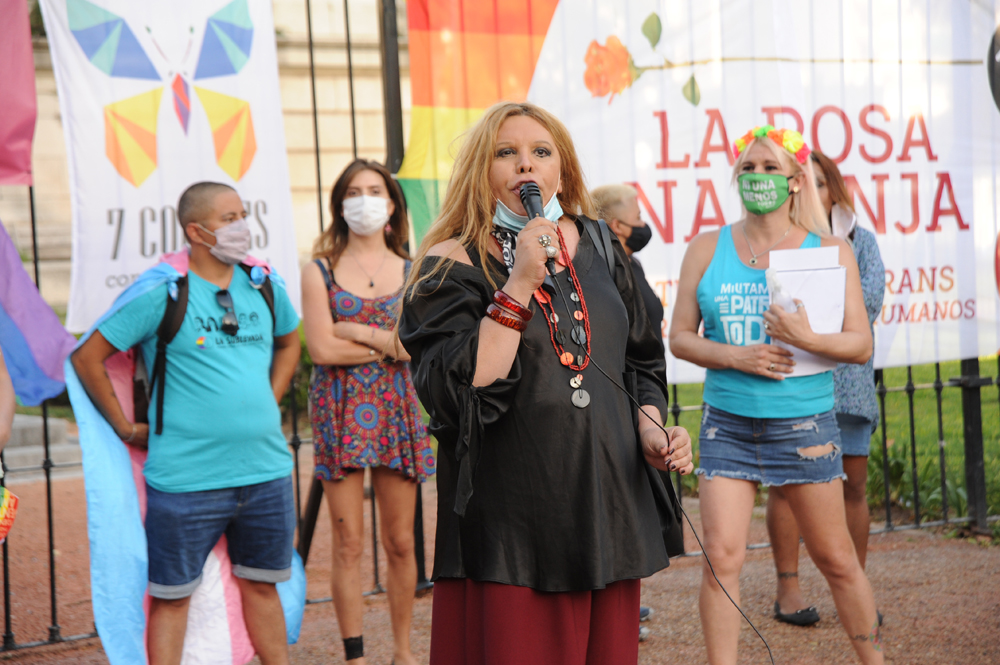
“If anything has highlighted the quality of life for trans and gender-diverse people, it has been the pandemic. It has brought to light all the vulnerable sectors,” says Marcela Tobaldi, coordinator of La Rosa Naranja, a trans and gender-diverse organization based in Buenos Aires. Tobaldi explains that the current project arose from the merger of two central projects, the Diana Sacayán and the Lohana Berkins projects, which were developed by organizations affiliated with Orgullo y Lucha (Pride and Struggle), the LGBTIQ+ League of the Provinces, and the Federal Trans and Gender-Diverse Call.
Beyond the decree: why the law is urgent
Unlike Alberto Fernández's presidential decree that allocates 1 percent of public sector employment to trans people , the bill is much broader.
And while the decree led to the creation of a registry and the hiring of transvestites and transgender people in government ministries, the number of people included is still small compared to the number of those affected by long-standing, historical, and structural violence. “We need more transvestites and transgender people included. And a national law, because the law grants us legal status as citizens,” Tobaldi points out.
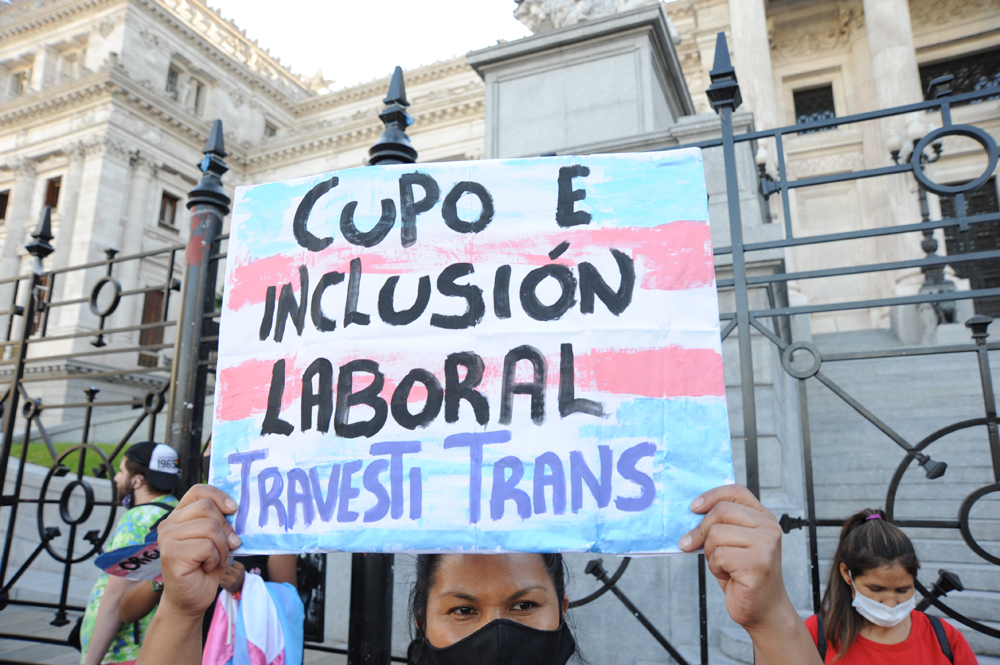
“Nadia (Echazú), Diana (Sacayán), and Lohana Berkins had to fight alone against a patriarchal system,” recalled Claudia Vásquez Haro, president of OTRANS and the Argentine Transvestite and Transgender Federal Coalition, at the February rally in front of Congress, where they made the same demand. She praised the “political maturity of the transvestite and transgender community, which built this unity.” The activist highlighted the social and political organization required to reach this point and urged: “The passage of this law is vital for our community.”
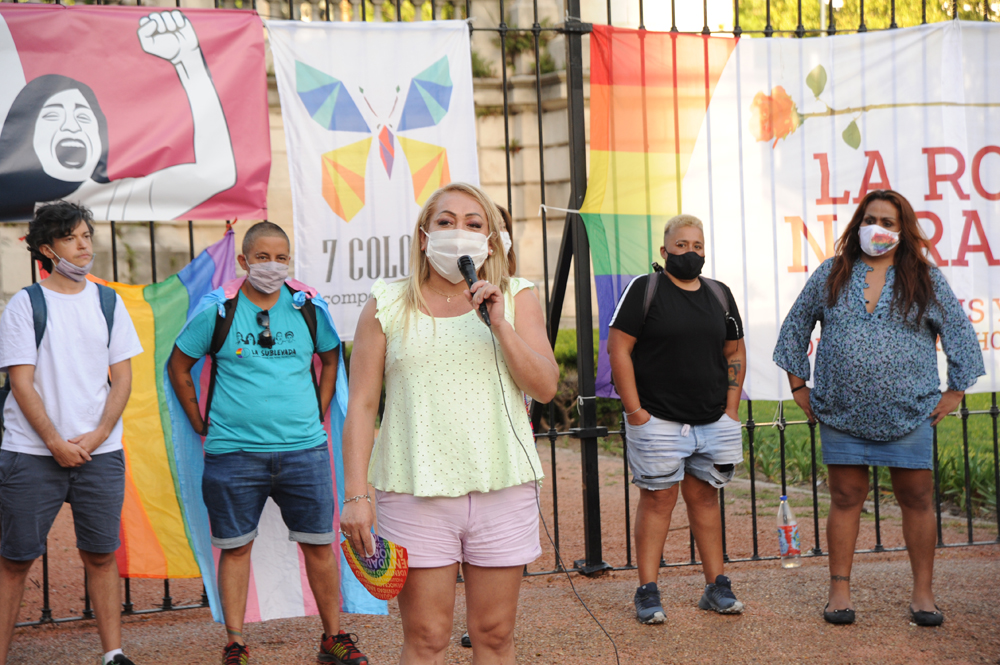
“The law would be the culmination of a public policy that has expanded in recent years. Quotas have already been decreed for the public administration and the Senate. There are also quota and/or labor inclusion laws for trans people in the provinces of Buenos Aires, Chubut, Río Negro, Chaco , Santa Fe, Entre Ríos, and La Pampa, as well as ordinances in more than 50 towns and municipalities ,” stated the Pride and Struggle Front, the LGBTIQ League of the provinces, the Argentine Transvestite and Trans Federal Call, Furia Trava, and the Lohana and Diana House, organizations that have been working on this bill, in a press release.
What does the draft bill that has received a favorable opinion say?
The “Diana Sacayán-Lohana Berkins Law for the Promotion of Access to Formal Employment for Transvestite, Transsexual and Transgender People” seeks to go beyond the presidential decree and establish “positive action measures aimed at achieving the effective labor inclusion of transvestite, transsexual and transgender people, in order to promote real equality of opportunity throughout the territory of the Argentine Republic.”
It aims to include transgender, transsexual, and gender-diverse people who are legally entitled to work, regardless of whether they have legally changed their gender marker as provided for in Article 3 of Law 26.743 on Gender Identity. Its articles propose affirmative action measures: labor inclusion in the National Government through a minimum quota of 1% across its three branches, Public Prosecutor's Offices, decentralized or autonomous agencies, non-state public entities, and state-owned companies and corporations, in all forms of employment.
In one of its articles, the bill unequivocally establishes the principle of non-discrimination, stating that all transvestite, transsexual, or transgender people have the right to decent and productive formal employment, equitable and satisfactory working conditions, and protection against unemployment. It further stipulates that, to ensure this right, prior criminal records cannot be considered when guaranteeing employment and continued employment. Therefore, the bill states that the criminal records of applicants "that are irrelevant to accessing the job cannot represent an obstacle to employment and continued employment, considering the particular vulnerability of this group."
How to get to the venue
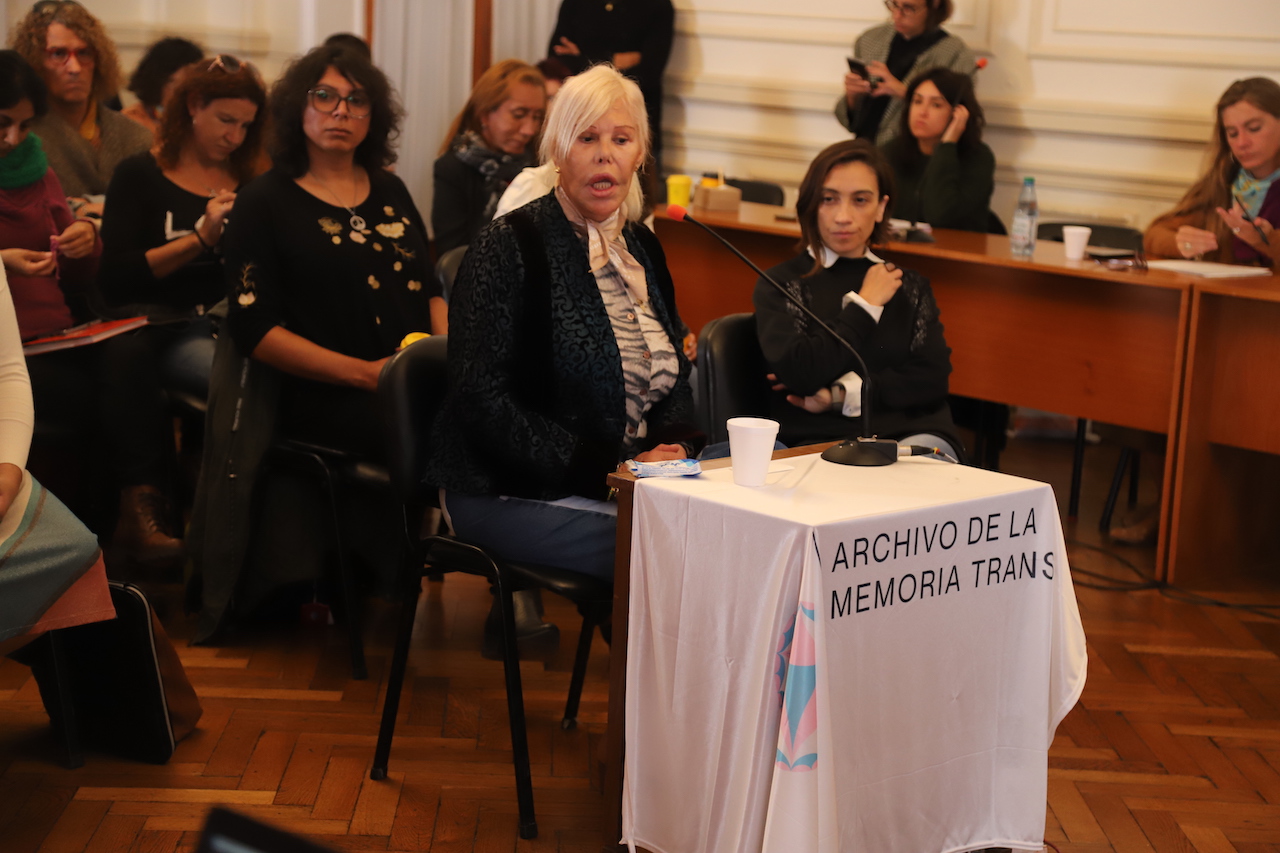
The bill, which is ready for debate in the Chamber of Deputies, is the product of years of work and activism by LGBT+ groups, especially the trans and travesti movement. It has been repeatedly in recent years by various legislators. Mónica Macha, president of the Chamber of Deputies' Gender and Diversity Committee, presented it several times , and worked on it both before and after its introduction in collaboration with LGBT+ groups .
It also includes initiatives from other legislators who presented bills, such as Gabriela Estevez and Cristina Alvarez Rodríguez. In 2020, as president of the Commission, Macha convened several meetings where activists from different parts of the country worked on each article through virtual gatherings.
The proposed law goes beyond quotas. It proposes measures to guarantee educational attainment and training, so that the difficulties many transgender and transvestite people have faced in accessing education do not prevent them from obtaining employment. Among its articles, it includes cross-cutting and federal inclusion, awareness campaigns, and priority in government contracts ( at equal cost and in the manner established by regulations, purchases of supplies and provisions from private legal entities or individuals that employ transgender, transsexual, and transvestite people). It also addresses incentives for the private sector to hire transgender and transvestite individuals, and access to credit for productive ventures (through Banco Nación).
“While this Ministry of Women and Gender of the Nation, headed by Elizabeth Gómez Alcorta and with Alba Rueda as Undersecretary of Diversity, and also of the province of Buenos Aires, have set and continue to set an agenda, we urgently need this law,” Tobaldi said.
We are present
We are committed to journalism that delves into the territories and conducts thorough investigations, combined with new technologies and narrative formats. We want the protagonists, their stories, and their struggles to be present.
SUPPORT US

FOLLOW US
Related notes
We are present
This and other stories are not usually on the media agenda. Together we can bring them to light.