

Elections in Mexico: between LGBTI inclusion and violence against candidates
For the first time, political parties must meet quotas to include candidates of Afro-descendant people, people with disabilities, and LGBTI people.


Share

On June 6, Mexico will hold its largest and, according to the National Electoral Institute (INE), “most inclusive” elections in its history. The INE's General Council established, for the first time, guidelines that political parties must follow to include candidates of African descent, people with disabilities, and LGBTQ+ individuals.
In this electoral process, 20,435 popularly elected positions at the local and federal levels are at stake throughout the national territory, including 500 federal deputies; 15 governorships, 30 local congresses and 1,900 municipalities.
The affirmative action measures implemented arose from years of collaborative work between activist groups and the National Electoral Institute (INE). These measures have established criteria that aim to create a minimum standard for LGBTI people to exercise their political and electoral rights equally and without discrimination.
One of these measures is the implementation of the Trans Protocol , with which the INE has sought since 2018 to guarantee the right to vote of trans people regardless of their gender expression and whether or not their data has been rectified on the voter ID card in any election or citizen participation mechanism organized by the Institute.

LGBT Inclusion
The affirmative action policy to include LGBT people is not mandatory in all states of the country. In the calls for participation issued by political parties, the local electoral bodies of Veracruz and Jalisco did not include affirmative action measures for these populations, and in some other states, it was only offered as a “recommendation.” Despite not being a rule, some parties have voluntarily nominated LGBT individuals.
Such is the case of Juan Pablo Delgado, an activist for the rights of LGBT people, who is running for mayor of León, the most important municipality in Guanajuato, a state located in the center of the country and which has historically been governed by the right.
“These affirmative actions are necessary because the lack of political representation is equivalent to our rights being nullified, particularly in contexts where politics has been conducted in a conservative and fundamentalist manner,” Delgado argues.
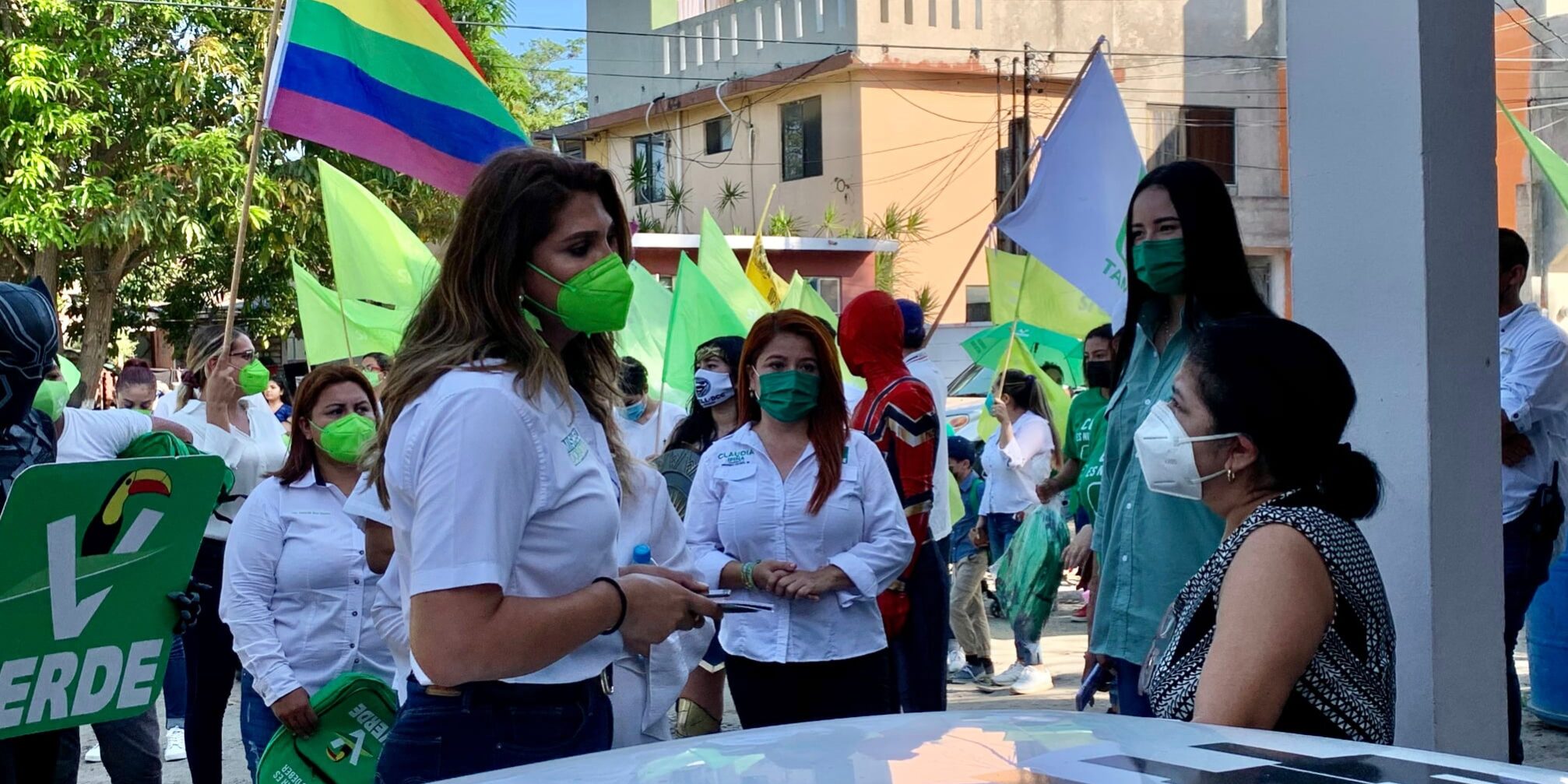
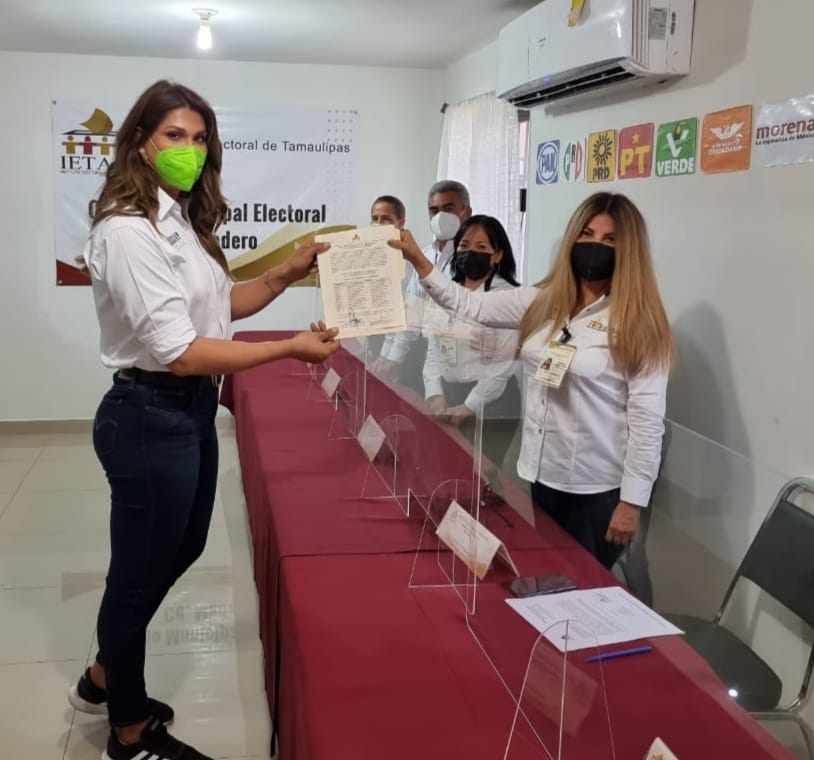
For her part, Mishel Doratto, who is running for mayor of Ciudad Madero in Tamaulipas, a northeastern state, told Presentes that the affirmative action measure represents a turning point for her community and her city. “To be honest, I was terrified at first, but the experience has been unforgettable. This goes beyond gender; this is about humanity,” she confessed.
Both Delgado and Doratto told Presentes that during their tours of the territory they found that "more people are open" to learning about their projects regardless of their sexual orientation and gender identity.
“I was pleased to confirm that Guanajuato’s reputation as a conservative society is more of a narrative that suits the right-wing political power that has governed for so many years,” Delgado points out.
Only 1.85% identify as LGBT
According to data from the INE (consulted one week before the election), of the 6,316 candidates who answered the identity questionnaire, only 117 people identify as part of the LGBT populations, representing 1.85% and 596 responded that they "prefer not to answer".
“We thought long and hard about whether to include it or not, and we left it in precisely to respect the possibility that a person might prefer not to reveal their sexual orientation or gender identity due to the discrimination that unfortunately still exists in Mexico. That's why we included that option, for those people who don't yet feel ready to publicly declare that they belong to the LGBTQ+ community,” explained Dania Ravel, an electoral councilor, to Presentes.
According to the latest Survey on Discrimination based on Sexual Orientation and Gender Identity , 75.4% of people said they avoid freely expressing their sexual orientation or gender identity for fear of suffering discrimination.
Simulation risks
Rebeca Garza, a trans woman and former electoral official in Querétaro, points out that not knowing the LGBT candidates appeals to protecting personal data; however, she believes that not answering or using the principle of self-determination "may be serving to allow people who are not LGBT to continue accessing power with a certain impunity."
In the 2017-2018 election cycle, 17 candidacies of men who posed as transgender women and muxes in Oaxaca. In these elections in Tlaxcala, 18 candidates from the Fuerza por México party self-identified as transgender women in an attempt to comply with gender parity. LGBT groups in the state denounced and rejected these candidacies.
Rebeca Garza adds that “the problem isn’t affirmative action, but a structure that refuses to relinquish power.” She further states that it’s “a type of gender-based political violence where gender identity and trans people are made scapegoats. It’s regrettable because what it legitimizes and perpetuates are the stigmas of portraying trans people as fake, fraudulent, and criminal, when it’s actually them who are evading the law.”
Regarding the principle of self-identification, Councilor Dania Ravel says she is concerned because the Superior Chamber of the Electoral Tribunal argued that, due to privacy of personal data, it is not possible to disclose the people who access places through affirmative action.
“I think it’s serious, considering the precedents we have. When we can’t inform the public about the people applying through these affirmative action programs, we limit their ability to take timely action in cases of fraudulent claims. I understand that there may be issues related to people’s privacy, but this is a rule, and the public should be able to verify that people actually belong to these groups facing discrimination. I believe it should be made public,” he points out.

The most violent elections
Besides being the largest and most inclusive elections in history, they have also been the most violent. From the start of the electoral process in September until April 30, 782 attacks were recorded, 35% of which were against women. The attacks ranged from beatings to kidnappings; furthermore, 7 female candidates and 28 male candidates were murdered, according to Etellekt's report on Political Violence in Mexico .
Neither the Etellekt report nor the National Registry of Persons Sanctioned for Political Violence against Women Based on Gender of the INE, report any aggressions motivated by sexual orientation or gender identity.
On April 13, 2020, the National Electoral Institute (INE) adapted reforms to the protocol addressing political violence against women based on gender, and for the first time in the Institute's regulations, it addressed acting with an intersectional perspective and granting protection measures. These actions are also applicable to people of diverse sexual orientations and gender identities or other historically discriminated groups.
Despite the positive experiences, Juan Pablo and his team have faced homophobic and transphobic violence on social media and an attempted physical attack. Furthermore, Mishel Doratto believes that the incidents where their gender identity and pronouns were disrespected stem from a “lack of information,” as they occurred “unconsciously and involuntarily.”
Neither Juan Pablo nor Mishell reported to the electoral authorities the incidents they experienced because of their sexual orientation and gender identity.

Lesbians absent from proposals
According to the database on candidates for federal and local deputies, among the proposals on gender issues, the rights that are most mentioned are marriage equality, the gender identity of trans people and adoption.
Gay, bisexual, and transgender people are the populations explicitly named in the proposals. Lesbians are not mentioned, and intersex people are addressed in only one proposal, which seeks to prevent intersex children from undergoing surgery.
In general, the proposals talk about "inclusion" and "providing rights" but do not explain how they will make it possible, even those candidates who claim to be part of the sexual diversity population.
While this election is historic due to the number of LGBT candidates, Rebeca Garza urges us to look “beyond the election day.” She reflects that it is necessary to see how many actually reach power, how many will exercise it freely, and how many will address an agenda in favor of LGBTI rights.
“Of those who come to power, we must examine how many of these candidacies are replicating the violence already reported by cisgender women: that they do not receive resources, that they do not receive legal support, that they were assigned to losing districts, and that winning was only to meet the quota. And obviously, we must monitor the false trans and indigenous candidacies.”
We are present
We are committed to journalism that delves into the territories and conducts thorough investigations, combined with new technologies and narrative formats. We want the protagonists, their stories, and their struggles to be present.
SUPPORT US

FOLLOW US
Related notes


We are present
This and other stories are not usually on the media agenda. Together we can bring them to light.